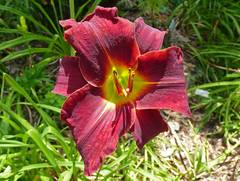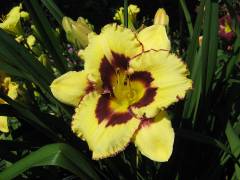
Hemerocallis, Genus, fulva, Species,
- Genus & species
Orange daylily
Overview
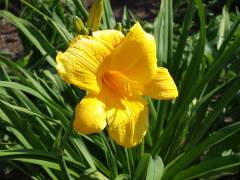
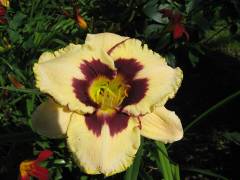
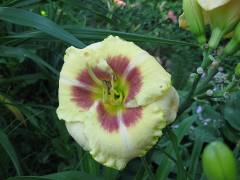
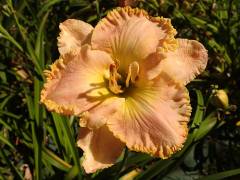
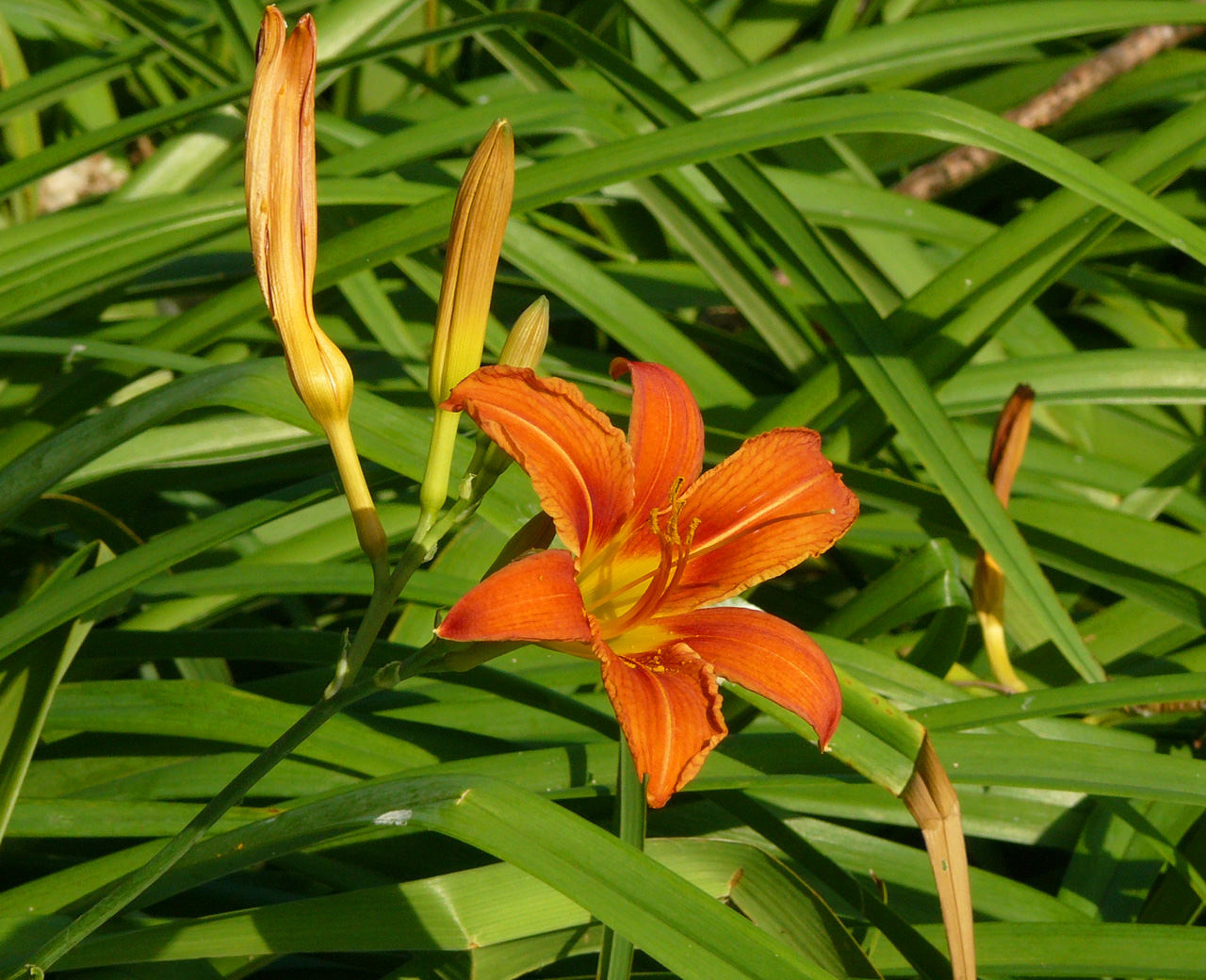
Hemerocallis fulva is a herbaceous perennial forming clumps 24-48 inches (60-120 cm) tall in flower and 24-36 inches (60-90 cm) wide, spreading by fleshy stolons and spindle-shaped tuberous roots. Leaves are strap-shaped and keeled, 18-30 inches (45-75 cm) long and 0.5-1.2 inches (1.5-3 cm) wide, arching outward in two ranks from the crown, mid-green, emerging in early spring and yellowing after flowering. Leafless scapes rise above the foliage carrying 6-12 buds that open in succession, each flower 3-5 inches (8-13 cm) across, funnel-form, rusty orange with a darker midrib stripe and a yellow-green throat. Individual flowers open for a single day. The widely naturalised triploid clone is sterile and sets no seed, increasing only by vegetative offsets that widen a clump by 6-12 inches (15-30 cm) per year. Foliage dies to the ground after frost and regrows from the crown. Dense colonies exclude lower-growing plants, and the species is listed as invasive in several eastern United States jurisdictions, persisting along roadsides and stream banks from discarded root fragments. Rust and daylily leaf streak cause foliar spotting in humid summers.
Native Range
Native to eastern Asia, from central and eastern China through Korea to Japan and the Russian Far East. Grows on grassy slopes, forest margins, and stream banks from near sea level to 6,500 feet (2,000 m). Introduced to Europe by the sixteenth century and to North America by the late eighteenth century, and now naturalised across much of the eastern and central United States and southern Canada.Suggested Uses
Planted in borders, on slopes for erosion control, and in roadside and utility strips at 18-24 inch (45-60 cm) spacing. Stoloniferous spread and tolerance of poor soils suit naturalised mass plantings, while the same habit makes the species hard to contain in mixed beds alongside slower-growing perennials. Grows in containers of at least 5 gallons (19 L), where clumps need division every 2-3 years.How to Identify
Appearance
Size & Dimensions
Height2' - 4'
Width/Spread2' - 3'
Bloom Information
Flowers open late June through early August in zones 4-7, and from late May in zones 8-9. Each flower lasts one day, opening at dawn and collapsing by the following morning; a single scape flowers over 2-3 weeks and a clump over 4-6 weeks. Temperatures above 90F (32C) shorten individual flower life, with collapse by mid-afternoon. No repeat flush follows the main flowering period.
Detailed Descriptions
Flower Description
rusty orange with a darker midrib stripe and yellow-green throatFoliage Description
mid-greenGrowing Conditions
Sun Requirements
Requires 4-12 hours of direct sunlight daily
• Full Sun: 6+ hours of direct sunlight
• Partial Shade: 3-6 hours of direct sunlight
• Full Shade: Less than 3 hours of direct sunlight
Care & Maintenance
Care Guide
Water 1 inch (2.5 cm) per week during establishment; established clumps survive 3-4 weeks without rain, though scape number and flower diameter decrease. Growth occurs in soils from sand to heavy clay at pH 5.5-7.5, including salt-exposed roadside positions. Flower numbers fall by roughly half where daily direct sun drops below 4 hours. Flower production declines after 5-7 years as the clump centre becomes congested, and division in early spring or immediately after flowering restores it. Daylily rust and leaf streak produce yellow to brown foliar lesions in warm humid weather; clearing dead foliage in late autumn lowers overwintering inoculum. Hemerocallis gall midge distorts spring buds in cool maritime climates, and root fragments left in soil regrow, making removal from established colonies a multi-season task.Pruning
Spent scapes are cut to the base once the last bud has opened, removing the standing dead stems. Yellowing outer leaves can be pulled by hand through the season without effect on the plant. Foliage is cut back to 2-3 inches (5-8 cm) after frost blackens it, or left standing and cleared in early spring. Division every 4-6 years, splitting the crown into pieces of 3-4 fans, maintains flower numbers.Pruning Schedule
Prune: August & November
summerfall
Container Growing
Suitable for container growing
Minimum container size: 5 gallons