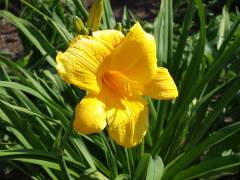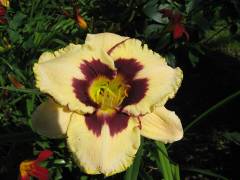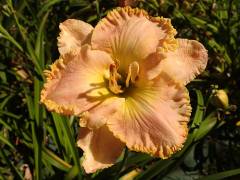
Hemerocallis, Genus, 'Ed Murray', Cultivar,
- Genus
- Cultivar
ed murray daylily
East Asia (genus origin; cultivar is a garden hybrid)
Overview
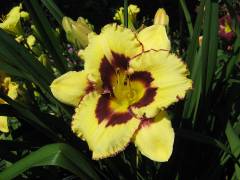
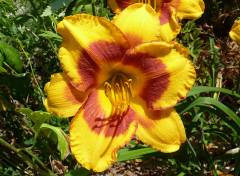
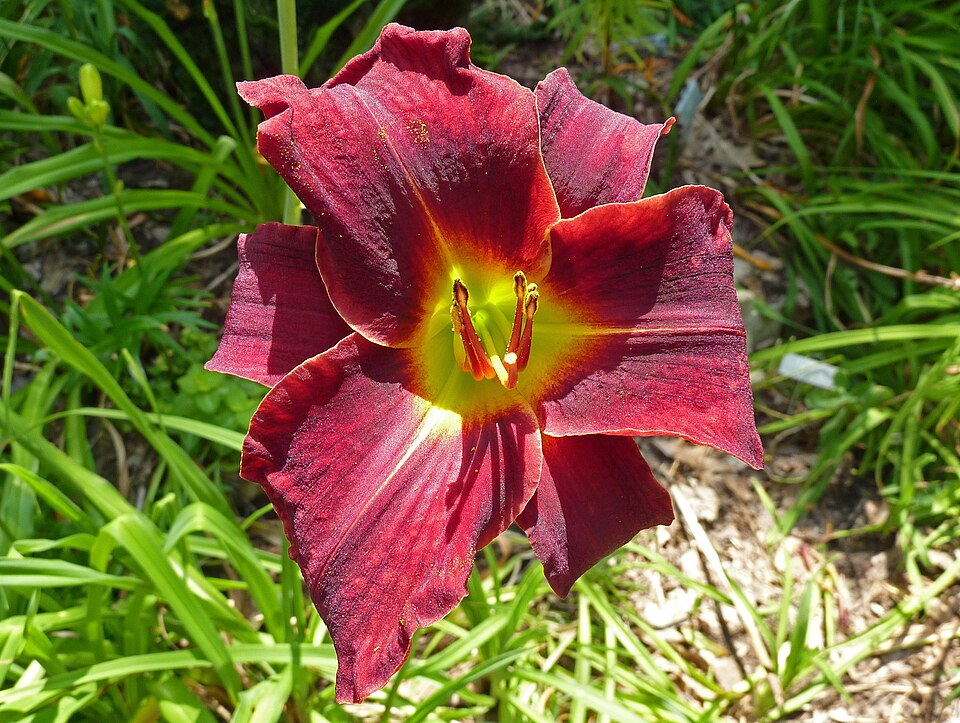
Hemerocallis 'Ed Murray' is a clumping, deciduous herbaceous perennial reaching 28–32 inches (70–80 cm) tall and 18–24 inches (45–60 cm) wide. The diploid cultivar was registered by Ed Grovatt in 1970 and received the American Hemerocallis Society Stout Silver Medal in 1981. Flowers are 4–4.5 inches (10–11 cm) across, dark blackish-red to deep mahogany with a velvety petal surface and a 0.5–0.75 inch (1.3–2 cm) yellow-green throat. The saturated dark pigmentation reads nearly black in low light and shifts toward mahogany-red in bright sun. Foliage is medium green, arching, strap-shaped, and 18–22 inches (45–55 cm) long, dying back to ground level with hard frost. Bloom runs from June through July over 4–5 weeks, shorter than many yellow-flowered daylily cultivars. Each flower opens for one day. In zones 7 and warmer, afternoon temperatures above 90°F (32°C) combined with direct sun cause petal melt and pigment loss. All plant parts contain colchicine-like compounds and are toxic to cats, causing acute kidney failure if ingested.
Native Range
Hemerocallis 'Ed Murray' is a garden hybrid registered by Ed Grovatt in 1970 and does not occur in the wild. The genus Hemerocallis is native to East Asia, with wild species distributed across China, Korea, Japan, and eastern Russia.Suggested Uses
Used in mid-border positions at 18–24 inch (45–60 cm) spacing, in mixed perennial beds, and in containers 3 gallons (11 L) or larger. The dark flower color reads most clearly when paired with lighter companions such as cream, silver, or yellow-flowered perennials. The 4–5 week bloom window requires overlapping summer-flowering perennials for extended color. Deep shade and continuously wet soils cause flower reduction and crown rot; exposed sites in zones 7+ cause petal melt.How to Identify
Appearance
Size & Dimensions
Height2'4" - 2'8"
Width/Spread1'6" - 2'
Bloom Information
Flowers appear from June through July over a 4–5 week period. Individual blooms are 4–4.5 inches (10–11 cm) across in dark blackish-red to deep mahogany with a yellow-green throat. Each flower opens for one day. Scapes carry 12–18 buds. Petal melt occurs in zones 7+ when afternoon temperatures exceed 90°F (32°C).
Detailed Descriptions
Flower Description
Dark blackish-red to deep mahogany with velvety surface and yellow-green throat; 4-4.5 inches acrossFoliage Description
Medium green, arching strap-shaped, 18-22 inches longGrowing Conditions
Sun Requirements
Requires 6-10 hours of direct sunlight daily
• Full Sun: 6+ hours of direct sunlight
• Partial Shade: 3-6 hours of direct sunlight
• Full Shade: Less than 3 hours of direct sunlight
Care & Maintenance
Care Guide
Grow in full sun to light afternoon shade with 6 or more hours of direct light, in average to moist, well-drained loam, clay, or sandy soil at pH 6.0–7.0. In zones 7 and warmer, 2–3 hours of afternoon shade reduces petal melt and pigment fade; in zones 3–6, full sun retains color. Water deeply once per week during the first growing season, then supplement only during extended drought. Apply a balanced fertilizer in early spring at 1 tablespoon per square foot (30 g/m²). Divide clumps every 3–5 years in early spring or early fall. Hardy to USDA zone 3.Pruning
Remove spent flower scapes at the base once all buds have opened and finished. Cut spent foliage to ground level after the first hard frost, or in early March before new growth emerges. Lift and divide crowded clumps every 3–5 years using a spade or two garden forks.Pruning Schedule
Prune: March & October–November
fallearly spring
Container Growing
Suitable for container growing
Minimum container size: 3 gallons