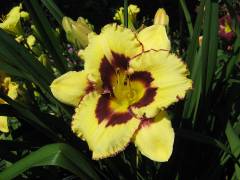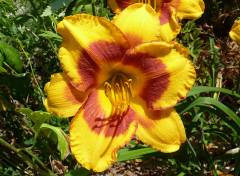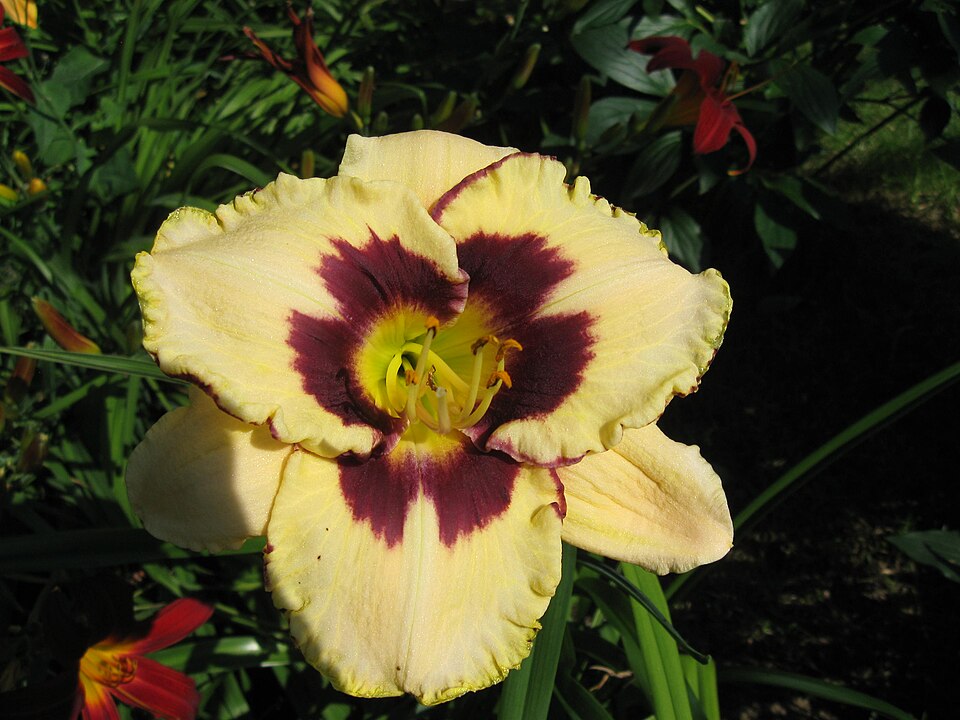
Hemerocallis, Genus, 'Canadian Border Patrol', Cultivar,
- Genus
- Cultivar
Canadian border patrol daylily
Garden hybrid cultivar; registered by Ed Fancett, Ontario, Canada, 1995; parent genus Hemerocallis native to East Asia
Overview
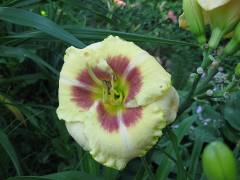
Hemerocallis 'Canadian Border Patrol' is a clumping semi-evergreen perennial in the asphodel family (Asphodelaceae) reaching 24–28 inches (60–70 cm) tall with a spread of 18–24 inches (45–60 cm). This daylily cultivar carries a bicolor picotee flower pattern: trumpet-shaped flowers 5.5–6 inches (14–15 cm) across open with creamy-ivory to pale yellow petals that are edged in a distinct dark purple to plum-violet picotee band around the petal margins, with a contrasting yellow-green throat at the flower center. The sharply defined dark edge set against the pale petal ground produces a clearly patterned bicolor flower face that separates the cultivar from solid-colored daylilies across the trade. Each individual flower lasts a single day, with well-branched flower scapes producing bloom from July through August across a 4–6-week display window that runs slightly shorter than some longer-blooming cultivars in the group. Foliage consists of arching strap-shaped medium green leaves. Growth rate runs moderate. Hardy to zone 3.
Native Range
Hemerocallis 'Canadian Border Patrol' is a garden hybrid registered by Ed Fancett of Ontario, Canada, in 1995. The parent genus Hemerocallis is native to East Asia, and the commercial daylily trade has bred thousands of cultivars from the wild Asian species across the past century.Suggested Uses
Grown in border compositions at 18–24 inch (45–60 cm) spacing. The distinct bicolor picotee pattern is the primary visual feature of the cultivar, so siting in positions viewed at close range — along paths, at the front of borders, near seating areas — lets the picotee edge detail read clearly across the distance that gardeners actually view plants from. The shorter bloom period from July through August at 4–6 weeks runs shorter than some longer-season daylily cultivars, so companion planting that supplies early-season and late-season color fills the calendar gaps that this cultivar leaves in the color progression. The plant functions in container culture in 3 gallon (11 L) or larger pots. Deep shade weakens the picotee color definition, and waterlogged soils are not suitable given the drainage preference.How to Identify
Appearance
Size & Dimensions
Height2' - 2'4"
Width/Spread1'6" - 2'
Bloom Information
Trumpet-shaped flowers 5.5–6 inches (14–15 cm) across, creamy-ivory to pale yellow petal ground with a distinct dark purple to plum-violet picotee band around the petal margins, yellow-green throat at the flower center, open from July through August across a 4–6-week display window. Each individual flower lasts one day. The bloom window runs slightly shorter than some longer-blooming daylily cultivars in the group.
Detailed Descriptions
Flower Description
Creamy-ivory to pale yellow with dark purple to plum-violet picotee edge; yellow-green throatFoliage Description
Medium green arching strap-shapedGrowing Conditions
Sun Requirements
Requires 6-10 hours of direct sunlight daily
• Full Sun: 6+ hours of direct sunlight
• Partial Shade: 3-6 hours of direct sunlight
• Full Shade: Less than 3 hours of direct sunlight
Care & Maintenance
Care Guide
Grows in full sun in average to moist well-drained soil at pH 6.0–7.0, tolerating loam, clay, and sand. Hardy to zone 3. Full-sun positions intensify the dark picotee edge color — shade positions weaken the picotee definition and reduce the contrast that makes the bicolor pattern visible. Cultural requirements match the other daylily cultivars across the commercial trade. Dividing crowded clumps every 3–5 years maintains flowering vigor.Pruning
Spent flower scapes are removed at the base of the plant after all buds on each scape have opened and closed. Foliage is cut back to the ground in late fall or early spring. Crowded clumps are divided every 3–5 years in spring or fall.Pruning Schedule
Prune: March & September
fallearly spring
Container Growing
Suitable for container growing
Minimum container size: 3 gallons