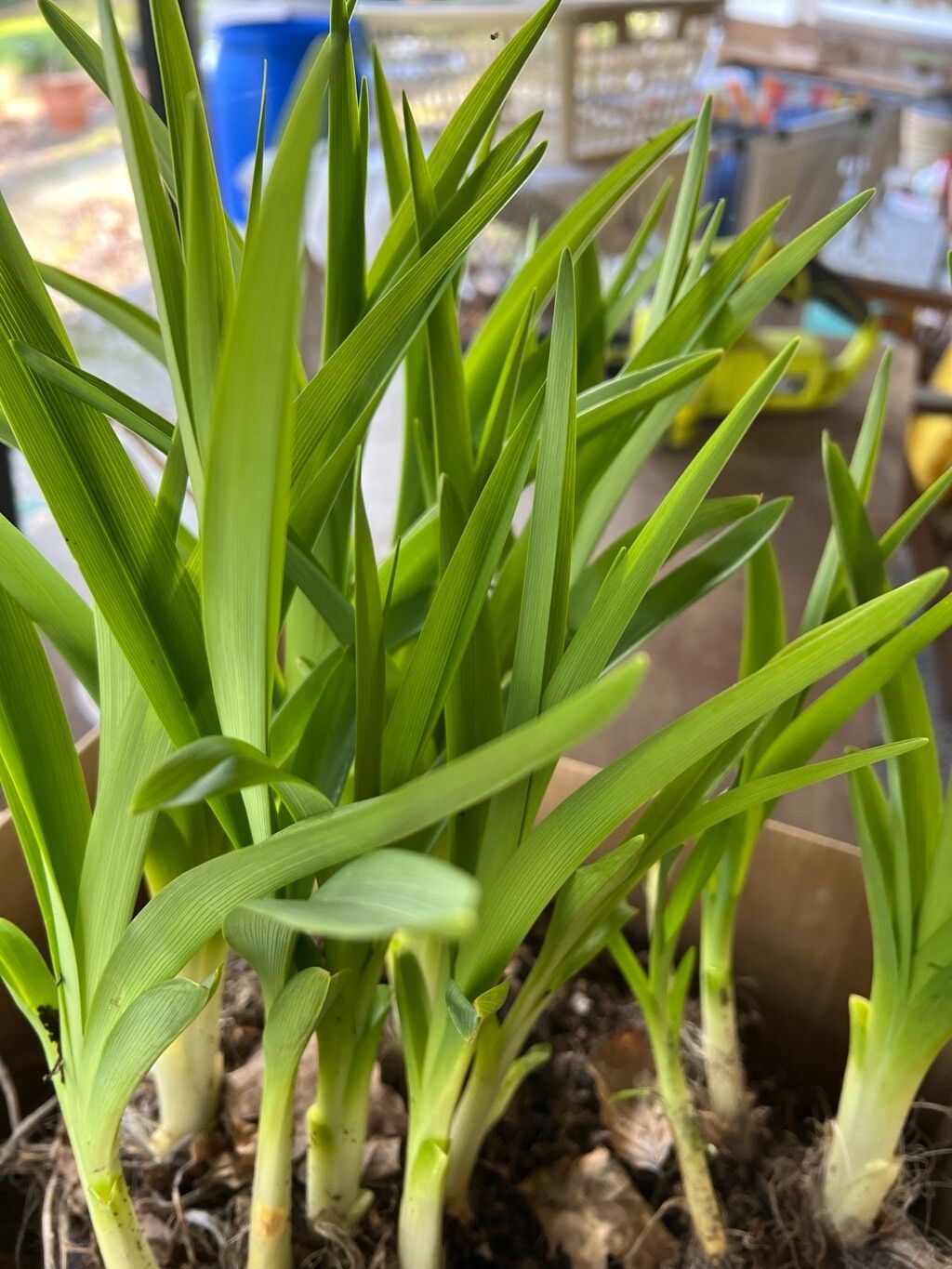
Hemerocallis 'Stella de Oro'
Stella D'Oro Daylily
horticultural hybrid (parent species native to East Asia)
Overview
Hemerocallis spp. 'Stella de Oro' is a compact reblooming daylily registered by Walter Jablonski in 1975 from a complex Hemerocallis spp. hybrid background. Plants form dense clumps 12-15 inches (30-38 cm) tall in flower and 18-24 inches (45-60 cm) wide, with grass-like foliage 12-14 inches (30-36 cm) tall arching outward from a central crown. Each scape bears 3-5 buds; flowers are 2.75-3 inches (7-7.5 cm) across, six-tepaled, golden yellow with a slightly ruffled edge and no contrasting eye or band. Individual flowers open at dawn and collapse the same evening, replaced over a 2-3 month sequence as new buds open. Total bloom span runs 14-18 weeks in zones 5-7, beginning in early summer with rebloom flushes through early fall after a brief midsummer pause. In zones 8-9, bloom is more continuous but each individual flush is shorter. Foliage is semi-evergreen in zones 8-10 and fully deciduous in zones 3-6. Spider mites and aphids occur on stressed plants. All parts of Hemerocallis spp. are toxic to cats, with small ingestions of leaves, flowers, or pollen causing acute kidney failure; the plant is non-toxic to dogs and humans.
Native Range
'Stella de Oro' is a horticultural hybrid without natural distribution. Parent Hemerocallis spp. species are native to East Asia, particularly China, Korea, Japan, and the Russian Far East, growing on grassy slopes, woodland edges, and seasonally wet meadows from sea level to 6,500 feet (2,000 m).Suggested Uses
Planted in residential perennial borders, foundation plantings, and parking lot strips at 18-24 inch (45-60 cm) spacing in zones 3-9. Container culture is reliable in pots of at least 3 gallons (11 L); plants in larger containers rebloom more strongly. Cat exposure to Hemerocallis spp. foliage, flowers, or pollen causes acute nephrotoxicity, which limits use in gardens accessible to domestic cats.How to Identify
Appearance
Size & Dimensions
Height1' - 1'3"
Width/Spread1'6" - 2'
Reaches mature size in approximately 2 years
Bloom Information
Late spring through early fall in zones 4-9, with a typical onset in late May to mid-June and peak rebloom flushes in July and September. Individual flowers last one day; each scape produces 3-5 buds opening sequentially over 7-12 days. Total active bloom across all rebloom cycles spans 14-18 weeks in zones 5-7. Flowering decreases or pauses during temperatures consistently above 95°F (35°C).
Detailed Descriptions
Foliage Description
mid-greenGrowing Conditions
Sun Requirements
Requires 6-12 hours of direct sunlight daily
• Full Sun: 6+ hours of direct sunlight
• Partial Shade: 3-6 hours of direct sunlight
• Full Shade: Less than 3 hours of direct sunlight
Care & Maintenance
Care Guide
Water 1 inch (2.5 cm) per week during establishment in the first year; mature plants tolerate 2-3 weeks without rain but rebloom is reduced under prolonged drought. Apply balanced fertilizer in early spring and again after the first bloom flush to support rebloom. Aphids and spider mites develop in hot dry summers, particularly in dense plantings; rust (Puccinia hemerocallidis) appears in southeastern United States from late summer onward. Daylily leafminer creates pale serpentine trails in foliage but does not affect flowering. Divide clumps every 4-5 years when bloom decreases or the clump center thins; division is performed in spring or early fall.Pruning
Spent scapes are cut at the base after each rebloom flush to redirect energy from seed formation into further bud production. Foliage can be cut to 2-3 inches (5-7 cm) above ground in late fall after frost or in early spring before new growth, depending on regional preference for winter appearance. Yellow or rust-affected leaves can be removed at any time during the growing season.Pruning Schedule
J
F
M
A
M
J
J
A
S
O
N
D
fallearly spring
Container Growing
✓ Suitable for container growing
Minimum container size: 3 gallons