Lawn Care Schedule by Month: Your Complete Cool-Season Grass Calendar
Pets & Toxicity
Recorded toxicity for plants linked in this guide. An unknown status is not a safety assessment.
No linked plant is recorded as toxicDetailsHide
— Image © Plant Reference 2026
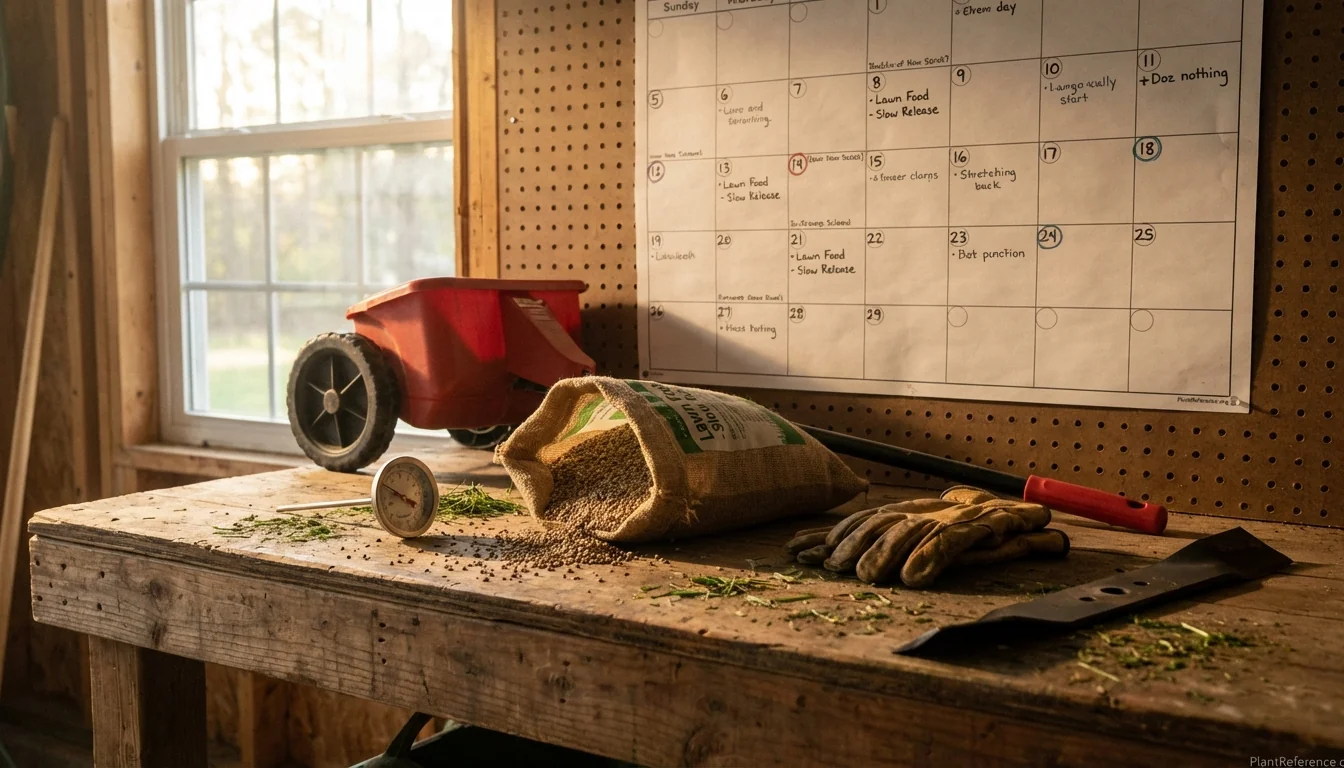
Most lawn care mistakes come down to doing the right thing at the wrong time. Fertilizing in July stresses cool-season grass instead of helping it. Overseeding in spring throws seed money at a crop that will not survive its first summer. Skipping the September aeration window means waiting another full year. After maintaining lawns across Texas and the transition zone for over a decade, I can tell you that a reliable monthly calendar solves more problems than any product on the shelf.
Why a Monthly Calendar Beats Guesswork
Every major lawn care task has a biological window — a period when the grass or the pest you are targeting is in the right stage for intervention. Miss the window and either the treatment fails or you create new problems. Pre-emergent herbicide applied two weeks late lets crabgrass germinate. Fertilizer applied during summer heat pushes weak top growth at the expense of roots. Seed sown in spring produces seedlings that die in their first July.
The calendar below is built for cool-season grasses — 🌿Poa pratensis (poh-uh prah-TEN-sis) Kentucky bluegrass, 🌿Festuca arundinacea tall fescue, 🌿Lolium perenne perennial ryegrass, and fine fescues — in USDA Zones 5 through 7. If you manage warm-season turf like 🌿Cynodon dactylon bermudagrass or 🌿Zoysia japonica zoysiagrass, the timing shifts: your active season is May through August instead of April through October, and your primary fertilization window is summer rather than fall. Cool-Season vs Warm-Season Grass: Which Type Is Right for Your Lawn?
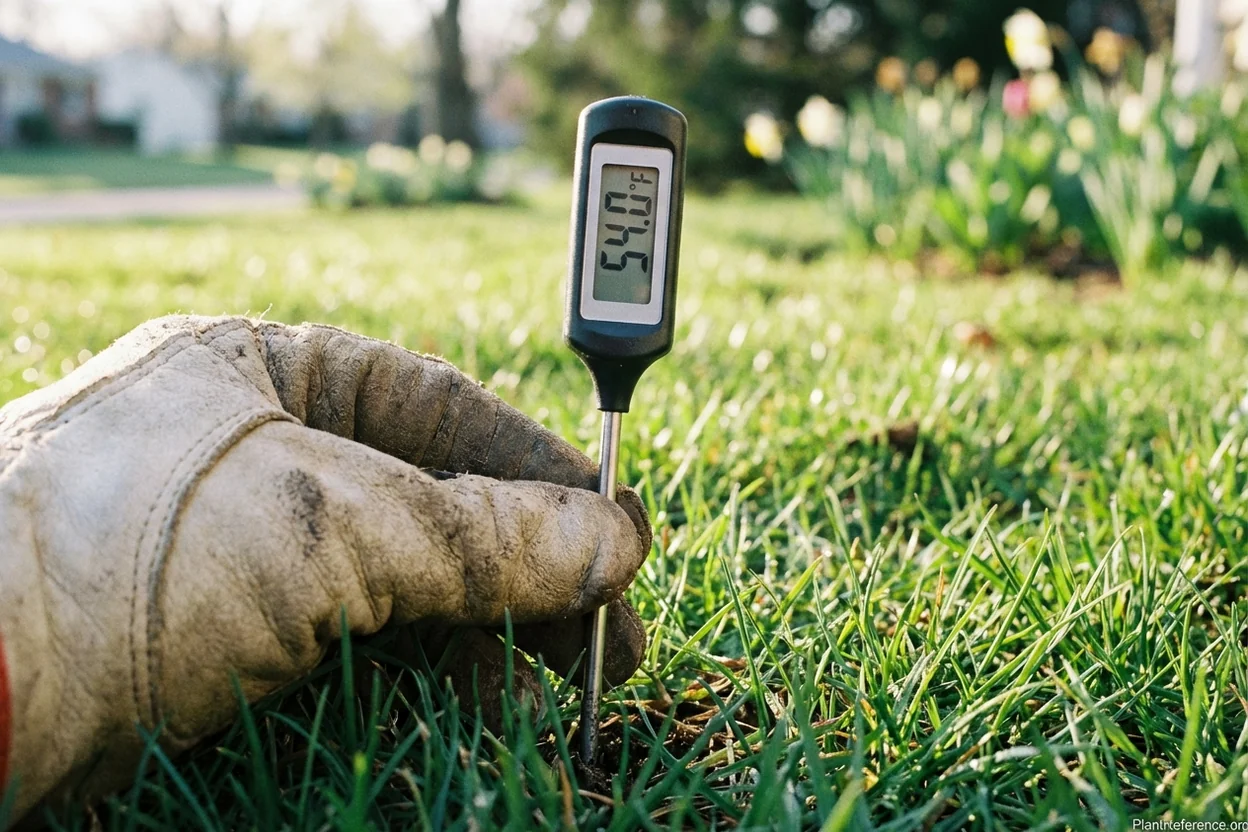
One critical note: soil temperature matters more than calendar dates. A lawn in Zone 5 Minnesota and one in Zone 7 Virginia can be 4-6 weeks apart on the same task. Use a soil thermometer at 2-inch depth to time your pre-emergent and seeding rather than relying on fixed dates.
Winter: January Through February
These are planning months, not action months. The ground is frozen or saturated in most of the cool-season zone and your grass is dormant.
What to Do
Order a soil test kit from your county extension lab ($10-25) and submit samples as soon as the ground thaws enough to take cores. A soil test every 2-3 years tells you exactly what your lawn needs — most homeowners either over-apply phosphorus (which many states now restrict) or ignore a pH problem that locks out nutrients no matter how much fertilizer they spread.
Service your mower: sharpen or replace the blade, change the oil, replace the spark plug, and check the air filter. A sharp blade on the first spring mow sets the tone for the season. Best Wood for Raised Garden Beds: Material Comparison and Longevity Test
Minimize foot traffic on frozen turf. Walking on frosted grass crushes cell walls in the leaf blades, leaving brown footprint-shaped dead spots that do not recover until spring growth resumes.
Early Spring: March Through April
This is pre-emergent season. Your primary goal is getting the crabgrass barrier down before germination starts.
Pre-Emergent Herbicide (Soil Temperature: 50-55°F)
Apply pre-emergent herbicide when soil temperature at 2-inch depth reaches 50-55°F for 3-5 consecutive days. Crabgrass germinates once soil sustains 55°F — you need the barrier in place before that happens. Natural phenological cues can help: forsythia bloom is the traditional indicator, though Ohio State research found lilac and redbud bloom correlate more closely with actual crabgrass germination.
The two main active ingredients are prodiamine (Barricade) and dithiopyr (Dimension). Prodiamine provides 4-6 months of residual and works best as the first application. Dithiopyr provides 3-4 months but has early post-emergent activity — it can kill crabgrass seedlings up to the 1-tiller stage if you are slightly late. A split application (prodiamine first, dithiopyr 5-8 weeks later) gives season-long coverage.
Do NOT apply pre-emergent if you plan to overseed in spring — the herbicide prevents grass seed germination too. Mesotrione (Tenacity) is the only pre-emergent safe for use at the time of seeding.
First Mow (When Grass Reaches 3.5-4 Inches)
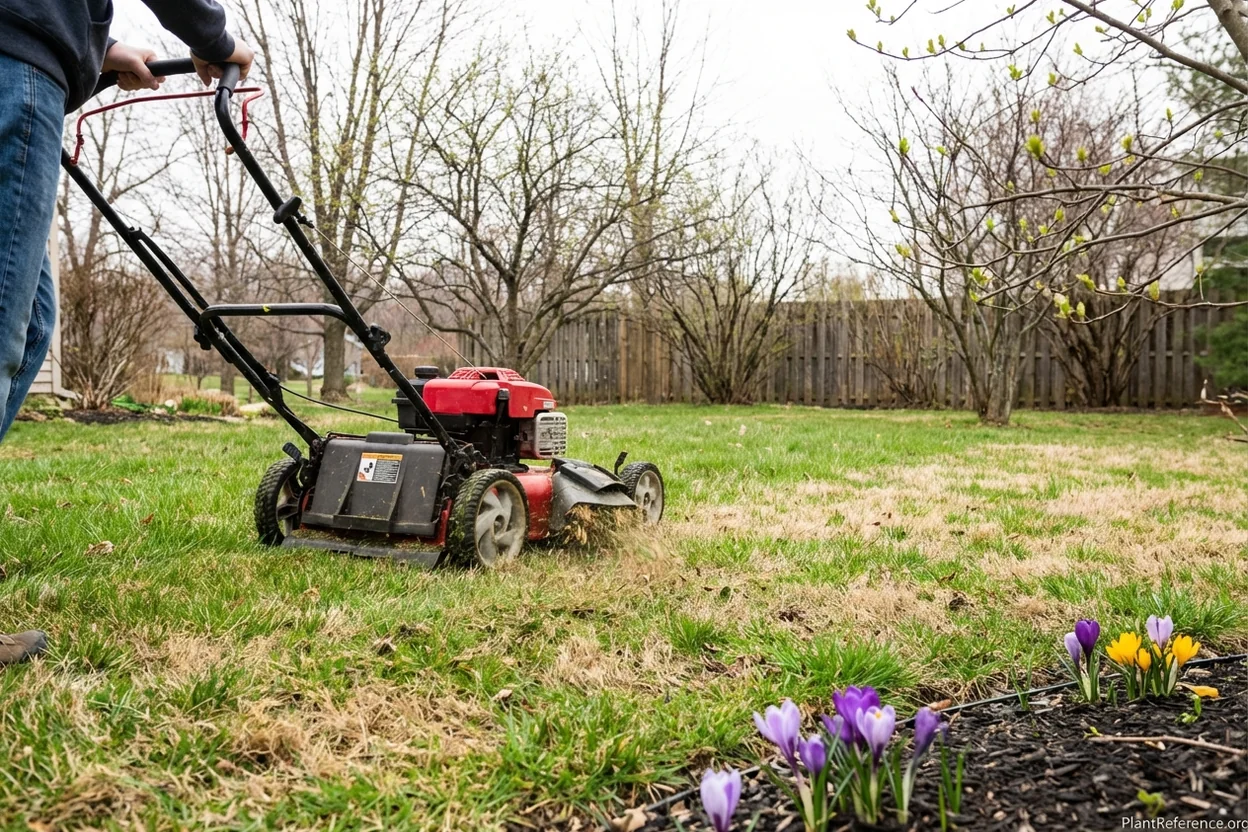
Mow for the first time when grass growth reaches about a third above your target height. Set the mower at 2.5-3 inches (6-8 cm) for this initial cut to remove winter-damaged tips and stimulate tillering. Make sure the blade is sharp — dull blades tear cold-stressed tissue and invite disease. Best Grass for Your Climate Zone: The Complete Selection Guide
Post-Emergent Broadleaf Herbicide (Optional, April)
If dandelions, clover, or ground ivy are present, apply a selective broadleaf herbicide (2,4-D or triclopyr-based "three-way" blend) when daytime temperatures reach 60°F and weeds are actively growing. Spray on a calm, dry day. Do not apply within 3 weeks of seeding.
Lime or Sulfur (Per Soil Test)
If your soil test shows pH below 6.0, apply pelletized lime per the lab's recommendation. If pH is above 7.0, apply eleite sulfur. Allow 6-8 weeks for pH adjustment before seeding.
Late Spring: May
Growth is accelerating. Mowing frequency increases and irrigation may become necessary.
Mowing Ramps Up
By May, cool-season grass enters its peak spring growth. You may need to mow every 4-5 days to stay within the one-third rule. Raise the mowing height to 3-3.5 inches (8-9 cm) as temperatures climb. Always return clippings — they decompose quickly and recycle up to 1 lb of nitrogen per 1,000 sq ft (0.5 kg per 93 sq m) annually. Raised Bed Weeds: Prevention Strategies and Control Methods
Light Spring Fertilizer (Optional)
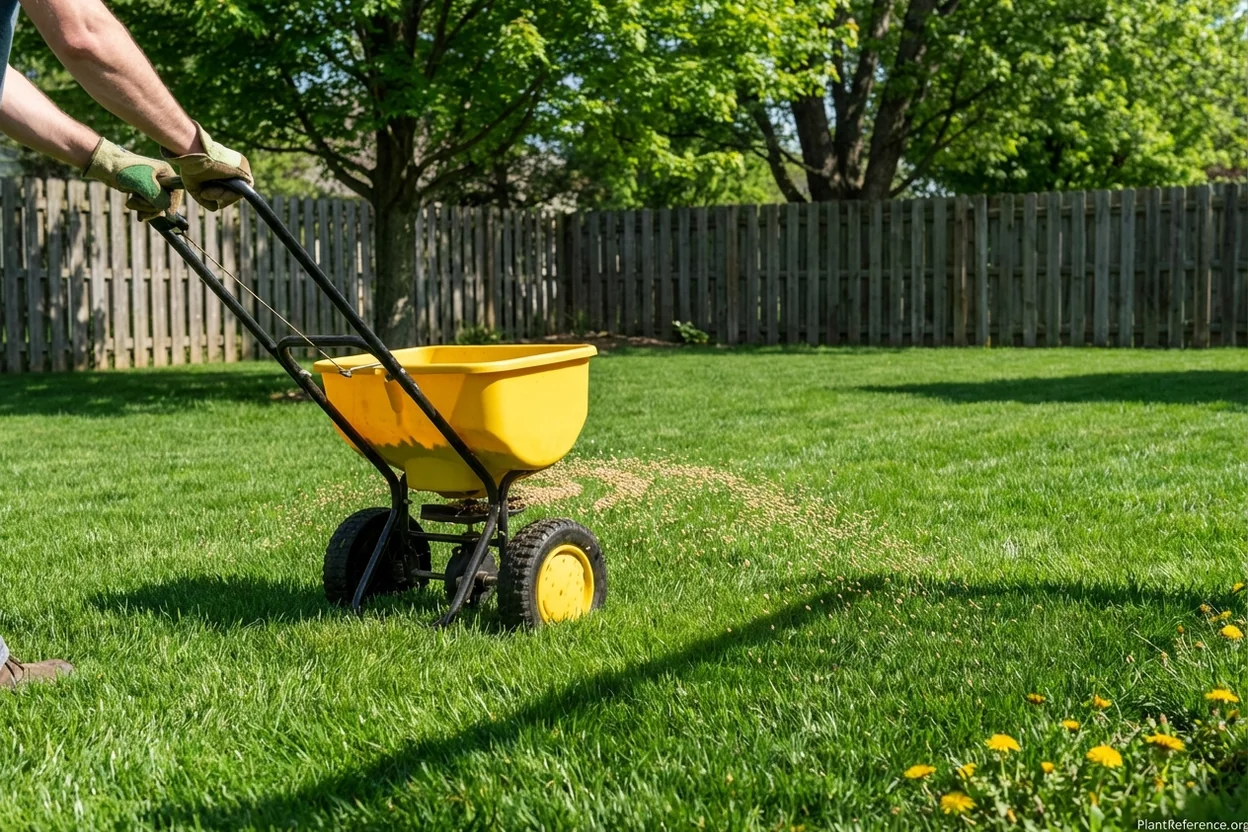
Apply 0.5-1 lb of nitrogen per 1,000 sq ft only if the lawn appears thin, pale, or slow to fill in. Use a slow-release organic formula to avoid the rapid flush of growth that fast-release synthetics create. Most cool-season lawns do NOT need heavy spring fertilization — the fall application from the previous year carries them through spring. Over-fertilizing in spring produces excessive top growth, increases mowing frequency, and depletes carbohydrate reserves the plant needs for summer survival.
Grub Preventive (May Through Mid-July)
Apply chlorantraniliprole (GrubEx) any time from May through mid-July as a preventive treatment. This product kills grub larvae as they hatch and begin feeding, but it must be in place before eggs hatch. Water in with 0.5 inches of irrigation after application. Chlorantraniliprole has very low toxicity to mammals, birds, and pollinators — it is the safest synthetic grub control available. The Complete Guide to Raised Bed Gardening for Beginners (2025)
Summer: June Through August
Summer is survival mode for cool-season grass. Your job is to reduce stress, not push growth.
Raise Mowing Height
Increase mowing height to 3.5-4 inches (9-10 cm) for all cool-season species. The extra blade length shades soil, reduces surface temperature by up to 10°F, and cuts evaporation. This single adjustment reduces water demand more than any irrigation strategy. Mowing frequency drops to every 7-14 days as growth slows in heat.
Water Deeply and Infrequently
Apply 1-1.5 inches (2.5-4 cm) of water per week including rainfall, delivered in 2-3 deep sessions rather than daily sprinkles. Deep watering pushes roots downward; shallow watering keeps them near the surface where they are vulnerable to heat. Water between 6-8 AM to minimize evaporation and allow foliage to dry before nightfall.
If drought forces a choice, you can let cool-season grass go dormant. A healthy lawn survives 4-6 weeks of dormancy without permanent damage. Apply 0.5 inches of water every 2-3 weeks to keep crowns alive during extended drought, but do not fertilize or try to force green growth on dormant turf. Raised Bed Soil Settling and Compaction: Prevention and Solutions
Do NOT Fertilize
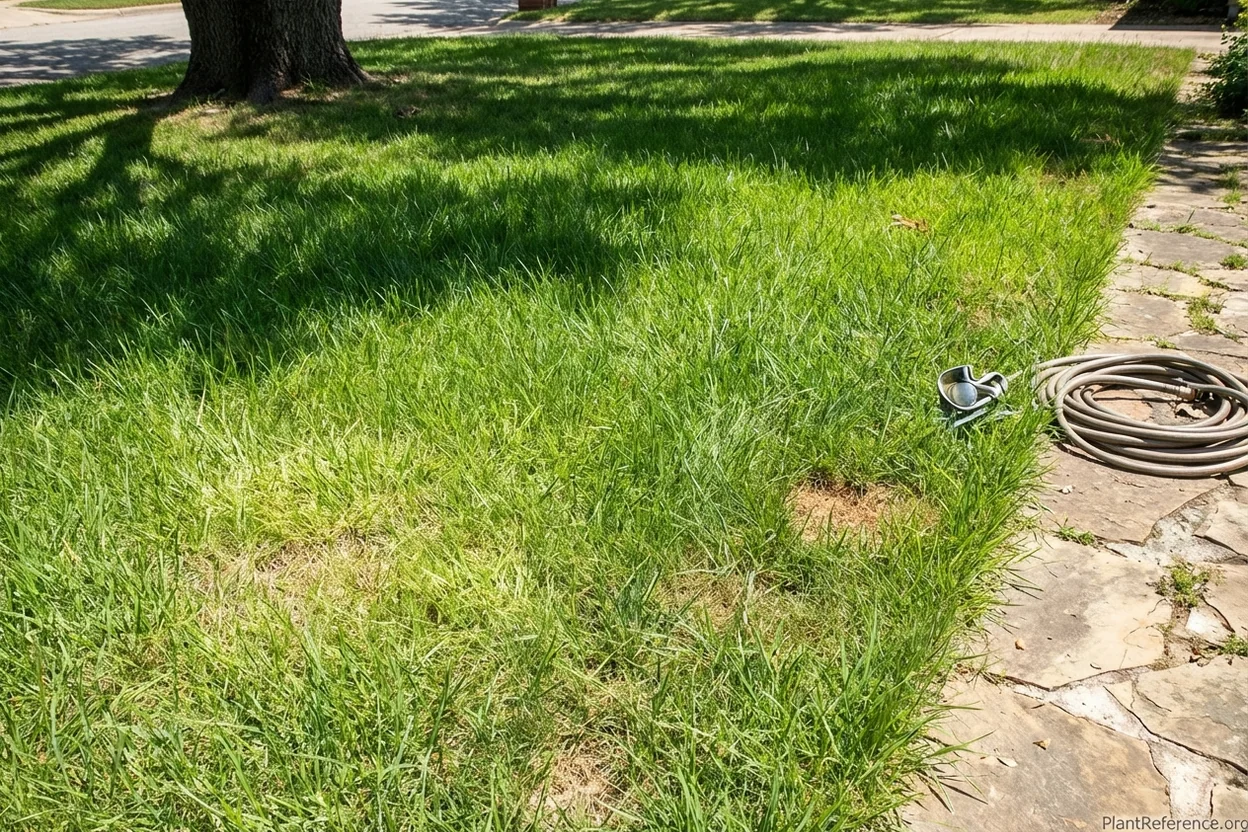
Nitrogen applied during summer heat drives weak, succulent top growth that is highly susceptible to brown patch and other fungal diseases. Cool-season grass is not actively building roots during hot weather — fertilizer applied now is wasted or actively harmful. The exception is a light application of iron (chelated iron spray) for cosmetic greening without stimulating growth.
Monitor for Disease and Pests
Watch for brown patch (circular tan patches, worse after evening watering and heavy nitrogen), dollar spot (silver-dollar-sized bleached spots on nitrogen-deficient turf), and chinch bugs (irregular brown patches expanding outward in sunny, dry areas that do not respond to watering). Scout for grubs in late August using the cut-and-flip method — cut a 1-square-foot flap of sod 3 inches deep and count larvae. Treatment threshold is 8-10 grubs per square foot for healthy lawns. Poor Drainage in Raised Beds: Causes and Fixes for Waterlogged Soil
The Most Important Month: September
If you only do lawn care one month per year, make it September. This is when cool-season grasses enter their most productive growth period — soil is still warm from summer, air temperatures are cooling, and the grass shifts into overdrive building roots, tillers, and carbohydrate reserves for winter.
Core Aeration
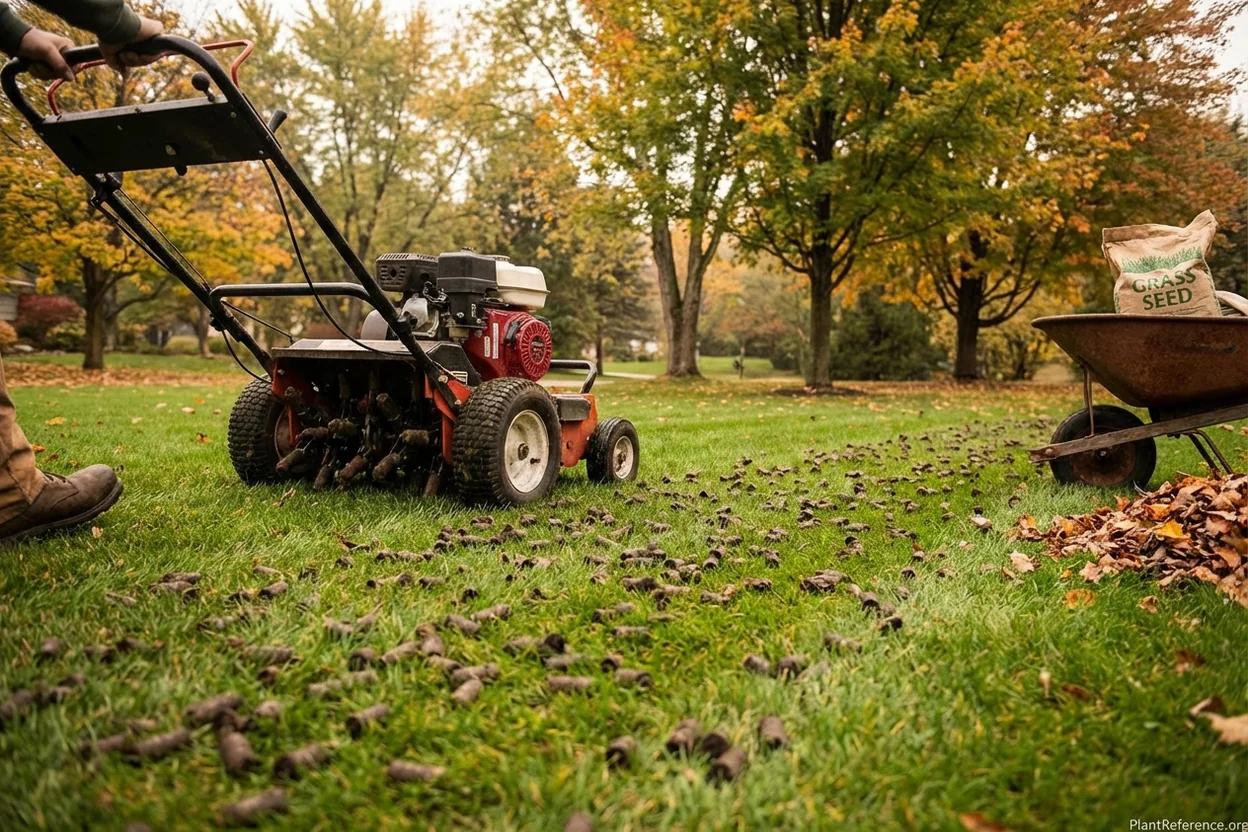
Rent a core aerator (not a spike aerator) and pull plugs across the entire lawn. Core aeration relieves compaction, opens channels for air, water, and nutrients to reach the root zone, and creates ideal microsites for overseeding. Leave the soil plugs on the surface — they break down within 2-3 weeks and reincorporate naturally.
Aerate when soil is moist but not saturated. Make two passes in perpendicular directions for the best coverage. Focus extra passes on high-traffic areas and zones that pond water.
Overseed
Spread seed immediately after aeration. The holes created by the aerator provide perfect seed-to-soil contact. For 🌿Festuca arundinacea tall fescue lawns, overseed at 5-8 lbs per 1,000 sq ft. For 🌿Poa pratensis Kentucky bluegrass, use 2-3 lbs per 1,000 sq ft. Keep newly seeded areas consistently moist (light watering 2-3 times daily) for the first 3-4 weeks until germination is complete. Best Soil Mix for Raised Beds: Creating the Perfect Growing Medium
Do NOT apply pre-emergent herbicide if you are overseeding — it will kill the new grass seedlings. If crabgrass is a concern, use mesotrione (Tenacity) as the only pre-emergent safe for new seedings.
Primary Fall Fertilizer
Apply 1 lb of nitrogen per 1,000 sq ft in mid-to-late September. This is the single most important fertilizer application of the year for cool-season grass. Fall nitrogen fuels root growth, tillering, and carbohydrate storage that carries the lawn through winter and into spring green-up. Use a slow-release or organic source for sustained feeding over 6-8 weeks.
Fall Finish: October Through November
October: Second Fertilizer and Weed Control
Apply a second fall fertilizer at 0.5-1 lb of nitrogen per 1,000 sq ft in mid-October. If not overseeding, apply a fall pre-emergent (dithiopyr) to prevent winter annual weeds like 🌿Poa annua annual bluegrass, chickweed, and henbit. Post-emergent broadleaf herbicide can also be applied in October — dandelions are actively transporting nutrients to roots in fall, making them more susceptible to systemic herbicides than at any other time of year.
November: Final Mow and Winterizer
Apply an optional "winterizer" fertilizer at 0.5-1 lb of nitrogen per 1,000 sq ft in early November before the ground freezes. This late application is absorbed by roots and stored as carbohydrates, fueling early spring green-up before you can even get a spreader on the lawn.
Lower the mowing height to 2.5-3 inches (6-8 cm) for the final 1-2 mows of the season. Cutting slightly shorter going into winter reduces the risk of snow mold and discourages vole activity (voles tunnel under tall matted grass during winter). Do not scalp — just bring it down to the low end of the recommended range.
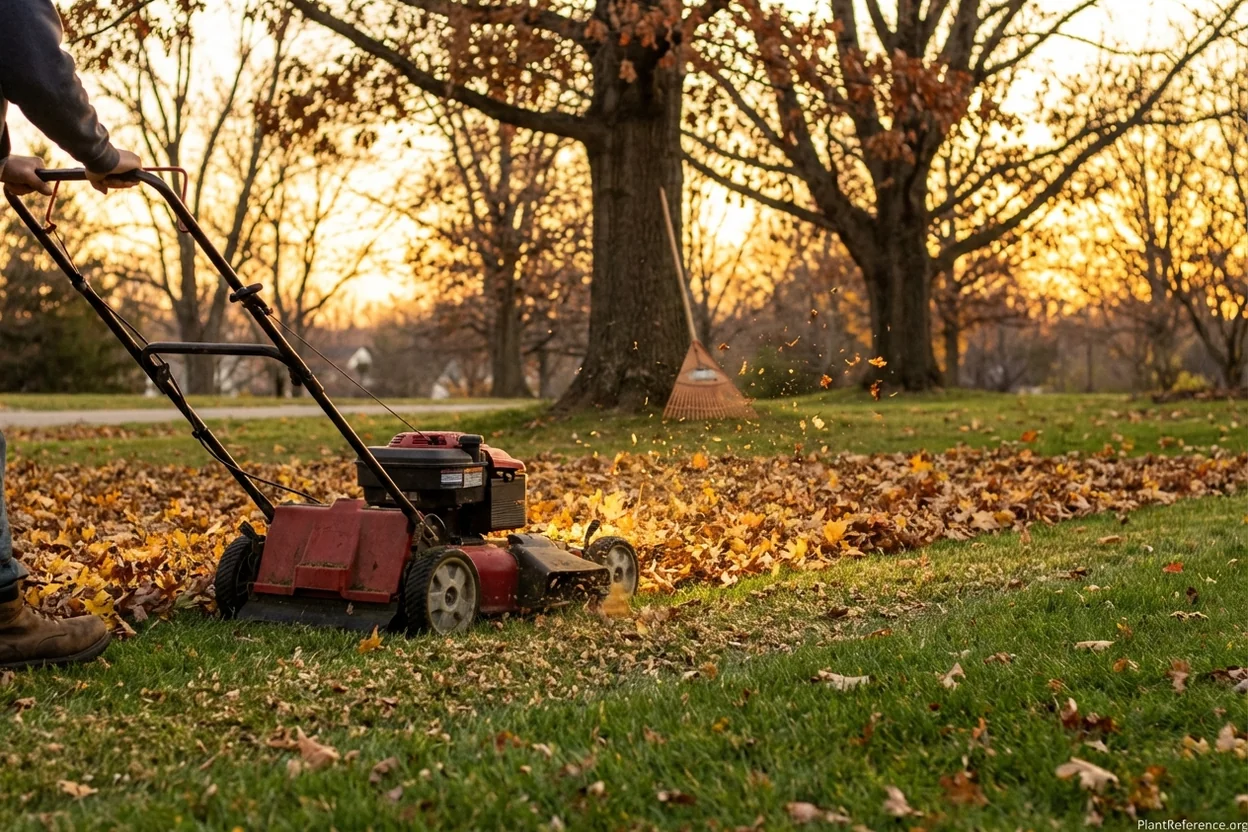
Remove fallen leaves by mulch-mowing thin layers or raking heavy accumulations. A thick mat of wet leaves smothers turf and creates ideal conditions for snow mold. If leaves are light enough, a mulching mower chops them into fine pieces that filter into the canopy and decompose over winter, adding organic matter to the soil.
Clean and winterize your irrigation system before the first hard freeze. Raised Bed Soil pH Problems: Testing, Adjusting, and Maintaining Balance
December: Season Wrap-Up
The lawn is dormant. Store your mower with a sharp blade and fresh fuel stabilizer (or drained fuel tank for carbureted engines). Review the season — note which areas performed poorly, where weeds broke through, and where drainage issues appeared. These observations inform next year's plan.
Do not apply any products. Do not mow. Let the lawn rest.
Quick-Reference Monthly Checklist
Month | Primary Task | Secondary Tasks | Soil Temp Trigger |
|---|---|---|---|
Jan-Feb | Plan and prep | Soil test, sharpen mower blade, avoid frozen turf | — |
March | Monitor soil temperature | Clean debris, apply lime/sulfur per soil test | Watch for 50-55°F |
April | Pre-emergent herbicide | First mow at 2.5-3 in, post-emergent broadleaf (optional) | 50-55°F sustained |
May | Mowing ramps up (every 4-5 days) | Light fertilizer (optional), grub preventive | Above 55°F |
June | Raise mowing height to 3.5-4 in | Deep watering begins, monitor for disease | — |
July-Aug | Stress management | Water deeply, no fertilizer, scout for grubs/chinch bugs | — |
Sept | Aerate + overseed + fall fertilizer | Lower mowing height to 3-3.5 in | Soil cooling below 75°F |
October | Second fertilizer, fall pre-emergent | Post-emergent broadleaf herbicide | — |
November | Final mow (2.5-3 in), winterizer | Mulch-mow leaves, winterize irrigation | Before ground freeze |
December | Season complete | Store mower, review notes | — |
How to Build a Raised Garden Bed: Step-by-Step Construction Guide
Frequently Asked Questions
Reading about plants and recognising them are different skills. These three build the second.
- Daily PlantIdentify the day’s mystery plant from a close-up photograph.
- Keyed OutWork a dichotomous key, lead by lead, to name a hidden specimen.
- Name That PlantName a specimen from botanical clues dealt hardest first.
Free to play, no account needed
Tagged with
Aisha manages a small tropical nursery on the east side of Houston, specializing in plants that can handle the Gulf Coast's humidity, heat, and unpredictable flooding. She studied horticulture in college and worked at a wholesale grower before opening her own operation. Growing up, her parents kept a kitchen garden with okra, bitter gourd, and curry leaf plants—a tradition she's continued. Houston's subtropical climate lets her grow things most of the country can't, but it also means dealing with fungal issues, standing water, and summers where it's too hot for even tomatoes. Aisha writes about tropical and subtropical plant care, humidity management, and working with heavy clay soils.