Image 1 of 18
1 / 18
Plant Reference
Ilex, Genus, ×, Hybrid, meserveae, Species,
- Genus & species
- Hybrid
blue-leaved hybrid holly
Hybrid of garden origin — {Ilex aquifolium} (Europe, western Asia, northern Africa) × {Ilex rugosa} (Japan and Sakhalin); the hybrid was developed by Kathleen Meserve at her Long Island, New York property during the 1950s and 1960s
Overview
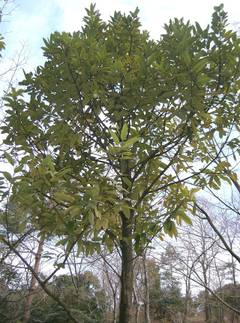
Ilex × meserveae is an upright broadleaf evergreen hybrid shrub in the family Aquifoliaceae growing 6–10 feet (1.8–3 m) tall and 6–8 feet (1.8–2.4 m) wide from a multi-stemmed base that produces a dense rounded to pyramidal canopy. The hybrid is the cross between the European English holly I. aquifolium (the species type with the Christmas-holly visual association and the limited cold hardiness to USDA zone 6) and the Japanese alpine holly I. rugosa (a low-growing prostrate species native to the cold mountain regions of Japan and Sakhalin Island and reliably hardy to USDA zone 3). The cross was made by Kathleen Meserve, an amateur plant breeder working at her property on Long Island, New York during the 1950s and 1960s — Meserve crossed the two species with the goal of producing a holly with the ornamental foliage and red berries of the European parent and the extreme cold hardiness of the Japanese parent, and the resulting hybrid sustains both traits and supports holly cultivation across USDA zone 4 (and into zone 3 with siting protection) where the European species cannot reliably overwinter. The hybrid was named in honor of Kathleen Meserve when it was formally described, and the resulting cultivars are now the standard cold-hardy hollies in the eastern North American nursery trade. Leaves are blue-green to dark blue-green, glossy, ovate, spiny-margined, and 1–2 inches (2.5–5 cm) long, and the foliage is carried on dark purple stems that contrast with the blue-green leaves and that are a reliable field character of the hybrid. White tiny 4-petaled flowers 0.2 inch (5 mm) across open in axillary clusters in May and June across a 2–3 week bloom period, and the hybrid is dioecious — male and female flowers are carried on separate cultivars. Female cultivars 'Blue Princess' and 'Blue Girl' produce bright red berries 0.3 inch (8 mm) across that ripen in October and persist through winter, and male cultivars 'Blue Prince' and 'Blue Stallion' are sold as pollinator companions for the female cultivars and are planted within approximately 30 feet (9 m) of the female plants for reliable fruit set. Limitation: the dioecious sex requirement means that solo female plants without a nearby male pollinator produce no berries, and gardeners who want the red winter berry display need to plant matched male and female cultivar pairs from the start. The hybrid calls for strictly acidic soil with a pH of 5.0–6.5 and develops chlorosis at higher pH levels. Holly leaf miner (Phytomyza ilicis) and scale insects are occasional pests as for the European parent species, and dormant-season horticultural oil supports control of overwintering scale populations. All parts contain saponins and ilicin and are toxic to humans, cats, and dogs if ingested. Drought-tolerant once established. Deer-resistant.
Native Range
Hybrid of garden origin — the cross between Ilex aquifolium (the European English holly native to western and southern Europe, northwestern Africa, and western Asia) and Ilex rugosa (the Japanese alpine holly native to the cold mountain regions of Japan and Sakhalin Island). The hybrid was developed by Kathleen Meserve, an amateur plant breeder working at her property on Long Island, New York during the 1950s and 1960s, with the breeding goal of combining the ornamental foliage and red berries of the European parent with the extreme cold hardiness of the Japanese parent. The hybrid bears Meserve's name in formal recognition of her breeding work, and the resulting cultivars are now the standard cold-hardy hollies in the eastern North American nursery trade.Suggested Uses
Used as an evergreen specimen shrub, formal hedge, foundation planting, screening shrub, and red-winter-berry plant for cold-climate eastern North American gardens at 6–8 foot (180–240 cm) spacing between plants in USDA zones 4 through 9. The blue-green foliage on dark purple stems supplies the year-round ornamental interest, and the bright red winter berries on the female cultivars ('Blue Princess', 'Blue Girl') supply the red winter berry display that has historically been the role of I. aquifolium in milder regions — the hybrid extends that red-berried holly role into USDA zones 4 and 5 where the European parent cannot reliably overwinter. Plantings call for matched male and female cultivar pairs because the dioecious sex requirement means solo female plants produce no berries without a nearby male pollinator. Alkaline soil positions are unsuitable because of the strict acid soil requirement of the hybrid. Gardens where children, cats, or dogs may access the foliage or red berries should account for the saponin and ilicin toxicity.How to Identify
Appearance
Size & Dimensions
Height6' - 10'
Width/Spread6' - 8'
Colors
Bloom Information
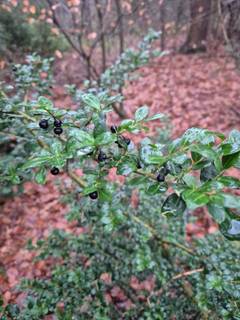
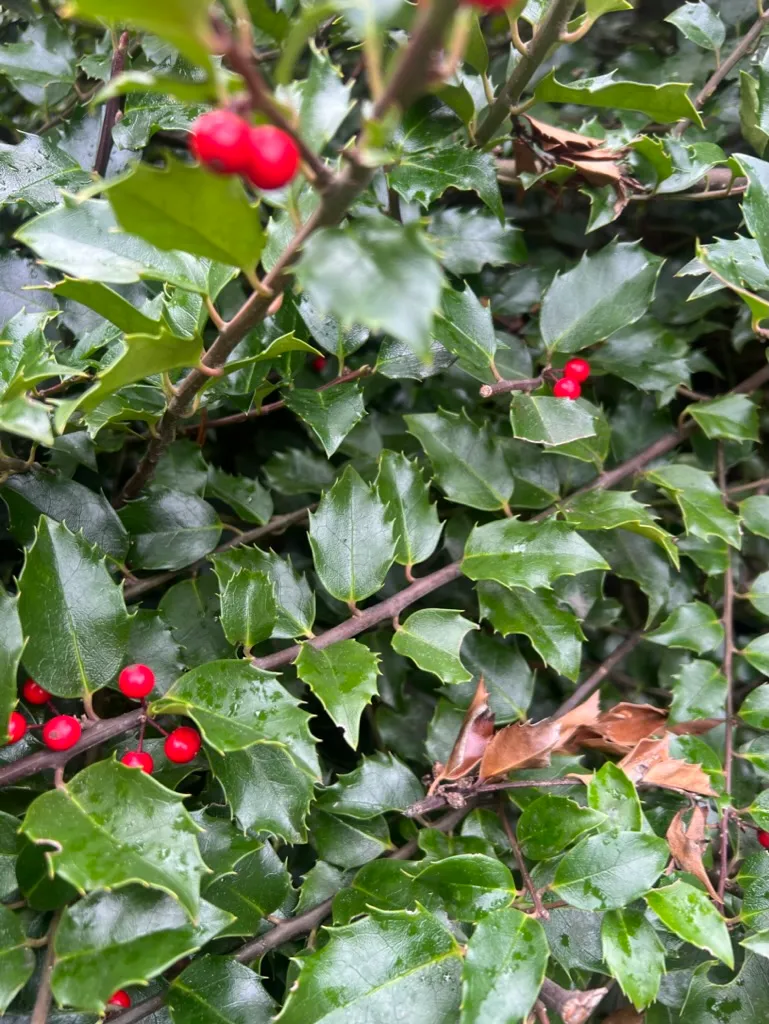
White tiny 4-petaled flowers 0.2 inch (5 mm) across open in axillary clusters in May and June across a 2–3 week bloom period. The hybrid is dioecious and male and female flowers are carried on separate cultivars — female cultivars 'Blue Princess' and 'Blue Girl' produce the berries while male cultivars 'Blue Prince' and 'Blue Stallion' produce only pollen and serve as pollinator companions within approximately 30 feet (9 m) of the female plants. Honeybees and other pollinators work the flowers for nectar during the spring bloom. Bright red berries 0.3 inch (8 mm) across ripen on female plants in October and persist through winter for a long red winter berry display.
Detailed Descriptions
Flower Description
white tiny 4-petaled flowers 0.2 inch (5 mm) across in axillary clusters in May and June; the hybrid is dioecious — female cultivars ('Blue Princess', 'Blue Girl') produce bright red berries 0.3 inch (8 mm) across that ripen in October and persist through winter, and successful fruit set requires a male cultivar pollinator ('Blue Prince', 'Blue Stallion') within approximately 30 feet (9 m) of the female plantFoliage Description
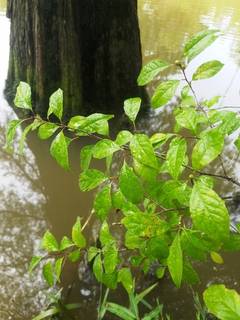
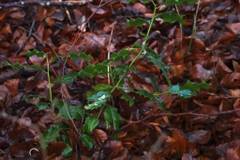
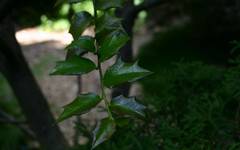
blue-green to dark blue-green glossy ovate spiny-margined leaves 1-2 inches (2.5-5 cm) long carried on dark purple stems that contrast with the blue-green foliage and that are a reliable identifying character of the hybrid; the foliage may bronze slightly in winter positions exposed to wind and full sun; evergreen year-roundGrowing Conditions
Sun Requirements
Requires 4-8 hours of direct sunlight daily
• Full Sun: 6+ hours of direct sunlight
• Partial Shade: 3-6 hours of direct sunlight
• Full Shade: Less than 3 hours of direct sunlight
Care & Maintenance
Care Guide
Site in part sun to full sun with 4–8 hours of direct sun per day in well-drained loam, clay, or sand soil with a strictly acidic pH of 5.0–6.5 — the hybrid develops chlorosis at higher pH levels and should not be planted in alkaline soils without acidification amendment. Drought tolerance develops once the root system is established. The hybrid is dioecious — for berry production on female cultivars ('Blue Princess', 'Blue Girl'), a male cultivar ('Blue Prince', 'Blue Stallion') is needed within approximately 30 feet (9 m). Holly leaf miner (Phytomyza ilicis) and scale insects are occasional pests, and dormant-season horticultural oil supports control of overwintering scale populations. All parts contain saponins and ilicin and are toxic to humans, cats, and dogs if ingested. Deer-resistant. Hardy in USDA zones 4–9 — the cold hardiness inherited from the Japanese parent I. rugosa supports cultivation in zones colder than I. aquifolium can tolerate.Pruning
Pruning is done in late winter (February or March) before new growth emerges or in midsummer (July) after the spring flush has hardened, to maintain shape and remove dead, damaged, or crossing branches. The hybrid tolerates formal hedging shearing for clipped surfaces. Late-summer and fall pruning is avoided because late-season cuts stimulate tender new growth that is vulnerable to winter cold damage in zones 4 through 6 where the hybrid is most often planted as a cold-hardy holly substitute.Pruning Schedule
Prune: February–March & July
early springsummer