Image 1 of 7
1 / 7
Plant Reference
Ilex, Genus, aquifolium, Species,
- Genus & species
English holly
Western and southern Europe, northwestern Africa, and western Asia — from Norway and the British Isles south to the Mediterranean and east to Turkey; mixed deciduous and coniferous woodlands, hedgerows, and scrubland from sea level to approximately 5,000 feet (1,500 m) elevation; naturalized and classified as invasive in the Pacific Northwest of North America
Overview
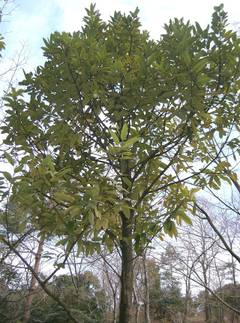
Ilex aquifolium is the English holly (European holly), an upright pyramidal evergreen tree in the family Aquifoliaceae growing 15–50 feet (4.5–15 m) tall and 15–25 feet (4.5–7.5 m) wide from a single trunk that develops a smooth gray bark with age. The specific epithet aquifolium is from the Latin acus meaning needle and folium meaning leaf, referring to the sharp marginal spines along the leaf edges, and the genus name Ilex is the classical Latin name applied originally to a different sharp-leaved Mediterranean evergreen (Quercus ilex, the holm oak) and later transferred to this genus. Leaves are dimorphic on mature trees — lower-canopy leaves carry more spines along the wavy margins as a defense against browsing herbivores at ground and lower-canopy levels, and upper-canopy leaves on mature trees often have smooth-margined leaves with reduced or absent spines because the browsing pressure at height is reduced. Leaves are glossy dark green on the upper surface, lighter green beneath, ovate, leathery, 1.5–3 inches (4–7 cm) long, and evergreen year-round. The species is dioecious — male and female flowers are carried on separate individuals — and female plants produce the bright red berries that drive both the species' ornamental winter display and its invasive seed spread; successful berry production requires a male pollinator within approximately 30 feet (9 m) of the female plant, and male and female cultivars are sold as matched pairs in the nursery trade for reliable fruiting. Limitation: the species is naturalized and classified as invasive in the Pacific Northwest of North America where bird-dispersed berries colonize native forest understory and displace native vegetation — Oregon and Washington list the species as a noxious weed and restrict its sale and planting under state regulations, and regional invasive species lists should be consulted before planting in jurisdictions where the species is restricted. Holly leaf miner (Phytomyza ilicis) creates serpentine mines on the upper leaf surface and is a cosmetic concern, and scale insects may colonize the stems. All parts contain saponins and ilicin and are toxic to humans, cats, and dogs if ingested — the bright red berries are particularly hazardous because the holiday-season visual associations and the bright color draw children, and ingestion of as few as 5–6 berries can produce severe gastrointestinal symptoms in young children. Thick leather gloves and long sleeves are warranted during any handling or pruning operation because the marginal leaf spines cut unprotected skin. Native to western and southern Europe, northwestern Africa, and western Asia. Drought-tolerant once established. Deer-resistant.
Native Range
Native to western and southern Europe, northwestern Africa, and western Asia, ranging from Norway and the British Isles south to the Mediterranean and east to Turkey, growing in mixed deciduous and coniferous woodlands, hedgerows, and scrubland from sea level to approximately 5,000 feet (1,500 m) elevation. The species is naturalized and classified as invasive in the Pacific Northwest of North America following 19th-century introductions as an ornamental Christmas-holly tree — Oregon and Washington list the species as a noxious weed and restrict its sale and planting under state regulations because the bird-dispersed berries have colonized native forest understory across the region and displaced native vegetation in coastal Douglas-fir and western hemlock forests.Suggested Uses
Used as an evergreen specimen tree, formal clipped hedging (the species tolerates repeated clipping for tight formal surfaces), screening planting, and traditional Christmas-holly source for cut-stem decorative use during the holiday season at 15–25 foot (4.5–7.5 m) spacing as specimen trees or 3–4 foot (0.9–1.2 m) spacing for hedging in USDA zones 6 through 9. The bright red berries on female plants supply the traditional Christmas-holly visual association and the year-round glossy dark green spiny evergreen foliage carries through all four seasons of garden interest. Jurisdictions where the species is classified as invasive (the Pacific Northwest of North America — Oregon and Washington list it as a noxious weed) are unsuitable because of the bird-dispersed seed colonization of native forest understory, and gardeners in those regions who want a holly specimen should consider male-only cultivars (which produce no berries) or native alternatives such as Ilex opaca (American holly). Gardens where children, cats, or dogs may access the bright red berries should account for the saponin and ilicin toxicity, and the berries are particularly hazardous to young children because the bright color and the holiday-season visual associations draw attention.How to Identify
Appearance
Size & Dimensions
Height15' - 50'
Width/Spread15' - 25'
Bloom Information
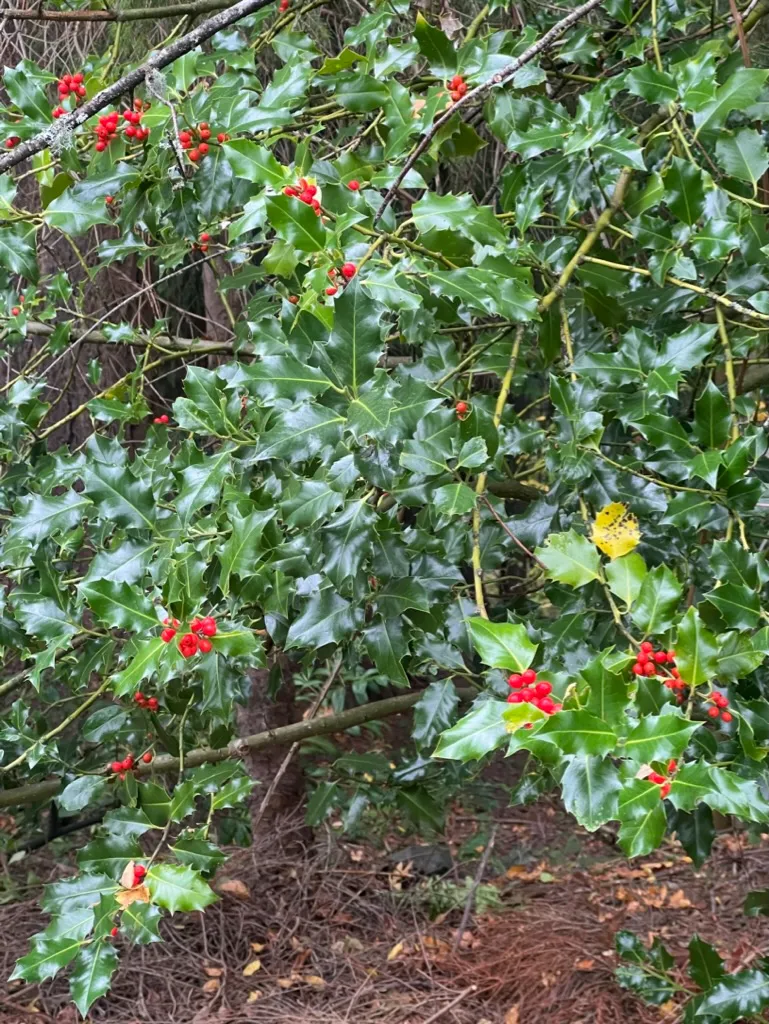
White to greenish-white tiny 4-petaled flowers 0.2 inch (5 mm) across open in axillary clusters in May and June across a 2–3 week bloom period. The species is dioecious and male and female flowers are carried on separate individuals — successful berry production requires a male pollinator within approximately 30 feet (9 m) of the female plant. Honeybees and other pollinators work the flowers for nectar during the spring bloom. Bright red berries 0.3–0.4 inch (8–10 mm) ripen on female plants in October and persist through winter, supplying the traditional Christmas-holly visual association.
Detailed Descriptions
Flower Description
white to greenish-white tiny 4-petaled flowers 0.2 inch (5 mm) across in axillary clusters in May and June; the species is dioecious — male and female flowers are carried on separate individuals — and female plants produce bright red berries 0.3-0.4 inch (8-10 mm) that ripen in October and persist through winter, with successful fruit set requiring a male pollinator within approximately 30 feet (9 m) of the female plantFoliage Description
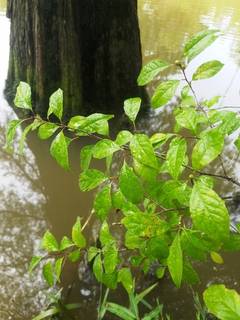
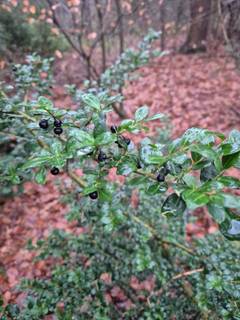
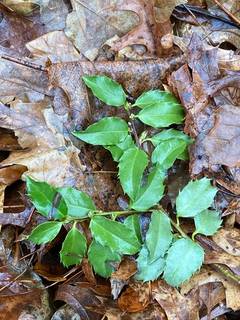
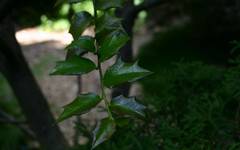
glossy dark green on the upper surface and lighter green beneath; ovate leathery leaves 1.5-3 inches (4-7 cm) long with wavy margins bearing sharp spines along the leaf edges; the leaves are dimorphic — lower-canopy leaves carry more spines along the wavy margins, and upper-canopy leaves on mature trees often have smooth-margined leaves with reduced or absent spines, a developmental response to reduced browsing pressure at height; evergreen year-roundGrowing Conditions
Sun Requirements
Requires 2-8 hours of direct sunlight daily
• Full Sun: 6+ hours of direct sunlight
• Partial Shade: 3-6 hours of direct sunlight
• Full Shade: Less than 3 hours of direct sunlight
Care & Maintenance
Care Guide
Site in part sun to full shade with 2–8 hours of direct sun per day in well-drained soil with a pH of 5.0–7.5. The species adapts to loam, clay, sand, and chalk soils across a wide light range and develops drought tolerance once the root system is established. The species is dioecious — for berry production on female plants, a male I. aquifolium pollinator is needed within approximately 30 feet (9 m). The species is classified as invasive in the Pacific Northwest of North America (Oregon and Washington list it as a noxious weed and restrict its sale and planting), and regional invasive species lists should be consulted before planting in jurisdictions where the species is restricted. Holly leaf miner (Phytomyza ilicis) and scale insects are common pests, and dormant-season horticultural oil supports control of overwintering scale populations. All parts contain saponins and ilicin and are toxic to humans, cats, and dogs if ingested — the bright red berries are particularly hazardous to children. Thick leather gloves and long sleeves are warranted during any handling or pruning operation. Deer-resistant. Hardy in USDA zones 6–9.Pruning
Pruning is done in late winter (February or March) before new growth emerges or in midsummer (July) after the spring flush has hardened, to maintain shape and remove dead, damaged, or crossing branches. The species tolerates hard renovation pruning and formal hedging — clipping for formal hedge surfaces is done 1–2 times per season at the same windows. Thick leather gloves and long sleeves are warranted during any pruning operation because the marginal leaf spines cut unprotected skin during handling.Pruning Schedule
Prune: February–March & July
early springsummer