Image 1 of 11
1 / 11
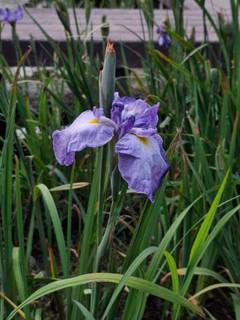
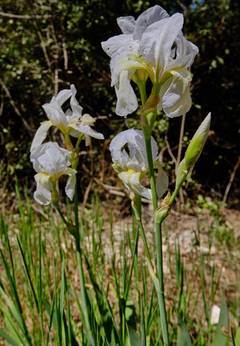
Species photo — your cultivar may vary
© Clémentine Fromageot, some rights reserved (CC-BY-SA) · GBIF
Iris, Genus, sibirica, Species, 'Caesar's Brother', Cultivar,
- Genus & species
- Cultivar
Caesar's Brother Siberian iris
Garden selection; species {Iris sibirica} is native to central and eastern Europe and temperate Asia
Overview
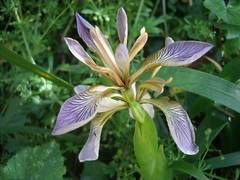
Iris sibirica 'Caesar''s Brother' is a Siberian iris cultivar grown for very dark violet-blue to near-black flowers, forming an upright clump 30–36 inches (75–90 cm) tall and 24–30 inches (60–75 cm) wide. Three-petaled flowers 3–4 inches (8–10 cm) across with deep violet-blue falls and standards and a small yellow-white signal patch at the base of each fall appear from mid-May through mid-June for about 3 weeks; flower color sits darker than the typical mid-blue Siberian iris and approaches near-black at full opening. Foliage is composed of medium green narrow sword-shaped leaves 24–30 inches (60–75 cm) long that arch outward from the central crown, holding form through summer and turning golden-brown after the first hard frost. Cultural advantages over tall bearded iris (I. germanica) include tolerance of moist to wet soils, no susceptibility to iris borer, no need for staking at this height, and clump intervals of 5–8 years between divisions rather than the 3–4 years typical of bearded iris. The clumping habit stays in place rather than running by rhizomes, so the plant remains where it is set. The species I. sibirica is native to wet meadows and stream margins of central and eastern Europe and temperate Asia. All parts contain irritant compounds that can cause skin and gastrointestinal reactions in pets and humans. Deer rarely browse iris foliage.
Native Range
The species Iris sibirica is native to central and eastern Europe and temperate Asia, with a range from northern Italy and the Alps east through Russia to Lake Baikal, where it grows in wet meadows, marshes, and along stream margins. I. sibirica 'Caesar''s Brother' is a garden selection introduced in the 1930s, chosen for very dark violet-blue flower color.Suggested Uses
Used in mixed perennial borders, along the margins of ponds and streams, in rain gardens with reliably moist soil, in mass plantings, and in containers of 7 gallons (26 liters) or larger. The arching grass-like foliage holds form through the summer growing season after the spring bloom finishes, contributing structural texture to mixed plantings. Combines with Hemerocallis, Astilbe, and grasses such as Calamagrostis for moist-border plantings.How to Identify
Appearance
Size & Dimensions
Height2'6" - 3'
Width/Spread2' - 2'6"
Colors
Bloom Information
Flowers from mid-May through mid-June for approximately 3 weeks across USDA zones 5–7; bloom shifts about 2 weeks earlier in zone 8 and later in zone 4. Very dark violet-blue to near-black flowers with yellow-white signal patches. Carries no perceptible fragrance.
Detailed Descriptions
Flower Description
Very dark violet-blue to near-black with small yellow-white signal patches at the base of the fallsFoliage Description
Medium green narrow sword-shaped leaves 24-30 inches (60-75 cm) long arching from the central crownGrowing Conditions
Sun Requirements
Requires 5-10 hours of direct sunlight daily
• Full Sun: 6+ hours of direct sunlight
• Partial Shade: 3-6 hours of direct sunlight
• Full Shade: Less than 3 hours of direct sunlight
Care & Maintenance
Care Guide
Plant in a site receiving 5 or more hours of direct sun daily; clumps tolerate light shade but flower count drops below 5 hours. Soil should be moist to wet, slightly acidic to neutral (pH 5.5–7.0), and tolerates clay better than tall bearded iris. Water during the first season of establishment and during prolonged summer drought thereafter. Top-dress with compost in early spring; the plant responds to moderate fertility. Lift and divide only when the clump center dies out, typically every 5–8 years, in early fall or just after spring bloom finishes.Pruning
Cut spent flower stalks at the base after bloom finishes in late June if seed-pod development is not wanted. Cut all foliage to 2 inches (5 cm) above the crown in late autumn after the leaves brown, or in early March before new growth pushes; the golden-brown autumn foliage may be left standing through winter for cold-season form.Pruning Schedule
Prune: March & November
fallearly spring
Container Growing
Suitable for container growing
Minimum container size: 7 gallons