Monarda, Genus,
- Genus
beebalms and bergamots
Overview
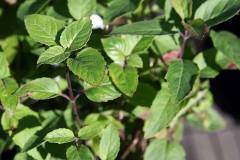
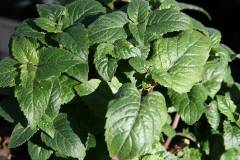
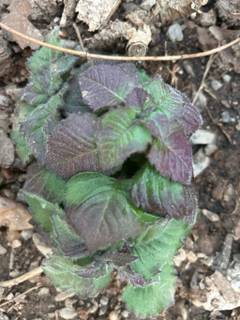
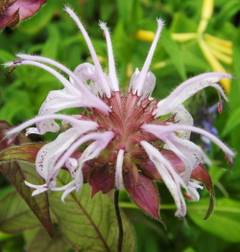
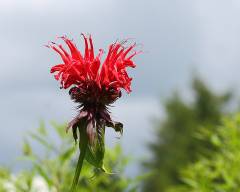
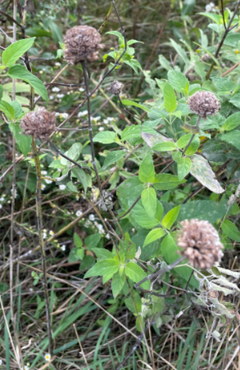
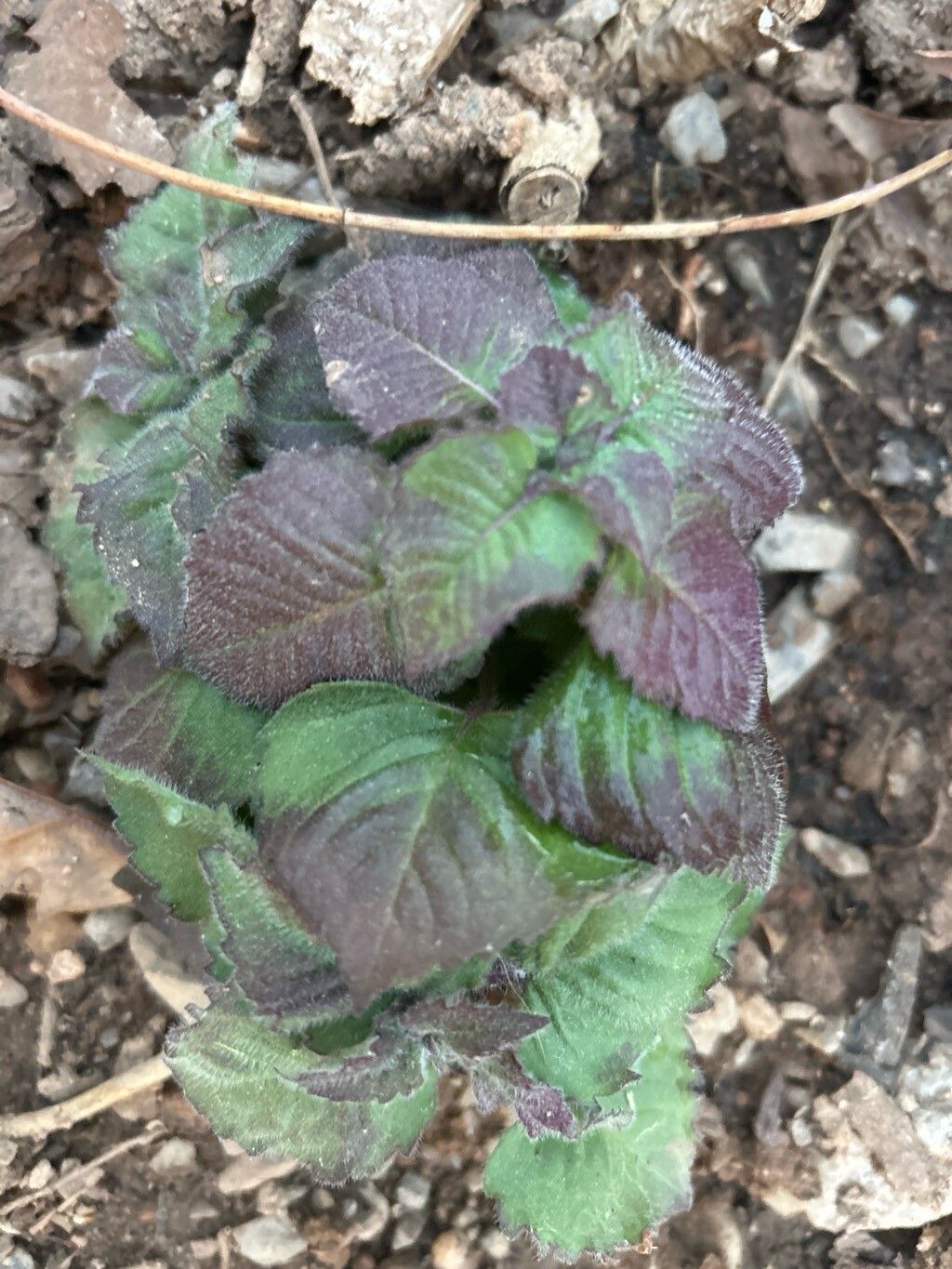
Monarda is a genus of about 20 species of annual and perennial herbs in the mint family (Lamiaceae), known as beebalms and wild bergamots, native to North America. Plants grow 1–4 feet (30–120 cm) tall on square stems carrying aromatic, toothed leaves that release a strong, citrus-like or oregano-like scent when crushed. Tubular two-lipped flowers, 1–1.5 inches (2.5–4 cm) long, are packed into dense whorled heads at the stem tips, in red, pink, purple, and white, often above a ring of colored bracts. The genus grows in prairie, meadow, moist woodland edge, and streambank across much of the continent. Plants spread by shallow rhizomes to form widening clumps and draw bees, butterflies, and hummingbirds to the open heads. Powdery mildew often coats the foliage in late summer, especially in dry soil or crowded, still air. M. didyma, scarlet beebalm, and M. fistulosa, wild bergamot, are grown in pollinator and native gardens, and the leaves of several species are brewed as herbal tea.
Native Range
The genus is native to North America, ranging across the United States, southern Canada, and northern Mexico. Monarda grows in prairie, meadow, moist woodland edges, and along streams and ditches. Plants occupy both sunny, dry sites and moister, partly shaded ground depending on species.Suggested Uses
Monarda is grown in pollinator gardens, herbaceous borders, meadow plantings, and herb gardens, spaced 18–24 inches (45–60 cm) apart. The flowers draw bees, butterflies, and hummingbirds, and the seed heads feed birds into winter. The aromatic leaves of several species are used for herbal tea.How to Identify
Appearance
Size & Dimensions
Height1' - 4'
Width/Spread1' - 3'
Bloom Information
Flowering runs through summer, roughly June through September, with the whorled heads opening over several weeks at each stem tip. Removal of spent heads brings on a second, lighter flush in some species. Bloom is heaviest in full sun on moist soil.
Detailed Descriptions
Flower Description
red, pink, purple, to whiteFoliage Description
green to grey-greenGrowing Conditions
Sun Requirements
Requires 4-10 hours of direct sunlight daily
• Full Sun: 6+ hours of direct sunlight
• Partial Shade: 3-6 hours of direct sunlight
• Full Shade: Less than 3 hours of direct sunlight
Care & Maintenance
Care Guide
Plants grow in full sun to part shade on fertile, moist, well-drained loam, clay, or sandy soil at a pH of 6.0–7.0. Steady moisture limits the powdery mildew that often coats the foliage in late summer, and open spacing with air movement reduces it further. Established clumps withstand short drought but flower most freely with even moisture. Shallow rhizomes spread the clumps outward, which are lifted and divided every two to three years to control spread and renew vigor. Mildew-resistant cultivars hold cleaner foliage in humid climates.Pruning
Stems are cut to the base after flowering, or in late winter where the seed heads are left for birds. Removal of faded heads through summer lengthens the bloom and limits self-seeding. Clumps are divided in spring every two to three years to curb spread and clear mildew-prone old growth.Container Growing
Suitable for container growing