Image 1 of 18
1 / 18
Plant Reference
Monarda, Genus, didyma, Species,
- Genus & species
bee balm
Eastern North America (Maine to Michigan, south to Georgia and Tennessee)
Overview
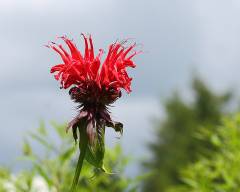
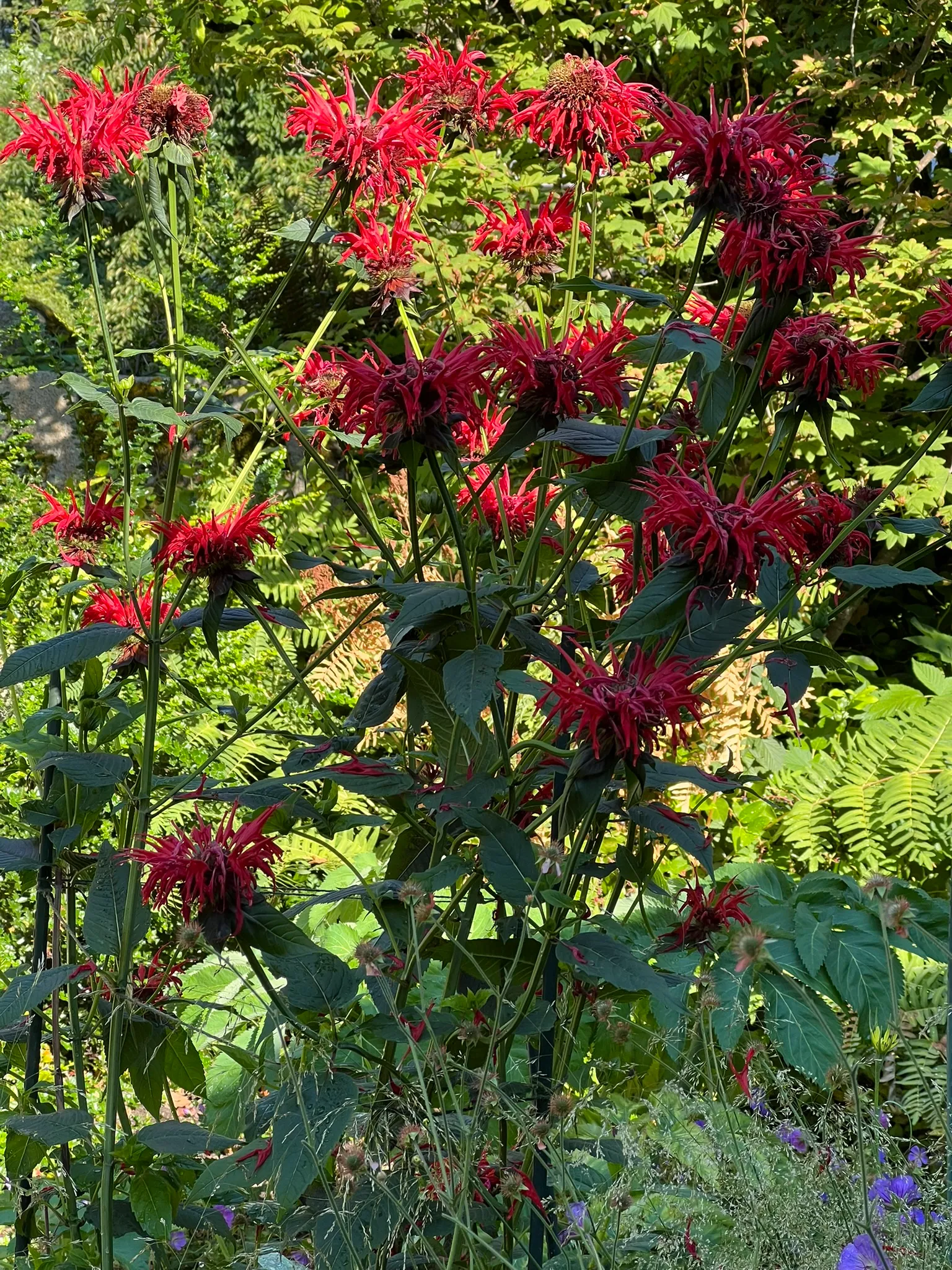
Monarda didyma is bee balm (Oswego tea), a deciduous perennial growing 24-48 inches (60-120 cm) tall and 18-36 inches (45-90 cm) wide. Shaggy rounded terminal flower heads 2-3 inches (5-7 cm) of scarlet-red tubular two-lipped florets in summer (July-August). Cultivars in pink, lavender, purple, and white. Medium green lance-shaped aromatic opposite foliage on square stems — the bergamot-like scent is released when the leaves are crushed. In the mint family (Lamiaceae). Hummingbird-visited — the tubular florets are a primary hummingbird nectar source. The foliage was used as a tea substitute after the Boston Tea Party (1773). Named after Nicolás Monardes (1493-1588), Spanish physician. Spreads aggressively by stolons — the center of old clumps dies out while the edges expand (divide every 2-3 years). Powdery mildew (Erysiphe spp.) disfigures the foliage by midsummer — the primary disease concern. Mildew-resistant cultivars: 'Jacob Cline' (red), 'Raspberry Wine' (wine-red), 'Marshall's Delight' (pink). Consistent moisture — the foliage wilts in drought. Cut back by one-half in early June for shorter bushier plants. Non-toxic (the leaves are edible as tea). Deer-resistant (aromatic). Native. Full sun to partial shade. Zones 4-9. Growth rate is fast.
Native Range
Native to eastern North America (Maine to Michigan, south to Georgia and Tennessee), growing in moist woodland edges, stream banks, and bottomlands.Suggested Uses
Commonly planted in cottage gardens, rain gardens, and pollinator plantings in zones 4-9. Hummingbird and butterfly nectar source. Choose mildew-resistant cultivars. Consistent moisture. Non-toxic (edible tea). Deer-resistant. Native.How to Identify
Appearance
Size & Dimensions
Height2' - 4'
Width/Spread1'6" - 3'
Bloom Information
Summer (July-August), lasting 5-6 weeks. Scarlet-red shaggy rounded flower heads (or pink/lavender/white in cultivars). Hummingbird-visited. Deadhead for extended bloom. Butterfly nectar source.
Detailed Descriptions
Flower Description
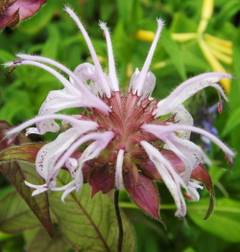
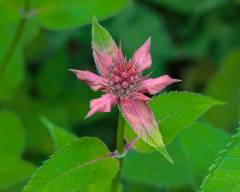
Scarlet-red (species); cultivars in pink, lavender, purple, and white; shaggy rounded terminal heads 2-3 inches (5-7 cm) with tubular two-lipped floretsFoliage Description
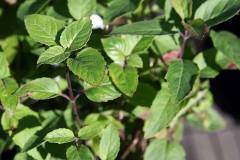
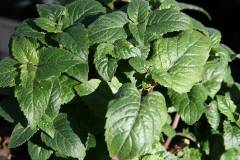
Medium green, lance-shaped to ovate, opposite, toothed, 3-5 inches (7-13 cm); strongly aromatic when crushed (bergamot-like scent); square stems (family trait)Growing Conditions
Sun Requirements
Requires 4-8 hours of direct sunlight daily
• Full Sun: 6+ hours of direct sunlight
• Partial Shade: 3-6 hours of direct sunlight
• Full Shade: Less than 3 hours of direct sunlight
Care & Maintenance
Care Guide
Full sun to partial shade. Consistent moisture — wilts in drought. Powdery mildew is the primary disease — choose mildew-resistant cultivars ('Jacob Cline,' 'Raspberry Wine'). Spreads by stolons — divide every 2-3 years. Cut back by one-half in June for bushier plants. Non-toxic (edible tea). Deer-resistant. Native. Zones 4-9.Pruning
Cut back by one-half in early June for shorter bushier plants. Deadhead spent flower heads in summer (August) for secondary bloom. Cut all foliage to the ground in fall (October) or early spring (March). Divide every 2-3 years — the center dies out.Pruning Schedule
Prune: March, June, August & October
late springsummerfallearly spring
Toxicity
Non-toxicPlanting Guide
Planting Methods & Timing
Planting Method
transplant
Indoor Start
8 weeks before last frost
Days to Maturity
90–120 days
Plant Spacing
18 inches