Monarda, Genus, punctata, Species,
- Genus & species
spotted horsemint
Overview
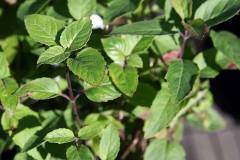
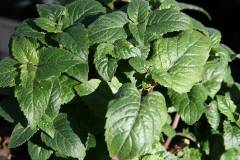
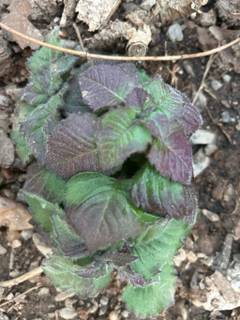
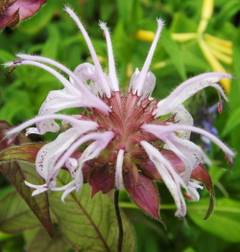
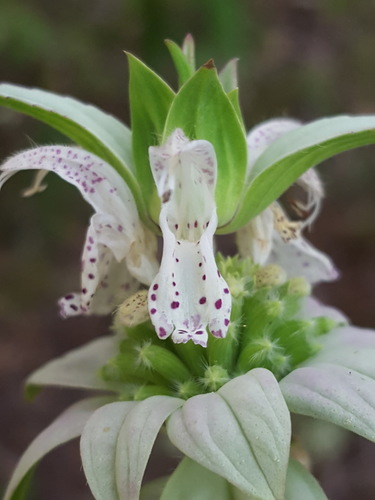
Monarda punctata is an aromatic, short-lived perennial in the mint family, 1-3 feet (30-90 cm) tall and 1-2 feet (30-60 cm) wide, with square stems and a strong thyme-like scent when the foliage is crushed. The lance-shaped, toothed leaves are 1-3 inches (2.5-8 cm) long and grayish-green. Flowers form in several stacked whorls up the stem, each whorl with small two-lipped flowers that are pale yellow heavily spotted with purple-brown. Beneath each whorl sits a ring of showy bracts in white, pink, or lilac that are more conspicuous than the flowers themselves. Bloom runs through summer into early autumn and draws large numbers of bees, wasps, and other pollinators. It grows in dry, sandy soils, dunes, prairies, and open fields across eastern and central North America. The high thymol content makes it strongly aromatic and unappealing to deer. Plants are short-lived but self-sow where conditions suit them.
Native Range
Monarda punctata is native to eastern and central North America, from the Atlantic coast and Great Lakes south to Texas and Florida. It grows in dry, sandy soils, dunes, prairies, and open fields.Suggested Uses
Used in pollinator gardens, sandy meadows, prairie plantings, and dry borders, spaced 12-18 inches (30-45 cm) apart. The aromatic foliage and long bract display suit naturalistic and herb plantings. It also grows in containers in free-draining mix.How to Identify
Appearance
Size & Dimensions
Height1' - 3'
Width/Spread1' - 2'
Bloom Information
Flowering runs from midsummer into early autumn, roughly July to September, with whorls opening from the lowest tier upward. The colored bracts hold their display longer than the small flowers. Bees, wasps, and other insects work the flowers steadily through the season.
Detailed Descriptions
Flower Description
pale yellow spotted purple, with pink to lilac bractsFoliage Description
grayish-greenGrowing Conditions
Sun Requirements
Requires 5-9 hours of direct sunlight daily
• Full Sun: 6+ hours of direct sunlight
• Partial Shade: 3-6 hours of direct sunlight
• Full Shade: Less than 3 hours of direct sunlight
Care & Maintenance
Care Guide
Grow in full sun in light, sandy, free-draining soil; lean, dry ground suits it better than rich beds. It tolerates drought and heat once established and needs little water. Hardy in USDA zones 3-8, it behaves as a short-lived perennial or biennial and often persists by self-sowing. Good airflow reduces the powdery mildew that can mark the foliage in humid sites. Wet, heavy soils shorten its life and encourage rot. No feeding is needed on poor soils.Pruning
Spent flowering stems are cut back after bloom to tidy the plant and allow some self-seeding. Stems can be left standing over winter for seed and insect shelter. Plants are cut to the ground in late winter before new growth.Container Growing
Suitable for container growing
Minimum container size: 2 gallons