Monarda, Genus, bradburiana, Species,
- Genus & species
eastern bee balm
Central and eastern United States from Indiana and Illinois south to Alabama and west to Oklahoma and Kansas
Overview
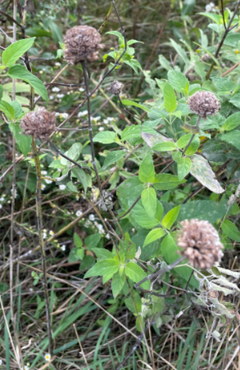
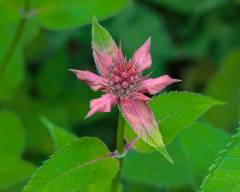
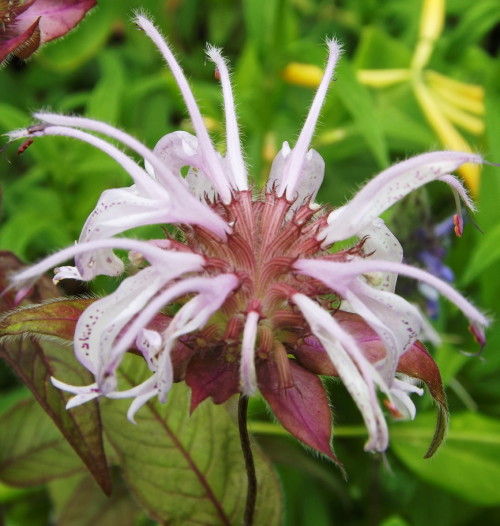
Monarda bradburiana is a clumping native bee balm of the central and eastern United States, growing 18–24 inches (45–60 cm) tall and equally wide. Pale pink to lavender-pink tubular flowers with purple-spotted throats are carried in dense whorled head-like clusters 2–3 inches (5–8 cm) across, surrounded by reddish-purple bracts; bloom runs from early May through mid-June for about 4 weeks, 4–6 weeks earlier than the commonly grown M. didyma and M. fistulosa. Foliage is composed of dark green ovate-lanceolate leaves 2–4 inches (5–10 cm) long with a strong oregano-mint aromatic profile when bruised; the species was named for the Scottish botanist John Bradbury, who collected in Missouri in 1809–1811. Three traits separate this species from M. didyma: powdery mildew resistance is high (most leaves remain unmarked through summer where M. didyma foliage is heavily silvered by August), the crown is non-stoloniferous and stays as a discrete clump rather than running 12–24 inches (30–60 cm) per season, and the plant tolerates dry to medium soils where M. didyma requires consistent moisture. Cultural needs are still narrower than other native perennials: full sun for full flowering, sharp drainage to avoid crown rot, and air movement to keep mildew minimal. The species is native to limestone glades and dry open woods. Hummingbirds, bumblebees, and small native bees visit the flowers. Deer rarely browse the aromatic foliage.
Native Range
Monarda bradburiana is native to the central and eastern United States, with a range from Indiana and Illinois south to Alabama and west to Oklahoma and Kansas, where it grows on limestone glades, in dry rocky open woods, and along bluff edges of the Ozark and Interior Highlands regions.Suggested Uses
Used in native and pollinator gardens, sunny mixed borders, prairie-style plantings, and on sloped sites with sharp drainage. Combines with Echinacea pallida, Penstemon digitalis, and short-grass natives such as Bouteloua curtipendula for a dry-meadow planting. Container culture in 5-gallon (19-liter) or larger pots with sharp-drained potting mix.How to Identify
Appearance
Size & Dimensions
Height1'6" - 2'
Width/Spread1'6" - 2'
Colors
Bloom Information
Flowers from early May through mid-June for approximately 4 weeks across USDA zones 5–7; bloom shifts about 2 weeks earlier in zone 8 and later in zone 4. Pale pink to lavender-pink with purple-spotted throats. Carries a strong oregano-mint fragrance from bruised foliage rather than the flowers themselves.
Detailed Descriptions
Flower Description
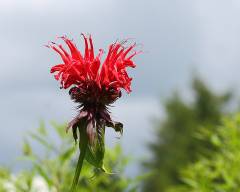
Pale pink to lavender-pink tubular flowers with purple-spotted throats in dense whorled head-like clusters 2-3 inches (5-8 cm) across, surrounded by reddish-purple bractsFoliage Description
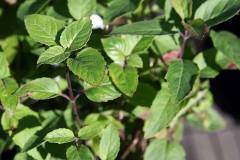
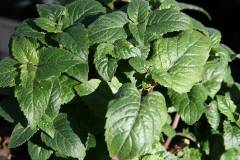
Dark green ovate-lanceolate aromatic leaves 2-4 inches (5-10 cm) longGrowing Conditions
Sun Requirements
Requires 5-10 hours of direct sunlight daily
• Full Sun: 6+ hours of direct sunlight
• Partial Shade: 3-6 hours of direct sunlight
• Full Shade: Less than 3 hours of direct sunlight
Care & Maintenance
Care Guide
Plant in a site receiving 5 or more hours of direct sun daily; flower count drops below 5 hours. Soil should be well-drained, neutral to slightly alkaline (pH 6.0–7.5), and lean to medium fertility — rich, wet, or heavy clay soils encourage crown rot, especially over winter. Water during the first season of establishment, then irrigate only during prolonged drought. Provide air movement around the plant; even a mildew-resistant species develops heavier mildew when crowded. Cut spent flower clusters to 8 inches (20 cm) above the crown after bloom finishes for a tidier summer mound; leave the seed heads through autumn for goldfinch foraging if the look suits the planting.Pruning
Cut spent flower clusters to 8 inches (20 cm) above the crown in mid- to late June after bloom finishes. Cut all stems to ground level after a hard frost in late autumn, or in early March before new growth pushes. Lift and divide every 4–5 years if the clump's center thins.Pruning Schedule
Prune: March, June & November
late springfallearly spring
Container Growing
Suitable for container growing
Minimum container size: 5 gallons