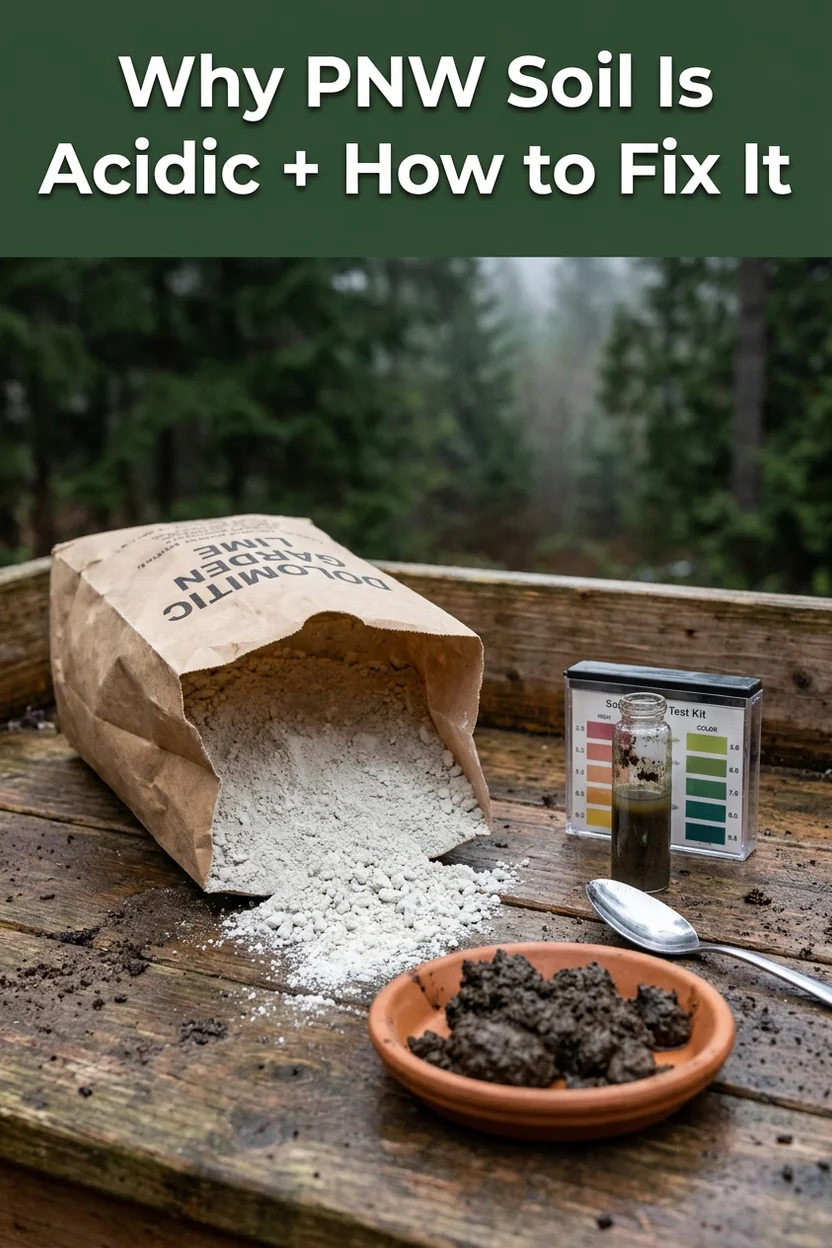
Why Pacific Northwest Soil Is Acidic + How to Fix It
Pets & Toxicity
Recorded toxicity for plants linked in this guide. An unknown status is not a safety assessment.
— Image © Plant Reference 2026
If you garden west of the Cascades, you have almost certainly fought acidic soil whether you knew it or not. The pale, stunted broccoli, the blueberries that thrive while the beets sulk, the lime recommendation stamped on every regional soil test—these all trace back to one process. Acidic soil in the Pacific Northwest is not a defect in your garden; it is the predictable chemical outcome of living under one of the rainiest temperate climates in North America.
Why Pacific Northwest Soil Turns Acidic
The mechanism is elegant and relentless. As rain falls through the atmosphere and percolates through soil rich in decomposing organic matter, it reacts with carbon dioxide to form carbonic acid (H₂CO₃)—the same weak acid that puts the fizz in carbonated water. This acid releases hydrogen ions into the soil solution.
Hydrogen ions are the problem. They are small, highly reactive, and they outcompete nutrient cations for space on the soil's clay and organic particles. With every rainstorm, hydrogen ions displace calcium (Ca²⁺) and magnesium (Mg²⁺), which then wash down past the root zone and out of reach. Over decades, this leaching strips the soil of its "base" nutrients and the pH steadily falls.
The maritime corridor from Portland through Seattle receives 35 to 60 inches (89 to 152 cm) of rain a year, most of it concentrated in the cool months when little is evaporating back out. That sustained downward flush is why western PNW soils so often test between pH 5.0 and 5.8—well below the 6.0 to 7.0 sweet spot most vegetables want. To understand how this fits the broader regional picture, see the Pacific Northwest Gardening Guide: Climate, Soil & Plant Selection.
How to Tell If Your Soil Is Too Acidic
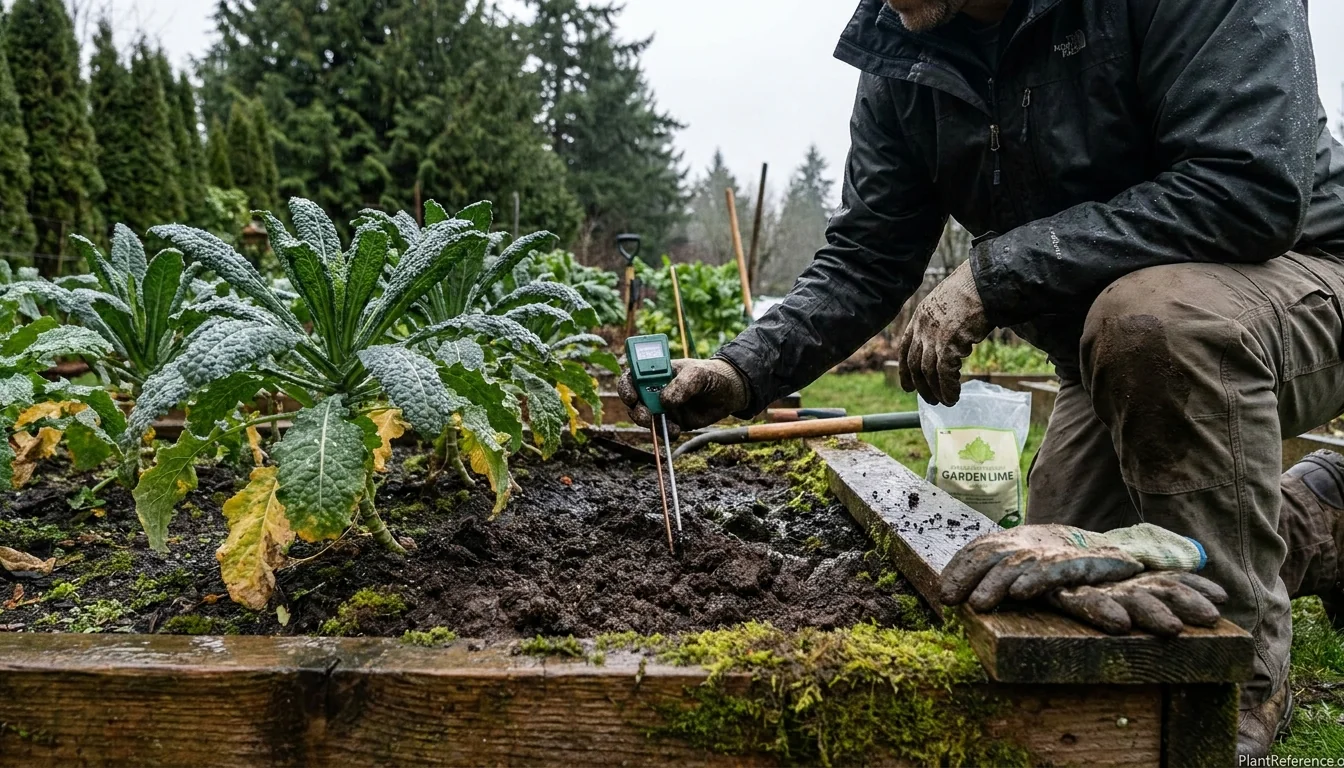
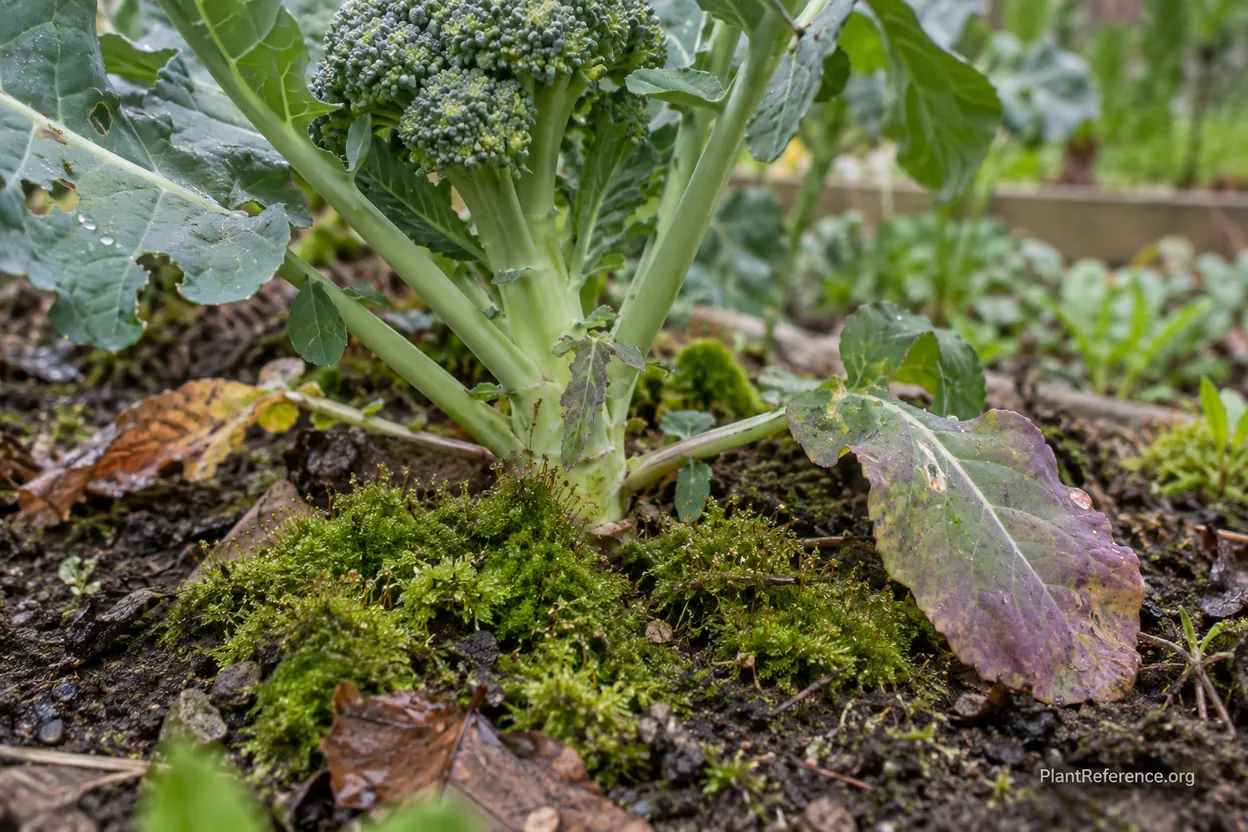
Plants tell you before any meter does. Chronically acidic soil produces slow, stunted growth despite adequate fertilizer, because the nutrients are present but chemically unavailable. Yellowing between leaf veins, poor response to nitrogen, and stubborn moss colonizing bare soil and lawn edges are all classic maritime symptoms.
Moss spreading aggressively across soil, paths, and lawn
Vegetables that stay small and pale despite regular feeding
Brassicas with persistent purple-tinged or yellow lower leaves
Beets, spinach, and lettuce that bolt or stall early
Wood ash or lime recommendations on every soil test you've run
Symptoms point you in the right direction, but you should never lime by guesswork. A soil test is the only way to know your starting pH and how far you need to move it. A simple home meter gives you a quick reading, while a mail-in lab test from your county extension office returns precise pH plus the calcium and magnesium levels that determine which kind of lime to use. If you garden in containers or beds, the Raised Bed Soil pH Problems: Testing, Adjusting, and Maintaining Balance guide walks through the testing routine in detail.
What Acidity Actually Does to Your Plants
Two distinct chemical failures happen as pH falls, and understanding both explains why acidity is so damaging.
The first is aluminum toxicity. Aluminum is abundant in most soils but harmlessly locked in mineral form at moderate pH. Once pH drops below 5.5, those aluminum minerals begin to dissolve, releasing soluble aluminum (Al³⁺) into the soil water. Aluminum is directly toxic to root tips—it stunts and thickens them, cripples their ability to explore for water and nutrients, and the damage compounds all season.
The second is phosphorus lockout. Phosphorus is essential for root development, flowering, and fruiting, but it is chemically fussy about pH. In acidic soil it binds tightly with iron and aluminum into compounds plants cannot absorb. You can spread all the bone meal you like; below pH 5.5 much of that phosphorus simply will not reach the plant. This is why acidity often masquerades as a phosphorus deficiency, and why the Nutrient Deficiencies in Raised Beds: Visual Diagnosis and Treatment symptoms can mislead you if you skip the pH test.
The practical upshot: in strongly acidic PNW soil, your plants are simultaneously poisoned by aluminum and starved of phosphorus, even in soil you've fertilized generously. Correcting pH fixes both at once, which is what makes lime such a high-leverage amendment.
How to Fix Acidic Soil With Lime
Liming raises pH by neutralizing hydrogen ions and replacing the calcium and magnesium that rain washed away. The choice of lime matters more in the PNW than almost anywhere else.
For most maritime gardens, dolomitic lime is the right call. Western Oregon and Washington soils are frequently magnesium-depleted, and dolomitic lime supplies both calcium and magnesium while raising pH. Use straight ground (calcitic) limestone only if a soil test shows your magnesium is already adequate, since excess magnesium can degrade soil structure over time.
Amendment | What It Does | Best Use in the PNW |
|---|---|---|
Dolomitic Lime | Raises pH, supplies calcium and magnesium | Default choice for magnesium-poor maritime soils |
Ground (Calcitic) Limestone | Raises pH, supplies calcium only | When a test shows magnesium is already sufficient |
Wood Ash | Raises pH fast, supplies potassium | Sparingly—15-25 lbs per 1,000 sq ft (6.8-11 kg) to avoid salt stress |
Elemental Sulfur | Lowers pH | Inland PNW alkaline soils, or acid-loving plants |
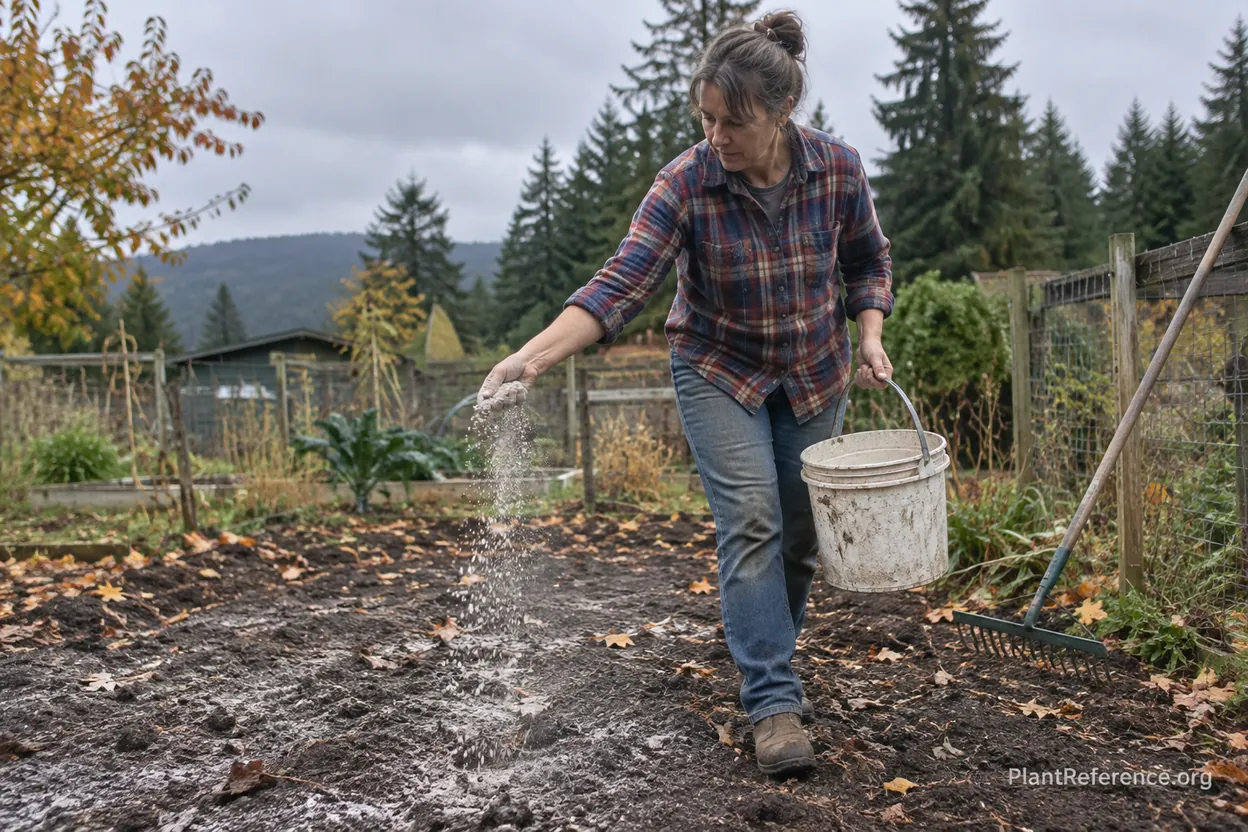
Timing is everything. Lime is only slightly soluble and reacts with soil over months, not days, so apply it in fall. Autumn application gives the lime the entire wet season to break down and shift pH before spring planting. Liming the morning you plant accomplishes almost nothing for that season's crop.
Rates depend on your current pH and soil texture, but a useful starting point for clay-rich maritime soils is 5-10 lbs per 100 sq ft (2.3-4.5 kg per 9.3 m²) to raise pH roughly half a point to a full point. Always confirm against your soil test recommendation. Incorporate lime into the top 6 inches (15 cm) of soil rather than leaving it on the surface, since it moves through soil very slowly on its own.
Adding organic matter helps too. Compost buffers pH and feeds the microbial life that keeps nutrients cycling, which is why annual compost is a cornerstone of the The Complete Guide to Raised Bed Gardening for Beginners (2025) approach. It will not replace lime when pH is genuinely low, but it makes every liming more effective and longer-lasting.
For gardeners battling the region's other signature soil problem—saturated, poorly draining ground—pairing lime with improved drainage pays off, because waterlogged roots cannot use corrected nutrients anyway. The Poor Drainage in Raised Beds: Causes and Fixes for Waterlogged Soil guide covers that side of the equation.
Plants That Prefer Acidic Soil
Before you lime the entire yard, remember that acidity is a feature for a large group of plants—many of them PNW signatures. Liming around these species actively harms them.
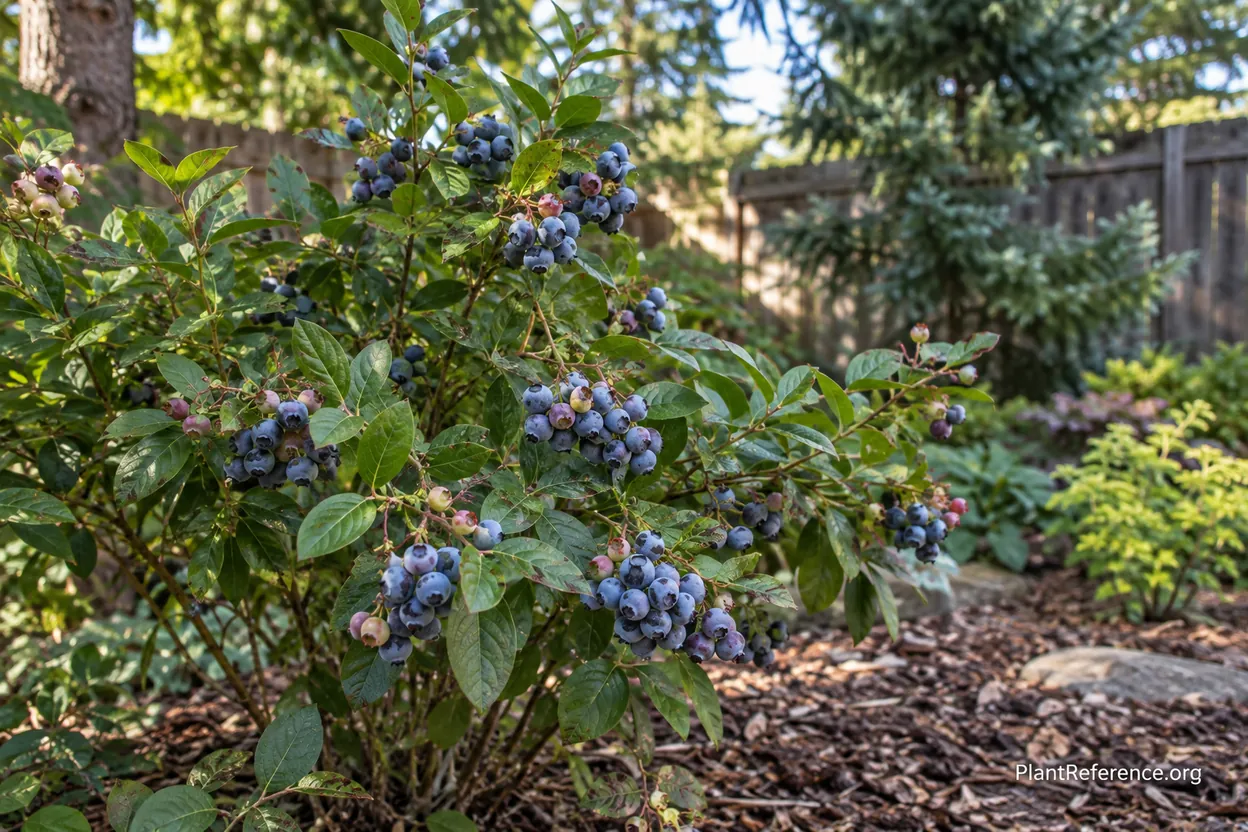
Blueberries 🌿Vaccinium corymbosum (vak-SIN-ee-um kor-im-BOH-sum) demand pH 4.5 to 5.5 and will yellow badly in limed soil. The same goes for rhododendrons and azaleas Rhododendron (roh-doh-DEN-dron), the unofficial shrubs of the maritime Northwest, along with camellias and most heathers.
Blueberries 🌿Vaccinium corymbosum — pH 4.5-5.5
Rhododendrons and azaleas Rhododendron — pH 4.5-6.0
Evergreen Huckleberry 🌿Vaccinium ovatum — native, naturally acid-adapted
Bigleaf Hydrangea 🌿Hydrangea macrophylla — turns blue in acidic soil
Red-flowering Currant 🌿Ribes sanguineum — PNW native, tolerant of acidity
Many native plants evolved in exactly these acidic, leached soils. Oregon Grape 🌿Mahonia aquifolium (mah-HOH-nee-ah ah-kwih-FOH-lee-um) and Evergreen Huckleberry 🌿Vaccinium ovatum thrive without any pH correction at all, which is part of what makes a native-forward garden so low-maintenance. The point is to lime your vegetable beds and lawn where the science calls for it—and to leave the acid-lovers alone. Group plants by their pH needs the same way you would group them by water needs.
The Inland Exception: When You Need Sulfur
Everything above describes the maritime west, but the PNW is split by the Cascades. East of the mountains—around Spokane and the Yakima Valley—the story flips. The inland climate is semi-arid, rain is scarce, and there is little leaching. Those soils are often alkaline, testing above pH 7.5.
In alkaline soil, the problem is reversed: iron, manganese, and zinc become unavailable, causing the yellowing chlorosis you see on inland blueberries and rhododendrons. The fix there is elemental sulfur, which soil bacteria slowly convert to sulfuric acid to lower pH. Like lime, it works slowly and should be applied well ahead of the growing season.
So before you reach for any amendment, find out which side of the divide you garden on. A maritime gardener adds lime; an inland gardener often adds sulfur; and the only way to know how much is to test. The same caution applies to anyone gardening kale, carrots, and other cool-season crops the region excels at—see When to Plant Kale in Seattle: Complete Guide + Best Varieties for Zone 8b and When to Plant Carrots in Portland: Zone 8b Dates + Best Varieties for crop-specific pH notes, and the Best Soil Mix for Raised Beds: Creating the Perfect Growing Medium guide for building a balanced bed from scratch.
The takeaway is that acidic PNW soil is fixable and predictable once you understand the chemistry. Test your soil, lime your vegetable beds in fall with dolomitic lime, leave your blueberries and rhododendrons alone, and re-test every two to three years to hold your gains. For the broader bed-building picture, the Best Soil for Raised Beds: 6 Commercial Mixes Tested and Compared comparison and the Best Raised Bed Vegetables for Beginners: Top 10 Easy-Growing Crops list both pair well with corrected, well-limed soil.
Frequently Asked Questions
Reading about plants and recognising them are different skills. These three build the second.
- Daily PlantIdentify the day’s mystery plant from a close-up photograph.
- Keyed OutWork a dichotomous key, lead by lead, to name a hidden specimen.
- Name That PlantName a specimen from botanical clues dealt hardest first.
Free to play, no account needed
Tagged with
Sarah earned her doctorate in plant biology and spent time working in botanical garden education before transitioning to freelance writing and consulting. Now based in Portland, Oregon, she teaches plant identification workshops at local community centers and maintains a modest collection of over 60 houseplants in her small apartment. Sarah specializes in helping beginners understand plant science without the jargon—her approach focuses on practical observation over theory. She's killed her fair share of fiddle leaf figs and finally cracked the code on keeping them alive.