Image 1 of 18
1 / 18
Plant Reference
Hydrangea, Genus, macrophylla, Species,
- Genus & species
bigleaf hydrangea
Overview
Hydrangea macrophylla is bigleaf hydrangea (mophead hydrangea), a mounding deciduous shrub growing 4-6 feet (1.2-1.8 m) tall and 4-6 feet (1.2-1.8 m) wide. Large rounded mophead flower clusters 6-12 inches (15-30 cm) composed of sterile florets — blue to purple in acidic soil (pH below 6.0), pink to red in alkaline soil (pH above 7.0). The color is controlled by soil aluminum availability. White cultivars are unaffected by pH. Glossy dark green broadly ovate leaves 4-8 inches (10-20 cm). In Hydrangeaceae. Native to Japan and Korea. Traditional cultivars bloom on old (previous season's) wood — flower buds can be killed by winter cold below -10°F (-23°C) in zones 5-6. This cold bud-kill is the primary limitation in northern zones. Remontant cultivars ('Endless Summer' series) bloom on both old and new wood. Not drought-tolerant — wilts rapidly (macrophylla = large leaf = high transpiration). Deer browse the foliage. Toxic (cyanogenic glycosides). Zones 5-9. Part shade. Growth rate is moderate.
Native Range
Native to Japan and Korea — coastal regions.Suggested Uses
Grown as a specimen shrub, foundation planting, mass planting, and in containers of at least 15 gallons (57 L), spaced 4-6 feet (1.2-1.8 m). pH-responsive flower color. Use remontant cultivars in zones 5-6. Consistently moist soil required. Toxic. Zones 5-9.How to Identify
Appearance
Size & Dimensions
Height4' - 6'
Width/Spread4' - 6'
Bloom Information
Early to midsummer (June-August). Large rounded mophead clusters 6-12 inches (15-30 cm) of sterile florets — blue in acidic soil, pink in alkaline. 6 weeks of bloom. Remontant cultivars rebloom on new wood. Bee- and butterfly-visited. Dried flower heads persist through winter.
Detailed Descriptions
Flower Description
Blue to purple in acidic soil (pH below 6.0 — aluminum available); pink to red in alkaline soil (pH above 7.0 — aluminum bound); white cultivars unaffected by pH; large rounded mophead clusters 6-12 inches (15-30 cm) across composed of sterile floretsFoliage Description
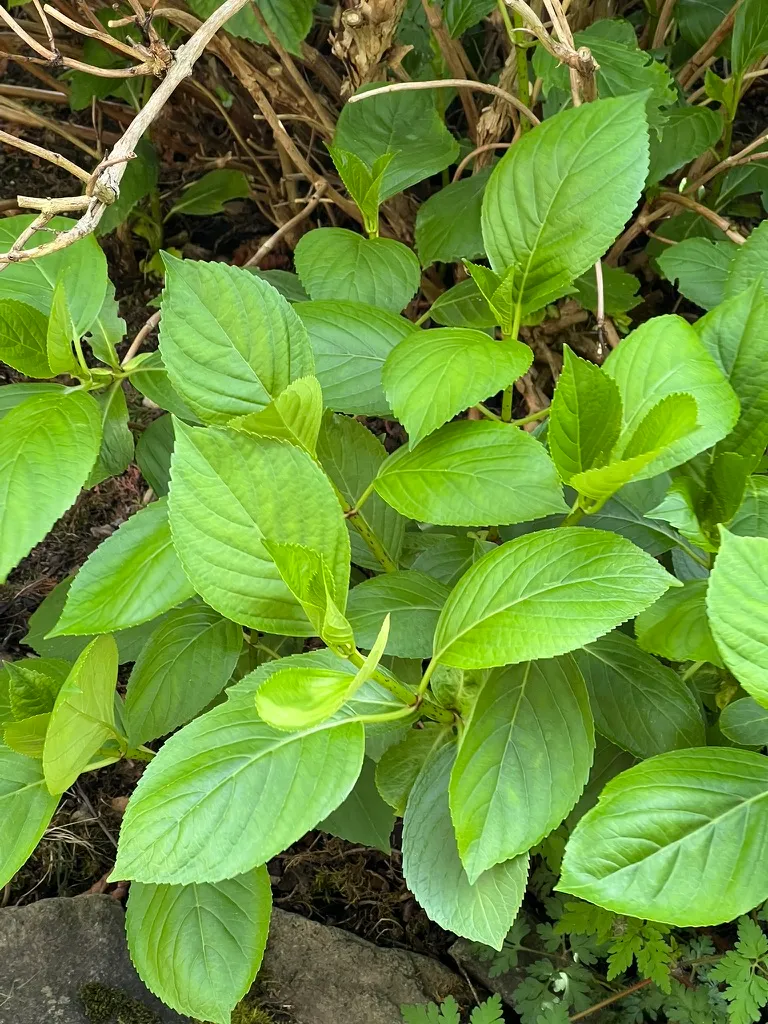
Glossy dark green, opposite, broadly ovate, coarsely serrated, 4-8 inches (10-20 cm) long; fall color absent or unremarkableGrowing Conditions
Sun Requirements
Requires 3-6 hours of direct sunlight daily
• Full Sun: 6+ hours of direct sunlight
• Partial Shade: 3-6 hours of direct sunlight
• Full Shade: Less than 3 hours of direct sunlight
Care & Maintenance
Care Guide
Part shade (3-6 hours — morning sun with afternoon shade in zones 7-9). Consistently moist acidic soil pH 4.5-6.5. Not drought-tolerant. Add aluminum sulfate for blue flowers, lime for pink. Traditional cultivars bloom on old wood — do not prune in fall/winter. Cold bud-kill in zones 5-6 — use remontant cultivars. Toxic. Zones 5-9.Pruning
Traditional cultivars (old-wood blooming): remove spent flower heads in early spring when buds swell — cut just above the first pair of plump buds. Do not prune in fall/winter. Remontant cultivars (old + new wood): prune more freely in early spring — new growth will still bloom. Remove dead stems at the base.Pruning Schedule
Prune: February–March
late winterearly spring
Container Growing
Suitable for container growing
Minimum container size: 15 gallons
Toxicity Warning
Toxic to pets and humansRelated Hydrangea species
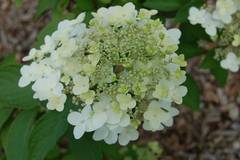 Pee-gee hydrangeaHydrangea paniculata 'Grandiflora'
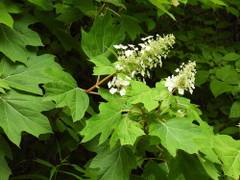 Oak-leaf hydrangeaHydrangea quercifolia
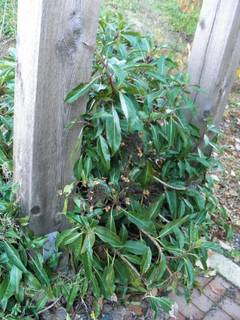 Evergreen climbing hydrangeaHydrangea integrifolia
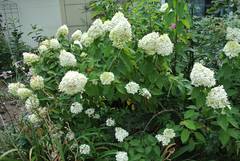 Limelight PeeGee hydrangeaHydrangea paniculata 'Limelight'
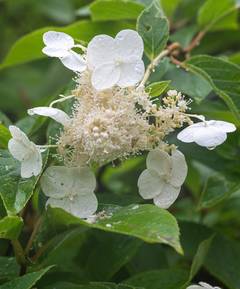 Climbing hydrangeaHydrangea anomala ssp. petiolaris
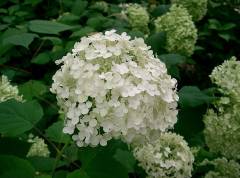 Annabelle hydrangeaHydrangea arborescens 'Annabelle'