Hydrangea, Genus, paniculata, Species, 'Jane', Cultivar,
- Genus & species
- Cultivar
little lime hydrangea
East Asia (China, Korea, Japan, Russian Far East)
Overview
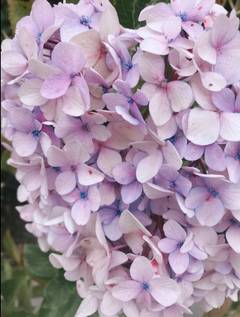
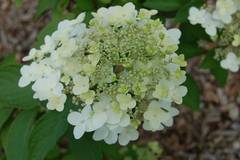
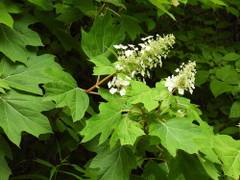
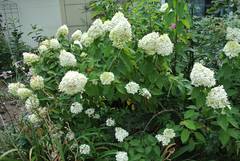
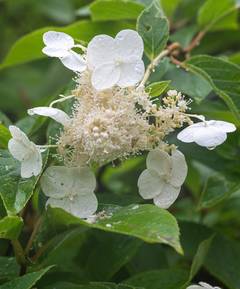
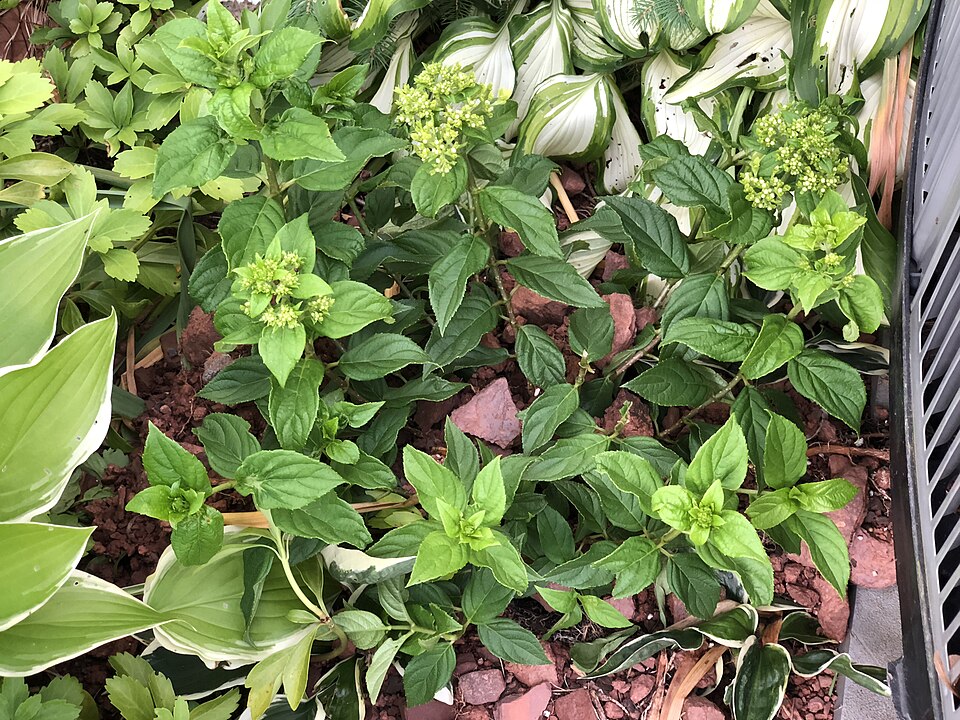
Hydrangea paniculata 'Jane' is a compact deciduous shrub reaching 3-5 feet (90-150 cm) tall and 3-5 feet (90-150 cm) wide, about one-third the size of H. paniculata 'Limelight'. Habit is upright and densely branched with a rounded crown. Leaves are ovate, 3-5 inches (7.5-12.5 cm) long, with serrated margins and matte medium-green coloration. Flowers form upright conical panicles 6-8 inches (15-20 cm) long, opening pale chartreuse-green in mid-summer, fading to white, then turning dusty pink and rose by autumn. Sterile florets dominate the panicle, giving a dense full-headed appearance. Annual growth on new wood is 18-24 inches (45-60 cm); plants reach mature size in 3-4 years. Stems are stout enough to support panicles upright in still conditions but bend in heavy rain or wind. Cold-hardy to -40°F (-40°C); flower buds form on current-season wood, so flowering occurs reliably even after winter dieback.
Native Range
Hydrangea paniculata is native to deciduous and mixed forests of southeastern China, Korea, Japan, and the Russian Far East from sea level to 3,500 feet (1,070 m) elevation. It was introduced to Western horticulture by Philipp Franz von Siebold in 1829. 'Jane' was selected by Bailey Nurseries in Minnesota and introduced in 2008 (US PP22,330) under the trade name Little Lime.Suggested Uses
Used in mixed borders, foundation plantings, low hedges, and large containers at 4-5 feet (1.2-1.5 m) spacing. Compact size suits gardens where H. paniculata 'Limelight' would outgrow available space. Grows in 10-15 gallon (38-57 L) containers with weekly watering during summer; container plants typically remain shorter (24-36 inches / 60-90 cm) than in-ground specimens.How to Identify
Appearance
Size & Dimensions
Height3' - 5'
Width/Spread3' - 5'
Bloom Information
Panicles begin opening in early to mid-July in zones 5-7 and late June in zones 8. Inflorescences mature from chartreuse-green to white over 3-4 weeks, then transition through dusty pink to deep rose by mid-September, holding rose color until first hard frost. Total in-color period is 12-14 weeks. Color intensity of the pink phase increases with cool nights below 60°F (16°C); rose tones are muted in zones 8-9.
Detailed Descriptions
Flower Description
Chartreuse-green aging to pink and roseFoliage Description
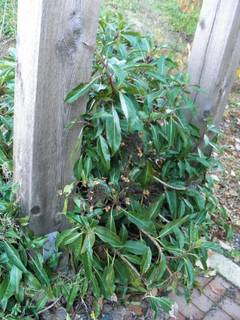
Medium greenGrowing Conditions
Sun Requirements
Requires 6-10 hours of direct sunlight daily
• Full Sun: 6+ hours of direct sunlight
• Partial Shade: 3-6 hours of direct sunlight
• Full Shade: Less than 3 hours of direct sunlight
Care & Maintenance
Care Guide
Plants establish in 1-2 growing seasons with weekly watering during the first summer if rainfall falls below 1 inch (2.5 cm) per week. Mature plants tolerate 2-3 weeks without rain in zones 4-6 but show wilting and reduced bloom in prolonged drought. Soil pH 5.5-7.5 supports consistent flowering; flower color does not respond to soil pH, unlike H. macrophylla. Powdery mildew develops in still humid conditions but remains cosmetic. Aphids may colonize new growth in May-June. Plants flower on new wood, so winter cold or late frost does not eliminate the bloom.Pruning
Cut stems back to 12-18 inches (30-45 cm) above ground in late winter (February-March) before bud break to encourage strong new growth and large panicles. Removal of the previous year panicle to a strong outward-facing bud preserves shape. Plants flower on current-season wood, so heavy pruning does not eliminate flowering. Crossing or damaged stems can be cut in spring.Pruning Schedule
Prune: February–March
winter
Container Growing
Suitable for container growing
Minimum container size: 10 gallons