Image 1 of 7
© Luis Miguel Bugallo Sánchez ( Lmbuga Commons ) ( Lmbuga Galipedia ) Publicada por/ Publish by : Luis Miguel Bugallo Sánchez, some rights reserved (CC-BY-SA) · Wikimedia Commons
1 / 7
Hydrangea, Genus, serrata, Species,
- Genus & species
Mountain hydrangea
Mountain woodlands of Japan on Honshu, Shikoku, and Kyushu, and the southern Korean peninsula
Overview
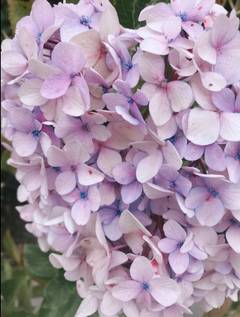
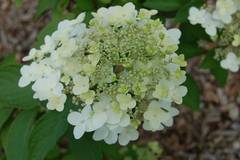
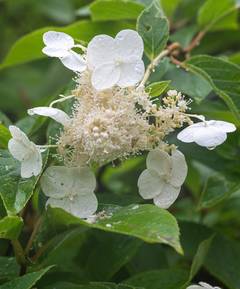
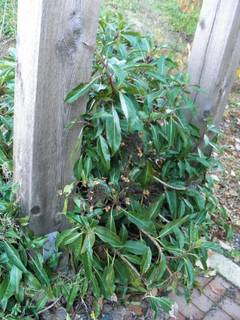
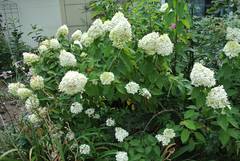
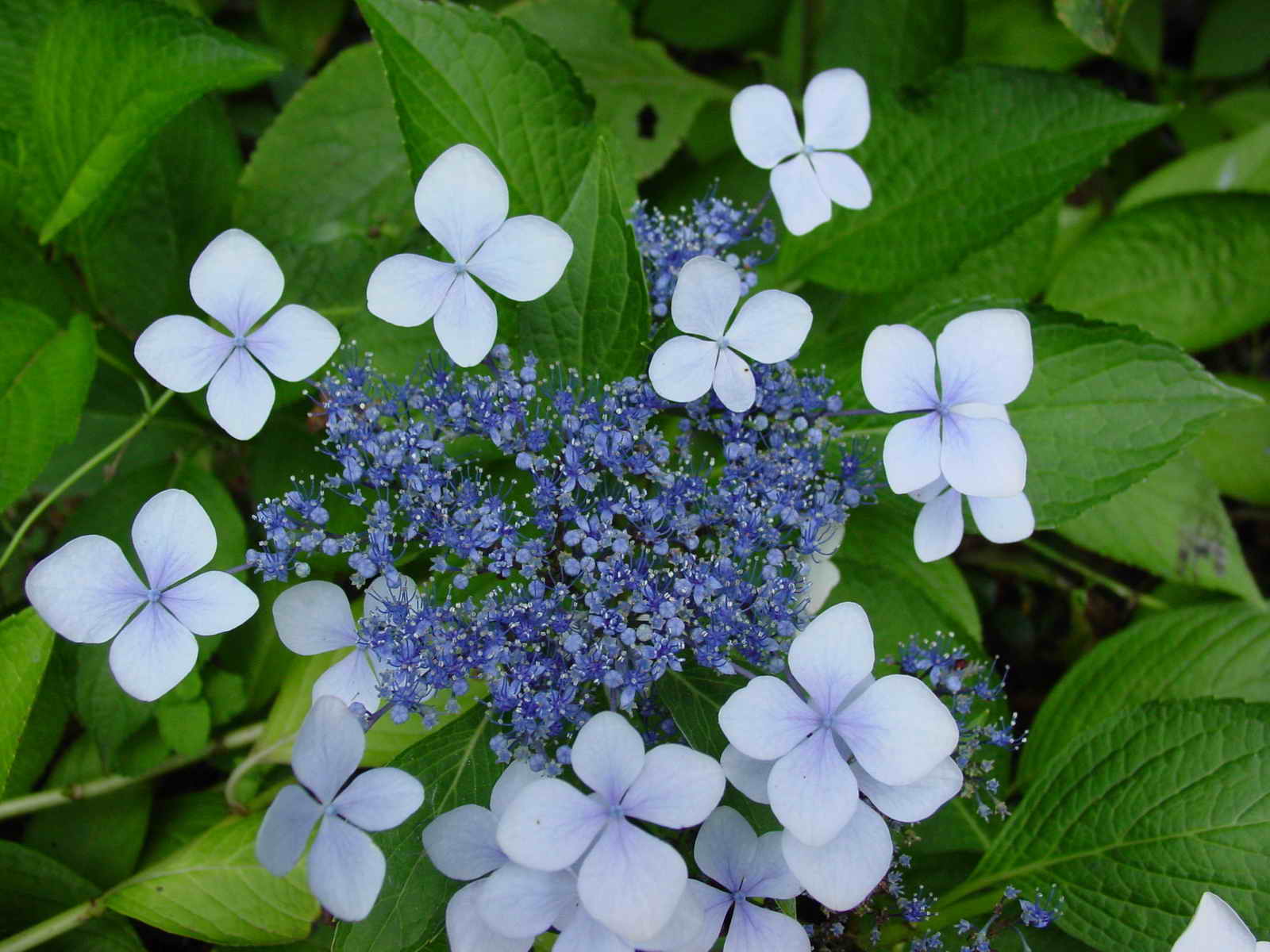
Hydrangea serrata is a deciduous shrub reaching 2-4 feet (0.6-1.2 m) tall and wide, with slender stems and a mounded outline. Leaves are opposite, narrowly ovate to lanceolate, 2-5 inches (5-12 cm) long, thinner in texture and more sharply pointed than those of H. macrophylla, and turn red to purple before leaf drop. Lacecap heads 2-4 inches (5-10 cm) across open from June to August, with a flat centre of fertile flowers about 0.15 inch (4 mm) wide ringed by four to eight sterile ray florets 0.6-1.2 inches (1.5-3 cm) across. Sepal colour shifts with soil chemistry: blue below pH 5.5 where aluminium is available to the roots, rose to red above pH 6.5, and purple between the two. Flower buds form on the previous season wood, so a winter low near -10 F (-23 C) or a hard April frost removes the season bloom while the plant itself survives. Leaves of H. serrata var. thunbergii contain phyllodulcin and are dried in Japan for amacha, a sweet tea. Foliage and buds contain cyanogenic glycosides and cause vomiting in dogs, cats, and people. Hardy in USDA zones 6-9.
Native Range
Hydrangea serrata is native to the mountain woodlands of Japan on Honshu, Shikoku, and Kyushu, and to the southern Korean peninsula. Populations occupy stream banks, ravine slopes, and forest understorey between 650 and 5,000 feet (200-1,500 m). Overlapping morphology has led some botanists to treat the plant as H. macrophylla subsp. serrata.Suggested Uses
Planted in shaded borders, along woodland paths, and at 30-36 inch (75-90 cm) spacing as a low informal hedge. Container culture works in 7 gallons (26 L) or more, with the pot moved to an unheated shed or garage over winter in zone 6. Cut stems are used fresh in summer arrangements and hold their sepals when air-dried from the green stage.How to Identify
Appearance
Size & Dimensions
Height2' - 4'
Width/Spread2' - 4'
Bloom Information
Heads open from mid-June to early July and hold colour into August, running six to nine weeks. Sterile florets keep their sepals after the fertile flowers finish, then turn green and dry on the plant. Buds set from August of the previous year, so bloom is lost where winter minima drop below -10 F (-23 C) or where late frosts strike swelling buds in April. Repeat-flowering selections carry a second, lighter flush on current-season shoots from late August.
Detailed Descriptions
Flower Description
blue below pH 5.5, rose to red above pH 6.5, purple at intermediate pHFoliage Description
matte medium green, turning red to purple before leaf dropGrowing Conditions
Sun Requirements
Requires 3-6 hours of direct sunlight daily
• Full Sun: 6+ hours of direct sunlight
• Partial Shade: 3-6 hours of direct sunlight
• Full Shade: Less than 3 hours of direct sunlight
Care & Maintenance
Care Guide
Three to six hours of morning sun with shade after midday suits the species; leaves scorch at the margins where afternoon sun combines with temperatures above 85 F (29 C). Soil is moisture-retentive loam high in organic matter at pH 5.0-7.0, and 2-3 inches (5-8 cm) of mulch holds root-zone moisture through summer. Water use runs to about 1 inch (2.5 cm) per week, with visible wilting inside a day of the surface drying in hot weather. Sepal colour is shifted toward blue with aluminium sulphate at 1 tablespoon per gallon (15 ml per 3.8 L) monthly, or toward pink with garden lime. Straw or hessian laid over the crown through winter holds flower buds alive in zone 6. Powdery mildew, Cercospora leaf spot, and two-spotted spider mite occur in still air and dry heat.Pruning
Cutting is done within four weeks of flowering, since buds for the next season form on the same wood from August. Dead stems are taken back to live tissue in April, once bud break shows which wood came through winter. Removal of one quarter of the oldest stems at ground level each year holds the framework young. Cutting in late winter removes the coming bloom on all but the repeat-flowering selections.Pruning Schedule
Prune: July–August
summer
Container Growing
Suitable for container growing
Minimum container size: 7 gallons