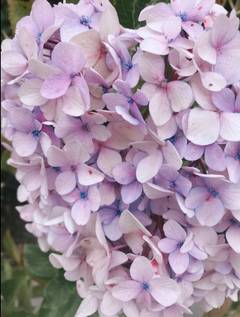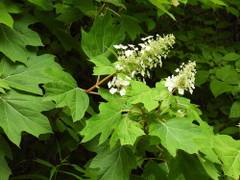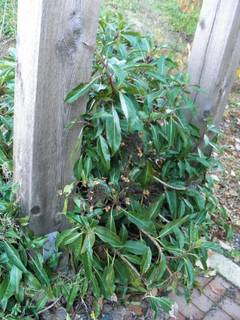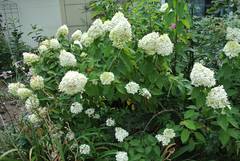
Hydrangea, Genus, paniculata, Species, 'Grandiflora', Cultivar,
- Genus & species
- Cultivar
pee-gee hydrangea
China, Japan, and Korea; the species is native to East Asia; 'Grandiflora' is a cultivar selected for large all-sterile panicles
Overview
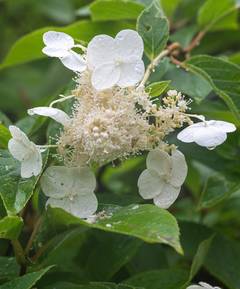
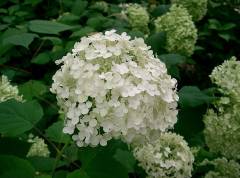
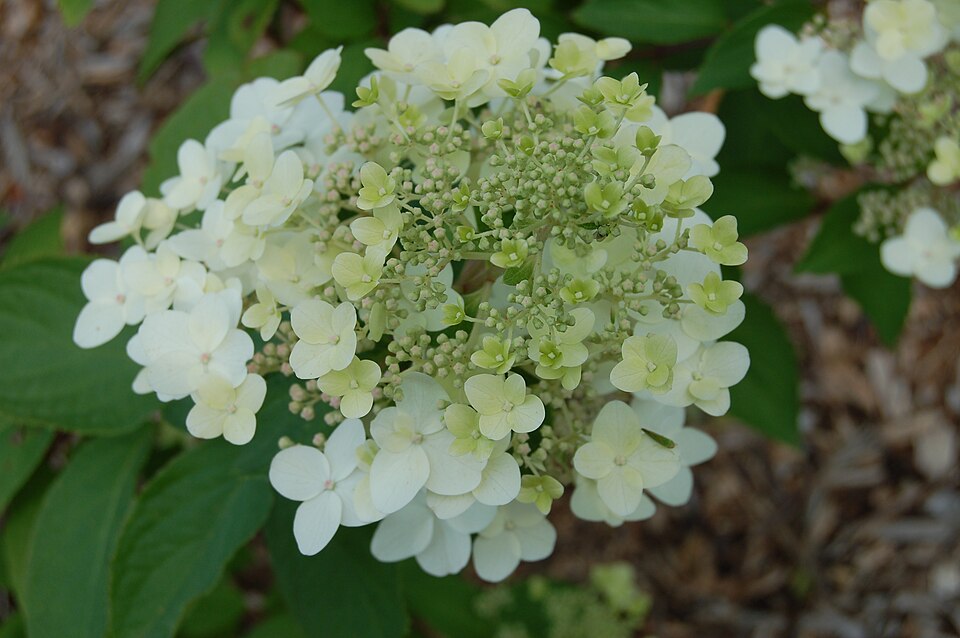
Hydrangea paniculata 'Grandiflora' is PeeGee hydrangea (panicle hydrangea), an upright deciduous shrub growing 8-15 feet (2.4-4.5 m) tall and 8-12 feet (2.4-3.6 m) wide. Large conical panicles 10-18 inches (25-45 cm) composed predominantly of sterile florets — creamy-white emerging in July, aging to soft pink then rusty-brown. Matte dark green ovate to elliptic coarsely serrated leaves 3-6 inches (7-15 cm). Blooms on new (current season's) wood. In Hydrangeaceae. The original PeeGee hydrangea (PG = Paniculata Grandiflora). Flower color is not affected by soil pH (unlike H. macrophylla). The large all-sterile panicles are heavy and cause branches to arch under their weight, especially after rain — this drooping is the primary aesthetic limitation. Newer cultivars ('Limelight', 'Little Lime', 'Quick Fire') have sturdier stems and more balanced sterile/fertile ratios. Can be trained as a small single-trunk tree. Tolerates a wider range of soils and pH than H. macrophylla. Not drought-tolerant. Deer browse. Toxic (cyanogenic glycosides). Zones 3-9. Full sun to partial shade. Growth rate is fast.
Native Range
The species is native to China, Japan, and Korea. 'Grandiflora' is a cultivar selected for large all-sterile panicles.Suggested Uses
Grown as a specimen shrub, informal hedge, small tree form, and in mass plantings spaced 8-12 feet (2.4-3.6 m). Reliable bloom in cold zones (blooms on new wood). Consider newer cultivars ('Limelight', 'Little Lime') for sturdier stems. Toxic. Zones 3-9.How to Identify
Appearance
Size & Dimensions
Height8' - 15'
Width/Spread8' - 12'
Bloom Information
Detailed Descriptions
Flower Description
Creamy-white emerging in July, aging to soft pink then rusty-brown; large conical panicles 10-18 inches (25-45 cm) long composed predominantly of sterile floretsFoliage Description
Matte dark green, opposite, ovate to elliptic, coarsely serrated, 3-6 inches (7-15 cm) long; fall color absent or unremarkableGrowing Conditions
Sun Requirements
Requires 4-12 hours of direct sunlight daily
• Full Sun: 6+ hours of direct sunlight
• Partial Shade: 3-6 hours of direct sunlight
• Full Shade: Less than 3 hours of direct sunlight
Care & Maintenance
Care Guide
Full sun to partial shade (4-12 hours). Well-drained soil pH 5.5-7.5 — tolerates clay and sand. Not affected by soil pH (unlike H. macrophylla). Not drought-tolerant. Blooms on new wood — prune freely in late winter (February-March). Deer browse. Toxic. Zones 3-9.Pruning
Prune in late winter (February-March) — blooms on new (current season's) wood. Can be pruned hard (to 1-2 feet / 30-60 cm) annually for fewer but larger panicles, or lightly for a larger shrub with more numerous smaller panicles. Can be trained as a small single-trunk tree by selecting one stem and removing lower branches.Pruning Schedule
Prune: February–March
early spring