Image 1 of 5
1 / 5
Plant Reference
Hydrangea, Genus, integrifolia, Species,
- Genus & species
evergreen climbing hydrangea
Southern and central China, Taiwan, Philippines, Myanmar, and northern Vietnam; montane forests at 3,000-8,000 feet (900-2,400 m)
Overview
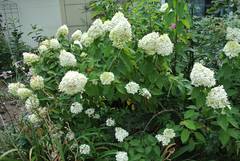
Hydrangea integrifolia is evergreen climbing hydrangea, a climbing evergreen vine growing 15-30 feet (4.5-9 m) tall and 3-6 feet (0.9-1.8 m) wide against a support. White to cream lacecap-type inflorescences 4-6 inches (10-15 cm) with sterile ray florets surrounding fertile center florets in May-July (5 weeks). Dark glossy green entire-leaved (unserrated) leathery leaves 3-6 inches (7-15 cm); bronze new growth. In Hydrangeaceae. Integrifolia = entire-leaved. Climbs by self-clinging aerial rootlets on rough surfaces (brick, stone, rough wood). Native to southern China, Taiwan, Philippines, Myanmar, and northern Vietnam. Slow to establish — 5-7 years to first bloom, 8-15 years to cover a wall. This slow establishment is the primary limitation. Not drought-tolerant. Hardy to about 10°F (-12°C). All parts contain cyanogenic glycosides — mildly toxic. Deer-resistant. Zones 7-10. Part shade to full shade. Growth rate is slow.
Native Range
Native to southern and central China, Taiwan, Philippines, Myanmar, and northern Vietnam. Found in montane forests at 3,000-8,000 feet (900-2,400 m).Suggested Uses
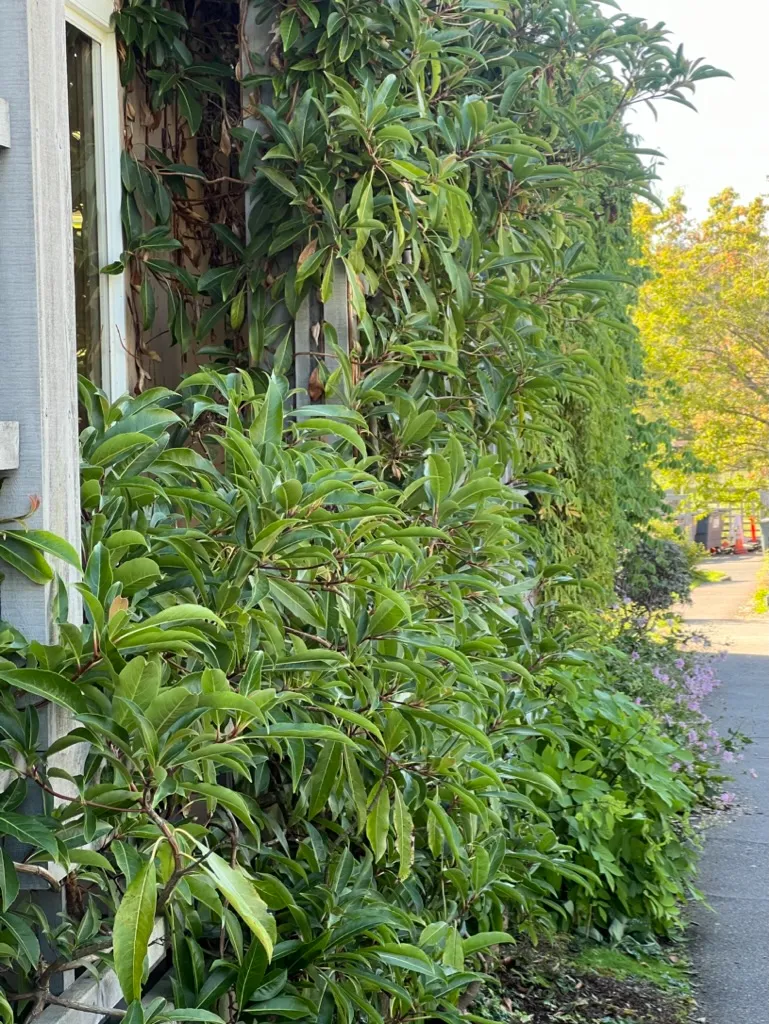
Grown on north- or east-facing walls, shaded fences, and large trees, spaced 3-6 feet (0.9-1.8 m). Self-clinging. Evergreen. Lacecap flowers. Slow to establish. Mildly toxic. Zones 7-10.How to Identify
Appearance
Size & Dimensions
Height15' - 30'
Width/Spread3' - 6'
Bloom Information
Detailed Descriptions
Flower Description
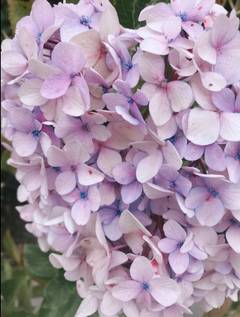
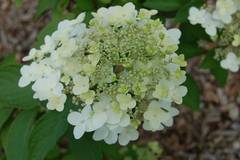
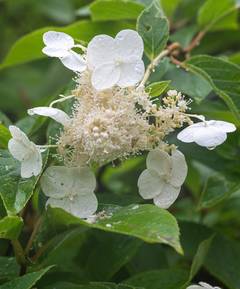
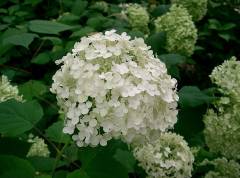
White to cream, in lacecap-type inflorescences 4-6 inches (10-15 cm) — a ring of sterile white ray florets surrounding smaller fertile florets in the center; May-JulyFoliage Description
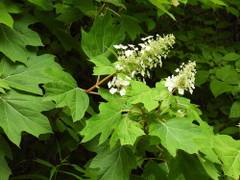
Dark glossy green above, paler beneath, entire (unserrated — integrifolia = entire-leaved), elliptic to oblong, leathery, 3-6 inches (7-15 cm); new growth emerges bronze-green; evergreen year-roundGrowing Conditions
Sun Requirements
Requires 2-6 hours of direct sunlight daily
• Full Sun: 6+ hours of direct sunlight
• Partial Shade: 3-6 hours of direct sunlight
• Full Shade: Less than 3 hours of direct sunlight
Care & Maintenance
Care Guide
Part shade to full shade (2-6 hours). Moist well-drained soil pH 5.5-7.0. Not drought-tolerant. Self-clinging on rough surfaces. Slow to establish (5-7 years to bloom). Hardy to 10°F (-12°C). Prune after flowering (July-August). All parts mildly toxic. Deer-resistant. Zones 7-10.Pruning
Prune after flowering (July-August) to control size and remove spent flower heads. The vine blooms on previous year's wood — do not prune before flowering. Minimal pruning needed in most situations.Pruning Schedule
Prune: July–August
summer