1 / 3
Hydrangea anomala ssp. petiolaris
climbing hydrangea
Japan, Korea, and Sakhalin Island (Russia); moist mountain forests, climbing on large trees and rocky outcrops
Learn more
Overview
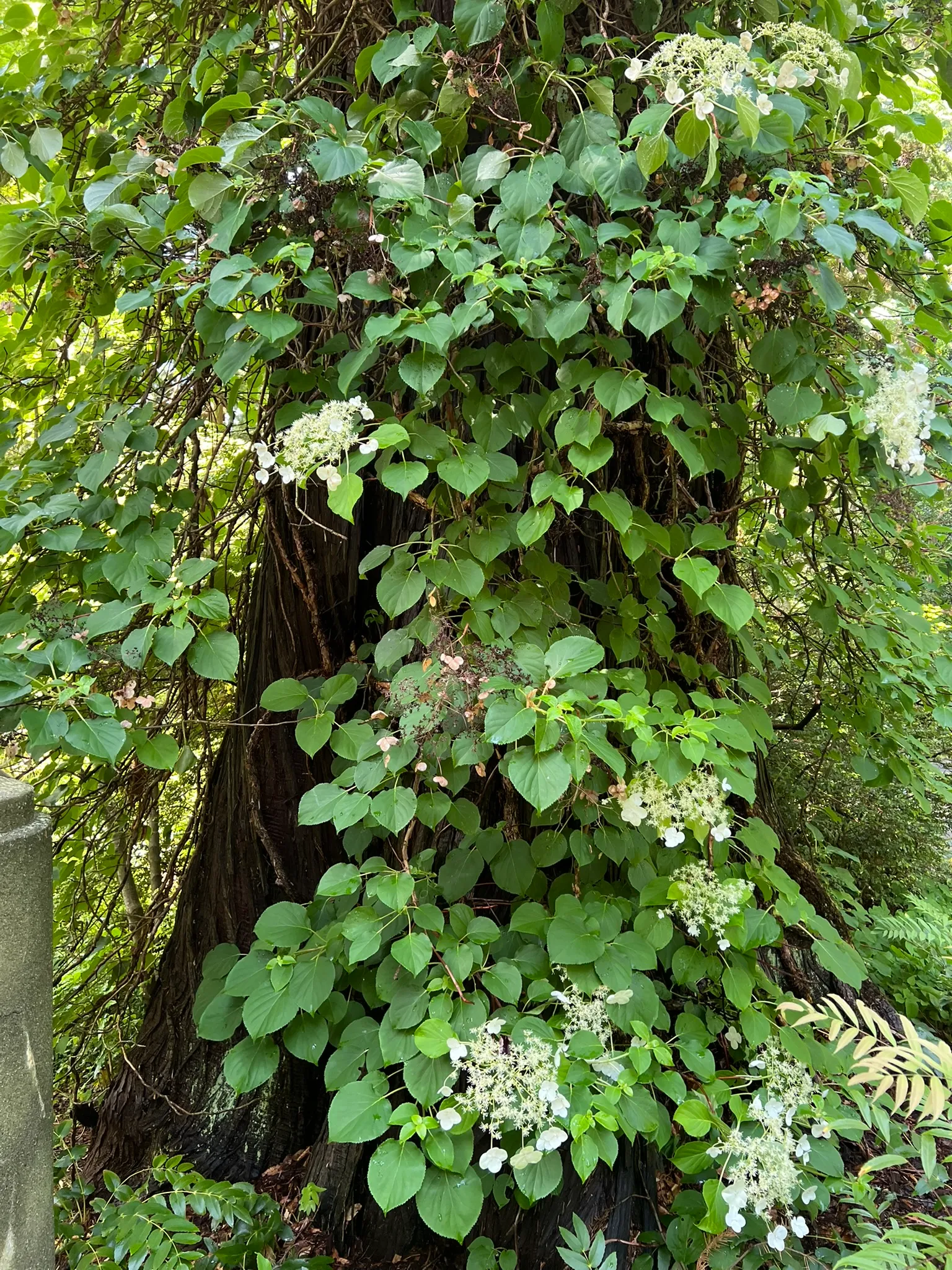
Hydrangea anomala subsp. petiolaris is climbing hydrangea, a deciduous climbing vine growing 30-80 feet (9-24 m) tall and 5-6 feet (1.5-1.8 m) wide per stem. White lacecap flower heads 6-10 inches (15-25 cm) with showy sterile outer florets surrounding tiny fertile inner flowers in June-July (4 weeks). Lightly fragrant. Dark green broadly ovate finely serrate leaves 2-4 inches (5-10 cm); yellow fall color. In Hydrangeaceae. Petiolaris = with petioles. Climbs by aerial rootlets — self-clinging to masonry, wood, and tree bark without a trellis. Slow to establish — typically 3-5 years of minimal growth before vigorous climbing. This very slow establishment period is the primary limitation. Exfoliating cinnamon-brown bark on mature stems. The aerial rootlets can damage painted surfaces and soft mortar. Native to Japan, Korea, and Sakhalin Island. Not drought-tolerant. Contains hydrangin — toxic to cats and dogs. Deer browse. Zones 4-8. Part shade to full sun or full shade. Growth rate is slow initially, then fast.
Native Range
Native to Japan, Korea, and Sakhalin Island (Russia). Found in moist mountain forests, climbing on large trees and rocky outcrops.Suggested Uses
Grown on masonry walls, large trees, pergolas, and fences, spaced 5-6 feet (1.5-1.8 m). Self-clinging. Lacecap flowers. Exfoliating bark. Slow to establish. Toxic to pets. Zones 4-8.How to Identify
Appearance
Size & Dimensions
Height30' - 80'
Width/Spread5' - 6'
Reaches mature size in approximately 10 years
Bloom Information
Early to midsummer (June-July). White lacecap flower heads 6-10 inches (15-25 cm). Sterile outer florets surrounding fertile inner cluster. Lightly fragrant. 4 weeks. Bee-visited. Dried flower heads persist.Detailed Descriptions
Flower Description
White lacecap flower heads 6-10 inches (15-25 cm) across — a ring of showy sterile outer florets 1-1.5 inches (2.5-4 cm) surrounding a flat cluster of tiny fertile inner flowers; lightly fragrantFoliage Description
Dark green, broadly ovate with finely serrated margins, 2-4 inches (5-10 cm); glossy above; yellow fall colorGrowing Conditions
Sun Requirements
Requires 2-8 hours of direct sunlight daily
• Full Sun: 6+ hours of direct sunlight
• Partial Shade: 3-6 hours of direct sunlight
• Full Shade: Less than 3 hours of direct sunlight
Care & Maintenance
Care Guide
Part shade to full sun or full shade (2-8 hours). Moist soil pH 5.5-7.5. Not drought-tolerant. Self-clinging by aerial rootlets — no trellis needed. Slow to establish (3-5 years). Aerial rootlets can damage painted surfaces. Prune immediately after flowering. Toxic to pets (hydrangin). Deer browse. Zones 4-8.Pruning
Prune immediately after flowering (July-August) — flower buds form on previous year's wood. Remove unwanted growth and maintain desired coverage. The vine becomes heavy — ensure the support structure is sound.Pruning Schedule
J
F
M
A
M
J
J
A
S
O
N
D
summer