Hydrangea, Genus, quercifolia, Species, 'Pee Wee', Cultivar,
- Genus & species
- Cultivar
pee wee oakleaf hydrangea
Southeastern United States (Georgia, Florida to Louisiana; moist woodland ravines)
Overview
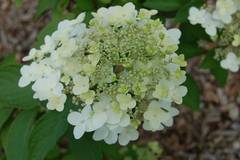
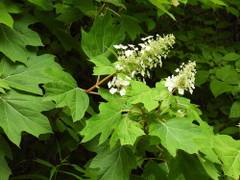
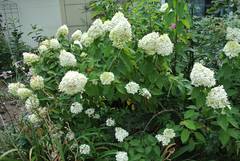
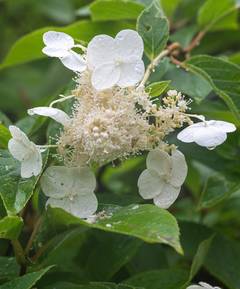
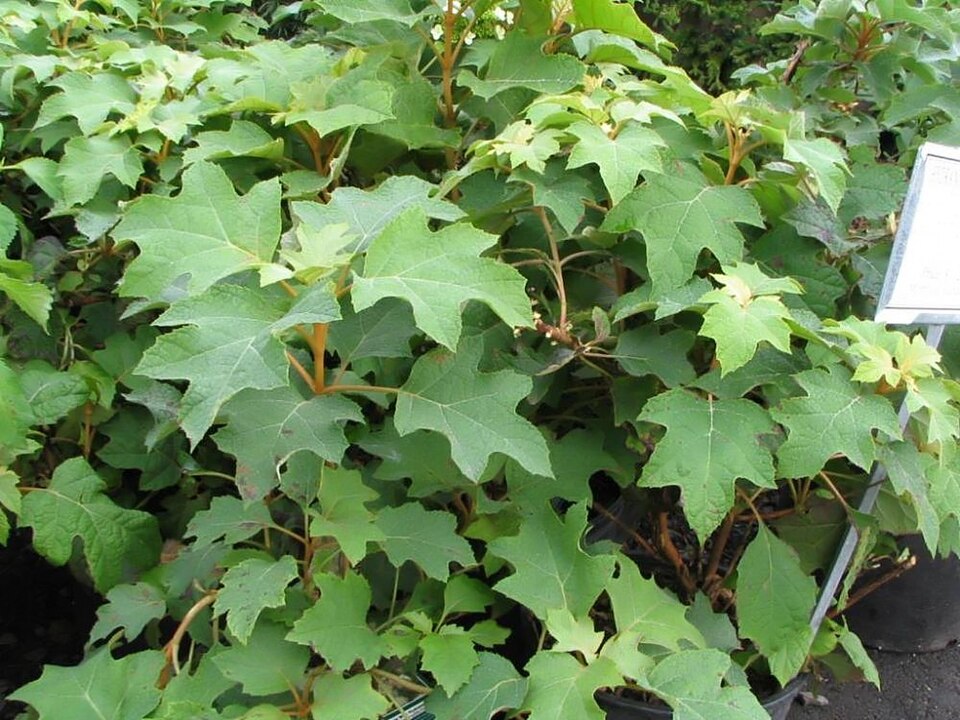
Hydrangea quercifolia 'Pee Wee' is a compact oakleaf hydrangea, a deciduous shrub growing 36-48 inches (90-120 cm) tall and wide — roughly half the size of the species type (72-96 inches / 180-240 cm). Conical flower panicles 4-6 inches (10-15 cm) opening white and aging through pink to tan from early to midsummer (June-July). Dark green deeply lobed (5-7 lobes) oak-shaped leaves 4-8 inches (10-20 cm) — the species name 'quercifolia' means 'oak-leaved' (Latin). The fall foliage turns burgundy-red to bronze-purple. Exfoliating cinnamon-brown bark on older stems — visible in winter. In the hydrangea family (Hydrangeaceae). Flowers on old wood (previous year's growth) — prune only immediately after flowering. Pruning in fall or winter removes next year's flower buds. Soil pH does not affect flower color (unlike H. macrophylla). Spreads by suckering to form a gradually expanding colony. The dried tan panicles persist through winter. Native to moist woodland ravines in the southeastern United States (Georgia, Florida to Louisiana). Tolerates clay soil. Drought-tolerant once established — more drought-tolerant than H. macrophylla. Non-toxic. Deer-resistant. Partial shade to full sun. Native. Zones 5-9. Growth rate is moderate.
Native Range
The species H. quercifolia is native to the southeastern United States (Georgia, Florida to Louisiana), growing in moist woodland ravines. 'Pee Wee' was selected in cultivation for the compact size.Suggested Uses
Commonly planted in borders, foundation plantings, and woodland edges in zones 5-9. The compact size (36-48 inches) suits smaller spaces. The oak-shaped foliage, burgundy fall color, conical flower panicles, and exfoliating bark provide four-season interest. Tolerates clay. Non-toxic. Native.How to Identify
Appearance
Size & Dimensions
Height3' - 4'
Width/Spread3' - 4'
Bloom Information
Early to midsummer (June-July), lasting 4-5 weeks. Conical panicles 4-6 inches (10-15 cm) opening white, aging to pink then tan. Dried panicles persist through winter. Flowers on old wood — prune after flowering only.
Detailed Descriptions
Flower Description
Conical panicles opening white, aging to pink then tan; 4-6 inches (10-15 cm) long; mix of sterile and fertile floretsFoliage Description
Dark green, deeply lobed (5-7 lobes), oak-shaped, 4-8 inches (10-20 cm); turns burgundy-red to bronze-purple in fallGrowing Conditions
Sun Requirements
Requires 3-6 hours of direct sunlight daily
• Full Sun: 6+ hours of direct sunlight
• Partial Shade: 3-6 hours of direct sunlight
• Full Shade: Less than 3 hours of direct sunlight
Care & Maintenance
Care Guide
Partial shade to full sun. Flowers on old wood — prune only immediately after flowering (fall/winter pruning removes flower buds). Tolerates clay. Soil pH does not affect flower color. Spreads by suckering. More drought-tolerant than H. macrophylla. Non-toxic. Deer-resistant. Native. Zones 5-9.Pruning
Prune immediately after flowering in late summer (August). Flowers on old wood — fall or winter pruning removes next year's buds. Remove dead or weak stems at the base. Remove suckers to control spread. The compact mounding form develops naturally.Pruning Schedule
Prune: August
summer
Container Growing
Suitable for container growing
Minimum container size: 7 gallons