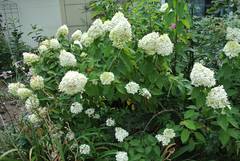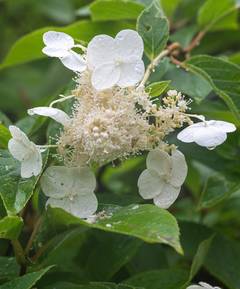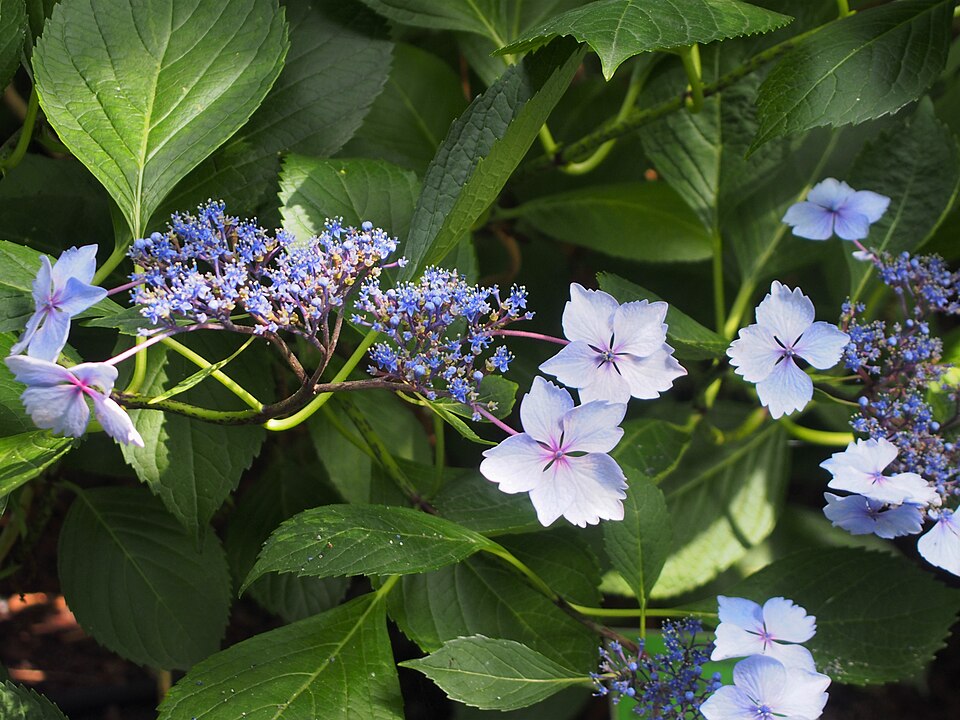
Hydrangea, Genus, macrophylla, Species, 'Mariesii Lilacina', Cultivar,
- Genus & species
- Cultivar
Lilacina lacecap hydrangea
Species native to Japan; cultivar selected from the Mariesii group (parent 'Mariesii' collected by Charles Maries in the 1870s)
Overview
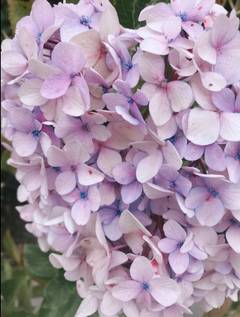
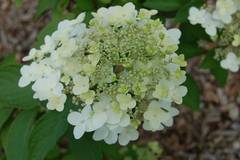
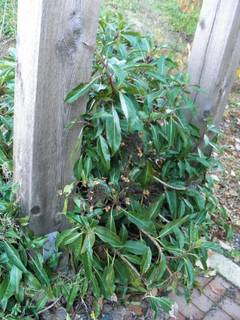
Hydrangea macrophylla 'Mariesii Lilacina' is a spreading, deciduous shrub reaching 4–5 feet (1.2–1.5 m) tall and 4–6 feet (1.2–1.8 m) wide, with horizontal tiered branching inherited from 'Mariesii'. This selection from the Mariesii group produces flat-topped lacecap flower heads 5–7 inches (13–18 cm) across with single sterile ray florets in lilac-blue to sea-blue in acidic soil and lilac-pink in alkaline soil, surrounding a central cluster of small fertile florets. The lilac cast is a blue-violet with a pink undertone that reads clearest in slightly acidic soil at pH 5.5–6.0; strongly acidic soil shifts the rays toward pure blue and strongly alkaline soil shifts them toward pink, reducing the lilac character in both directions. Ray florets are rounded with slightly serrated sepal edges. Glossy, dark green, broadly ovate leaves are 4–6 inches (10–15 cm) long. Flower buds form on old wood. Growth rate is moderate. Hardy in USDA zones 6–9. The spreading habit requires wider spacing than upright cultivars, and the lilac color holds only at intermediate pH.
Native Range
The species Hydrangea macrophylla is native to Japan. 'Mariesii Lilacina' is a named selection from the Mariesii group, descended from the original 'Mariesii' collected by Charles Maries in the 1870s.Suggested Uses
Planted in partial-shade borders and containers of 7 gallons (26 L) or larger at 4–6 foot (1.2–1.8 m) spacing. The lilac color fills a color range between the clean blues and pinks of other H. macrophylla cultivars, combining with both palettes in mixed plantings. The horizontal tiered branching gives a layered flower display along each tier. Late spring frost can reduce or eliminate the flower display for a season, and the cultivar is not suited to full sun, dry soils, or USDA zones below 6.How to Identify
Appearance
Size & Dimensions
Height4' - 5'
Width/Spread4' - 6'
Bloom Information
Produces flat-topped lacecap flower heads 5–7 inches (13–18 cm) across from June through August, with single sterile ray florets in lilac-blue to sea-blue in acidic soil or lilac-pink in alkaline soil, surrounding small fertile florets. Lilac tone holds clearest at pH 5.5–6.0 and diminishes at both pH extremes. Flower buds form on old wood. Bloom duration is 6–8 weeks.
Detailed Descriptions
Flower Description
Lacecap: single sterile rays in lilac-blue to sea-blue (acid) or lilac-pink (alkaline) surrounding small fertile florets; head 5–7 inches (13–18 cm) across; lilac tone clearest at pH 5.5–6.0Foliage Description
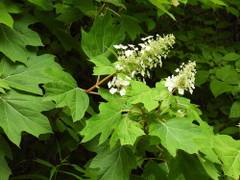
Glossy dark green, broadly ovate; 4–6 inches (10–15 cm) long; plain greenGrowing Conditions
Sun Requirements
Requires 3-5 hours of direct sunlight daily
• Full Sun: 6+ hours of direct sunlight
• Partial Shade: 3-6 hours of direct sunlight
• Full Shade: Less than 3 hours of direct sunlight
Care & Maintenance
Care Guide
Plant in partial shade in moist, humus-rich, well-drained loam or clay soil. Hardy in USDA zones 6–9. The lilac ray color expresses clearest at pH 5.5–6.0; stronger adjustment in either direction shifts the rays toward pure blue or pure pink and reduces the lilac character. Flower buds form on old wood, so a sheltered position away from morning sun and exposed frost pockets protects overwintered stems. Consistent moisture through the growing season supports bloom quality. Mulch 2–3 inches (5–7 cm) deep over the root zone, leaving a gap around the stems.Pruning
Prune immediately after flowering in August by cutting spent heads back to the next pair of healthy buds. Remove only dead wood and crossing branches in order to maintain the horizontal tiered branching pattern; hard cutbacks disrupt the structure and remove flower buds for the following year.Pruning Schedule
Prune: August
summer
Container Growing
Suitable for container growing
Minimum container size: 7 gallons