Hydrangea, Genus, macrophylla, Species, 'Pia', Cultivar,
- Genus & species
- Cultivar
pia hydrangea
Overview
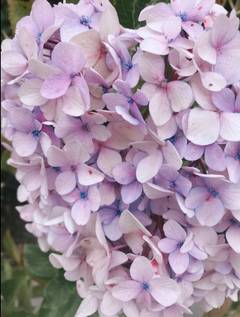
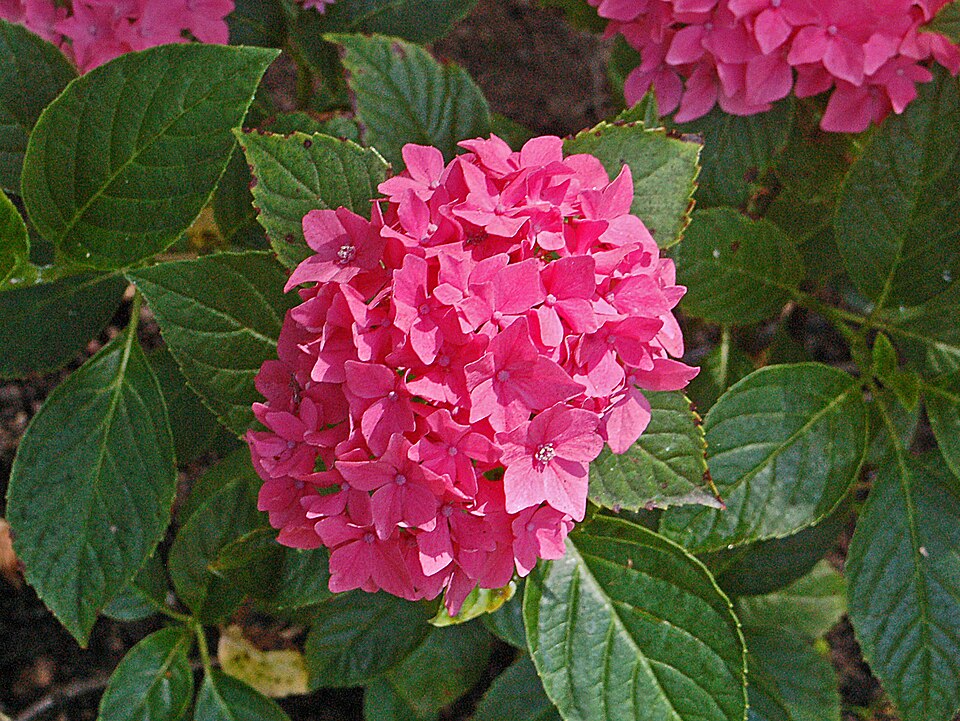
Hydrangea macrophylla 'Pia' is a dwarf rounded deciduous shrub reaching 18–24 inches (45–60 cm) tall with a spread of 24–30 inches (60–75 cm)—the smallest H. macrophylla cultivar in general commerce, running roughly one-third the height of standard 4–6 foot mophead cultivars in the species. The cultivar carries dense rounded miniature mophead flower clusters 3–4 inches (8–10 cm) across composed of flat single florets in deep rose-pink to crimson, and the flower-head size is proportional to the overall dwarf habit—the shrub does not attempt to carry full-sized mophead heads on a small frame. Flower color runs relatively pH-stable across the normal garden pH range: the pink-to-crimson coloration persists through soils from pH 5.5 to 7.0, and achieving blue flowers requires extremely acidic conditions below pH 4.5 that most garden soils do not reach. Glossy dark green broadly ovate leaves 2–4 inches (5–10 cm) long run smaller than the standard species leaves in proportion to the dwarf shrub architecture. Bloom occurs on old wood. Growth rate is slow. Hardy to zone 6.
Native Range
Hydrangea macrophylla is native to Japan, growing in coastal cliffs and mountain woodlands along the Pacific coast of Honshu and Shikoku. 'Pia' (also sometimes marketed as 'Pink Elf' or 'Winning Edge') is a dwarf selection that entered North American commercial cultivation through specialist hydrangea and dwarf-shrub nurseries in the late 20th century, developed for garden positions where standard H. macrophylla cultivars run too large.Suggested Uses
Planted in containers of at least 3 gallons (11 L), edging, rock gardens, small borders, and window boxes at 24–30 inch (60–75 cm) spacing in zone-6-and-warmer gardens. Dwarf size makes the cultivar a container-gardening match in a genus where most cultivars outgrow typical pot sizes; window boxes, balcony container gardens, and small urban plantings all suit the scale. The pH-stable pink-to-crimson color simplifies soil management compared to traditional H. macrophylla cultivars where soil chemistry actively shifts color between pink and blue. Late spring frost on old-wood flower buds eliminates bloom in some years in marginal climates. Full sun, dry soils, and zones below 6 are poor fits for the cultivar.How to Identify
Appearance
Size & Dimensions
Height1'6" - 2'
Width/Spread2' - 2'6"
Bloom Information
Dense rounded miniature mophead clusters 3–4 inches (8–10 cm) across of flat single florets, deep rose-pink to crimson, open from June through August. Bloom occurs on old wood. Flower color runs relatively pH-stable across the normal garden pH range (5.5–7.0), which simplifies soil management compared to color-sensitive cultivars. Active bloom duration is 6–8 weeks.
Detailed Descriptions
Flower Description
Deep rose-pink to crimson; flat single florets; miniature mophead 3-4 inches; pH-stable pinkFoliage Description
Glossy dark green, broadly ovate, 2-4 inches; smaller than standard H. macrophyllaGrowing Conditions
Sun Requirements
Requires 3-5 hours of direct sunlight daily
• Full Sun: 6+ hours of direct sunlight
• Partial Shade: 3-6 hours of direct sunlight
• Full Shade: Less than 3 hours of direct sunlight
Care & Maintenance
Care Guide
Partial shade in moist humus-rich well-drained soil matches the cultivar's cultivation needs. Hardy to zone 6 (−10°F / −23°C). Flower color runs relatively pH-stable—the deep pink to crimson coloration persists across soils from pH 5.5 to 7.0 without active management, and blue flowers require extremely acidic conditions below pH 4.5 rarely found in garden soils. The dwarf size suits container cultivation in pots as small as 3 gallons (11 L) and fits window-box and balcony positions where standard-sized hydrangeas are scaled wrong. Bloom on old wood means late spring frost after bud break eliminates the year's flowers in marginal zone-6 climates.Pruning
Pruning immediately after flowering (August) shapes the shrub without removing the coming year's flower buds, which form on current-season growth after bloom. The naturally dwarf habit requires minimal shaping beyond removal of spent flower heads and dead wood; hard pruning removes the following year's flower buds and eliminates bloom.Pruning Schedule
Prune: August
summer
Container Growing
Suitable for container growing
Minimum container size: 3 gallons