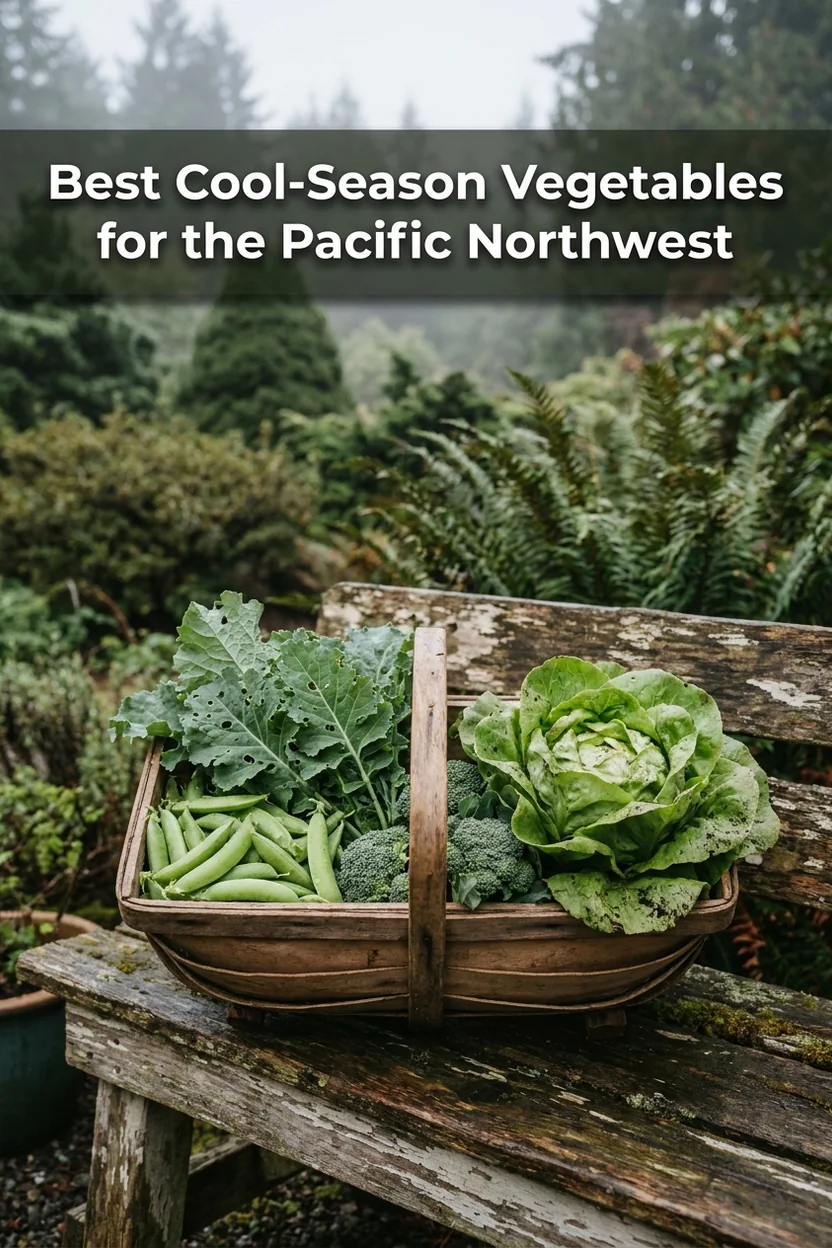
Best Cool-Season Vegetables for Pacific Northwest Gardens
Pets & Toxicity
Recorded toxicity for plants linked in this guide. An unknown status is not a safety assessment.
Brassica oleracea 'Red Russian' — Toxicity
Non-toxicView Brassica oleracea 'Red Russian' plant profileLactuca sativa 'Winter Density' — Toxicity
Non-toxicView Lactuca sativa 'Winter Density' plant profileAllium cepa 'Walla Walla' — Toxicity Warning
Toxic to petsView Allium cepa 'Walla Walla' plant profileAllium cepa 'Ailsa Craig' — Toxicity Warning
Toxic to petsView Allium cepa 'Ailsa Craig' plant profileAllium sativum 'Inchelium Red' — Toxicity Warning
Toxic to petsView Allium sativum 'Inchelium Red' plant profile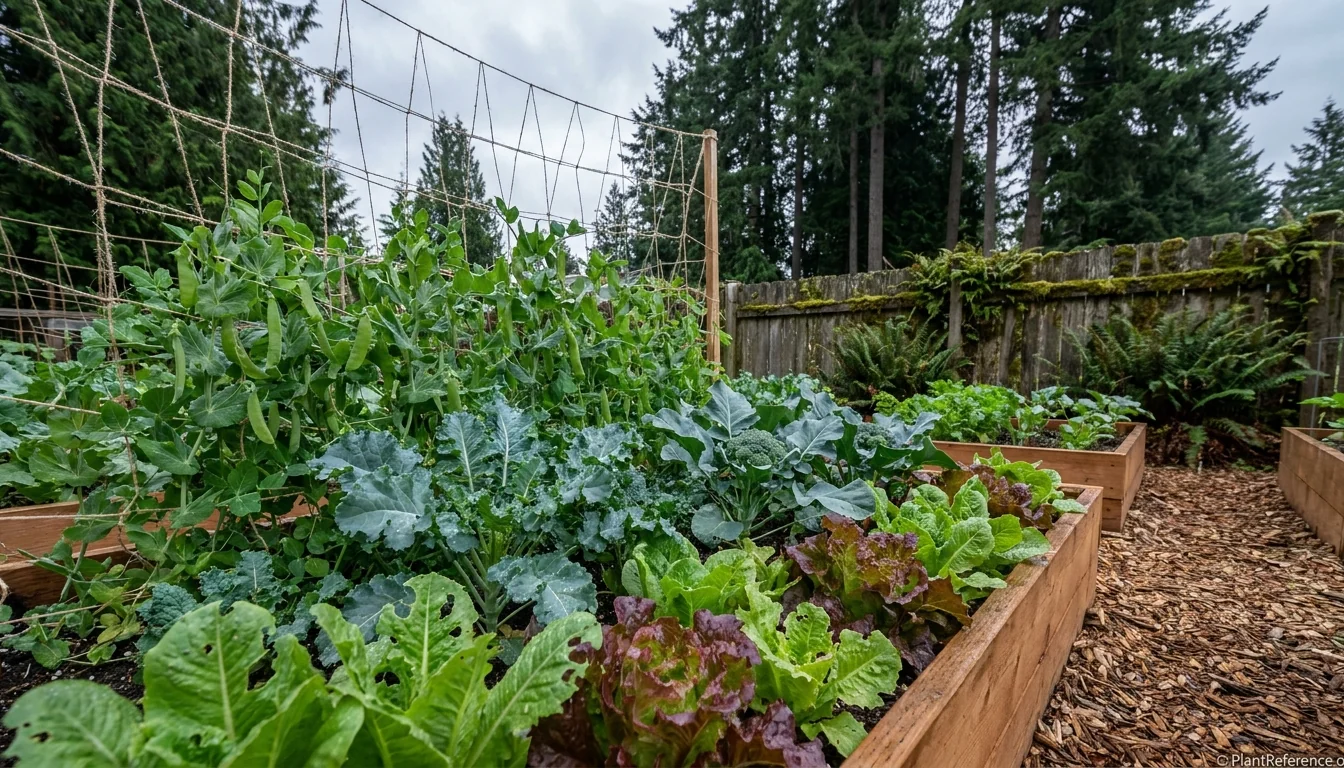
— Image © Plant Reference 2026
The maritime Pacific Northwest is, climatically speaking, a cool-season garden by design. The same cloudy, moderate summers that frustrate tomato and pepper growers are precisely what leafy greens, peas, and brassicas evolved to exploit. Cool-season vegetables grow best in air temperatures between 40°F and 70°F (4-21°C), and the region's long, mild spring and autumn shoulders give two generous windows to grow them. Understanding why these crops succeed here—and how to time the region's signature spring-and-fall double cycle—is the key to a productive PNW vegetable garden nearly year-round.
Best Cool-Season Vegetables for the Pacific Northwest
Cool-season vegetables share a physiological preference: their enzymes and growth processes run most efficiently in moderate temperatures, and many actually improve in flavor as the season cools. When temperatures climb, these crops shift into reproductive mode—bolting to seed—which is why the PNW's cool summers extend their productive window far beyond what warmer regions manage.
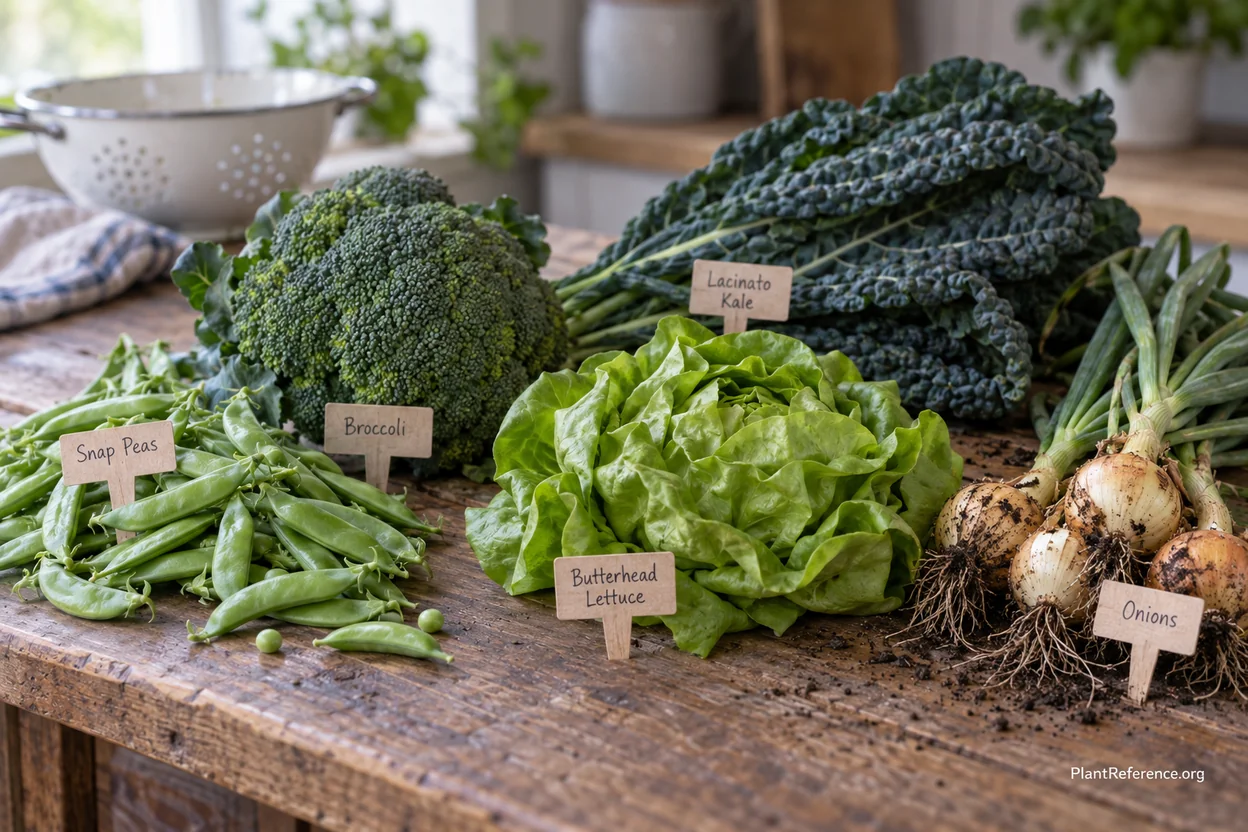
Peas are the quintessential PNW spring crop. Pisum sativum (PY-sum sa-TY-vum) germinates in cold soil and tolerates light frost, so it goes in as soon as the ground is workable. Pisum sativum 'Oregon Sugar Pod II' is a regional standard bred for the area's damp conditions, while Pisum sativum 'Cascadia' offers sweet snap pods and Pisum sativum 'Oregon Giant' produces large, cold-tolerant snow pods.
Brassicas are the backbone of the cool-season garden. Brassica oleracea (BRASS-ih-kuh oh-ler-AY-see-uh) encompasses broccoli, cabbage, and kale, all of which luxuriate in PNW conditions. For broccoli, 🌿Brassica oleracea 'Di Cicco' and 🌿Brassica oleracea 'Calabrese' produce a main head plus side shoots over a long harvest. For cabbage, Brassica oleracea 'Golden Acre' matures early in spring while Brassica oleracea 'January King' is bred to stand through winter cold. Kale is the standout—🌿Brassica oleracea 'Lacinato', 🌿Brassica oleracea 'Red Russian', and the famously hardy 🌿Brassica oleracea 'Winterbor' all overwinter and grow sweeter after frost.
Leafy greens fill every gap. Lactuca sativa (lak-TOO-kuh sa-TY-vuh) lettuce grows quickly in cool weather—🌿Lactuca sativa 'Buttercrunch' resists bolting and 🌿Lactuca sativa 'Winter Density' tolerates real cold. Spinach, Spinacia oleracea (spin-AY-shee-uh oh-ler-AY-see-uh), thrives in the shortening days of fall; 🌿Spinacia oleracea 'Bloomsdale' and Spinacia oleracea 'Tyee' both overwinter under cover.
Alliums round out the category, though their timing is distinct. Allium cepa (AL-ee-um SEP-uh) onions require "long-day" varieties at the PNW's high-latitude summer day lengths—🌿Allium cepa 'Walla Walla' and 🌿Allium cepa 'Ailsa Craig' are reliable choices. Garlic, Allium sativum, is planted in fall: hardneck 🌿Allium sativum 'Music' and softneck 🌿Allium sativum 'Inchelium Red' both overwinter for an early-summer harvest.
Crop / Variety | Days to Maturity | Best Sowing Window | Notes for the PNW |
|---|---|---|---|
Pisum sativum 'Oregon Sugar Pod II' | 60-70 days | Late Feb - March | Bred for regional dampness; frost tolerant |
60-70 days | March or July | Main head plus extended side shoots | |
60 days | July - August | Overwinters; sweetens after frost | |
55-65 days | Spring & fall | Cold-tolerant romaine-butterhead type | |
40-50 days | Aug - Sept | Overwinters under cover for spring harvest | |
125 days | Aug (overwinter) | Long-day onion suited to PNW summers |
Spring and Fall Planting Windows
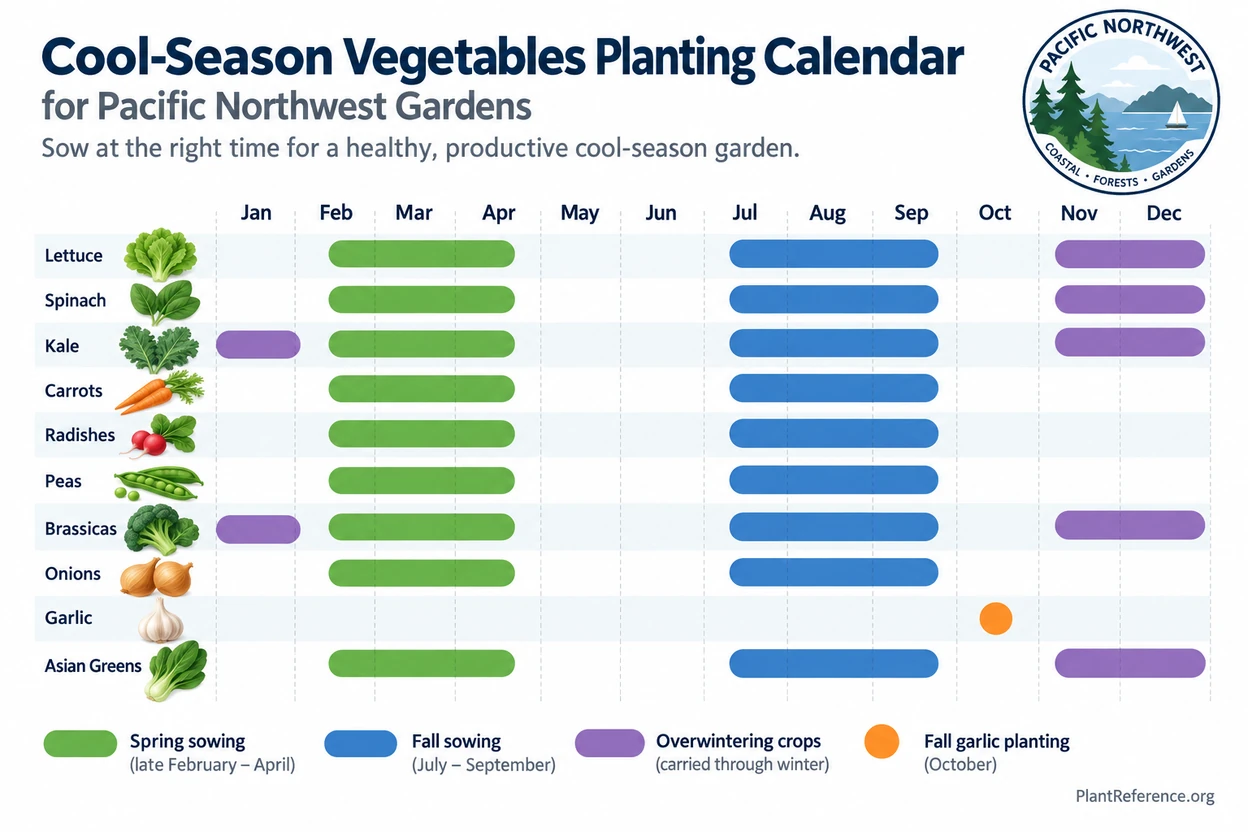
The PNW's signature growing pattern is two cool-season cycles bracketing the warm middle of the year. Because the maritime climate offers a long, gradual spring and a mild, lingering autumn, most cool-season crops can be grown twice—and several can be carried straight through winter under simple protection.
The Spring Cycle
Begin as soon as soil is workable, typically late February through March in the maritime lowlands where the last frost falls in mid-to-late March. Peas, spinach, and the first lettuces tolerate cold soil and go in directly. Start broccoli, cabbage, and kale indoors in late winter and transplant in March to April. The goal is to mature these crops before summer warmth triggers bolting—a physiological switch from leaf-and-head production to flowering driven by temperature and day length. When to Plant Lettuce in Seattle: Complete Guide + Best Varieties for Zone 8b
The Fall and Overwinter Cycle
The fall cycle is where PNW gardens truly shine. Sow brassicas in July and direct-sow spinach and lettuce in August through September, timing them to size up as days shorten and temperatures fall. Many of these crops then hold in the garden through winter, harvested as needed. Overwintering spinach and hardy kale resume growth in late winter for an extra-early spring harvest. When to Plant Kale in Portland: Complete Guide + Best Varieties for Zone 8b
The Allium Exception
Alliums follow their own calendar. Plant garlic in September or October so cloves establish roots before winter, then harvest the following July. Overwintering onions are also set out in late summer. For both, fall planting leverages the mild PNW winter to produce far larger bulbs than spring planting allows. When to Plant Onions in Seattle: Complete Guide + Best Varieties for Zone 8b
Inland Adjustment
East of the Cascades, in Spokane and the Yakima Valley, the calendar compresses. The colder Zone 6b-7a winters and later May frosts mean spring sowing starts weeks later and the fall window closes sooner. Inland gardeners get a strong single spring cycle and a shorter fall window, often relying more heavily on cold frames to extend it. Pacific Northwest Gardening Guide: Climate, Soil & Plant Selection
Quick Reference
Peas, spinach, early lettuce: direct sow late Feb - March (maritime)
Broccoli, cabbage, kale (spring): start indoors late winter, transplant March - April
Brassicas (fall): sow July
Spinach, lettuce (fall/overwinter): direct sow Aug - Sept
Garlic: plant Sept - Oct, harvest July
Overwintering onions: set out late summer
Complete Growing Guide for PNW Cool-Season Crops
Successful cool-season gardening in the maritime Northwest rests on three foundations: well-drained soil, balanced pH, and steady moisture management that accounts for the region's wet-then-dry seasonal swing.
Soil and Drainage
The PNW's abundant winter rainfall saturates soil for months, and cool-season crops planted into waterlogged ground rot at the root. Raised beds are the regional default rather than the exception, lifting roots above the saturated zone and warming soil earlier in spring. The Complete Guide to Raised Bed Gardening for Beginners (2025) Where a dense glacial-till hardpan layer sits 18-36 inches (45-90 cm) down, drainage is even more critical, and raised beds become essential. Poor Drainage in Raised Beds: Causes and Fixes for Waterlogged Soil
Managing Acidic Soil
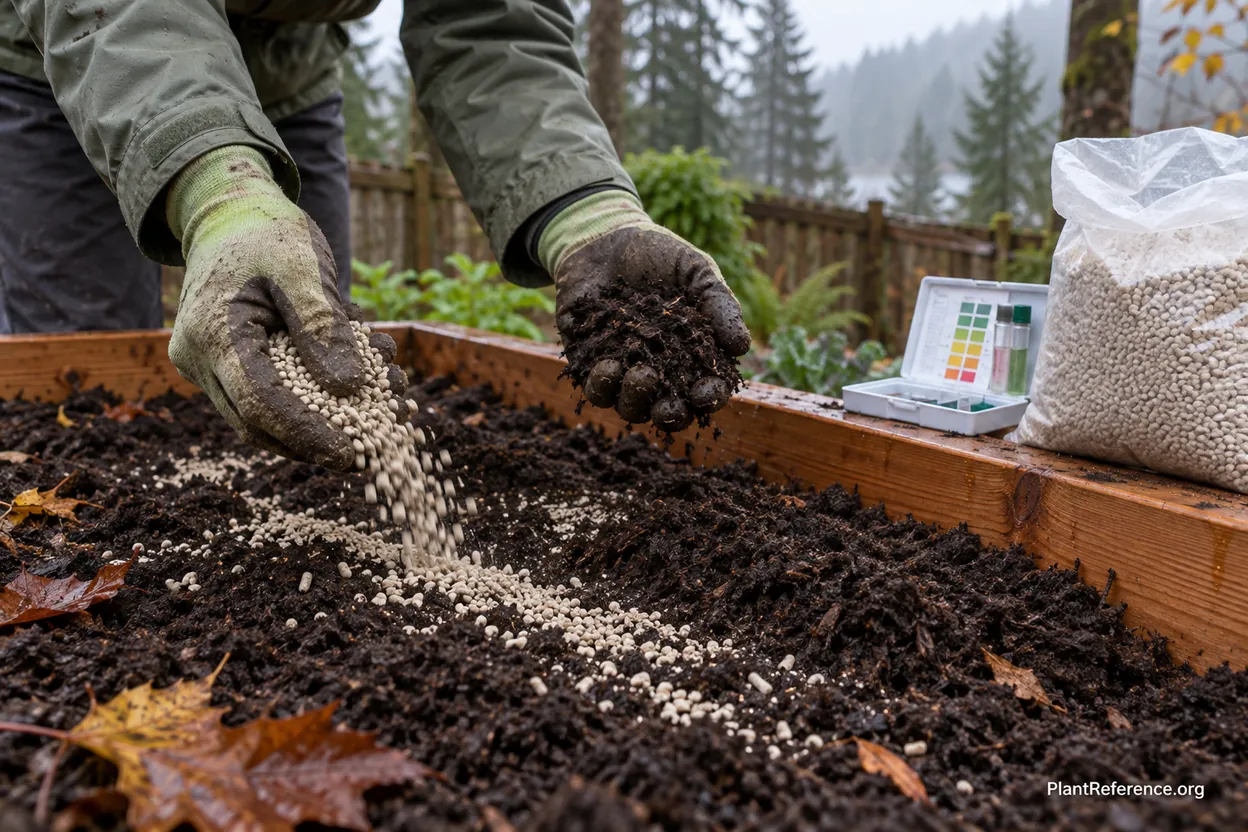
High rainfall drives a predictable chemical process: rainwater combines with atmospheric carbon dioxide to form weak carbonic acid, which leaches calcium and magnesium from the soil and steadily lowers pH. When pH drops below 5.5, aluminum becomes soluble and toxic to roots while phosphorus uptake stalls. Brassicas are especially pH-sensitive, preferring 6.5-7.0, so a fall application of dolomitic lime—which supplies the magnesium maritime soils often lack—is a foundational PNW practice. Raised Bed Soil pH Problems: Testing, Adjusting, and Maintaining Balance Always test before liming; the alkaline inland PNW rarely needs it. Best Soil for Raised Beds: 6 Commercial Mixes Tested and Compared
Watering Across the Seasons
Cool-season crops need consistent moisture, but the timing matters. Spring and fall crops often get enough from natural rainfall, while late-summer-sown fall crops germinate during the dry July-September gap and need regular irrigation to establish. Deliver water at the soil level through drip or soaker hoses to keep foliage dry—wet leaves in the PNW's humidity invite fungal disease. A 2-3 inch (5-7.5 cm) layer of organic mulch steadies soil moisture and moderates temperature. Best Raised Bed Vegetables for Beginners: Top 10 Easy-Growing Crops
Succession and Spacing
Sow lettuce and spinach in small batches every two to three weeks rather than all at once, ensuring a continuous supply instead of a single glut. Give brassicas room—18-24 inches (45-60 cm) between plants—because good airflow through the canopy is the simplest defense against the fungal diseases that thrive in maritime humidity. Proper spacing keeps leaf surfaces dry enough that spores cannot germinate. Raised Bed Vegetable Garden Layout: Planning for Maximum Production
Why Frost Improves Flavor
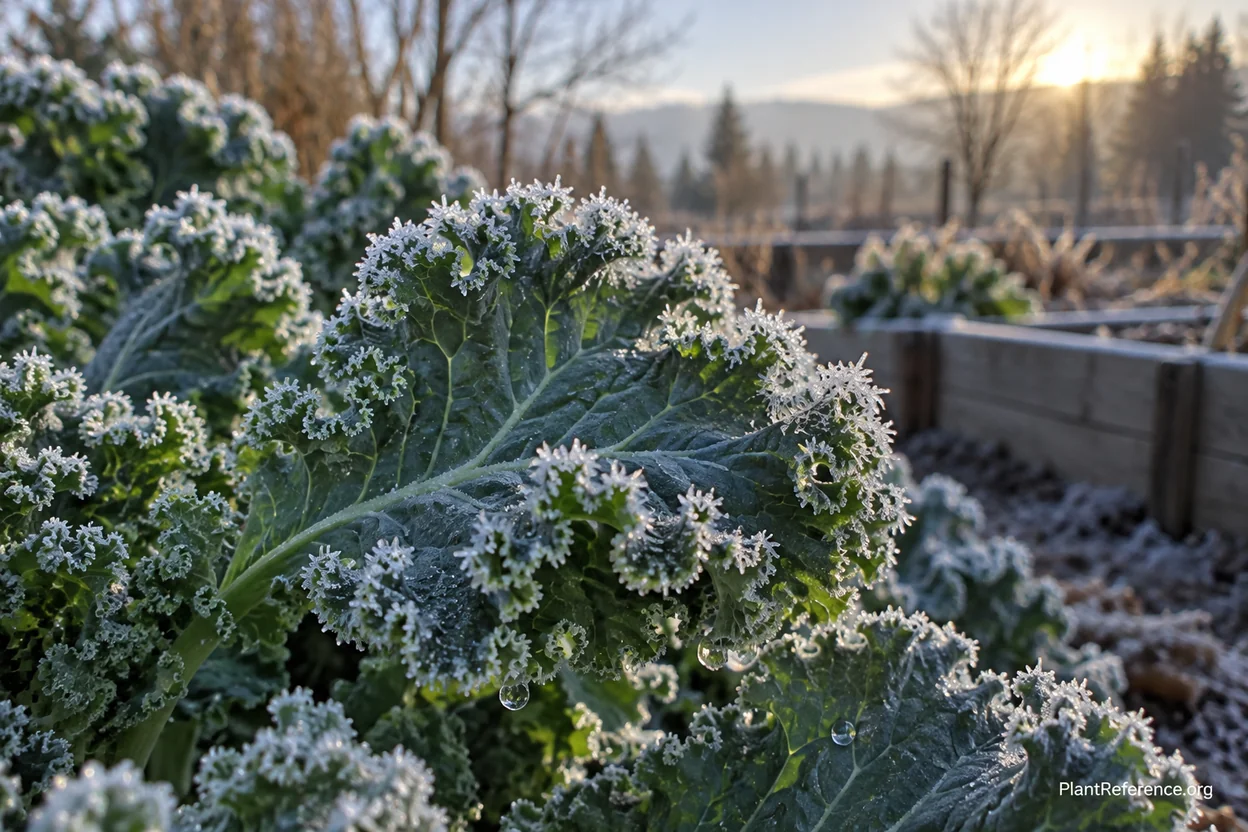
One of the cool-season garden's quiet rewards is that cold genuinely improves several crops. When kale and other hardy greens experience light frost, they convert stored starches into sugars as a natural antifreeze, protecting cells from ice damage. The result is noticeably sweeter, milder leaves—a physiological response that makes a fall-and-winter PNW harvest superior to a summer one. When to Plant Kale in Seattle: Complete Guide + Best Varieties for Zone 8b
Troubleshooting Cool-Season Problems
Slugs and Snails
Slugs are the defining PNW pest, and they target tender cool-season seedlings hardest in the moist spring and fall. The most effective approach combines cultural control—removing debris and boards where they shelter, and watering in the morning so soil surfaces dry by night—with iron phosphate baits, which are non-toxic to pets and wildlife and break down into soil nutrients. Raised Bed Pest Problems: Identification and Organic Control Methods
Bolting
Bolting is a physiological response, not a disease: rising temperatures and lengthening days signal cool-season crops to flower and set seed, turning lettuce bitter and ending spinach production. Prevent it by timing spring crops to mature before summer heat, choosing bolt-resistant varieties like 🌿Lactuca sativa 'Buttercrunch', and leaning on the more reliable fall cycle when day lengths are shortening rather than expanding.
Clubroot and Brassica Diseases
Clubroot, a soil-borne pathogen that deforms brassica roots, persists for years and is worse in acidic, waterlogged soil—exactly the maritime default. Liming to raise pH toward 7.0, improving drainage with raised beds, and rotating brassicas to a fresh bed each year are the three best defenses. Good spacing and airflow also limit the powdery mildew and downy mildew that maritime humidity encourages.
Cabbage Worms and Aphids
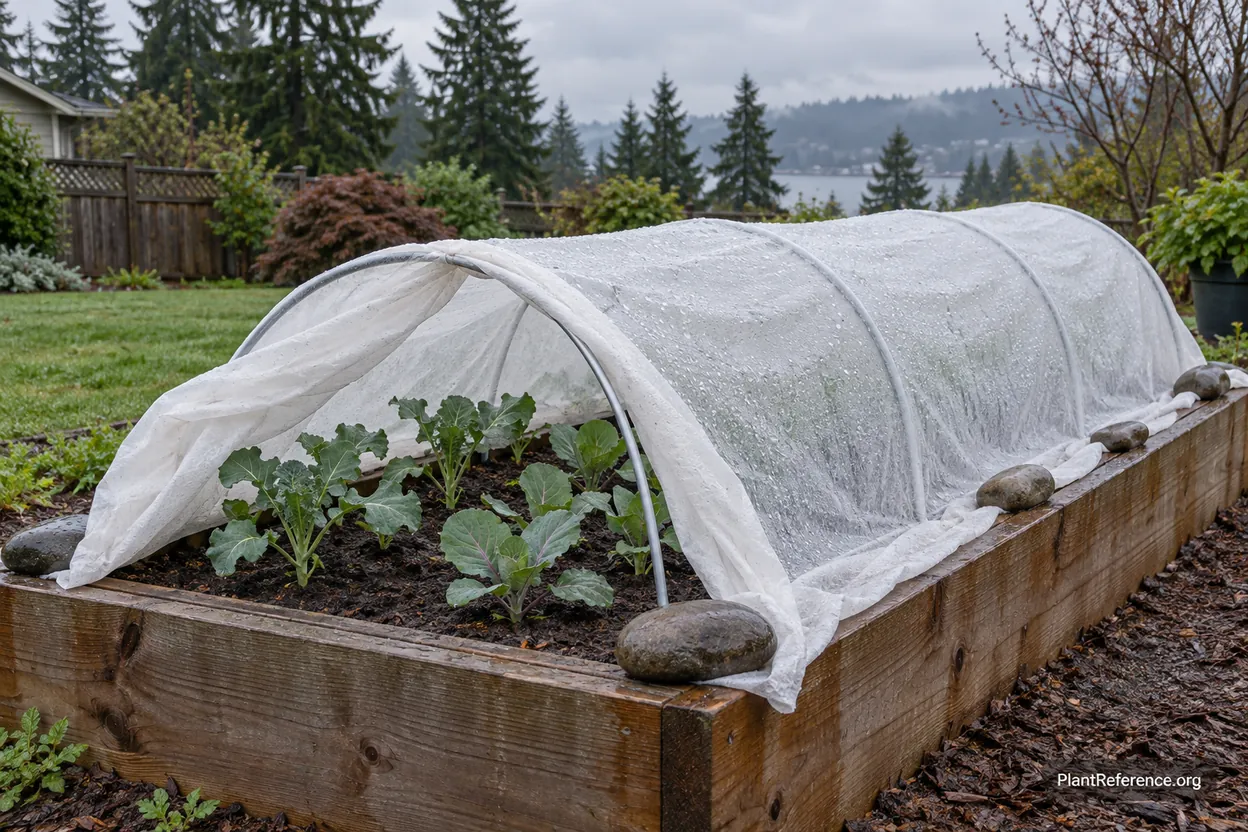
The white cabbage butterfly lays eggs that hatch into green caterpillars on brassica leaves, while aphids cluster on new growth flushed by excess nitrogen. Floating row covers exclude egg-laying butterflies entirely, and a strong spray of water dislodges aphid colonies. Fostering beneficial insects like lacewings and parasitic wasps keeps both in check without chemicals. When to Plant Carrots in Seattle: Zone 8b Dates + Best Varieties
Harvest & Storage
Harvest cool-season crops at their peak and many will keep producing. Pick peas like Pisum sativum 'Cascadia' every few days while pods are plump and sweet—frequent picking signals the plant to keep flowering. Cut the central head of 🌿Brassica oleracea 'Di Cicco' broccoli while the buds are tight, and the plant rewards you with weeks of smaller side shoots.
Harvest kale such as 🌿Brassica oleracea 'Lacinato' and 🌿Brassica oleracea 'Winterbor' from the bottom up, taking outer leaves and leaving the growing crown, and let it stand through frost for the sweetest flavor. Cut leaf lettuce and 🌿Spinacia oleracea 'Bloomsdale' spinach as a cut-and-come-again crop, harvesting outer leaves so the center keeps growing. When to Plant Lettuce in Portland: Complete Guide + Best Varieties for Zone 8b
For storage, keep leafy greens unwashed in the refrigerator crisper wrapped in a damp towel for up to a week. Cure 🌿Allium cepa 'Walla Walla' onions and garlic in a warm, airy spot for a couple of weeks before moving them to cool, dry storage—though sweet onions keep only a few months while firmer storage types last far longer. Brassicas like Brassica oleracea 'January King' cabbage hold for weeks in cold storage. When to Plant Onions in Portland: Complete Guide + Best Varieties for Zone 8b
Frequently Asked Questions
Reading about plants and recognising them are different skills. These three build the second.
- Daily PlantIdentify the day’s mystery plant from a close-up photograph.
- Keyed OutWork a dichotomous key, lead by lead, to name a hidden specimen.
- Name That PlantName a specimen from botanical clues dealt hardest first.
Free to play, no account needed
Tagged with
Sarah earned her doctorate in plant biology and spent time working in botanical garden education before transitioning to freelance writing and consulting. Now based in Portland, Oregon, she teaches plant identification workshops at local community centers and maintains a modest collection of over 60 houseplants in her small apartment. Sarah specializes in helping beginners understand plant science without the jargon—her approach focuses on practical observation over theory. She's killed her fair share of fiddle leaf figs and finally cracked the code on keeping them alive.