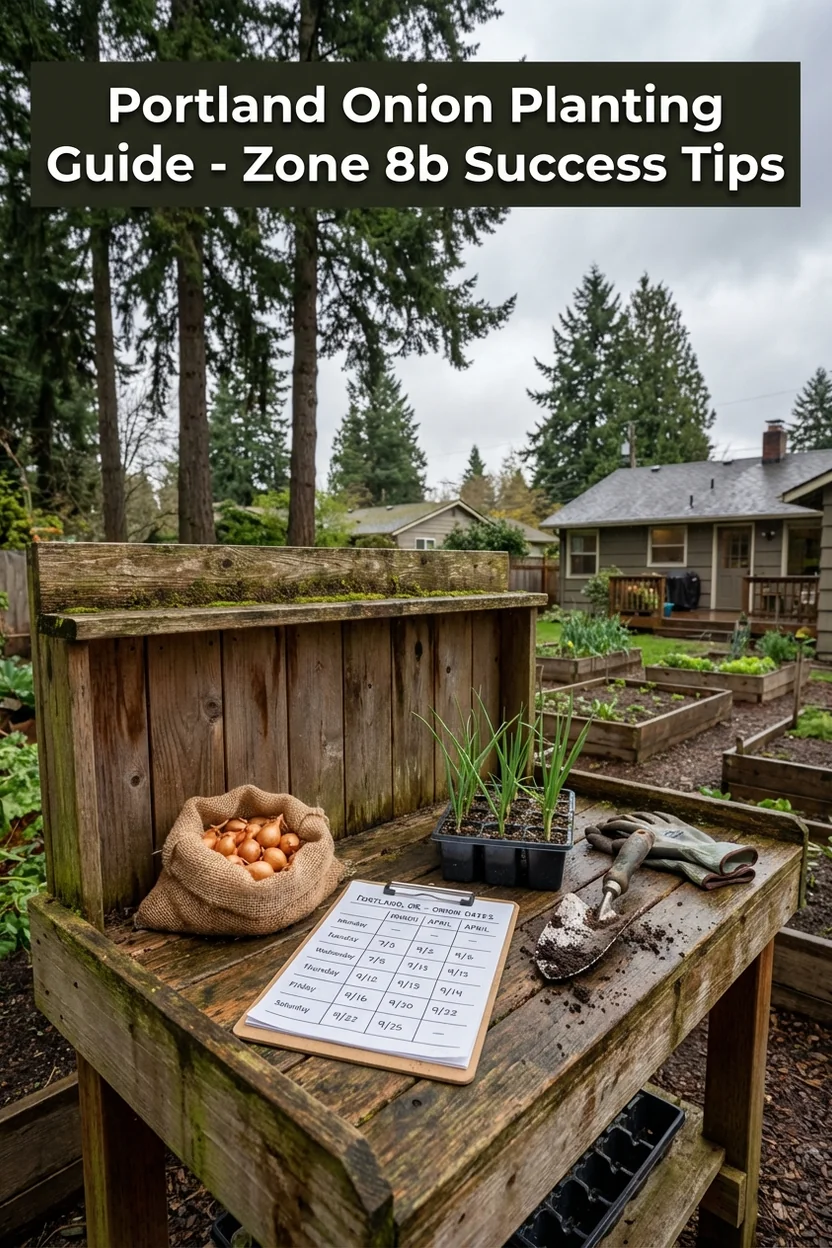
When to Plant Onions in Portland: Complete Guide + Best Varieties for Zone 8b
Pets & Toxicity
Recorded toxicity for plants linked in this guide. An unknown status is not a safety assessment.
Toxic to pets: red wing storage onion, yellow sweet Spanish onion, copra onion and 5 moreDetailsHide
Allium cepa 'Red Wing' — Toxicity Warning
Toxic to cats and dogs if eaten; cats are especially susceptible, and raw, cooked or concentrated plant material can damage red blood cells and cause anaemia.View Allium cepa 'Red Wing' plant profileAllium cepa 'Yellow Sweet Spanish' — Toxicity Warning
Toxic to cats and dogs if eaten; cats are especially susceptible, and raw, cooked or concentrated plant material can damage red blood cells and cause anaemia.View Allium cepa 'Yellow Sweet Spanish' plant profileAllium cepa 'Copra' — Toxicity Warning
Toxic to cats and dogs if eaten; cats are especially susceptible, and raw, cooked or concentrated plant material can damage red blood cells and cause anaemia.View Allium cepa 'Copra' plant profileAllium cepa 'Red Baron' — Toxicity Warning
Toxic to cats and dogs if eaten; cats are especially susceptible, and raw, cooked or concentrated plant material can damage red blood cells and cause anaemia.View Allium cepa 'Red Baron' plant profileAllium sativum 'Music' — Toxicity Warning
Toxic to cats and dogs if eaten; cats are especially susceptible, and raw, cooked or concentrated plant material can damage red blood cells and cause anaemia.View Allium sativum 'Music' plant profileAllium sativum 'California Early' — Toxicity Warning
Toxic to cats and dogs if eaten; cats are especially susceptible, and raw, cooked or concentrated plant material can damage red blood cells and cause anaemia.View Allium sativum 'California Early' plant profileAllium cepa 'Walla Walla' — Toxicity Warning
Toxic to cats and dogs if eaten; cats are especially susceptible, and raw, cooked or concentrated plant material can damage red blood cells and cause anaemia.View Allium cepa 'Walla Walla' plant profileAllium cepa 'Ailsa Craig' — Toxicity Warning
Toxic to cats and dogs if eaten; cats are especially susceptible, and raw, cooked or concentrated plant material can damage red blood cells and cause anaemia.View Allium cepa 'Ailsa Craig' plant profile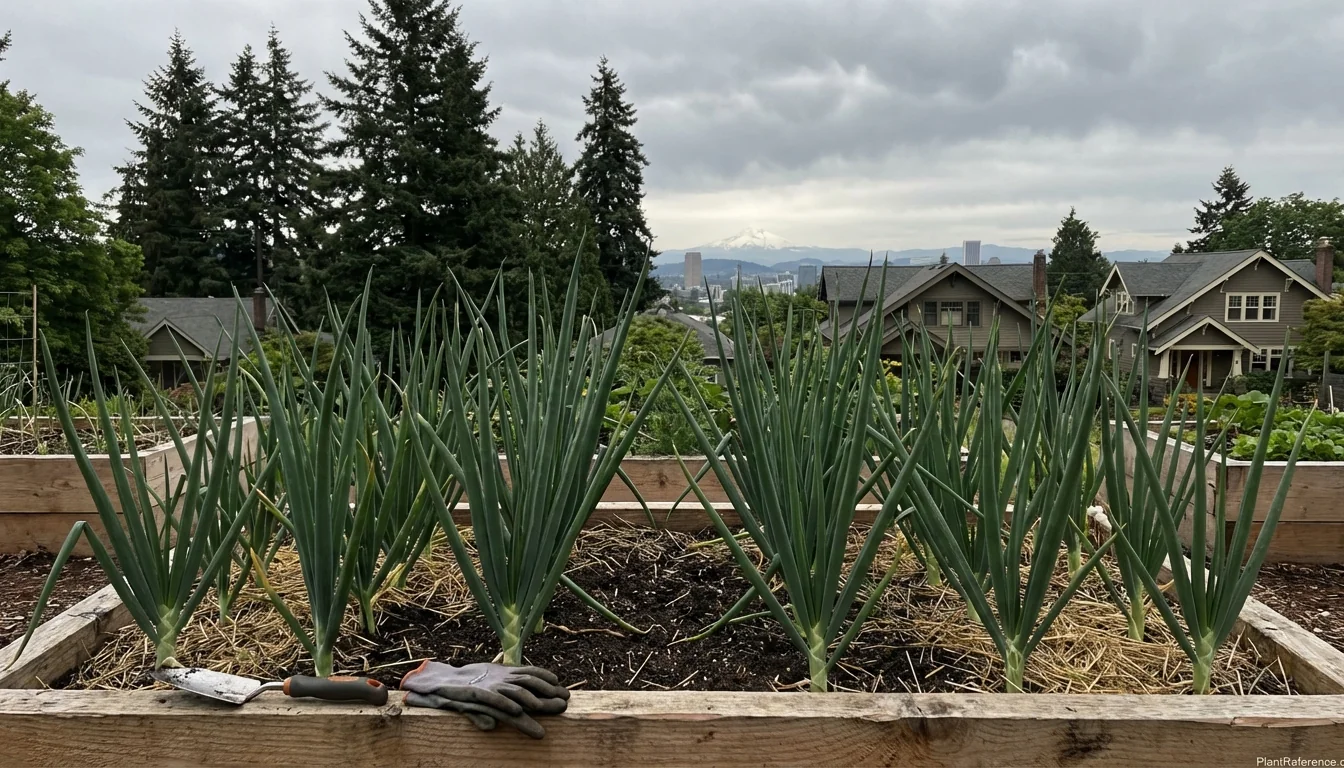
— Image © Plant Reference 2026
Living in Portland for forty years, I've learned that our Zone 8b climate gives us something most gardeners envy—the ability to plant onions twice a year. While folks in Minnesota are limited to spring planting, we can choose between spring planting for fall harvest or fall planting for an early summer harvest.
Best Onion Varieties for Portland's Climate
Portland sits at 45°N latitude, which means we need long-day onion varieties that require 14-16 hours of daylight to trigger bulbing. This is crucial—plant short-day varieties here and you'll get giant green tops but no bulbs.
The magic happens during our long June and July days when the sun doesn't set until after 9 PM. That extended daylight signals long-day onions to stop making leaves and start forming bulbs.
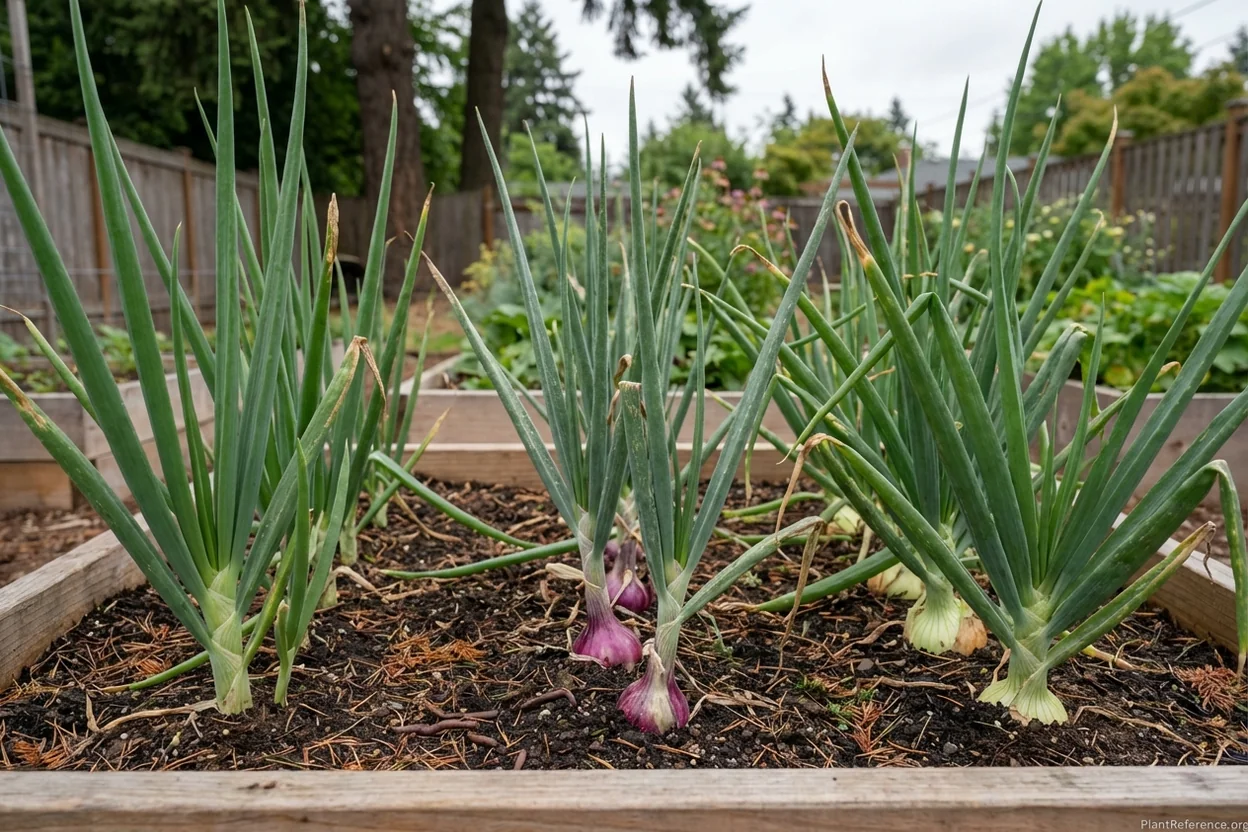
Here are the varieties that consistently perform well in Portland's climate:
Variety | Days to Maturity | Best For | Notes for Portland |
|---|---|---|---|
110-125 days | Sweet eating, early harvest | Perfect for fall planting, overwinters well in Zone 8b | |
105-120 days | Long-term storage | Excellent keeper, stores 8-10 months when cured properly | |
110-120 days | Large bulbs | Can produce 1+ pound bulbs in rich Oregon soil | |
100-110 days | Storage champion | Best storage onion for Portland, keeps until next harvest | |
110-115 days | Red storage type | Beautiful deep red color, good storage life | |
120-130 days | Exhibition size | Can grow massive show onions in Portland's long season |
Walla Walla Sweet is our regional champion. Developed just 260 miles east of us, it's perfectly adapted to Pacific Northwest conditions. The sweet, mild flavor comes from our naturally low-sulfur soils.
Red Wing gives you the longest storage life—I've had properly cured Red Wing onions last until the following August. That's nearly a full year of onion storage from one planting.
For garlic, Portland gardeners have excellent options with both hardneck and softneck varieties:
🌿Allium sativum 'Music' is the hardneck standard for our area. Plant cloves in October, harvest in July. The large bulbs have 4-6 jumbo cloves with complex flavor.
🌿Allium sativum 'California Early' softneck stores longer and braids beautifully. It's more heat-tolerant for our occasional hot summers.
Specific Planting Dates for Portland
Portland's last frost averages March 19, but I've been tracking it for decades—we can often plant earlier because our soil drains well and warms quickly.
Spring Planting Schedule
March 1-15: Onion Sets and Transplants Plant as soon as soil is workable. Onions are cold-hardy and actually prefer cool weather for establishing roots. I aim for soil temperature of 35°F (2°C) or warmer.
March 15-April 1: Direct Seeding If you're growing from seed, wait until soil reaches 40°F (4°C). Seeds germinate slowly in cold soil but won't rot if drainage is good.
Harvest Timeline for Spring Planting:
Early varieties: Late July to early August
Main season: August through September
Storage varieties: September when tops fall naturally
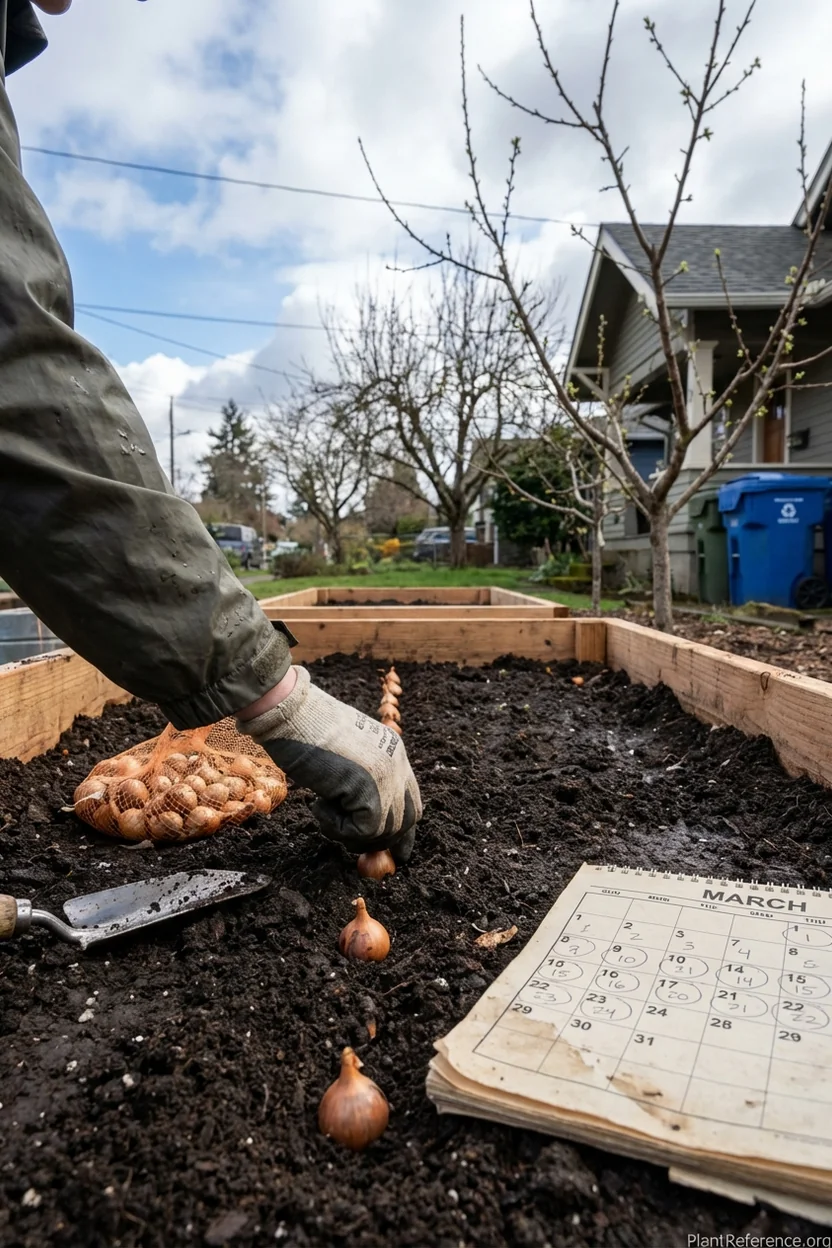
Fall Planting Schedule (Advanced Technique)
This is where Portland gardeners gain a real advantage. Fall planting gives you earlier harvest, larger bulbs, and fewer pest problems.
October 15-30: Transplant Only Use only transplants for fall planting—never sets or seeds. The young plants need time to establish roots before winter but shouldn't get too large or they'll bolt in spring.
Overwintering Management:
Mulch with 2 inches (5 cm) of straw in December
Expect some winter leaf die-back—normal in Zone 8b
Remove mulch in March when growth resumes
Side-dress with compost in early April
Harvest Timeline for Fall Planting:
Early varieties: May through June
Main season: June through July
Advantage: Harvest before summer heat stress
Garlic Planting Dates
October 1-15: Hardneck Varieties Plant 🌿Allium sativum 'Music' and other hardnecks early to ensure adequate cold exposure for proper bulb development.
October 15-November 1: Softneck Varieties 🌿Allium sativum 'California Early' can be planted later since it requires less vernalization.
Plant individual cloves 2 inches (5 cm) deep, 6 inches (15 cm) apart, pointed end up. In Portland's climate, both types will be ready to harvest by mid-July.
Complete Growing Guide for Portland
Soil Preparation
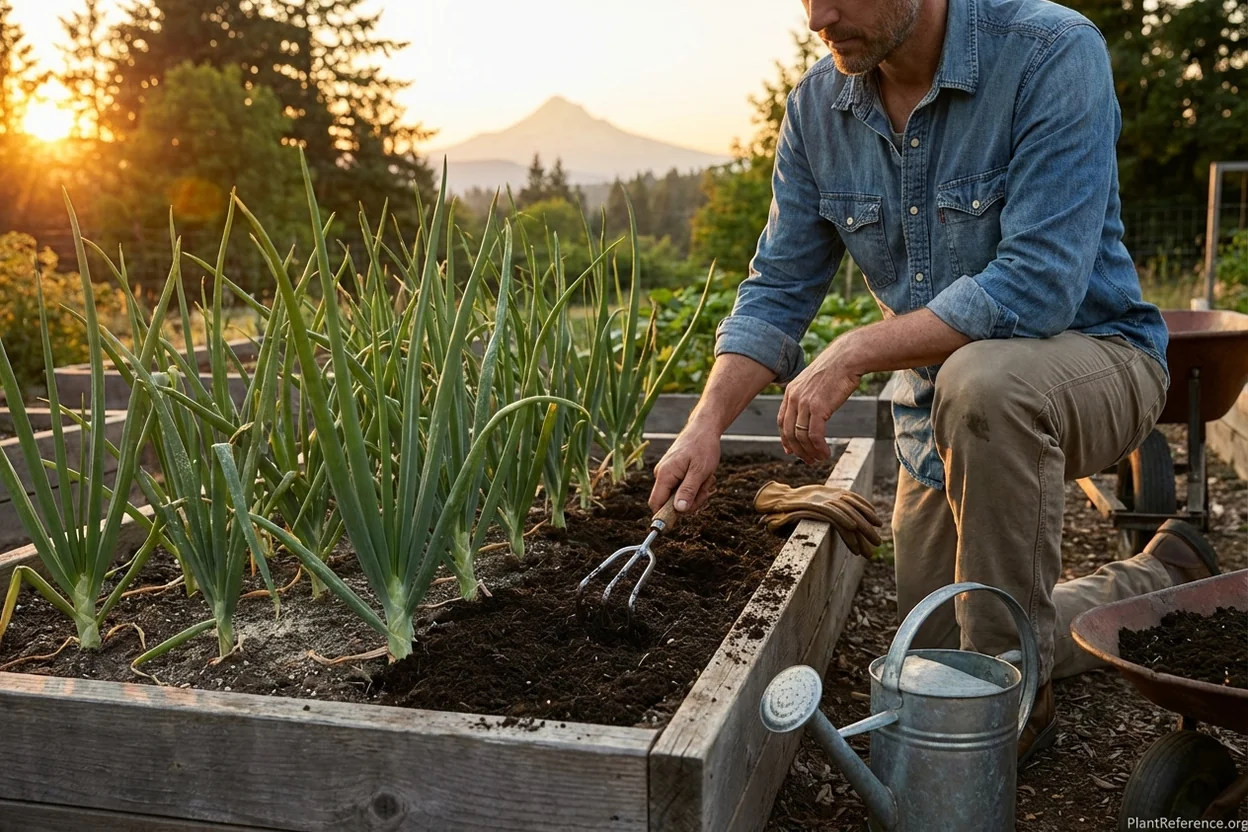
Portland's heavy clay soils need amendment for successful onion growing. I always add 2-3 inches (5-8 cm) of compost before planting.
pH Requirements: Onions prefer 6.0-6.8 pH. Most Portland soils run slightly acidic, so lime application every 2-3 years helps maintain optimal pH.
Drainage is Critical: Our wet winters can cause bulb rot. Raised beds or mounded rows improve drainage significantly. Even 4 inches (10 cm) of elevation makes a difference.
Test soil pH in February—add lime if below 6.0
Work in 3 inches (8 cm) of compost each spring
Create raised rows if your garden has drainage issues
Add coarse sand to heavy clay areas (not fine sand)
Ensure 6+ hours direct sunlight daily
Fertilization Strategy
Onions are heavy nitrogen feeders early in the season but need phosphorus and potassium for bulb development.
Pre-Planting: Work 2-3 inches (5-8 cm) of aged compost into beds. This provides slow-release nutrients throughout the growing season.
Growing Season Feeding:
Apply balanced 10-10-10 fertilizer at planting
Side-dress with compost tea every 3 weeks through May
Stop all nitrogen feeding by June 15—late nitrogen delays maturity
Apply potassium sulfate in early June to improve storage quality
Critical Timing: Stop nitrogen applications when bulbing begins. You'll know bulbing has started when the soil cracks around the base of the plant.
Watering Guidelines
Portland's wet winters and dry summers create unique watering challenges for onions.
Spring Management (March-May): Usually no supplemental watering needed. Our spring rains typically provide adequate moisture.
Summer Management (June-September): Deep watering once or twice weekly. Onions need consistent moisture but hate waterlogged soil.
Pre-Harvest (August-September): Reduce watering as tops begin to yellow. Stop watering completely 2 weeks before harvest to encourage proper curing.
Pest Management for Portland
Our mild, moist climate creates perfect conditions for certain onion pests.
Onion Root Maggot is our biggest challenge. The flies lay eggs at the base of plants in May, and larvae tunnel into developing bulbs.
Use floating row covers from planting through May
Delay planting until after May 1 to avoid peak egg-laying
Remove all onion family debris each fall
Rotate planting areas—don't grow onions in the same spot two years running
Thrips damage leaves and can transmit viruses. Look for silvery streaks on foliage.
Overhead watering knocks thrips off plants
Blue sticky traps placed near plants catch adult thrips
Beneficial insects like lacewings help control thrips naturally
Downy Mildew appears as fuzzy growth on leaves during our wet springs.
Improve air circulation with proper spacing
Water at soil level, not on foliage
Remove affected leaves immediately
Plant in full sun locations that dry quickly after rain
Troubleshooting Portland-Specific Problems
Problem: Small Bulbs Despite Good Growth
This is usually a variety selection issue. If you planted intermediate-day or short-day varieties, they won't bulb properly in Portland's latitude.
Solution: Only plant long-day varieties that need 14-16 hours of daylight. Save the 'Texas Sweet' and 'Granex' varieties for friends in California.
Problem: Onions Bolting (Going to Seed)
Bolting destroys the bulb and makes onions inedible. In Portland, this usually happens with fall-planted onions that grew too large before winter.
Solutions:
Plant transplants in late October, not early October
Choose smaller transplants (pencil thickness or less)
Provide consistent moisture—drought stress triggers bolting
Avoid large onion sets which bolt more readily
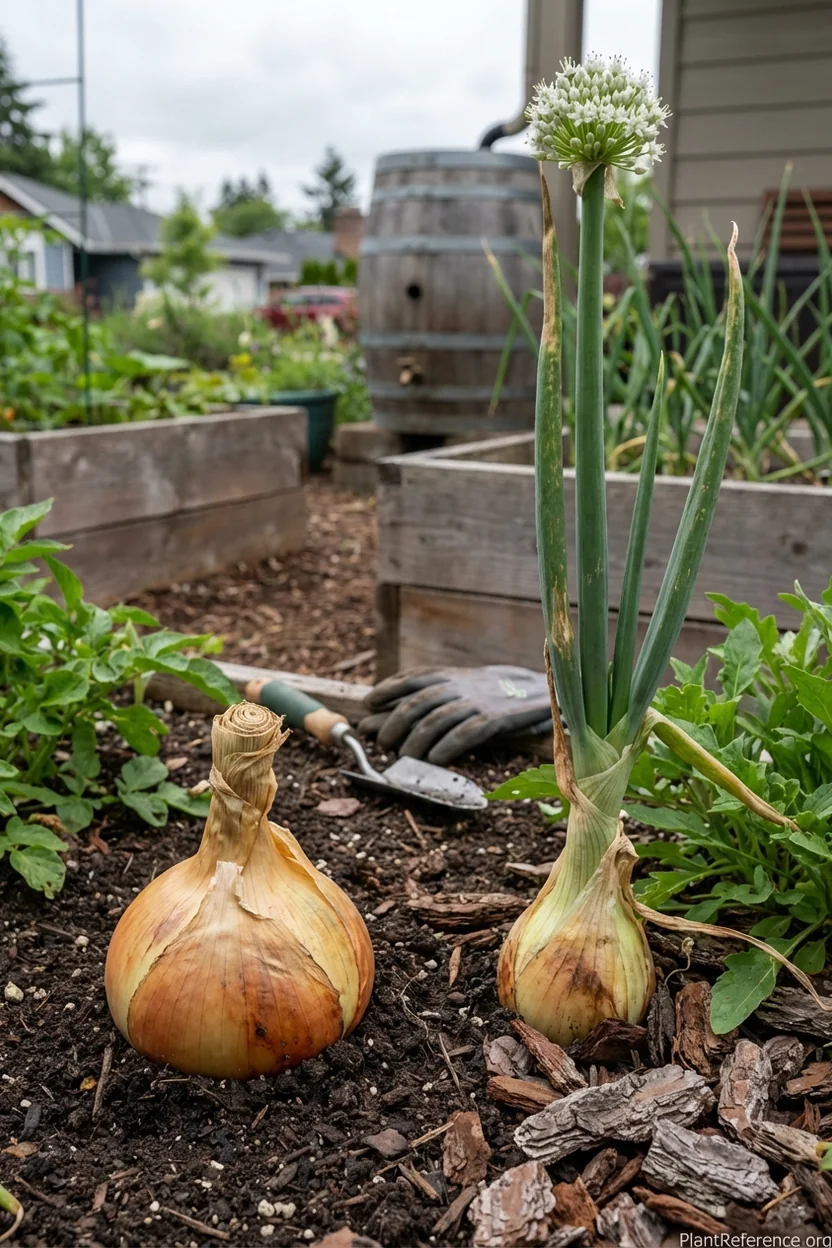
Problem: Thick Necks That Won't Cure
Onions with thick, fleshy necks won't store properly and tend to rot quickly.
Causes and Solutions:
Too much nitrogen late in season—stop feeding by June 15
Excessive watering near harvest—reduce water as tops yellow
Harvesting too early—wait for natural top fall-over
Wrong variety for storage—choose 'Copra' or 'Red Wing' for long storage
Problem: Poor Winter Survival of Fall-Planted Onions
Some winters are harder than others in Zone 8b. The 2021 ice storm taught many Portland gardeners about winter protection.
Solutions:
Mulch with 3-4 inches (8-10 cm) of straw in December
Choose cold-hardy varieties like 'Walla Walla' for fall planting
Plant in protected locations away from north wind
Use low tunnels or cold frames during extreme cold snaps below 20°F (-7°C)
Harvest & Storage
Determining Harvest Readiness
Harvest timing is crucial for storage quality. I wait until 50-75% of the tops fall over naturally. This indicates the plant has finished moving sugars from the leaves into the bulb.
Never bend tops over manually—this creates wounds that invite rot and reduces storage life.
Harvest Process
Choose a dry day for harvest. Portland's late summer usually provides several clear days perfect for onion harvest.
Lift bulbs carefully with garden fork, don't pull
Brush off soil but don't wash
Leave roots and tops attached initially
Lay in single layer in sunny, well-ventilated area
Curing for Storage
Portland's humid climate makes proper curing critical. I use my garage with fans running for air circulation.
Curing Process:
Spread onions in single layers on screens or mesh trays
Provide good airflow—use fans if necessary
Maintain temperature around 80-85°F (27-29°C) for fastest curing
Cure for 2-4 weeks until outer skins are papery
Necks should feel completely dry and tight
Storage Conditions: Once cured, store at 32-40°F (0-4°C) with 60-70% humidity. A cool basement or garage works well in Portland's climate.
→ Mesh Storage Bags ($12-18) - Perfect for cured onion storage with proper airflow
These breathable mesh bags provide excellent airflow for storing cured onions and garlic. Set includes multiple sizes for different bulb quantities. Reinforced drawstring closures prevent spillage while maintaining ventilation. Washable and reusable for multiple seasons. Transparent mesh allows easy identification of contents. Essential for Portland gardeners who need proper storage ventilation in humid conditions.
Product link unavailable
Frequently Asked Questions
Reading about plants and recognising them are different skills. These three build the second.
- Daily PlantIdentify the day’s mystery plant from a close-up photograph.
- Keyed OutWork a dichotomous key, lead by lead, to name a hidden specimen.
- Name That PlantName a specimen from botanical clues dealt hardest first.
Free to play, no account needed
Sarah earned her doctorate in plant biology and spent time working in botanical garden education before transitioning to freelance writing and consulting. Now based in Portland, Oregon, she teaches plant identification workshops at local community centers and maintains a modest collection of over 60 houseplants in her small apartment. Sarah specializes in helping beginners understand plant science without the jargon—her approach focuses on practical observation over theory. She's killed her fair share of fiddle leaf figs and finally cracked the code on keeping them alive.