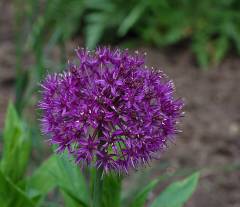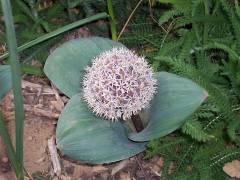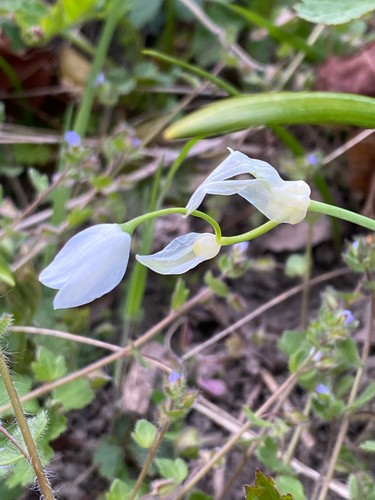
Allium, Genus, sativum, Species, 'Inchelium Red', Cultivar,
- Genus & species
- Cultivar
Inchelium red garlic
Central Asia (Allium sativum); 'Inchelium Red' is a Pacific Northwest landrace collected on the Colville Indian Reservation near Inchelium, Washington
Overview
Allium sativum 'Inchelium Red' is a softneck garlic cultivar in the amaryllis family (Amaryllidaceae), classified in the artichoke group — the dominant garlic type in commercial worldwide cultivation, named for the layered clove arrangement that resembles an artichoke cross-section. The cultivar was originally collected on the Colville Indian Reservation near Inchelium, Washington — a rare case of a garlic cultivar with documented Pacific Northwest provenance. Bulbs are 2-3 inches (5-8 cm) in diameter, round, with a white papery wrapper tinged pink to reddish-brown. Cloves are arranged in 3-5 concentric layers (artichoke pattern), with 12-20 cloves per bulb — outer cloves are large (0.75-1 inch / 2-2.5 cm) and inner cloves progressively smaller. Flavour is mild to moderate when raw, with a creamy, full-bodied garlic character when cooked — less pungent than hardneck rocambole types. The cultivar won the Roasted Garlic taste test at the 1990 Garlic Is Life Symposium in Tulsa, Oklahoma. As a softneck type, the cultivar typically does not produce a flower scape and carries a flexible neck that allows braiding for storage and display. Storage life is long — 6-9 months under optimal conditions (55-60°F / 13-15°C, 60% humidity), at the long end of the range across garlic cultivars. The cultivar is hardy to approximately -15°F (-26°C) with mulch. Softneck types are generally less cold-tolerant than hardneck types, but 'Inchelium Red' performs well through zone 5 due to its Pacific Northwest highland origin.
Native Range
Allium sativum is native to Central Asia. 'Inchelium Red' was collected from the Colville Indian Reservation near Inchelium, northeastern Washington state, where the cultivar had been grown by tribal members for generations.Suggested Uses
Grown in Pacific Northwest home vegetable gardens as a regionally adapted, long-storing garlic. The mild flavour and creamy roasted character suit everyday cooking. The 6-9 month storage life means a July harvest lasts through the following spring. The flexible neck allows braiding — a traditional storage and kitchen display method. A top-performing softneck cultivar for zones 5-8.How to Identify
Appearance
Size & Dimensions
Height1'6" - 2'
Width/Spread4" - 6"
Bloom Information
Softneck types typically do not produce flower scapes. Under stress (cold, drought), occasional scape production occurs — scapes are removed if they appear to redirect energy to bulb development.
Detailed Descriptions
Foliage Description
Grey-green, flat strap-shapedGrowing Conditions
Sun Requirements
Requires 6-10 hours of direct sunlight daily
• Full Sun: 6+ hours of direct sunlight
• Partial Shade: 3-6 hours of direct sunlight
• Full Shade: Less than 3 hours of direct sunlight
Care & Maintenance
Care Guide
Cloves are planted in autumn — mid-October to mid-November in the Pacific Northwest. Cloves are planted 2 inches (5 cm) deep, pointed end up, 6 inches (15 cm) apart, in rows 12 inches (30 cm) apart. Full sun, fertile well-drained soil, pH 6.0-7.0. Mulching with 3-4 inches (8-10 cm) of straw insulates against freeze-thaw cycles. Irrigation is 1 inch (2.5 cm) per week spring through early June. Watering stops 2-3 weeks before harvest. Harvest takes place when lower 4-5 leaves brown but 3-4 green leaves remain (mid-July in the Pacific Northwest). Curing is 3-4 weeks in a shaded, well-ventilated location. The flexible softneck allows braiding after curing.Pruning
No scape removal is required (softneck). Any occasional scape that appears is removed. Dried foliage is braided after curing for storage and display.Container Growing
Suitable for container growing
Minimum container size: 3 gallons