Image 1 of 4
1 / 4
© Patrick Standish from Aurora, Colorado, USA, some rights reserved (CC-BY) · Wikimedia Commons
Allium, Genus, karataviense, Species, 'Ivory Queen', Cultivar,
- Genus & species
- Cultivar
ivory queen allium
Central Asia (Kyrgyzstan, Tajikistan, Uzbekistan)
Overview
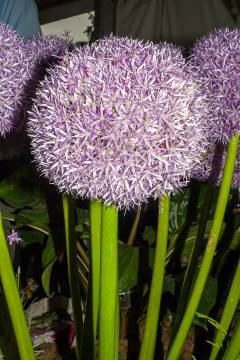
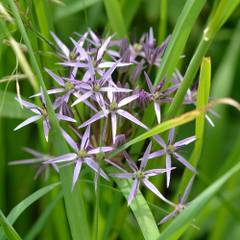
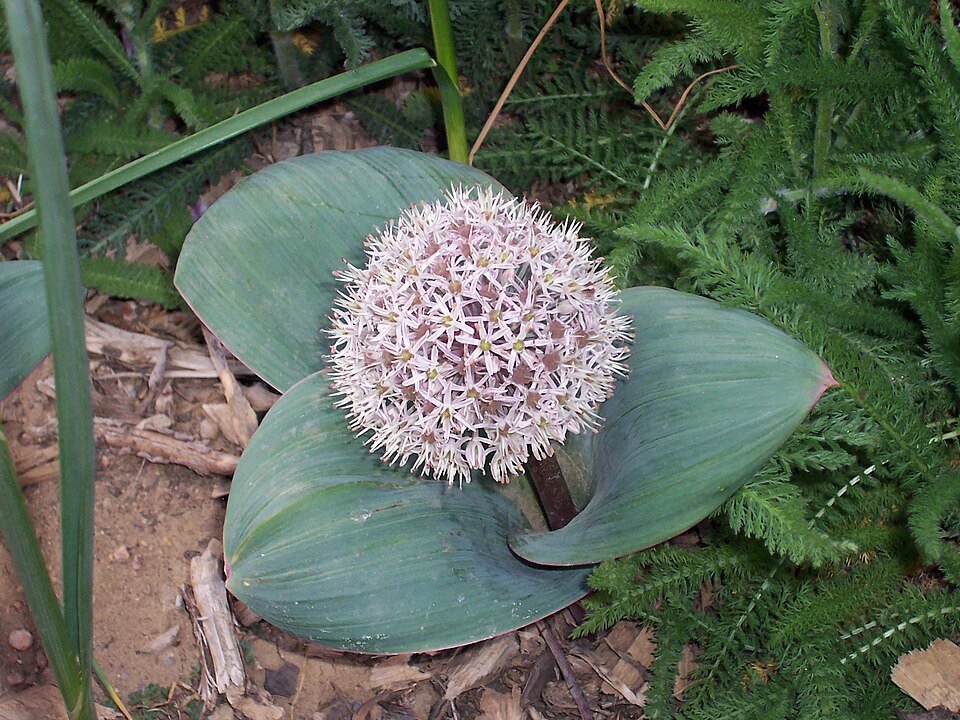
Allium karataviense 'Ivory Queen' is a compact bulbous perennial reaching 6–10 inches (15–25 cm) tall and 8–12 inches (20–30 cm) wide, growing from a round bulb 2–3 inches (5–8 cm) in diameter. This cultivar of A. karataviense produces ivory-white to pale pink flowers, lighter than the typical species which has lilac-pink blooms. The primary feature is the foliage: two broad, elliptic leaves 4–6 inches (10–15 cm) wide and 6–8 inches (15–20 cm) long, blue-gray with purple-red margins and undersides, held nearly horizontal close to the ground. Flower umbels are hemispherical to spherical, 3–4 inches (8–10 cm) across, densely packed with small, star-shaped ivory-white flowers, held on short, stout stems just above the foliage. Bloom occurs May through June, with individual umbels lasting 2–3 weeks. Foliage persists longer than in many ornamental Allium species, remaining presentable for 3–4 weeks after bloom before yellowing. Plants multiply slowly by bulb offsets. Self-seeding is minimal. Bulb rot develops in wet summer soils. The low profile limits visibility in tall plantings.
Native Range
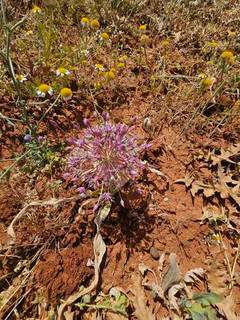
The species A. karataviense is native to central Asia, found in Kyrgyzstan, Tajikistan, and Uzbekistan. Grows on rocky limestone slopes and scree in the Karatau Mountains and Pamir-Alai ranges at 3,000–7,000 feet (900–2,100 m) elevation.Suggested Uses
Commonly planted in rock gardens, alpine troughs, and front-of-border positions at 6–8 inch (15–20 cm) spacing. Low profile suits raised beds, container plantings in 2-gallon (7.5 L) or larger pots, and edging. Not suited to tall perennial borders where the short stature would be obscured, or to irrigated beds without sharp drainage.How to Identify
Appearance
Size & Dimensions
Height6" - 10"
Width/Spread8" - 1'
Bloom Information
Flowers May through June in zones 4–8. Individual umbels last 2–3 weeks. In zone 8, bloom begins in late April. Foliage remains presentable for 3–4 weeks after bloom, longer than most tall ornamental alliums.
Detailed Descriptions
Flower Description
Ivory-white to pale pinkFoliage Description
Blue-gray to purple-tinged, broad, elliptic, held nearly horizontalGrowing Conditions
Sun Requirements
Requires 6-12 hours of direct sunlight daily
• Full Sun: 6+ hours of direct sunlight
• Partial Shade: 3-6 hours of direct sunlight
• Full Shade: Less than 3 hours of direct sunlight
Care & Maintenance
Care Guide
Plant bulbs 3–4 inches (8–10 cm) deep in fall in well-drained soil. Bulbs require dry summer dormancy; rot develops in clay soils or irrigated sites that remain wet from June through September. Water during active spring growth; withhold irrigation after foliage yellows. No fertilization is needed. Bulbs multiply slowly by offsets; division is rarely necessary. Alkaline to neutral soils are tolerated. Slugs may feed on foliage in moist spring conditions.Pruning
Allow foliage to die back naturally; do not remove leaves until fully brown, typically by mid-July. Dried flower heads can be removed or left in place. No other maintenance is required.Pruning Schedule
Prune: July
summer
Container Growing
Suitable for container growing
Minimum container size: 2 gallons