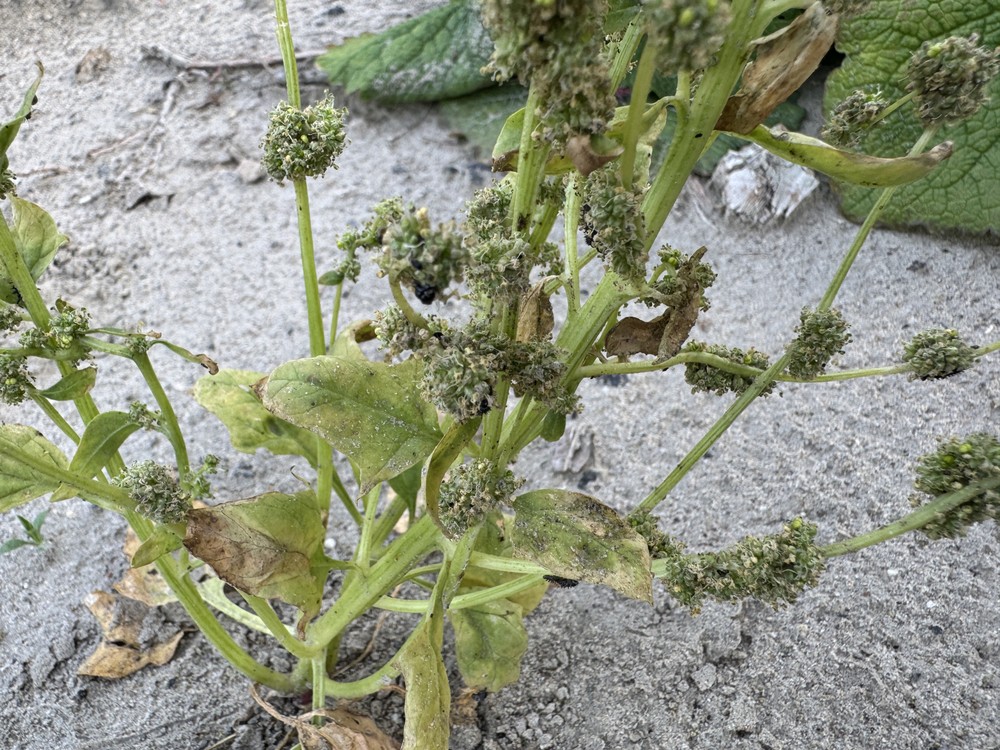
© Chris Rosmalen, some rights reserved (CC-BY-NC) · GBIF
Spinacia, Genus, oleracea, Species, 'Bloomsdale', Cultivar,
- Genus & species
- Cultivar
Bloomsdale spinach
Cultivar of garden origin (species native to central and western Asia)
Overview
Spinacia oleracea 'Bloomsdale' (Bloomsdale Long Standing) is a compact, rosette-forming annual in the amaranth family (Amaranthaceae) reaching 6–12 inches (15–30 cm) tall with a 6–10 inch (15–25 cm) spread. This heirloom cultivar (pre-1925) produces a dense rosette of heavily savoyed (deeply crinkled, blistered) leaves, dark green, thick, glossy, round to oval, 3–6 inches (8–15 cm) long. The 'Long Standing' designation refers to slower bolting compared to earlier spinach cultivars. Dioecious (separate male and female plants); wind-pollinated. Bolts rapidly when day length exceeds 14 hours or temperatures exceed 75°F (24°C). The savoyed leaves trap soil particles and require thorough washing. In the Pacific Northwest, the cool maritime spring extends the harvest window compared to warmer regions. Spinach is a cool-season annual with no heat tolerance; chard and New Zealand spinach serve as warm-season substitutes.
Native Range
The species Spinacia oleracea is native to central and western Asia (Iran/Afghanistan region), cultivated since at least the 7th century. 'Bloomsdale' (Bloomsdale Long Standing) was developed in the United States and has been in continuous cultivation since the early 20th century.Suggested Uses
Planted in vegetable gardens, salad gardens, containers (2+ gallon), and succession plantings. Eaten raw in salads (baby leaves) or cooked (sautéed, in soups, quiches, pasta). The heavily savoyed leaves hold sauces and dressings. The open-pollinated habit and dioecious pollination system make 'Bloomsdale' a seed-saving teaching cultivar. Included in cool-season crop rotations and soil-building plantings between cover crop cycles.How to Identify
Appearance
Size & Dimensions
Height6" - 1'
Width/Spread6" - 10"
Bloom Information
Bolts in response to long days (14+ hours) and heat above 75°F (24°C). Dioecious: male plants bolt first (producing pollen-bearing spikes), followed by female plants. Wind-pollinated. For seed saving, isolate from other spinach cultivars by 0.5–1 mile (0.8–1.6 km) or use alternate-day caging. The biennial seed-saving cycle and dioecious pollination are taught in seed-saving courses.
Detailed Descriptions
Flower Description
Greenish (if bolting)Foliage Description
Dark green, heavily savoyed (deeply crinkled/blistered), thick, glossy; round to ovalGrowing Conditions
Sun Requirements
Requires 3-8 hours of direct sunlight daily
• Full Sun: 6+ hours of direct sunlight
• Partial Shade: 3-6 hours of direct sunlight
• Full Shade: Less than 3 hours of direct sunlight
Care & Maintenance
Care Guide
Direct sow seeds 0.5 inch (1 cm) deep, 4–6 weeks before the last frost, spacing 6 inches (15 cm) apart. Successive sowings every 10 days extend the spring harvest. Pause from June through August (bolting period). Resume sowing in September for fall harvest. In the Pacific Northwest, fall-sown spinach often overwinters for early spring harvest. Consistent moisture and partial shade in warm weather delay bolting. Harvest outer leaves at 3–4 inches (8–10 cm) long or cut entire rosettes. Container culture in 2+ gallon pots is feasible.Pruning
Harvest outer leaves at the base for cut-and-come-again use, or harvest entire rosettes by cutting at ground level. Remove bolting plants promptly — leaf flavor becomes bitter once the seed stalk elongates.Container Growing
Suitable for container growing
Minimum container size: 2 gallons
Toxicity
Non-toxicPlanting Guide
Planting Methods & Timing
Planting Method
direct sow
Direct Sow Timing
4-6 weeks before last frost; successive sowings every 10 days through spring; resume in September for fall harvest
Days to Maturity
40–50 days
Plant Spacing
6 inches
Companion Planting
Good Companions
Avoid Planting With