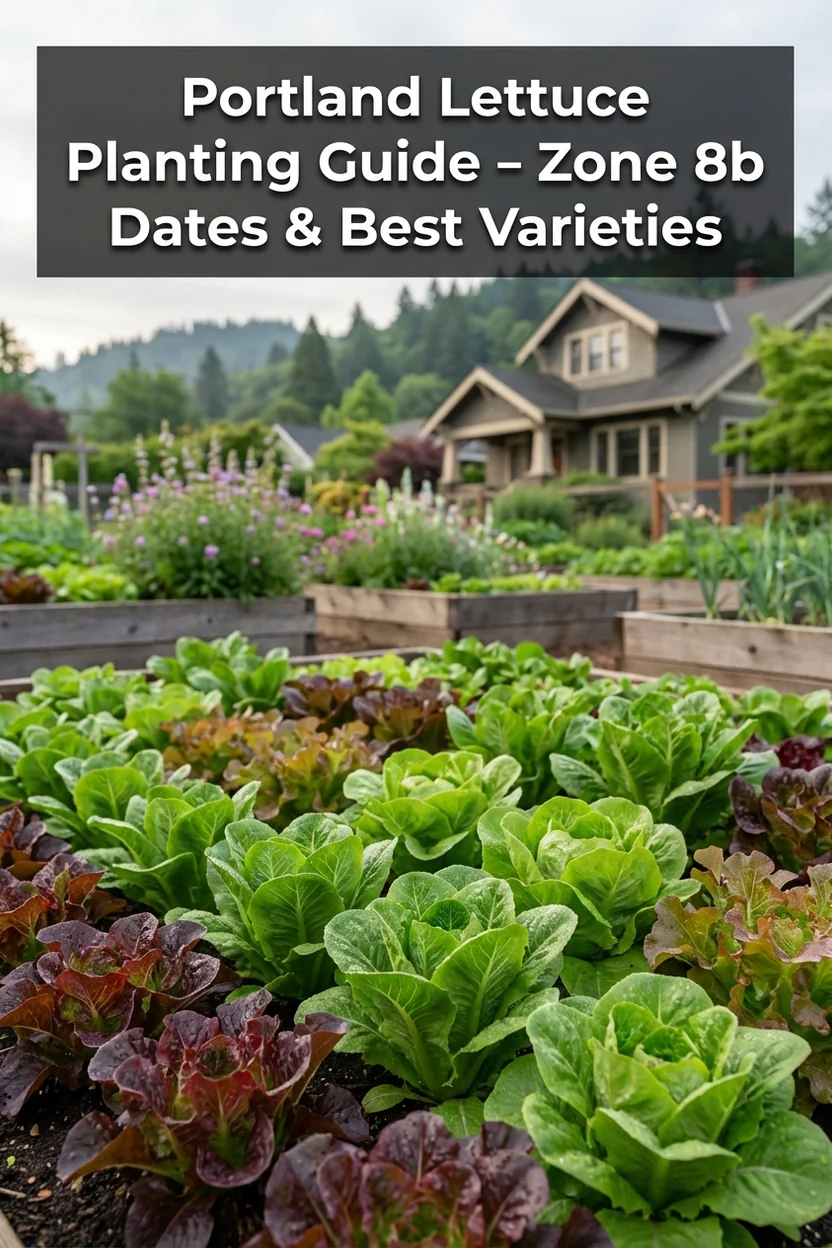
When to Plant Lettuce in Portland: Complete Guide + Best Varieties for Zone 8b
Pets & Toxicity
Recorded toxicity for plants linked in this guide. An unknown status is not a safety assessment.
No linked plant is recorded as toxicDetailsHide
Lactuca sativa var. crispa — Toxicity: Not assessed
Lactuca sativa var. crispa is non-toxic and safe for human consumption. All parts of the plant are edible, though leaves are the primary harvest. Generally safe around pets, though large quantities may cause mild digestive upset in some animals.View Lactuca sativa var. crispa plant profile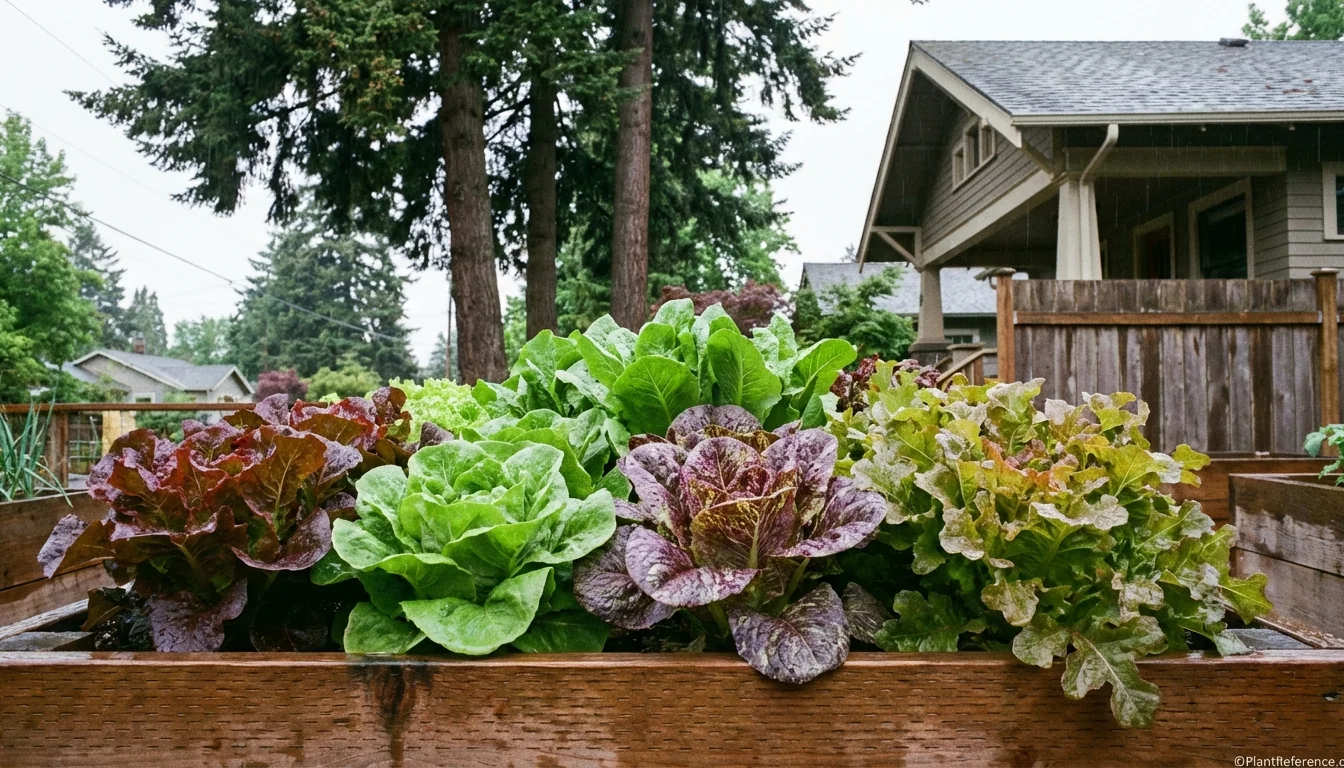
— Image © Plant Reference 2026
Portland rivals Seattle as one of the best lettuce cities in America, with the Willamette Valley's maritime climate delivering nearly identical growing conditions across a 235-day frost-free season that extends from late March through mid-November. Like its northern neighbor, Portland's cool, mild temperatures rarely trigger the bolting response that shuts down lettuce production in every city east of the Cascades. The summer gap is brief—4-5 weeks in late July through mid-August when Portland's occasional 90°F+ heat events can trigger bolting in sensitive varieties—slightly longer than Seattle's because the Willamette Valley's inland position creates marginally warmer summer peaks than the Puget Sound's coastal moderation. But this minor difference is academic for practical purposes: Portland lettuce gardeners still enjoy 10-11 months of effective production with simple cloche protection during winter, making Portland a genuinely world-class lettuce city. The Willamette Valley's deep, fertile alluvial soils add an advantage that Seattle's glacial clay doesn't match—Portland gardeners inherit some of America's finest agricultural soil, the same earth that supports Oregon's renowned grass seed, wine grape, and berry industries. Portland's food culture amplifies the lettuce opportunity. The city's farm-to-table movement—from the Portland Farmers Market at PSU to neighborhood markets in Alberta, Hawthorne, and Sellwood—creates intense demand for locally grown greens. The challenge isn't heat or cold but the Pacific Northwest's signature combination: slugs and winter rain. When to Plant Tomatoes in Portland: Complete Guide + Best Varieties for Zone 8b
Best Lettuce Varieties for Portland's Climate
Portland sits in USDA Zone 8b with a March 20 last frost and November 10 first frost—235 frost-free days. The Willamette Valley's mild winters extend effective lettuce production to 10-11 months with simple protection. All lettuce types produce successfully in Portland's cool maritime conditions.
Variety | Type | Days to Harvest | Portland Performance | Best For |
|---|---|---|---|---|
Butterhead | 55-65 days | Excellent year-round | Best all-around for Portland | |
🌿Lactuca sativa var. crispa (Red Oak Leaf) | Looseleaf | 45-55 days | Excellent year-round | Cut-and-come-again, color |
🌿Lactuca sativa var. longifolia (Romaine) | Cos | 70-80 days | Excellent, overwinters | Fall/winter production |
Mesclun Mix | Seedling mix | 30-40 days | Excellent year-round | Fastest harvest, succession |
🌿Lactuca sativa var. capitata (Iceberg) | Crisphead | 80-90 days | Good (rare for any city) | Late spring/early fall |
Butterhead | 55-65 days | Excellent year-round | Farmers market quality |
🌿Lactuca sativa 'Buttercrunch' leads for Portland because its year-round performance matches the Willamette Valley's extended growing calendar. Buttercrunch produces from March through November without the mandatory bolting interruption that every city east of the Cascades experiences. During Portland's brief warm period, Buttercrunch's bolt resistance carries production through the weeks that lesser varieties lose to heat. The compact rosettes with buttery hearts are a Portland Farmers Market staple from PSU to King.
🌿Lactuca sativa var. crispa (Red Oak Leaf) at 45-55 days delivers Portland's most vivid lettuce color. The anthocyanin-driven burgundy deepens through the long fall and winter periods when cool temperatures and declining light intensity stimulate pigment production. Cut-and-come-again harvesting extends each planting across 6-8 weeks in Portland's gentle climate—longer than any city with a significant summer gap.
🌿Lactuca sativa var. longifolia (Romaine) is Portland's overwintering champion. Romaine planted in September produces through winter under cloches, goes semi-dormant during December's shortest days, and resumes growth in February. Cold tolerance to 20°F (-7°C) means Romaine survives Portland winters without protection in most years, though cloches protect from rain damage. The dense, sweet hearts produced through Portland's cool fall are among the best Romaine grown anywhere.
Mesclun Mix at 30-40 days enables Portland's most frequent succession planting—potentially 12-15 sowings per year from February through October. The baby-leaf format is harvested before any bolting or disease develops.
🌿Lactuca sativa var. capitata (Iceberg) at 80-90 days is feasible in Portland—one of the few US cities where Iceberg succeeds reliably because summer temperatures stay moderate enough to prevent tipburn and premature bolting during the long maturation period.
🌿Lactuca sativa 'Bibb' thrives in Portland's gentle climate, producing the refined, soft-textured heads that the city's discerning food culture prizes. The variety that bolts within days in Midwest summers produces through most of Portland's year. When to Plant Peppers in Portland: Complete Guide + Best Varieties for Zone 8b
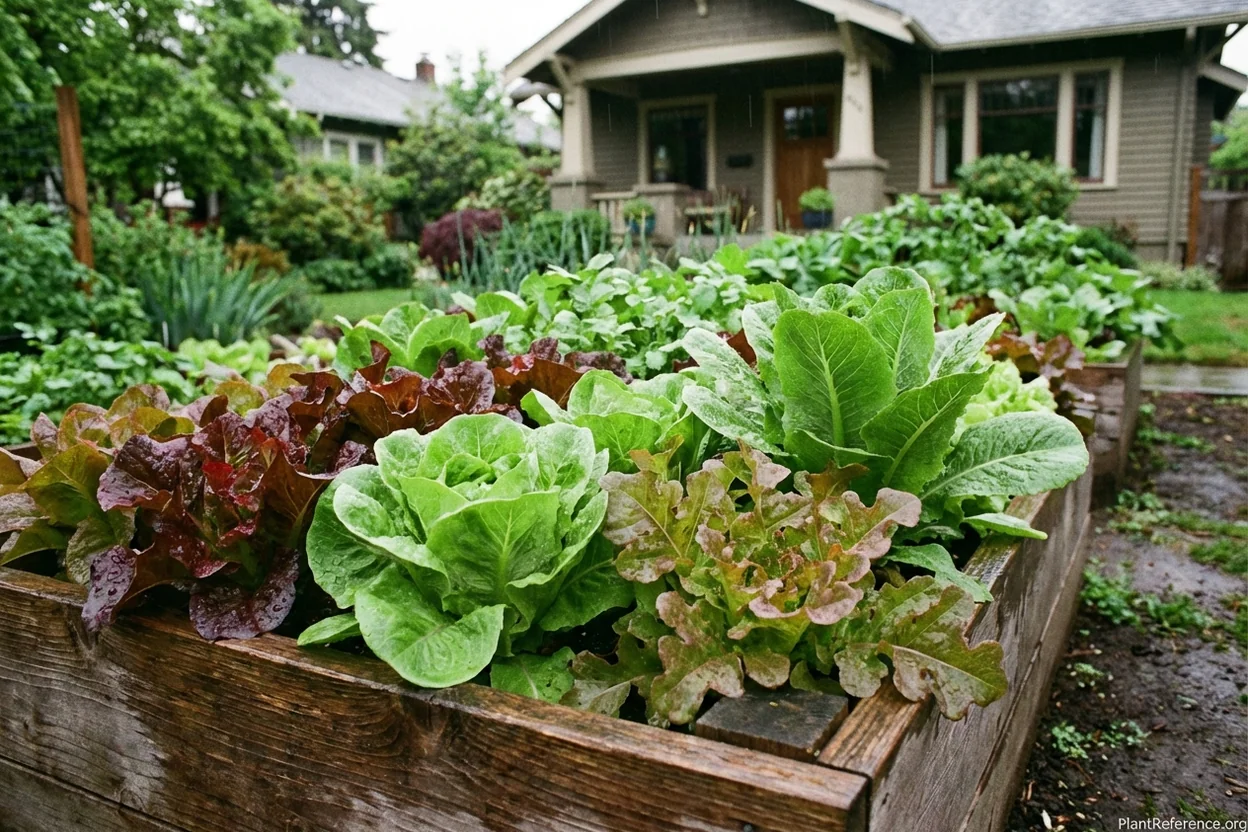
Specific Planting Dates for Portland Gardens
Portland's maritime calendar closely mirrors Seattle's with slightly later spring starts and earlier fall frost—but the differences are minor and the overall growing calendar is nearly identical.
Indoor Seed Starting (Late Winter): February 5-15 (4-6 weeks before transplanting). Start at 60-70°F (15-21°C). Lettuce germinates in 5-10 days. Indoor starting gets plants ahead of Portland's cool spring soil.
Direct Sow (Spring): February 20-March 10. Portland soil reaches 40°F by late February. Succession sow every 10-14 days from March through September—one of the longest succession windows of any US city.
Transplant Outdoors (Spring): March 10-25. Hardened transplants tolerate Portland's occasional late frost through March.
Brief Summer Peak (Late July-Mid August): Portland's gap is slightly longer than Seattle's—4-5 weeks when Willamette Valley temperatures occasionally reach 90°F+. With shade cloth and bolt-resistant varieties, production continues through most of the warm period. East Portland and areas away from the West Hills experience warmer peaks than neighborhoods shaded by the Tualatin Mountains.
Fall/Winter Sowing: Succession sow through September. For winter production, establish plants by September 15 under cloches before declining day length slows growth.
Winter Production: Cold-hardy varieties under cloches produce through Portland's mild Zone 8b winter. Growth slows from December through January but resumes in February.
Year-Round Succession: Portland supports 12-15 succession plantings per year—second only to Seattle among major US cities. Raised Bed Vegetable Garden Layout: Planning for Maximum Production
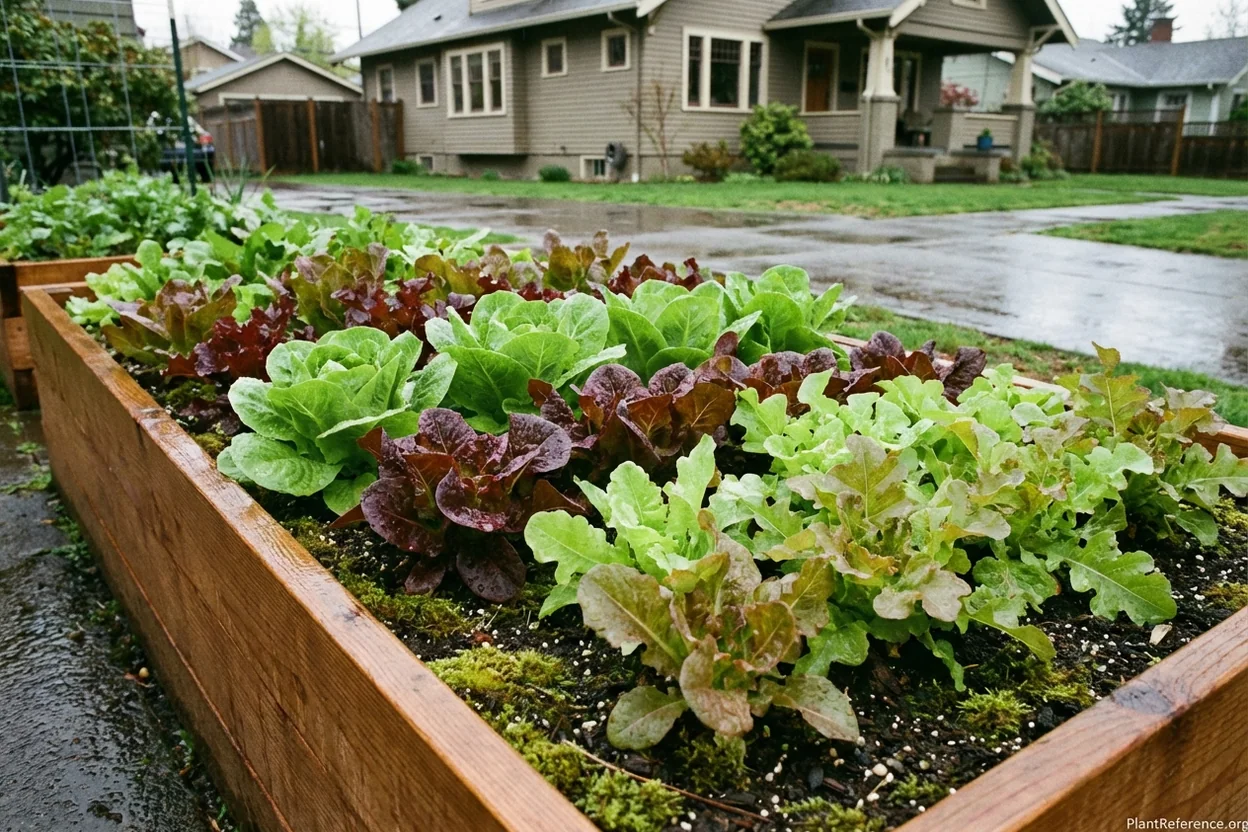
Complete Growing Guide for Portland
Willamette Valley Soil: Portland's Hidden Advantage
Portland's soil is genuinely exceptional. The Willamette Valley's deep alluvial deposits—created by prehistoric Missoula Floods—provide some of the finest agricultural soil in America. Most Portland garden soils test pH 5.5-6.5 (naturally acidic, close to lettuce's preference) with excellent organic matter content. Work 2-3 inches (5-8 cm) of compost into the top 8 inches (20 cm) to improve already-good soil structure. Unlike Seattle's heavy glacial clay, much of Portland's valley-floor soil drains adequately without raised beds—though raised beds still warm faster in spring and provide the elevation that prevents waterlogging during the rainy season. Space heading types 8-12 inches (20-30 cm) and looseleaf 4-6 inches (10-15 cm). How to Build a Raised Garden Bed: Step-by-Step Construction Guide
Rain Management: The Oregon Challenge
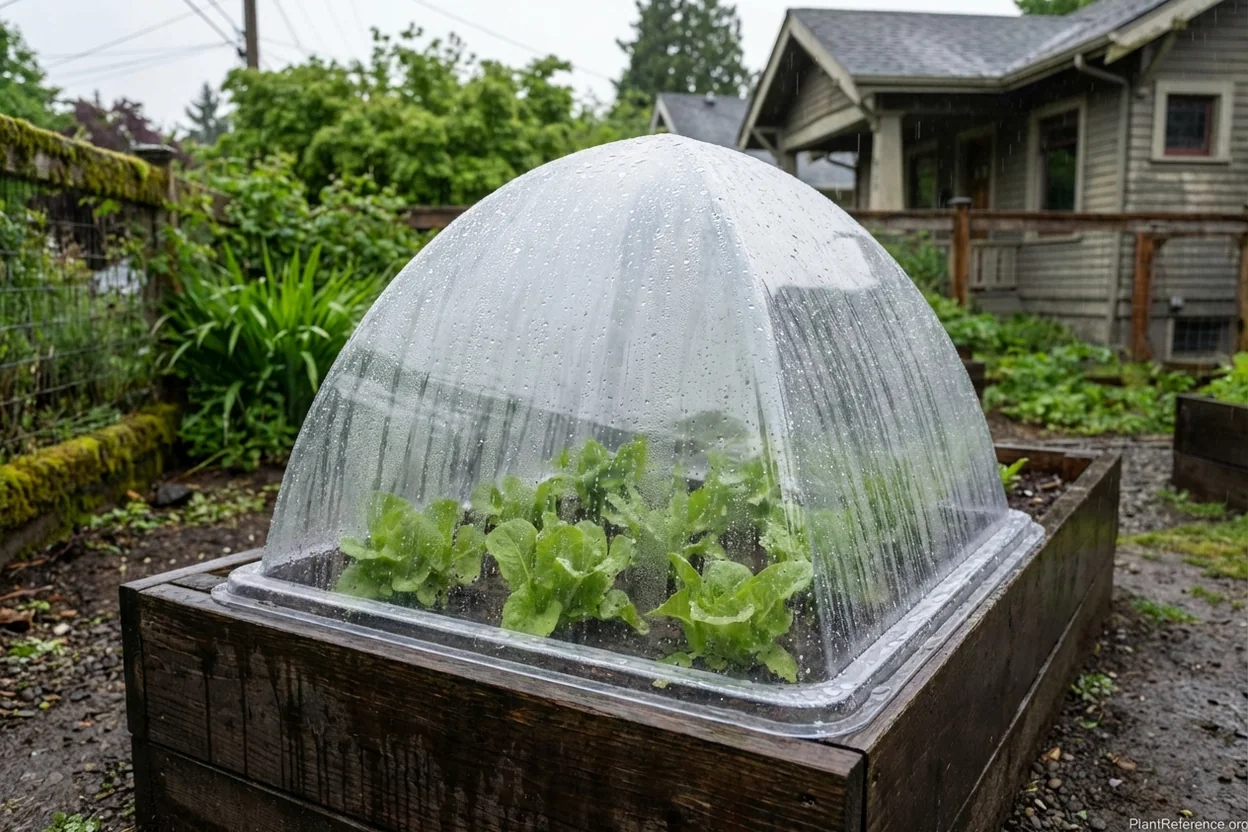
Portland receives about 43 inches (109 cm) of annual rainfall—slightly more than Seattle—with the vast majority falling from October through May. This wet season coincides with active lettuce growing, creating the same moisture management challenges as Seattle: downy mildew, basal rot, and slug habitat. Solutions: cloches and low tunnels keep foliage dry during the rainy months. Drip irrigation during the dry July-September period. Morning watering when supplemental irrigation is needed. Excellent drainage prevents waterlogging during extended November-through-March rain events. 5 Best Drip Irrigation Kits for Raised Beds (Tested for Easy Installation)
Cloches for Winter Production
A simple cloche extends Portland lettuce from 10 months to genuine year-round production. Like Seattle, the primary function is rain protection rather than warmth—Portland's mild winters provide adequate temperatures but constant rain damages exposed foliage. A PVC-and-plastic low tunnel over a raised bed costs under $50 and transforms winter growing from marginal to reliable. Establish winter lettuce by September 15 while day length still supports growth. When to Plant Squash in Portland: Complete Guide + Best Varieties for Zone 8b
Succession Planting
Sow small batches every 10-14 days from late February through September for continuous harvest. Portland's cool climate extends each planting's productive life to 6-8 weeks—longer than warmer cities. Stagger varieties by maturity: mesclun (30 days), Red Oak Leaf (50 days), Buttercrunch (60 days), and Romaine (75 days) planted simultaneously produce overlapping harvests.
Feeding
Light feeder—fish emulsion every 3-4 weeks sustains production. Portland's naturally fertile Willamette Valley soils provide excellent baseline nutrition. Heavy winter rainfall leaches nutrients—increase feeding to every 2-3 weeks for winter production under cloches. When to Plant Cucumbers in Portland: Zone 8b Dates + Best Varieties
Portland's Microclimate Variation
Portland's terrain creates meaningful microclimate differences. The West Hills (Tualatin Mountains) rising 1,000 feet above the valley floor create rain shadow effects east of the hills—East Portland receives slightly less rain than the West Hills neighborhoods. Southwest Portland's elevated neighborhoods cool faster in fall but warm earlier in spring. The Willamette River corridor and inner eastside neighborhoods (Hawthorne, Division, Sellwood) experience Portland's mildest winter temperatures due to the urban heat island effect—similar to New York's advantage for fall and winter lettuce production. When to Plant Kale in Portland: Complete Guide + Best Varieties for Zone 8b
Troubleshooting Portland-Specific Problems
Slugs: Portland's Defining Lettuce Pest
Portland's slug pressure rivals Seattle's as the worst in any major US city. The cool, moist Willamette Valley creates year-round slug habitat, and the native banana slug along with introduced European species devastate unprotected lettuce. Prevention: layer multiple approaches simultaneously—morning watering so soil dries by evening, iron phosphate bait (Sluggo) around plants, copper strips on raised bed edges, removal of daytime hiding spots, and beer traps for monitoring. No single method eliminates Portland's persistent slug pressure. The most dedicated Portland lettuce growers consider slug management the single most time-intensive aspect of their growing practice. Raised Bed Too Hot in Summer: Protecting Plants from Heat Stress
Downy Mildew in Wet Conditions
Portland's rainy season (October-May) creates downy mildew conditions from moisture saturation rather than heat-driven humidity. Prevention: cloches keeping foliage dry, 12-inch minimum spacing for heading types, drip irrigation only, and immediate removal of infected material. The rainy season coincides with peak lettuce production, making rain management the single most important growing strategy for Portland lettuce growers. Raised Bed Pest Problems: Identification and Organic Control Methods
Brief Summer Heat Events
Portland's Willamette Valley position creates occasional 90-95°F heat waves during late July-August that can trigger bolting in heat-sensitive varieties—slightly warmer peaks than coastal Seattle experiences. Prevention: shade cloth during heat events, harvest 🌿Lactuca sativa 'Bibb' before the warm period, rely on 🌿Lactuca sativa 'Buttercrunch' and 🌿Lactuca sativa var. crispa (Red Oak Leaf) to carry through. Portland's heat events typically last 3-7 days before marine air returns.
Winter Light Limitation
Portland's latitude (45.5°N) creates 8.7-hour December day length—slightly more light than Seattle (47.6°N) but still insufficient for vigorous winter growth. Establish winter lettuce by September 15. Winter production relies on plants already approaching maturity, not new sowings. New seed sown after mid-October grows very slowly until February. Best Soil Mix for Raised Beds: Creating the Perfect Growing Medium
Harvest & Storage
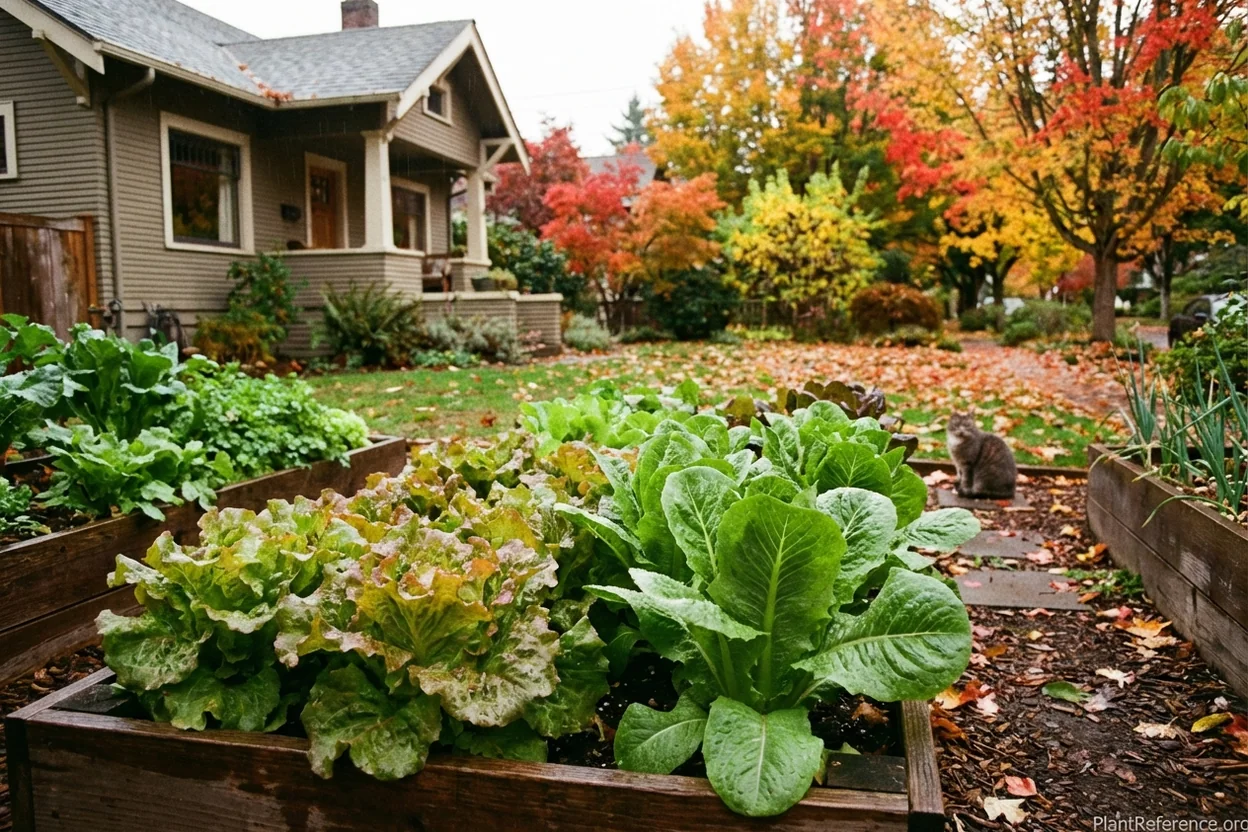
Harvest looseleaf types using cut-and-come-again—cut outer leaves 1 inch above the crown for 4-6 regrowth cycles over 6-8 weeks. Harvest heading types by cutting entire heads at the base when firm. Morning harvest captures peak crispness before afternoon warmth concentrates bitter compounds.
Portland's fall and winter lettuce benefits from frost-sweetening—temperatures in the 28-32°F range trigger starch-to-sugar conversion across a long period from November through February because the mild maritime climate produces gentle, repeated frost rather than hard killing freezes. This extended sweetening window is unique to Pacific Northwest cities and produces noticeably sweeter lettuce than the brief frost events that Midwest and Eastern cities experience.
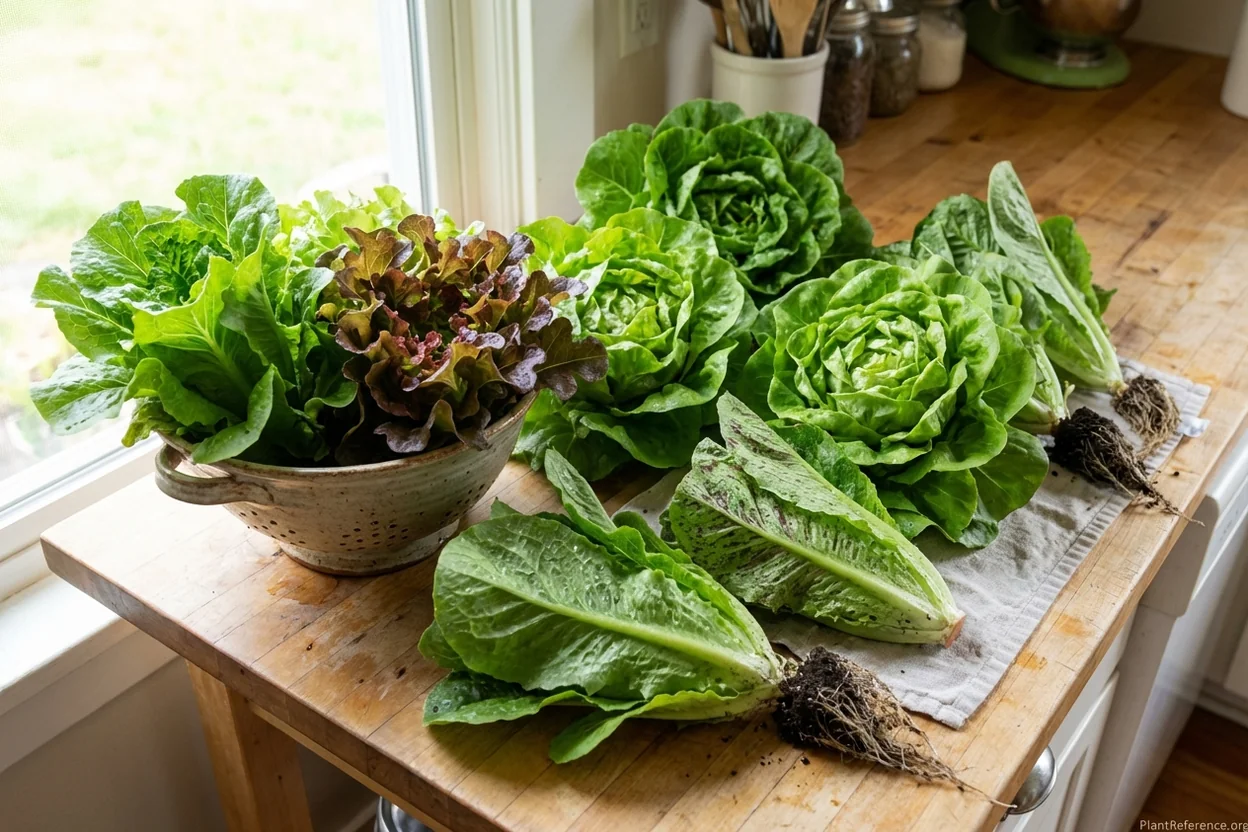
Store harvested lettuce refrigerated in damp paper towels inside a loose bag—keeps 7-10 days. Portland's near year-round production eliminates the need for preservation strategies. The city's extraordinary food culture—from the Portland Farmers Market at PSU (the largest continuously operating outdoor farmers market in the US) to neighborhood markets across Alberta, Hawthorne, and Mississippi—demonstrates the premium that fresh, local lettuce commands. Portland's commitment to local food systems and sustainable agriculture makes homegrown lettuce production part of the city's cultural identity in ways that few other American cities can genuinely match. The Complete Guide to Raised Bed Gardening for Beginners (2025)
Frequently Asked Questions
Reading about plants and recognising them are different skills. These three build the second.
- Daily PlantIdentify the day’s mystery plant from a close-up photograph.
- Keyed OutWork a dichotomous key, lead by lead, to name a hidden specimen.
- Name That PlantName a specimen from botanical clues dealt hardest first.
Free to play, no account needed
Tagged with
Sarah earned her doctorate in plant biology and spent time working in botanical garden education before transitioning to freelance writing and consulting. Now based in Portland, Oregon, she teaches plant identification workshops at local community centers and maintains a modest collection of over 60 houseplants in her small apartment. Sarah specializes in helping beginners understand plant science without the jargon—her approach focuses on practical observation over theory. She's killed her fair share of fiddle leaf figs and finally cracked the code on keeping them alive.