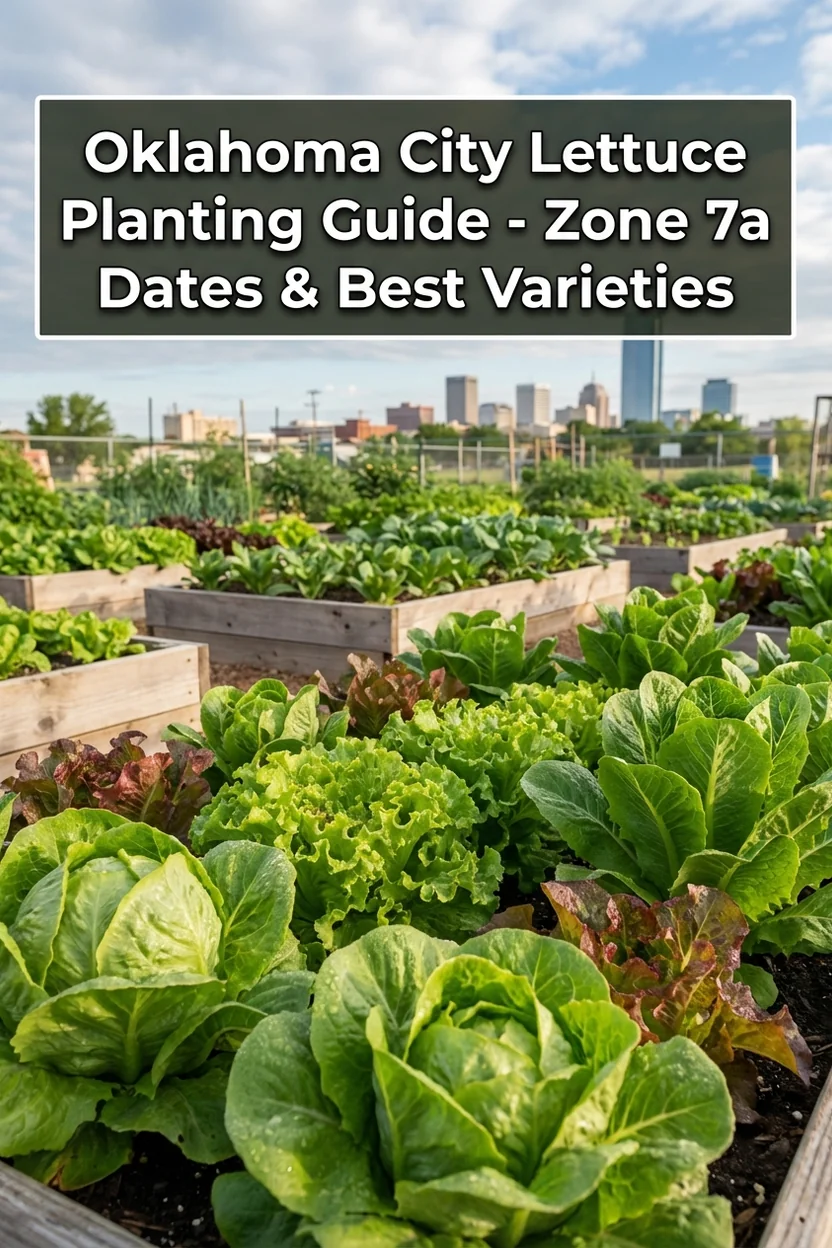
When to Plant Lettuce in Oklahoma City: Complete Guide + Best Varieties for Zone 7a
Pets & Toxicity
Recorded toxicity for plants linked in this guide. An unknown status is not a safety assessment.
No linked plant is recorded as toxicDetailsHide
Lactuca sativa var. crispa — Toxicity: Not assessed
Lactuca sativa var. crispa is non-toxic and safe for human consumption. All parts of the plant are edible, though leaves are the primary harvest. Generally safe around pets, though large quantities may cause mild digestive upset in some animals.View Lactuca sativa var. crispa plant profile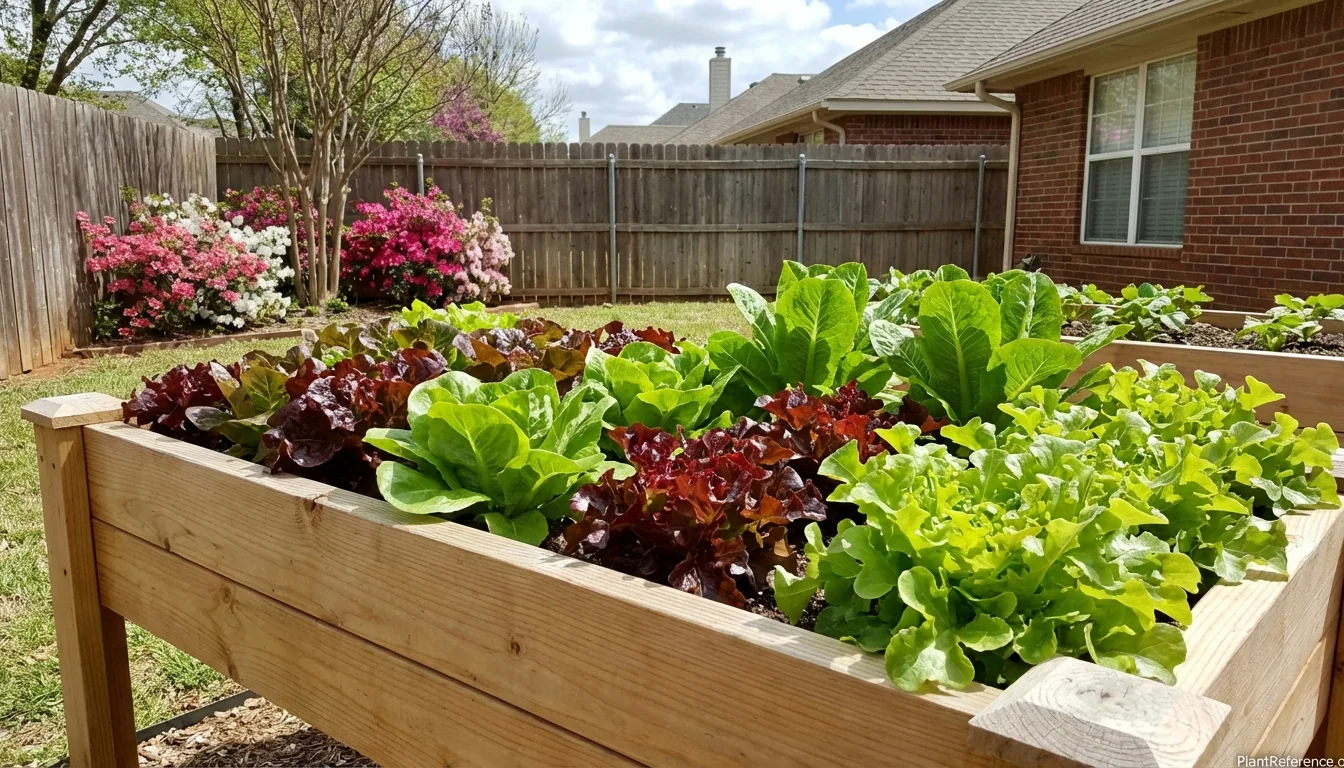
— Image © Plant Reference 2026
Oklahoma City brings the Southern Plains to lettuce growing—and the Plains bring wind, dry heat, and alkaline soil alongside a genuine disease-free advantage that humid Southern cities can only envy. The 218-day frost-free season from early April through early November provides a generous framework, but lettuce's heat threshold creates a summer gap of 10-12 weeks from mid-May through early August when temperatures regularly exceed 95°F with occasional 100°F+ days. This gap is comparable to Atlanta's but driven by dry heat rather than the heat-humidity combination that defines Gulf Coast and Piedmont cities. OKC's dry climate (35 inches of annual rainfall, 50-65% humidity during growing windows) is the lettuce grower's compensation—downy mildew, the devastating fungal disease that limits lettuce production in Memphis, Atlanta, and the Southeast, is dramatically reduced here because the dry air doesn't sustain the constant foliar moisture that the pathogen requires. Slug pressure is minimal compared to humid cities. The spring window from March through mid-May and the fall window from September through November are both excellent, with the fall window producing the year's best lettuce as declining temperatures and occasional Oklahoma frost sweeten the leaves. OKC's alkaline prairie soil (pH 7.0-8.5) creates the same iron chlorosis challenges as Dallas and Nashville—chelated iron rather than lime is the essential amendment. The Southern Plains wind is OKC's most distinctive challenge: persistent spring gusts that shred delicate lettuce leaves and accelerate moisture loss from shallow root zones demand windbreaks that most cities don't require. Oklahoma City's food culture has expanded significantly, with the Farmers Public Market, Paseo Arts District restaurants, and the growing metro-wide gardening community creating demand for the fresh, locally grown lettuce that OKC's dry climate produces with notably less disease pressure than humid competitors. When to Plant Tomatoes in Oklahoma City: Complete Guide + Best Varieties for Zone 7a
Best Lettuce Varieties for Oklahoma City's Climate
Oklahoma City sits in USDA Zone 7a with an April 1 last frost and November 5 first frost—218 frost-free days. Lettuce tolerates 28°F (-2°C) once established. OKC's dry climate supports all lettuce types with variety selection emphasizing wind resistance and bolt tolerance for the rapid spring-to-summer transition.
Variety | Type | Days to Harvest | Heat Tolerance | Best For |
|---|---|---|---|---|
Butterhead | 55-65 days | High (for type) | Best all-around for OKC | |
🌿Lactuca sativa var. crispa (Red Oak Leaf) | Looseleaf | 45-55 days | Moderate-High | Wind resistant, fast |
🌿Lactuca sativa var. longifolia (Romaine) | Cos | 70-80 days | Moderate | Premium fall crop |
Mesclun Mix | Seedling mix | 30-40 days | Variable | Fastest harvest, spring essential |
Butterhead | 55-65 days | Low | Fall only, wind-vulnerable | |
🌿Lactuca sativa var. capitata (Iceberg) | Crisphead | 80-90 days | Low | Fall only |
🌿Lactuca sativa 'Buttercrunch' leads for Oklahoma City because its bolt resistance extends the spring window 2-3 weeks and its thick, blistered leaves resist the wind damage that OKC's exposed Southern Plains position creates. Buttercrunch maintains sweet flavor during the rapid spring-to-summer transition when Oklahoma temperatures climb from pleasant 70s into the 95°F+ range that triggers bolting faster than in maritime-moderated cities.
🌿Lactuca sativa var. crispa (Red Oak Leaf) at 45-55 days provides fast production with the best wind resistance among looseleaf types. The sturdy, deeply lobed leaves handle Oklahoma's persistent spring gusts better than flat-leafed varieties. Cut-and-come-again harvesting extends each planting across 4-6 weeks.
🌿Lactuca sativa var. longifolia (Romaine) at 70-80 days excels as OKC's fall crop. The upright growth habit resists wind better than flat rosette types. Fall Romaine maturing into cooling October-November temperatures produces dense, sweet hearts. Romaine tolerates frost to 20°F (-7°C), extending harvest past the November 5 first frost.
Mesclun Mix at 30-40 days is essential for OKC's compressed spring—sow in early March, harvest by mid-April before heat arrives. The baby-leaf format is harvested before wind or heat can cause problems.
🌿Lactuca sativa 'Bibb' produces OKC's most delicate lettuce but is the most wind-vulnerable variety. Restrict to sheltered locations during the coolest fall weeks.
🌿Lactuca sativa var. capitata (Iceberg) at 80-90 days works only as a fall crop—start indoors July for late September transplanting. OKC's dry climate actually benefits Iceberg by eliminating the tipburn-promoting humidity that humid cities experience. When to Plant Peppers in Oklahoma City: Complete Guide + Best Varieties for Zone 7a
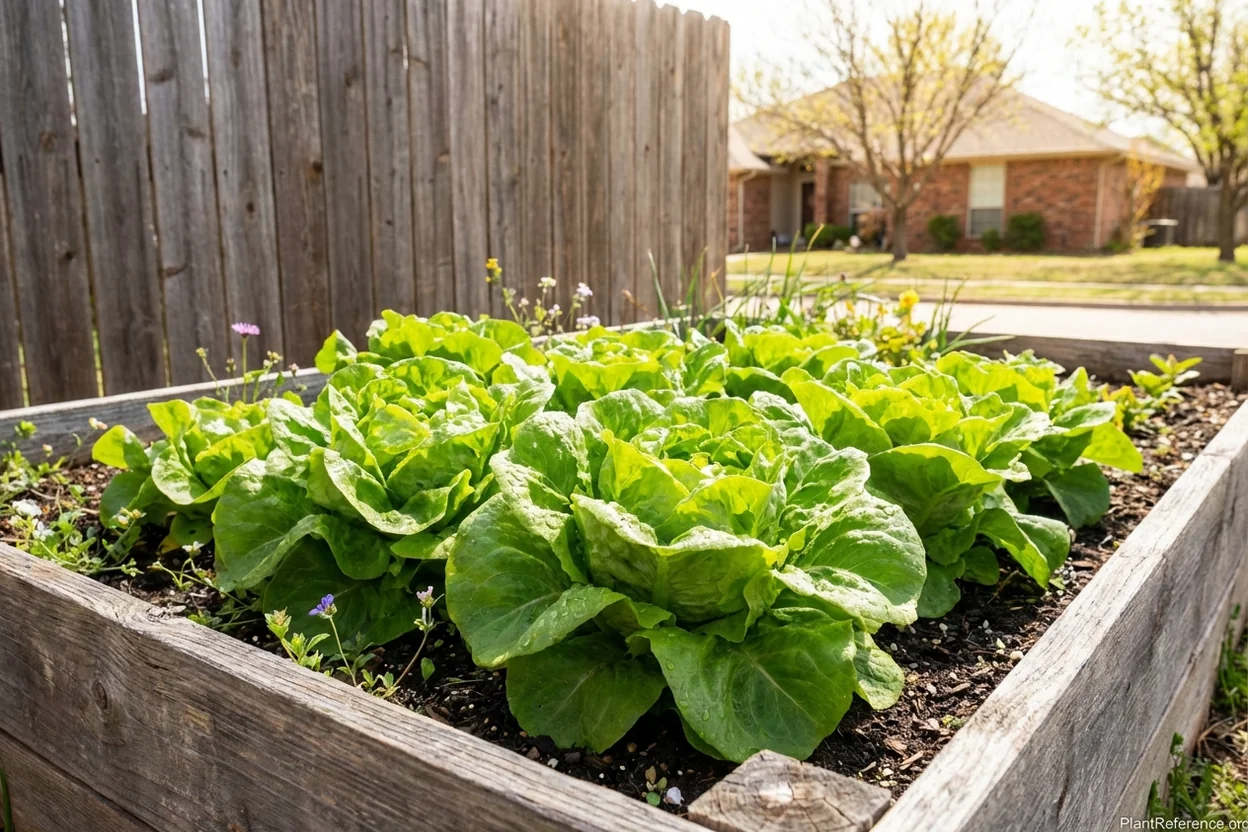
Specific Planting Dates for Oklahoma City Gardens
Oklahoma City's Zone 7a provides a generous lettuce calendar with the volatile spring weather that Southern Plains gardeners know well—warm spells punctuated by cold fronts.
Indoor Seed Starting (Spring): February 10-25 (4-6 weeks before transplanting). Start at 60-70°F (15-21°C). Lettuce germinates in 5-10 days.
Direct Sow (Spring): March 1-15. Oklahoma soil reaches 40°F by early March. Succession sow every 10-14 days through late April only—stop new sowings by May 1.
Transplant Outdoors (Spring): March 15-April 1. Hardened transplants tolerate frost to 28°F. Oklahoma's volatile spring requires row covers available through mid-April for cold snap protection.
Summer Gap (Mid-May through Early August): OKC's gap runs 10-12 weeks when temperatures exceed 95°F with dry heat. Even shade cloth is marginally effective because Oklahoma's summer intensity overwhelms 30% shade. Accept the gap.
Fall Sowing: August 10-25. Start seeds indoors to bypass thermoinhibition. Oklahoma's August soil exceeds 85°F routinely. Transplant by early September under shade cloth.
Fall Production Window: September through November. OKC's premium lettuce season with declining temperatures and October-November frost producing outstanding frost-sweetened quality in the dry Plains air.
Winter Growing (Zone 7a): Row covers extend harvest into December. Cold-hardy Romaine survives OKC's occasional hard freezes under cold frames, though Zone 7a winters are more severe than Zone 7b and 8a cities to the south. Raised Bed Vegetable Garden Layout: Planning for Maximum Production
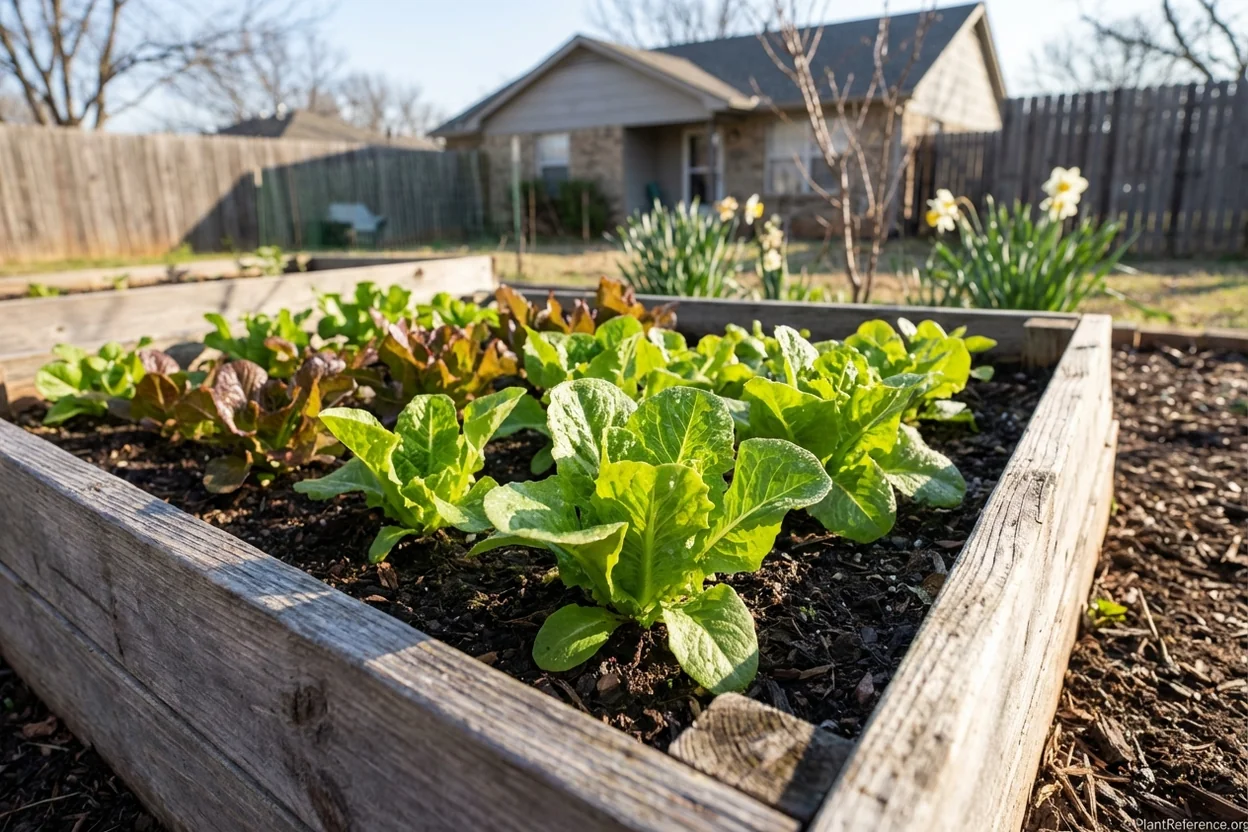
Complete Growing Guide for Oklahoma City
Alkaline Prairie Soil
Oklahoma City sits on alkaline prairie soil (pH 7.0-8.5)—similar to Dallas's Blackland Prairie but with slightly sandier composition in many metro neighborhoods. The alkaline pH locks up iron and micronutrients, causing yellowing (chlorosis) in lettuce. Do not add lime—Oklahoma soil is already too alkaline. Raised beds with controlled soil mix are strongly recommended. Fill with 50% topsoil, 30% compost, and 20% expanded shale or perlite. Chelated iron spray every 2-3 weeks prevents the chlorosis that OKC's alkaline conditions promote. Compost naturally lowers pH over time. Space heading types 8-12 inches (20-30 cm) and looseleaf 4-6 inches (10-15 cm). How to Build a Raised Garden Bed: Step-by-Step Construction Guide
Wind Protection: OKC's Essential Infrastructure
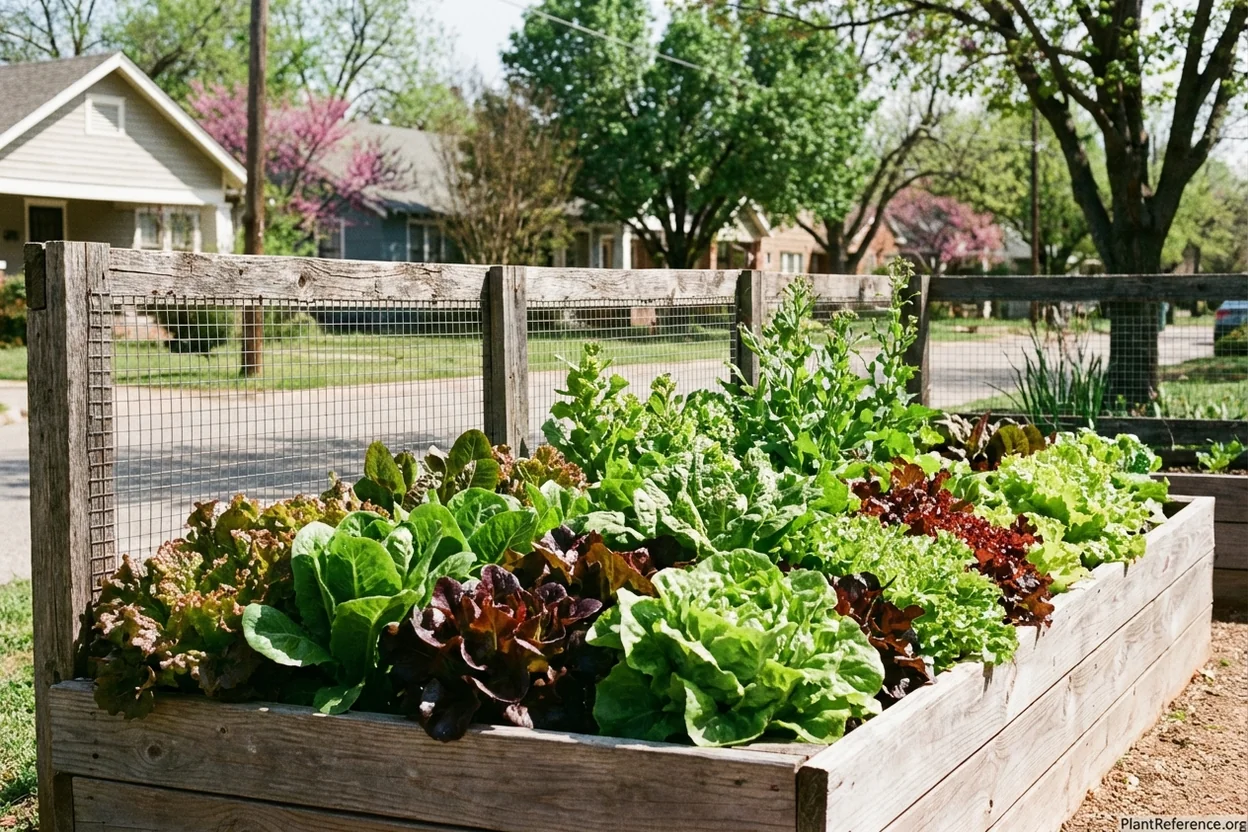
Oklahoma City's exposed Southern Plains position creates persistent spring wind that damages lettuce more aggressively than in any city except Kansas City. Windbreaks on the south and west sides of lettuce beds are effectively mandatory—fences, hedges, building walls, or temporary burlap screens. Raised beds positioned in the lee of structures experience dramatically less wind stress. Mulch 2-3 inches (5-8 cm) to prevent wind-driven moisture loss from shallow root zones. 🌿Lactuca sativa 'Buttercrunch' and 🌿Lactuca sativa var. longifolia (Romaine) with their thick leaf structures handle wind better than delicate 🌿Lactuca sativa 'Bibb'. 5 Best Drip Irrigation Kits for Raised Beds (Tested for Easy Installation)
Watering in OKC's Dry Climate
Oklahoma City receives about 36 inches (91 cm) of annual rainfall—adequate during spring but with dry stretches common during the fall growing window. Water 1-1.5 inches (2.5-4 cm) per week consistently. The dry climate (50-65% humidity) reduces downy mildew risk but increases evaporation from shallow root zones—drip irrigation maintains consistent moisture without the foliar wetting that overhead systems create. Oklahoma's dry wind accelerates soil drying between waterings, making consistent irrigation more critical here than in humid cities. When to Plant Squash in Oklahoma City: Complete Guide + Best Varieties for Zone 7a
Shade Cloth for Summer Bridge
Shade cloth (40-50%) extends OKC's spring window by 2-3 weeks and enables fall establishment. Install by early May. Oklahoma's intense summer sun and dry heat require heavier shade than humid Southern cities because the dry air provides no evaporative cooling effect. 🌿Lactuca sativa 'Buttercrunch' under shade cloth produces into early June in favorable years.
Succession Planting
Plant small batches every 10-14 days from March through late April and again from late August through October. OKC supports 6-8 total succession plantings across both windows. Stagger varieties by maturity: mesclun (30 days), Red Oak Leaf (50 days), Buttercrunch (60 days), and Romaine (75 days) for sequential harvests. When to Plant Cucumbers in Oklahoma City: Zone 7a Dates + Best Varieties
OKC's Dry Climate Advantage
Oklahoma City's dry growing conditions (50-65% humidity) create a genuine lettuce advantage over humid Southern cities. Downy mildew—the devastating disease that limits production in Memphis, Atlanta, and the Southeast—is dramatically reduced because the dry air doesn't sustain constant foliar moisture. Slug pressure is minimal. Basal rot in heading types is uncommon because foliage dries rapidly after irrigation. OKC gardeners face wind and alkaline soil challenges but avoid the disease pressure that defines humid Southern lettuce growing entirely. When to Plant Kale in Oklahoma City: Complete Guide + Best Varieties for Zone 7a
Troubleshooting Oklahoma City-Specific Problems
Persistent Plains Wind
OKC's defining lettuce challenge during spring establishment. Sustained 15-25 mph winds with gusts exceeding 40 mph shred delicate leaves, desiccate shallow root zones, and topple young transplants. Prevention: windbreaks on south and west sides of beds, thick-leafed varieties (🌿Lactuca sativa 'Buttercrunch', 🌿Lactuca sativa var. longifolia), heavy mulch, and positioning beds in sheltered locations against buildings. Container lettuce can be relocated during extreme wind events. Raised Bed Too Hot in Summer: Protecting Plants from Heat Stress
Extended Summer Gap (10-12 Weeks)
Oklahoma's intense dry heat creates a 10-12 week gap when temperatures exceed 95°F daily. Prevention: complete acceptance. Oklahoma's dry summer heat is more intense than humid Southern cities because the lack of cloud cover creates maximum solar radiation. Focus on maximizing the excellent fall window. Raised Bed Pest Problems: Identification and Organic Control Methods
Alkaline Soil and Iron Chlorosis
OKC's prairie soil tests pH 7.0-8.5. Prevention: raised beds with controlled soil mix, chelated iron spray every 2-3 weeks, sulfur amendments, and heavy compost that naturally acidifies. Do not add lime. This mirrors the same challenge that Dallas and Nashville gardeners face.
Thermoinhibition for Fall Starts
Oklahoma's August soil routinely exceeds 85°F. Prevention: mandatory indoor starting under AC, refrigerator-priming seeds, shade cloth over seedbeds, and waiting until early September for outdoor transplanting. Best Soil Mix for Raised Beds: Creating the Perfect Growing Medium
Harvest & Storage
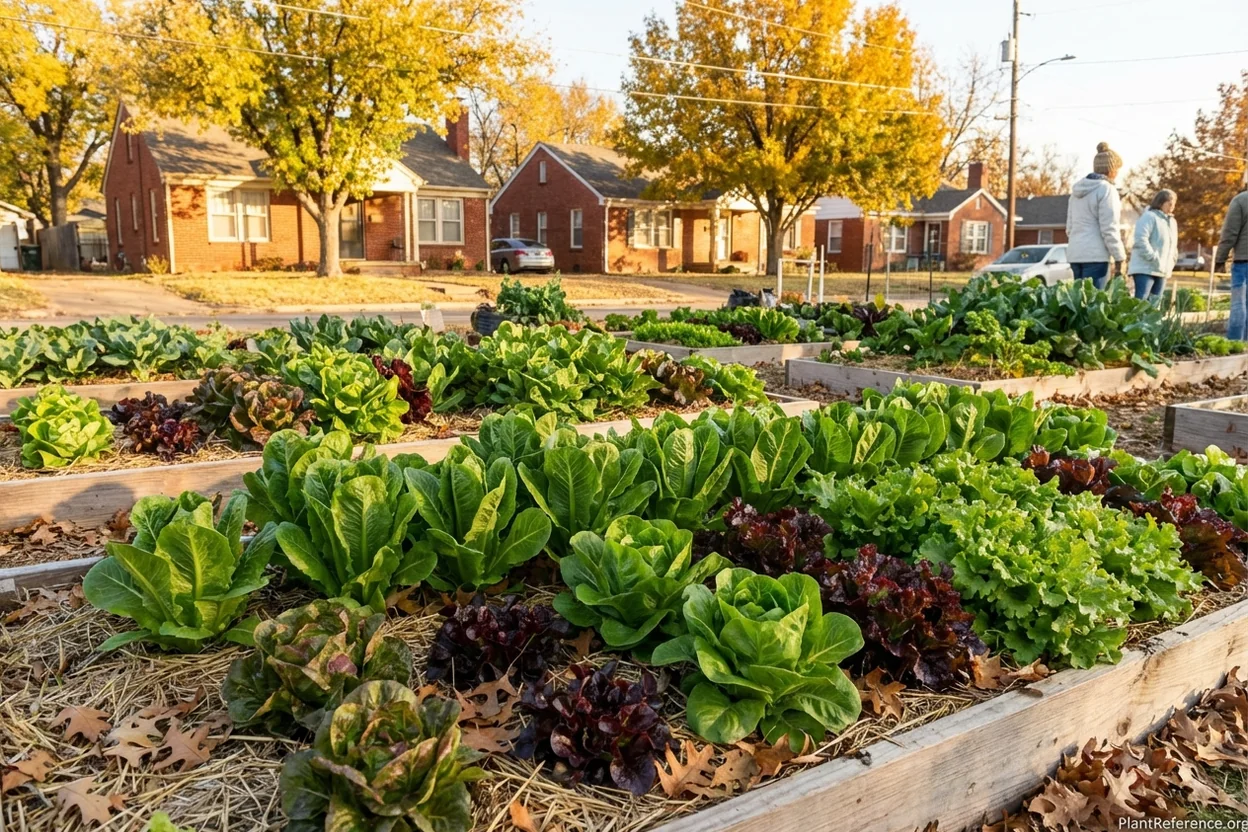
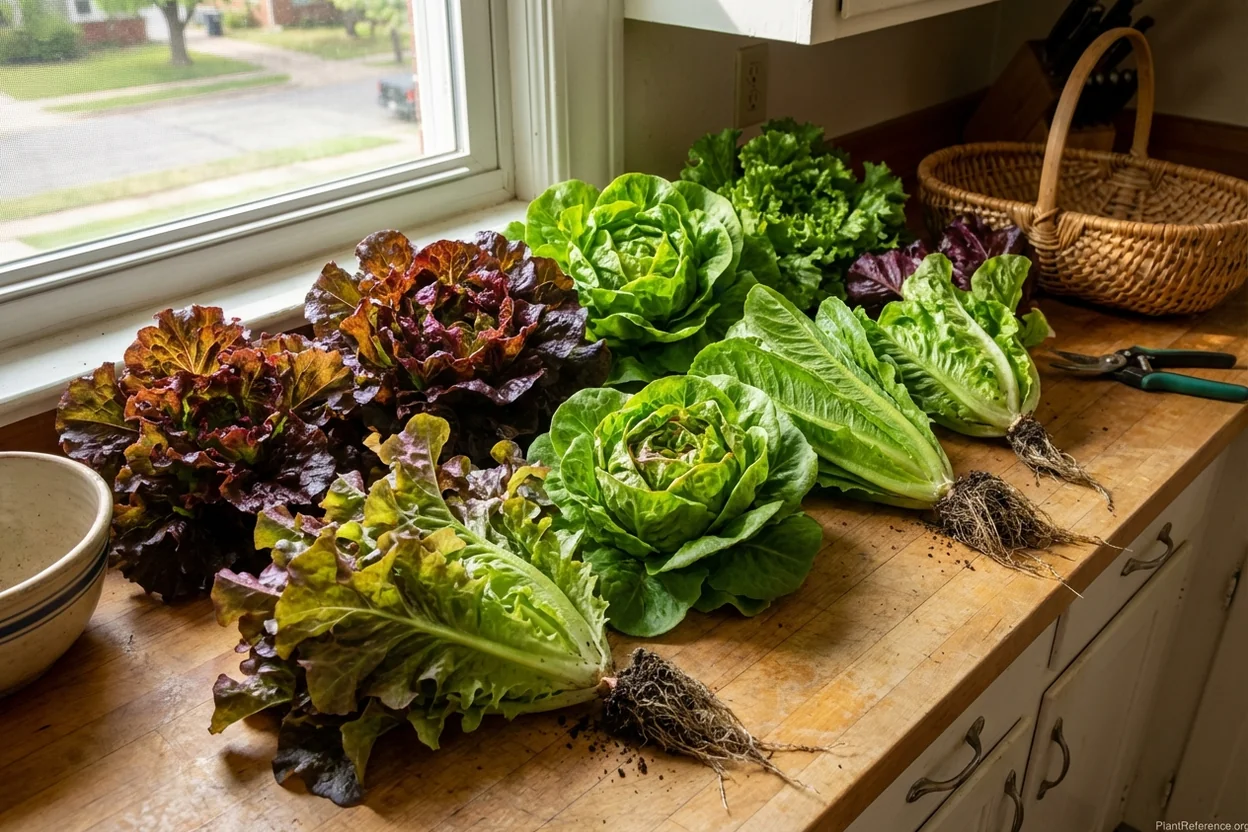
Harvest looseleaf types using cut-and-come-again—cut outer leaves 1 inch above the crown for 3-4 regrowth cycles over 4-6 weeks. Harvest heading types by cutting entire heads at the base when firm. Morning harvest before 9 AM captures peak crispness before Oklahoma's dry heat builds and concentrates bitter compounds.
Oklahoma City's fall lettuce benefits from light frost—temperatures in the 28-32°F range trigger starch-to-sugar conversion that sweetens leaves. The Southern Plains' dramatic fall cooling produces frost-sweetened lettuce through November. Zone 7a's frost events are gentle enough to sweeten without killing, and OKC's dry autumn air produces crisp, clean-flavored lettuce without the waterlogged quality that humid cities sometimes experience during the wet fall growing windows.
Store harvested lettuce refrigerated in damp paper towels inside a loose bag—keeps 7-10 days. Oklahoma City's approximately eight-month effective lettuce window (March-November, extended into December with protection) provides fresh lettuce through most of the year. The metro's food culture—from the Farmers Public Market to Paseo Arts District restaurants to the expanding community garden network across OKC's diverse neighborhoods—values the fresh, disease-free lettuce that the Southern Plains' dry climate uniquely produces among cities in the South and mid-South where humidity dominates the growing experience. OKC's combination of dry climate advantage, wind management challenge, and alkaline soil amendment creates a distinctive lettuce growing identity that rewards gardeners who invest in windbreaks and iron supplementation with exceptionally clean, healthy lettuce production. The Complete Guide to Raised Bed Gardening for Beginners (2025)
Frequently Asked Questions
Reading about plants and recognising them are different skills. These three build the second.
- Daily PlantIdentify the day’s mystery plant from a close-up photograph.
- Keyed OutWork a dichotomous key, lead by lead, to name a hidden specimen.
- Name That PlantName a specimen from botanical clues dealt hardest first.
Free to play, no account needed
Tagged with
Robert is a retired meteorologist who turned his lifelong hobby of gardening into a second career writing about weather-climate interactions and their effects on plants. Living in Oklahoma, he's seen it all—ice storms, tornadoes, 110°F heat, and drought, sometimes in the same month. Robert brings a data-driven approach to gardening, tracking weather patterns and correlating them with plant performance in his own large garden. He's particularly knowledgeable about wind-resistant plantings, storm damage recovery, and the challenge of gardening in a climate where extremes are the norm rather than the exception. Robert is a calm, measured writer who presents information without drama.