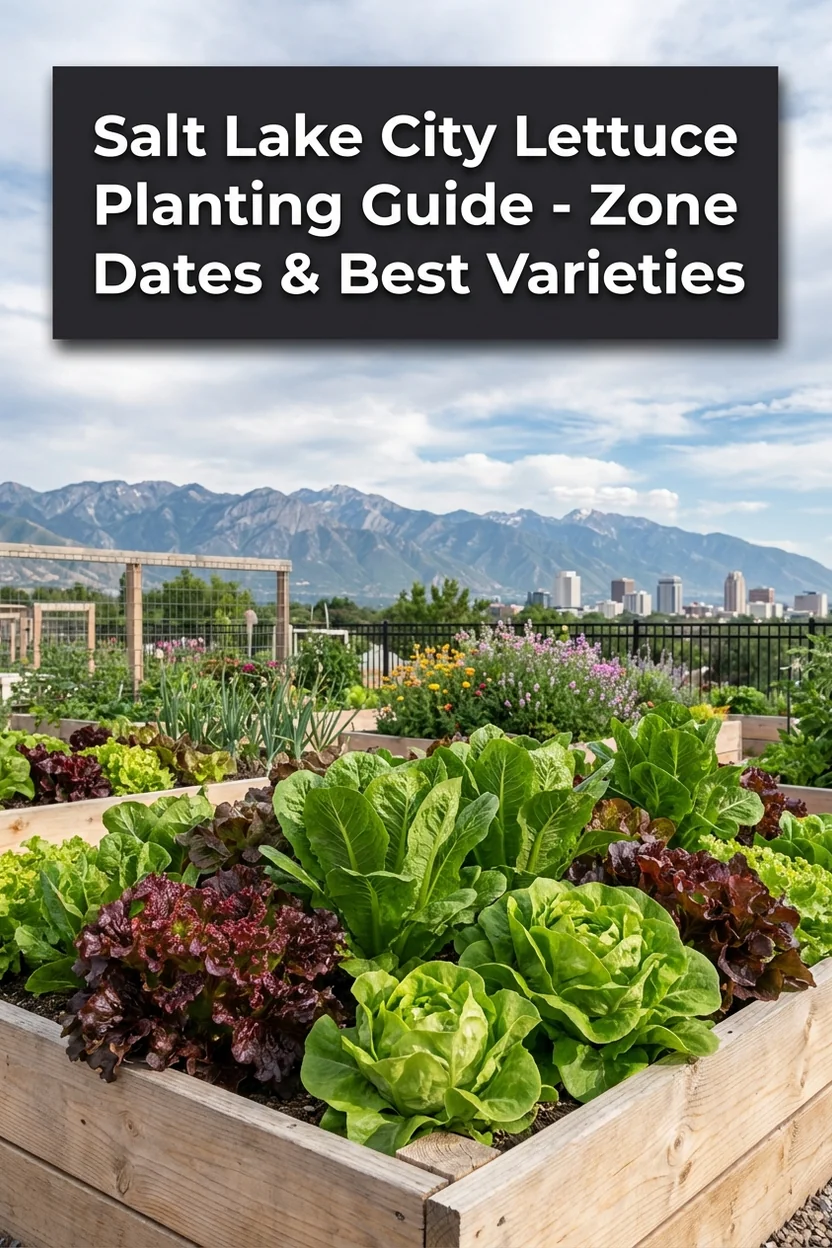
When to Plant Lettuce in Salt Lake City: Complete Guide + Best Varieties for Zone 7a
Pets & Toxicity
Recorded toxicity for plants linked in this guide. An unknown status is not a safety assessment.
No linked plant is recorded as toxicDetailsHide
Lactuca sativa var. crispa — Toxicity: Not assessed
Lactuca sativa var. crispa is non-toxic and safe for human consumption. All parts of the plant are edible, though leaves are the primary harvest. Generally safe around pets, though large quantities may cause mild digestive upset in some animals.View Lactuca sativa var. crispa plant profile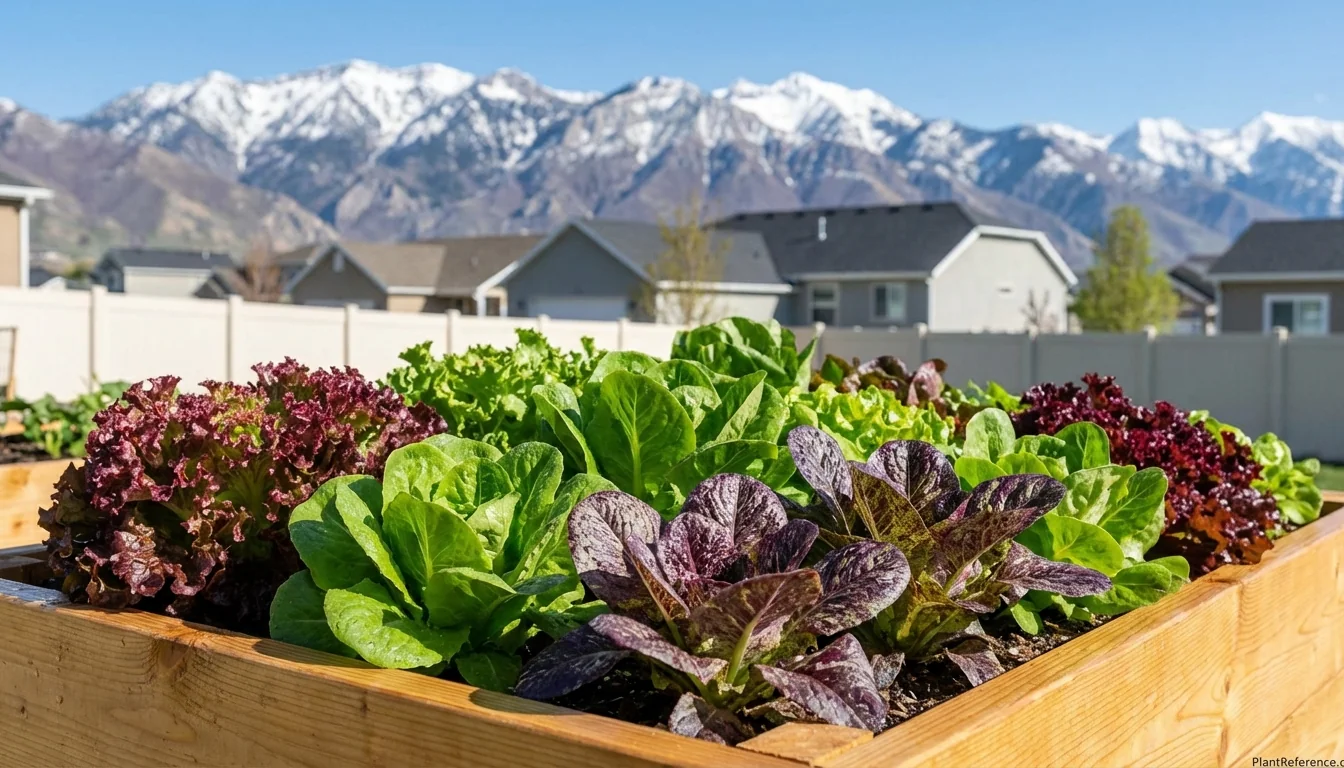
— Image © Plant Reference 2026
Salt Lake City brings the high desert to lettuce growing—and the high desert brings the driest climate, most intense sun, and most alkaline soil of any city in this guide alongside the complete elimination of every moisture-related disease that plagues lettuce growers everywhere else. The Wasatch Front's Zone 7a climate delivers a 173-day frost-free season from late April through mid-October—shorter than most Southern cities but with distinctive advantages that compensate. At 4,300 feet elevation, Salt Lake City's intense sun produces rapid lettuce growth during the spring and fall windows, and the dry air (only 16 inches of annual rainfall, 20-35% humidity) means downy mildew, basal rot, and slug damage are essentially nonexistent. This is the cleanest, most disease-free lettuce growing environment in the entire 30-city guide. The trade-off is water. Every drop of moisture lettuce needs must come from irrigation because natural rainfall is insufficient in every month of the growing season. The summer gap runs 8-10 weeks from late June through mid-August when temperatures exceed 90°F with intense high-altitude sun—comparable to moderate Southern cities but driven purely by dry heat and solar intensity without any humidity component. The spring window from early April through late June is excellent, with the Wasatch mountains providing dramatic microclimates: bench neighborhoods above the valley floor (Avenues, Federal Heights, East Bench) stay cooler longer than the valley itself. The fall window from September through mid-October is compressed because first frost arrives earlier at elevation than in lowland cities, but the quality is outstanding. Salt Lake City's food culture—from the Downtown Farmers Market to the farm-to-table restaurants along Main Street and 9th & 9th—values the fresh, clean lettuce that Utah's dry mountain air uniquely produces. The growing community benefits from Utah State University Extension's arid-climate expertise and the Wasatch Front's engaged community garden network. When to Plant Tomatoes in Salt Lake City: Complete Guide + Best Varieties for Zone 7a
Best Lettuce Varieties for Salt Lake City's Climate
Salt Lake City sits in USDA Zone 7a with an April 25 last frost and October 15 first frost—173 frost-free days. Lettuce tolerates 28°F (-2°C) once established, extending the effective season from early April through late October. SLC's dry, intense-sun climate supports all lettuce types with variety selection emphasizing bolt resistance and fast maturity to maximize the compressed windows.
Variety | Type | Days to Harvest | Heat Tolerance | Best For |
|---|---|---|---|---|
Butterhead | 55-65 days | High (for type) | Best all-around for SLC | |
🌿Lactuca sativa var. crispa (Red Oak Leaf) | Looseleaf | 45-55 days | Moderate-High | Fast harvest, cut-and-come-again |
Mesclun Mix | Seedling mix | 30-40 days | Variable | Fastest harvest, essential |
🌿Lactuca sativa var. longifolia (Romaine) | Cos | 70-80 days | Moderate | Fall crop (tight timing) |
Butterhead | 55-65 days | Low | Spring/fall cool windows | |
🌿Lactuca sativa var. capitata (Iceberg) | Crisphead | 80-90 days | Low | Fall only, tight timing |
🌿Lactuca sativa 'Buttercrunch' leads for Salt Lake City because its bolt resistance extends the spring window 2-3 weeks as high-altitude temperatures climb toward summer. Buttercrunch's thick, blistered leaves handle the intense Wasatch Front sun that accelerates photosynthesis and heat stress simultaneously. The compact rosettes thrive in SLC's amended raised beds and produce consistently in both the spring and fall windows.
🌿Lactuca sativa var. crispa (Red Oak Leaf) at 45-55 days provides the fast maturity that Salt Lake City's compressed windows demand. The burgundy-tipped leaves develop vivid coloration in Utah's cool fall nights when the mountain air drops temperatures rapidly after sunset. Cut-and-come-again harvesting extends each planting across 4-6 weeks.
Mesclun Mix at 30-40 days is essential for maximizing SLC's compressed growing calendar. Sow in early April, harvest by mid-May. The rapid cycle is critical because Salt Lake City has less total growing time than any Southern city in this guide.
🌿Lactuca sativa var. longifolia (Romaine) at 70-80 days requires careful timing in SLC's 173-day season. Spring Romaine must go in by mid-April (as transplants) to mature before late June heat. Fall Romaine is tight—start indoors in July for late August transplanting, but the October 15 first frost limits the window.
🌿Lactuca sativa 'Bibb' produces SLC's most delicate lettuce during the brief coolest windows—early spring and late September-October.
🌿Lactuca sativa var. capitata (Iceberg) at 80-90 days is high-risk in SLC's compressed season but feasible as a fall crop with July indoor starts. The dry climate eliminates the tipburn that humid cities experience. When to Plant Peppers in Salt Lake City: Complete Guide + Best Varieties for Zone 7a
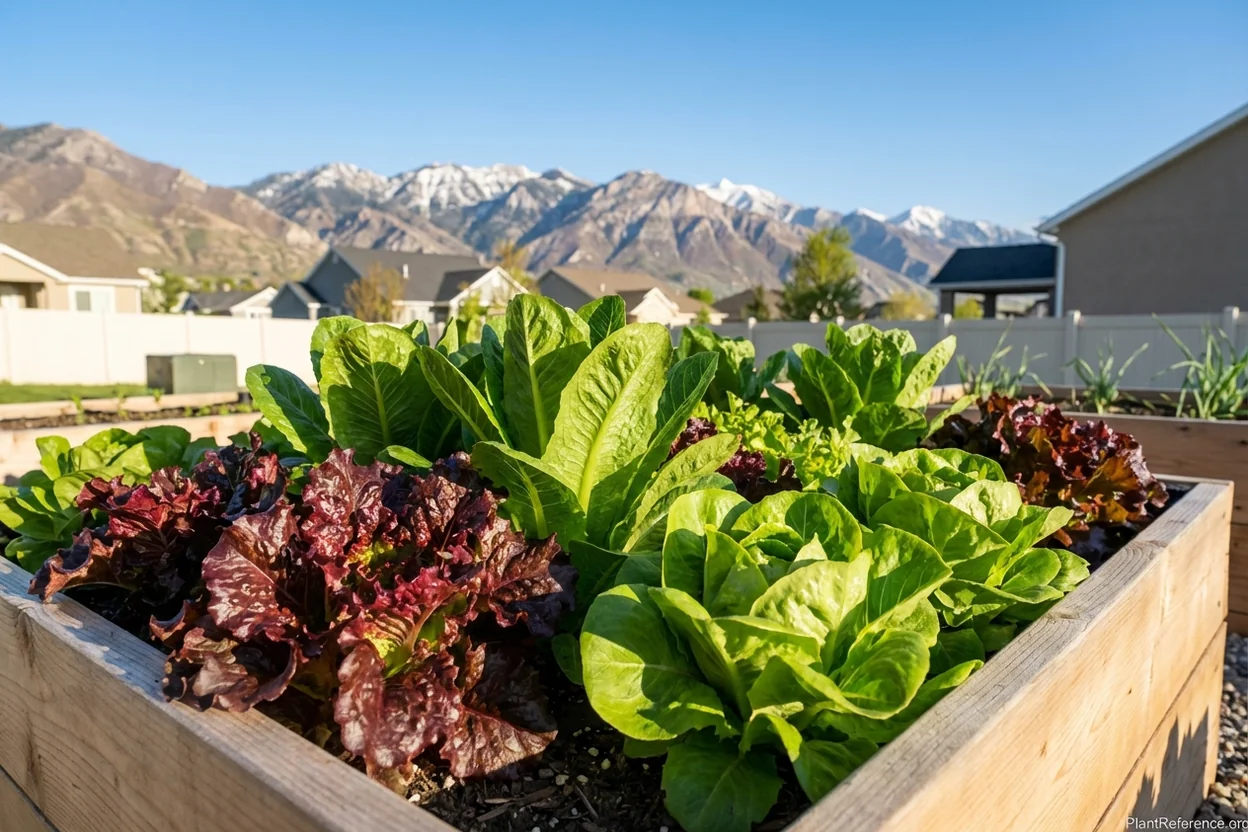
Specific Planting Dates for Salt Lake City Gardens
Salt Lake City's calendar is compressed compared to Southern cities but the intense high-altitude sun accelerates growth, partially compensating for the shorter season.
Indoor Seed Starting (Spring): March 15-April 1 (4-6 weeks before transplanting). Start at 60-70°F (15-21°C). Indoor starting is important because it gains critical weeks in SLC's compressed season.
Direct Sow (Spring): April 1-15. SLC soil reaches 40°F by early April. Succession sow every 10-14 days through late May. The intense sun produces rapid germination and growth once soil warms.
Transplant Outdoors (Spring): April 15-May 1. Hardened transplants tolerate frost to 28°F. Salt Lake City's volatile spring can produce late frost through late April—row covers provide insurance.
Summer Gap (Late June through Mid-August): SLC's gap runs 8-10 weeks when temperatures exceed 90°F with intense high-altitude sun. The dry heat and low humidity (20-35%) make shade cloth less effective than in humid cities because evaporative cooling is absent. Accept the gap.
Fall Sowing: August 1-15. Start seeds indoors—SLC's August soil is hot but thermoinhibition is less severe than in humid Southern cities because the dry soil doesn't retain heat as long. Direct outdoor sowing sometimes feasible in irrigated beds by mid-August.
Fall Production Window: September through mid-October. SLC's premium but compressed lettuce window—Utah's rapid fall cooling produces outstanding quality but the October 15 first frost ends the season sooner than lowland cities.
Season Extension: Cold frames extend harvest into November-December. The intense winter sun at elevation provides more light than cloudy Northern cities at similar latitudes, enabling slower but genuine winter growth under protection. Raised Bed Vegetable Garden Layout: Planning for Maximum Production
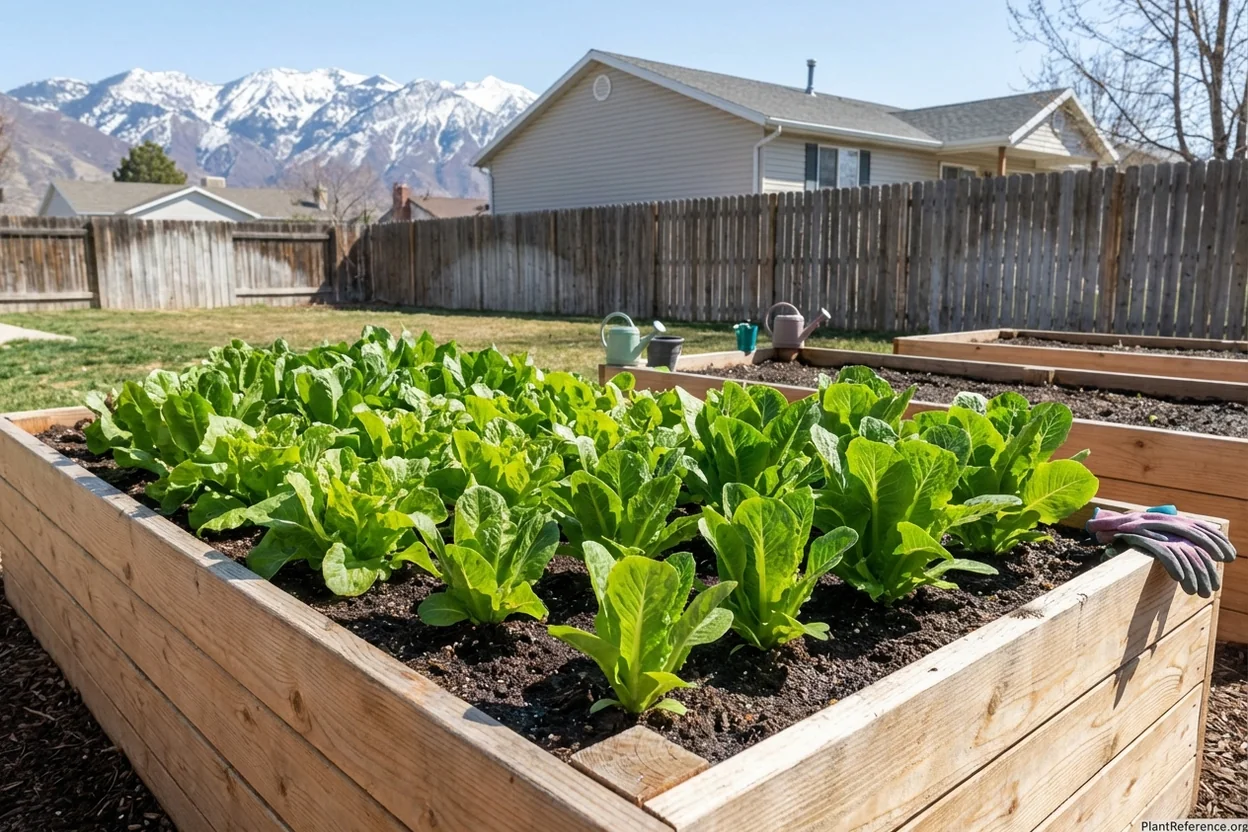
Complete Growing Guide for Salt Lake City
Alkaline Great Basin Soil
Salt Lake City sits on alkaline Great Basin soil (pH 7.5-8.5)—among the most alkaline of any city in this guide, comparable to Dallas. The alkaline chemistry locks up iron and micronutrients, causing yellowing (chlorosis) in lettuce. Do not add lime—Utah soil is already far too alkaline. Raised beds with controlled soil mix are strongly recommended. Fill with 50% topsoil, 30% compost, and 20% perlite. Chelated iron spray every 2-3 weeks prevents chlorosis. SLC's soil is also high in calcium carbonate (caliche) that creates hardpan layers restricting root growth—another reason raised beds are essential. Compost naturally lowers pH through organic acid production over time. Space heading types 8-12 inches (20-30 cm) and looseleaf 4-6 inches (10-15 cm). How to Build a Raised Garden Bed: Step-by-Step Construction Guide
Irrigation: SLC's Non-Negotiable Requirement
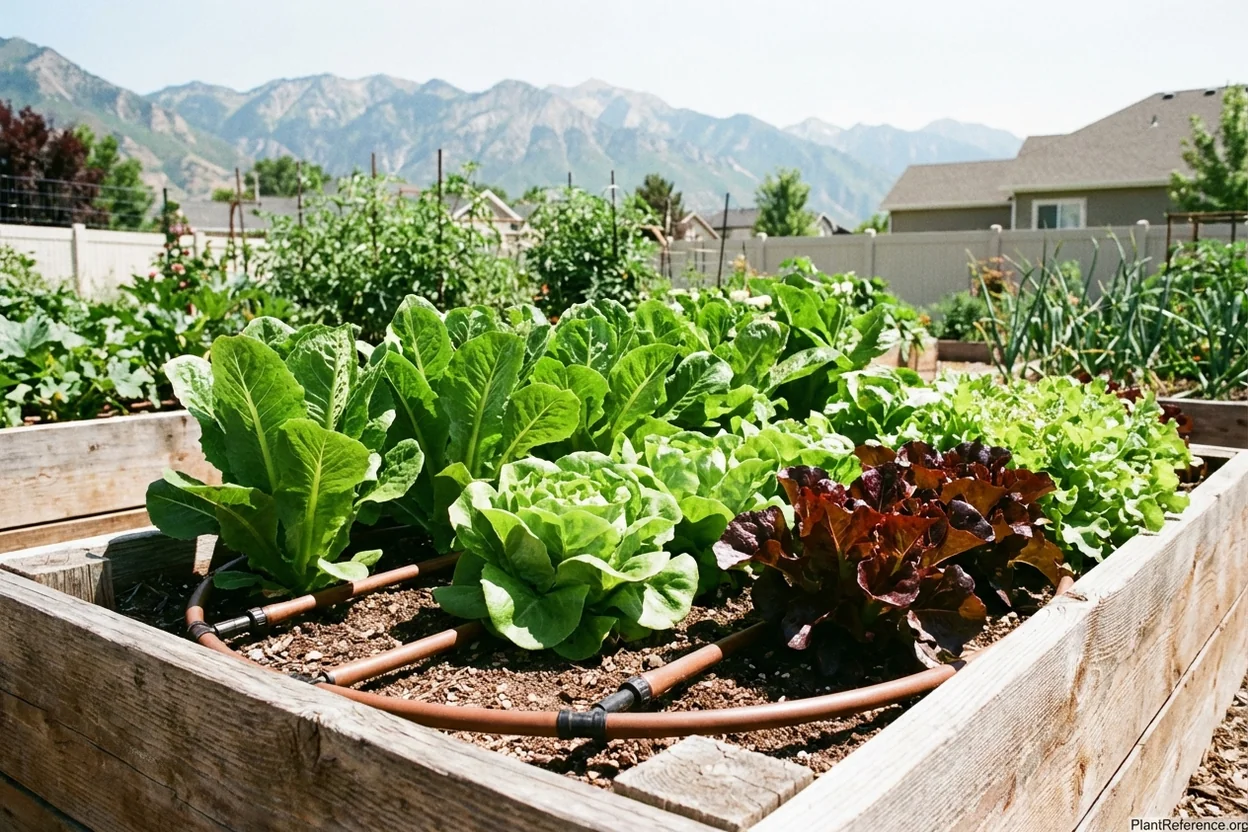
Salt Lake City receives only about 16 inches (41 cm) of annual rainfall—the driest growing climate in this entire 30-city guide. Every drop of moisture lettuce needs must come from irrigation. Drip irrigation is the standard approach because it delivers water efficiently in the dry climate without wasting a drop to evaporation. Water 1-1.5 inches (2.5-4 cm) per week consistently—more during hot, windy periods when evapotranspiration accelerates in the dry air. The low humidity means no downy mildew risk but also means soil dries rapidly between waterings. Mulch 2-3 inches (5-8 cm) to retain moisture against the dry mountain air. Utah's water-conscious gardening culture makes drip irrigation both a practical and philosophical standard for Wasatch Front vegetable growing. 5 Best Drip Irrigation Kits for Raised Beds (Tested for Easy Installation)
High-Altitude Sun Management
Salt Lake City's 4,300-foot elevation intensifies solar radiation compared to sea-level cities—UV exposure is approximately 15-20% higher than coastal locations at the same latitude. This intense sun accelerates lettuce growth but also accelerates bolting during the spring-to-summer transition. Shade cloth (30-50%) extends the spring window by 2-3 weeks, but SLC's dry air means shade cloth provides less temperature reduction than in humid cities because evaporative cooling doesn't supplement the shade effect. When to Plant Squash in Salt Lake City: Complete Guide + Best Varieties for Zone 7a
Wasatch Front Microclimates
Salt Lake City's dramatic terrain creates meaningful microclimate variation across the metro. Bench neighborhoods (Avenues, Federal Heights, East Bench) at higher elevations stay cooler longer in spring and experience earlier fall frost—extending the spring lettuce window but compressing the fall window. Valley-floor neighborhoods (Sugar House, West Valley, Murray) warm faster in spring but stay warmer into fall. The mountains block Arctic air masses from the north, making SLC's Zone 7a classification slightly misleading—winter minimums are moderated by the mountain barrier even as the elevation creates earlier frost onset. When to Plant Cucumbers in Salt Lake City: Zone 7a Dates + Best Varieties
Succession Planting in a Compressed Season
SLC's compressed season demands aggressive succession planting. Sow every 10-14 days from early April through late May and again from early August through September. The total window supports 5-7 succession plantings—fewer than Southern cities but each planting grows faster due to the intense high-altitude sun.
Feeding
Light feeder—fish emulsion every 3-4 weeks. SLC's alkaline soils require chelated iron spray every 2-3 weeks. Use sulfur-based amendments to gradually lower pH. Compost provides baseline nutrition while slowly acidifying the alkaline soil. Utah State Extension provides excellent arid-climate gardening guidance specific to the Wasatch Front. When to Plant Kale in Salt Lake City: Complete Guide + Best Varieties for Zone 7a
Troubleshooting Salt Lake City-Specific Problems
Compressed Growing Season (173 Days)
SLC's shortest frost-free season among cities in this guide's Zone 7a category. Prevention: mandatory indoor starts for heading types, fast-maturing varieties (mesclun 30 days, Red Oak Leaf 45 days), aggressive succession planting, and cold frames extending the fall window into November. The intense high-altitude sun partially compensates by accelerating growth rates 10-15% compared to sea-level cities at the same latitude. Raised Bed Too Hot in Summer: Protecting Plants from Heat Stress
Intense High-Altitude Sun and Bolting
SLC's 4,300-foot elevation creates 15-20% more intense solar radiation than coastal cities, accelerating both growth and bolting. Prevention: shade cloth during the spring-to-summer transition, bolt-resistant 🌿Lactuca sativa 'Buttercrunch', and morning harvest when bitter compounds are lowest. The dry air provides no cloud-cover relief—clear Utah skies mean maximum solar exposure nearly every day during the growing season. Raised Bed Pest Problems: Identification and Organic Control Methods
Alkaline Soil and Iron Chlorosis
SLC's Great Basin soil tests pH 7.5-8.5 with calcium carbonate hardpan layers. Prevention: raised beds with controlled soil mix (mandatory), chelated iron spray every 2-3 weeks, sulfur amendments, and heavy compost. Do not add lime. This is the most extreme alkaline soil challenge of any city in this guide alongside Dallas.
Rapid Soil Drying in Dry Mountain Air
SLC's 20-35% humidity causes soil to dry between waterings faster than in any other city. Prevention: drip irrigation on timers for consistent delivery, 2-3 inches of mulch retaining moisture, and monitoring soil moisture daily during hot periods when the dry Wasatch Front air can desiccate shallow root zones within hours. Best Soil Mix for Raised Beds: Creating the Perfect Growing Medium
Harvest & Storage
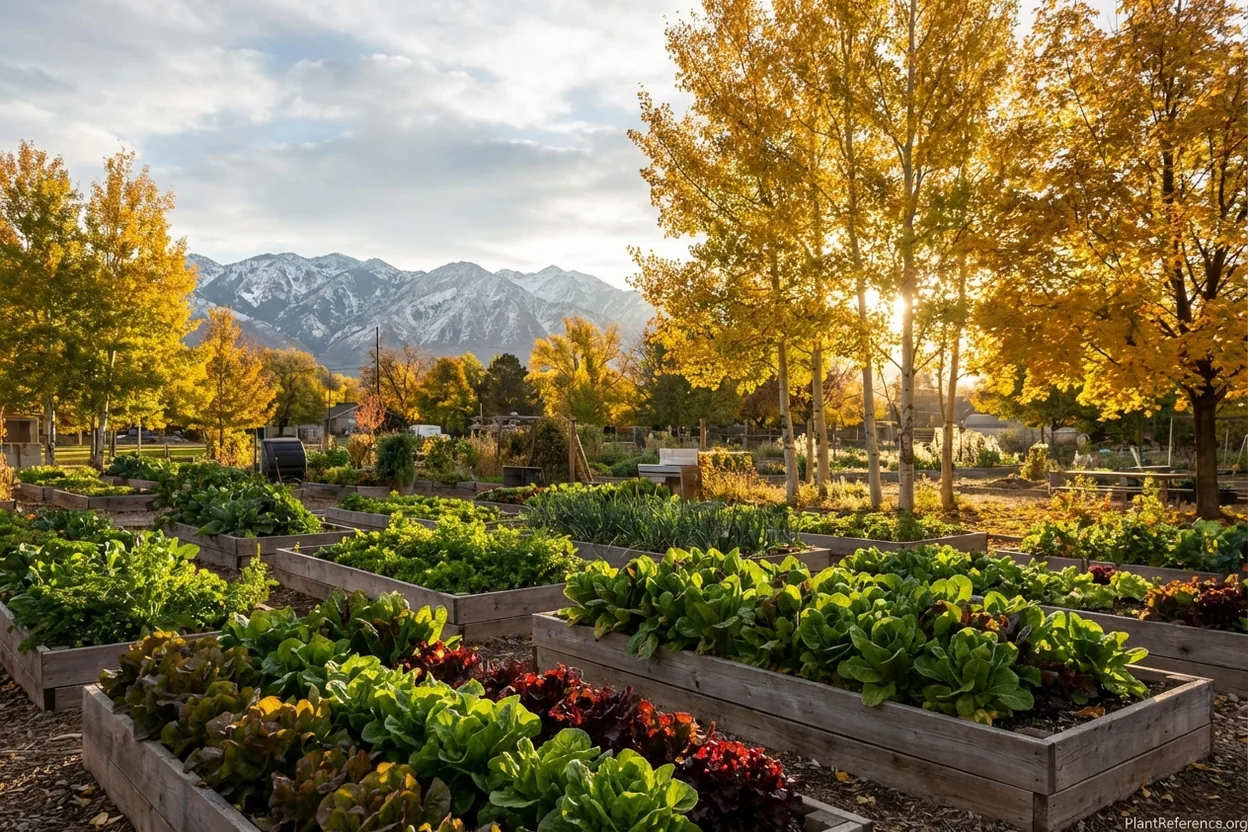
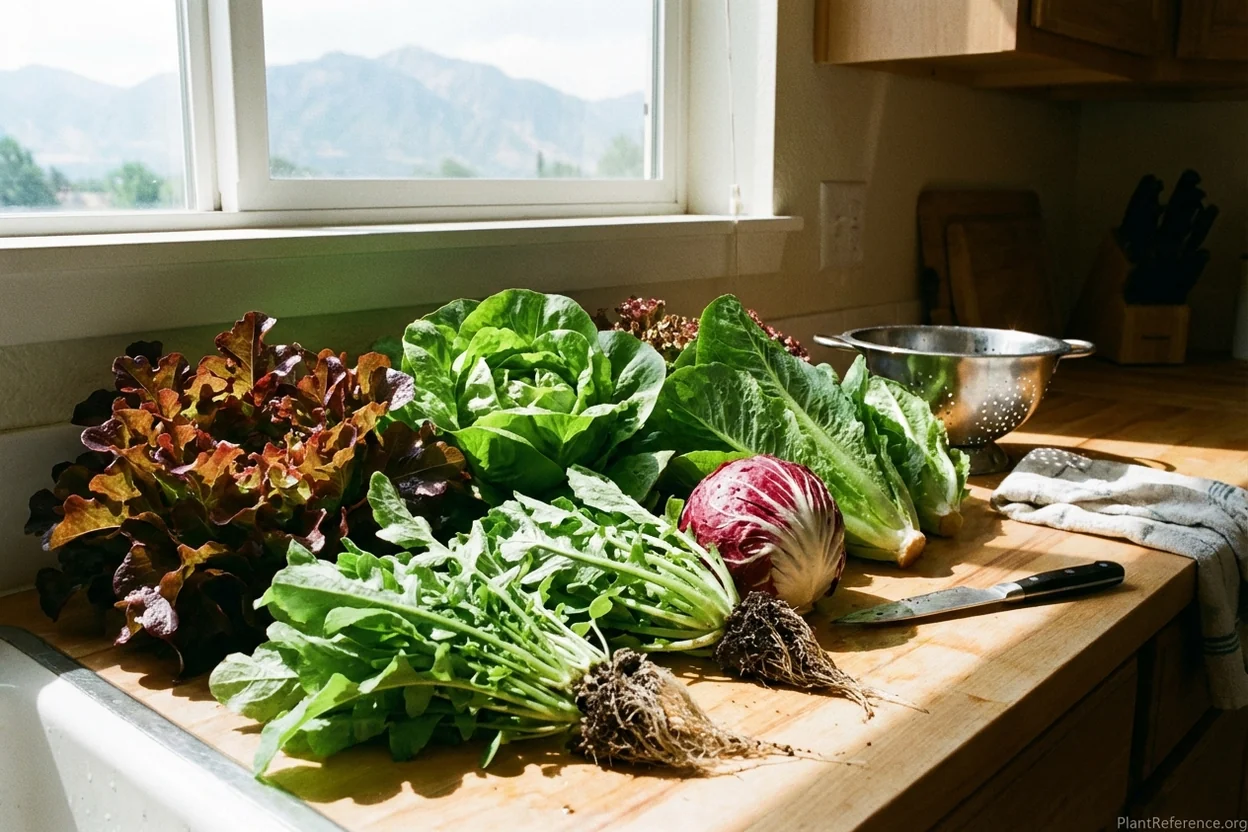
Harvest looseleaf types using cut-and-come-again—cut outer leaves 1 inch above the crown for 3-4 regrowth cycles over 4-6 weeks. Harvest heading types by cutting entire heads at the base when firm. Morning harvest before 9 AM is especially important in Salt Lake City because the intense high-altitude sun builds heat and concentrates bitter compounds faster than at sea level.
Salt Lake City's fall lettuce benefits from frost-sweetening that arrives more reliably than in many cities. The Wasatch Front's rapid fall temperature drop (sometimes 30°F between daytime highs and overnight lows) triggers the starch-to-sugar cryoprotectant response quickly and consistently. Temperatures in the 28-32°F range sweeten lettuce through September and October. Utah's dry air produces crisp, clean-flavored lettuce without the waterlogged quality that humid cities experience during the wet fall growing windows.
Store harvested lettuce refrigerated in damp paper towels inside a loose bag—keeps 7-10 days. Salt Lake City's approximately seven-month effective lettuce window (April-October, extended into December with cold frames) provides fresh lettuce through most of the year despite the compressed frost-free season. The Wasatch Front's food culture—from the Downtown Farmers Market to 9th & 9th restaurants to the growing community garden network across the valley—values the exceptionally clean, disease-free lettuce that Utah's high desert climate uniquely produces. No other city in this guide offers the combination of zero disease pressure and intense high-altitude sun that makes Salt Lake City's lettuce growing experience genuinely distinctive among all 30 cities covered. The Complete Guide to Raised Bed Gardening for Beginners (2025)
Frequently Asked Questions
Reading about plants and recognising them are different skills. These three build the second.
- Daily PlantIdentify the day’s mystery plant from a close-up photograph.
- Keyed OutWork a dichotomous key, lead by lead, to name a hidden specimen.
- Name That PlantName a specimen from botanical clues dealt hardest first.
Free to play, no account needed
Tagged with
Aisha manages a small tropical nursery on the east side of Houston, specializing in plants that can handle the Gulf Coast's humidity, heat, and unpredictable flooding. She studied horticulture in college and worked at a wholesale grower before opening her own operation. Growing up, her parents kept a kitchen garden with okra, bitter gourd, and curry leaf plants—a tradition she's continued. Houston's subtropical climate lets her grow things most of the country can't, but it also means dealing with fungal issues, standing water, and summers where it's too hot for even tomatoes. Aisha writes about tropical and subtropical plant care, humidity management, and working with heavy clay soils.