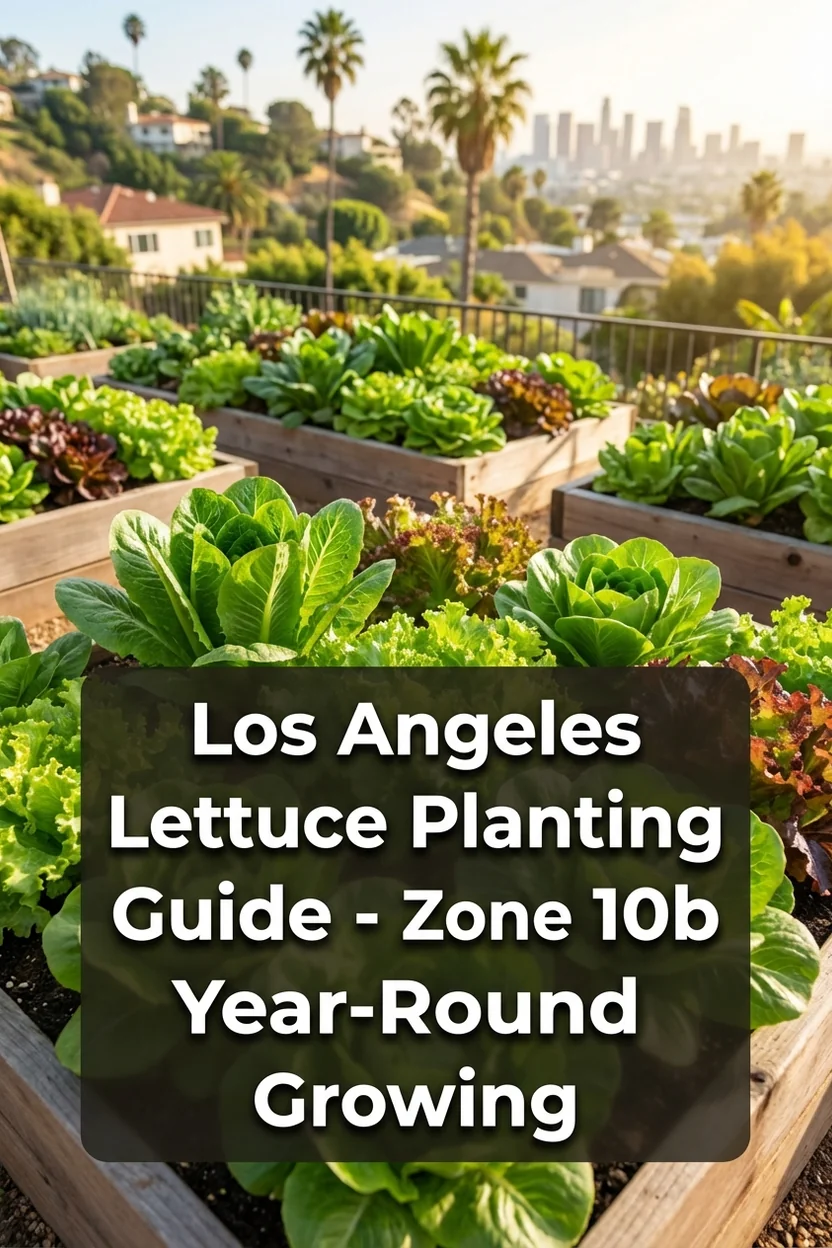
When to Plant Lettuce in Los Angeles: Complete Guide + Best Varieties for Zone 10b
Pets & Toxicity
Recorded toxicity for plants linked in this guide. An unknown status is not a safety assessment.
No linked plant is recorded as toxicDetailsHide
Lactuca sativa var. crispa — Toxicity: Not assessed
Lactuca sativa var. crispa is non-toxic and safe for human consumption. All parts of the plant are edible, though leaves are the primary harvest. Generally safe around pets, though large quantities may cause mild digestive upset in some animals.View Lactuca sativa var. crispa plant profile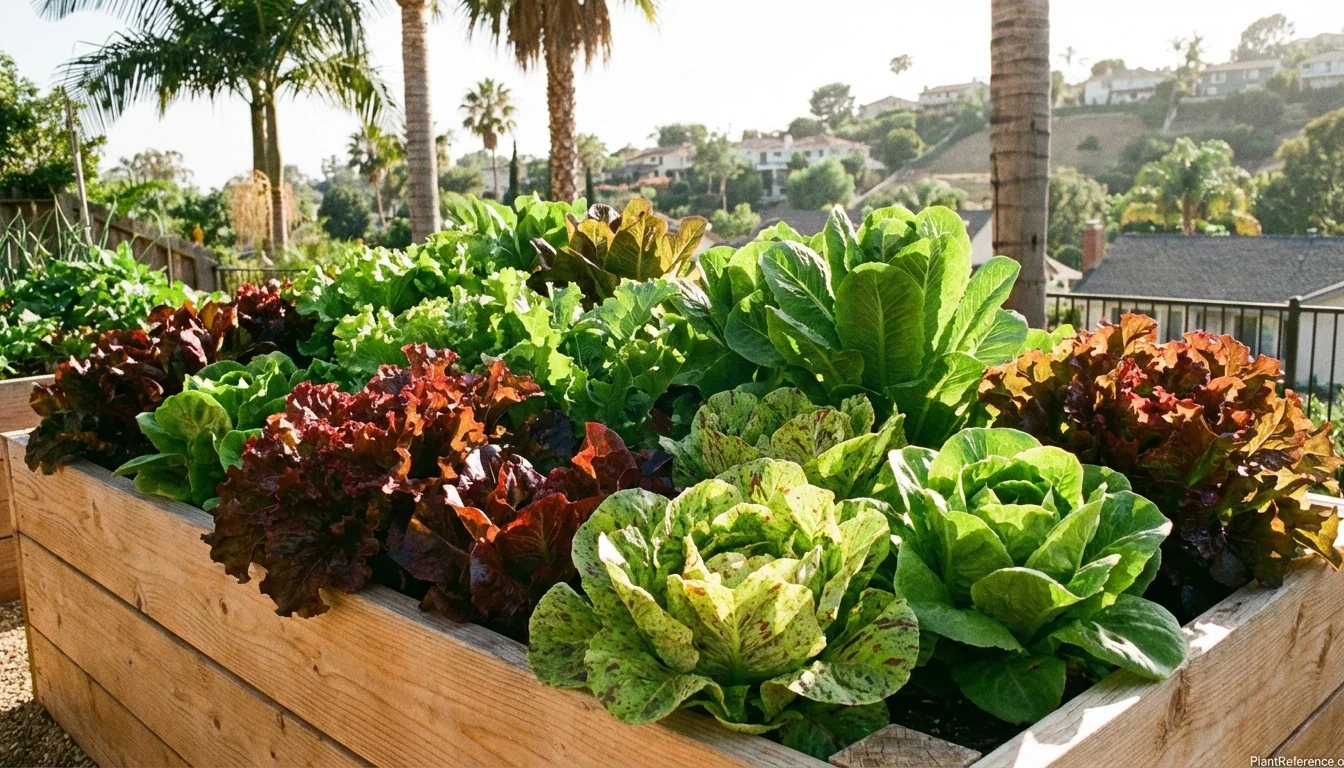
— Image © Plant Reference 2026
Los Angeles is two lettuce cities in one—the coastal strip from Santa Monica through Venice, Marina del Rey, and the Westside produces lettuce nearly year-round with fog-moderated summer temperatures rarely exceeding 80°F, while the inland valleys (San Fernando, San Gabriel, Inland Empire) experience 95-110°F summer peaks that create a genuine 8-10 week gap comparable to Southern cities. This extreme microclimate variation across a single metro area—the most dramatic of any city in this guide except San Francisco—means Los Angeles lettuce planning starts with knowing your neighborhood's distance from the Pacific Ocean. The Mediterranean climate provides the framework: mild, wet winters (65-72°F) and warm, dry summers with virtually zero rainfall from May through October. The 303-day frost-free season from mid-February through mid-December makes frost essentially irrelevant for lettuce, and the rare freezes that do occur are too mild to threaten established plants. LA's dry climate (15 inches of annual rainfall, 30-50% humidity) eliminates every moisture-related disease—downy mildew, basal rot, and slug damage are essentially nonexistent, giving Los Angeles the same disease-free advantage as San Francisco and Salt Lake City but with far warmer temperatures. The primary lettuce season runs from September through May—the opposite of Northern cities—with the mild winter months of December through February representing LA's premium growing period when temperatures are ideal and the sparse winter rain provides some natural irrigation. The city's extraordinary food culture—from the Hollywood Farmers Market to Santa Monica Farmers Market to the farm-to-table restaurants across Silver Lake, Echo Park, and the Arts District—creates intense demand for locally grown greens year-round. When to Plant Tomatoes in Los Angeles: Complete Guide + Best Varieties for Zone 10b
Best Lettuce Varieties for Los Angeles's Climate
Los Angeles sits in USDA Zone 10b with a February 15 last frost and December 15 first frost—303 frost-free days. But frost is so rare in most LA neighborhoods that the practical season approaches 365 days for coastal locations. All lettuce types succeed in LA's mild Mediterranean winter conditions.
Variety | Type | Days to Harvest | Heat Tolerance | Best For |
|---|---|---|---|---|
Butterhead | 55-65 days | High (for type) | Best all-around for LA | |
🌿Lactuca sativa var. crispa (Red Oak Leaf) | Looseleaf | 45-55 days | Moderate-High | Year-round coastal, cut-and-come-again |
🌿Lactuca sativa var. longifolia (Romaine) | Cos | 70-80 days | Moderate | Premium winter crop |
Mesclun Mix | Seedling mix | 30-40 days | Variable | Fastest harvest, succession |
Butterhead | 55-65 days | Low | Winter luxury | |
🌿Lactuca sativa var. capitata (Iceberg) | Crisphead | 80-90 days | Low | Winter only (LA grows commercial Iceberg) |
🌿Lactuca sativa 'Buttercrunch' leads for Los Angeles because its year-round performance spans the greatest range of LA's dramatic microclimate variation—producing through coastal summer fog and surviving the brief inland valley heat gaps with its bolt resistance carrying production into early July in most neighborhoods.
🌿Lactuca sativa var. crispa (Red Oak Leaf) at 45-55 days produces vivid color during LA's cool winter growing period. Cut-and-come-again harvesting extends each planting across 6-8 weeks in the mild Mediterranean conditions that delay bolting indefinitely during the November-March window.
🌿Lactuca sativa var. longifolia (Romaine) at 70-80 days is LA's premium winter variety. The Salinas Valley just 300 miles north grows the vast majority of America's commercial Romaine—LA's Mediterranean climate is the southern extension of that same ideal Romaine environment. Winter Romaine from November through March produces dense, crisp hearts in conditions that lettuce evolved for.
Mesclun Mix at 30-40 days enables the most frequent succession planting—potentially 15-20 sowings per year in coastal locations. The baby-leaf format is harvested before any bolting develops.
🌿Lactuca sativa 'Bibb' produces LA's most delicate winter lettuce—the soft, refined heads that command the highest prices at the Hollywood and Santa Monica farmers markets.
🌿Lactuca sativa var. capitata (Iceberg) at 80-90 days succeeds as a winter crop—LA is one of the few cities where home gardeners can grow reliable Iceberg because winter temperatures provide the long, cool maturation window Iceberg demands. When to Plant Peppers in Los Angeles: Complete Guide + Best Varieties for Zone 10b
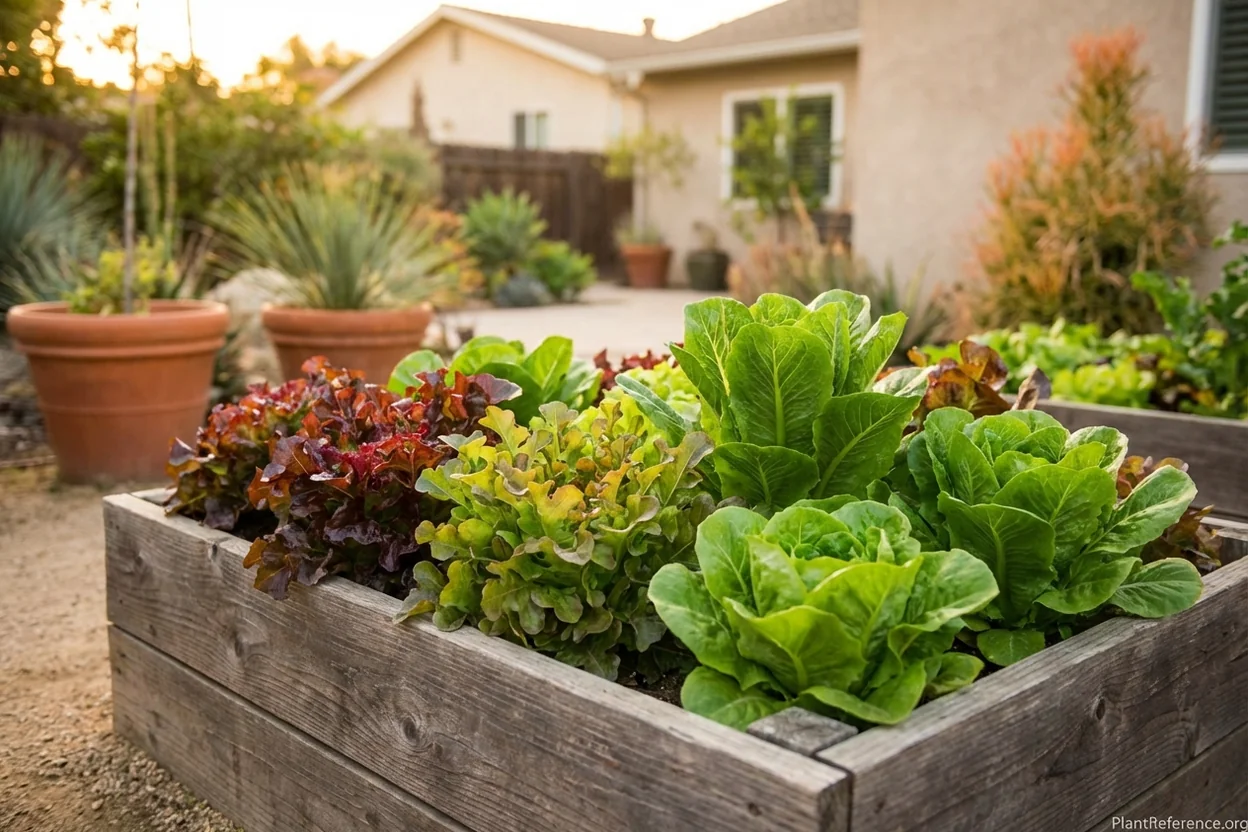
Specific Planting Dates for Los Angeles Gardens
LA's planting calendar varies more by neighborhood than by month—coastal vs inland location matters more than any date on a calendar.
Coastal Neighborhoods (Santa Monica, Venice, Westside, Manhattan Beach): Plant nearly year-round. Summer temperatures average 72-78°F—within lettuce's comfort zone. Brief warm spells in August-September may trigger bolting in heat-sensitive varieties but 🌿Lactuca sativa 'Buttercrunch' produces continuously.
Mid-City/Hollywood/Silver Lake: Plant September through June. Summer gap of 4-6 weeks in July-August when temperatures reach 85-90°F. Shade cloth extends production through most of summer.
Inland Valleys (San Fernando, San Gabriel, Inland Empire): Plant September through May. Summer gap of 8-10 weeks from late June through August when temperatures exceed 95-110°F. This is a completely different lettuce experience from the coast.
Primary Season (All Neighborhoods): September through May. Plant every 10-14 days for continuous harvest. Winter months (November-March) are LA's premium growing period.
Summer Bridge (Coastal Only): Succession sow through summer with shade cloth in transitional neighborhoods. Coastal fog eliminates the need for any summer modification.
Year-Round Succession: Coastal LA supports 15-20 succession plantings per year. Inland valleys support 8-10 across the September-May window. Raised Bed Vegetable Garden Layout: Planning for Maximum Production
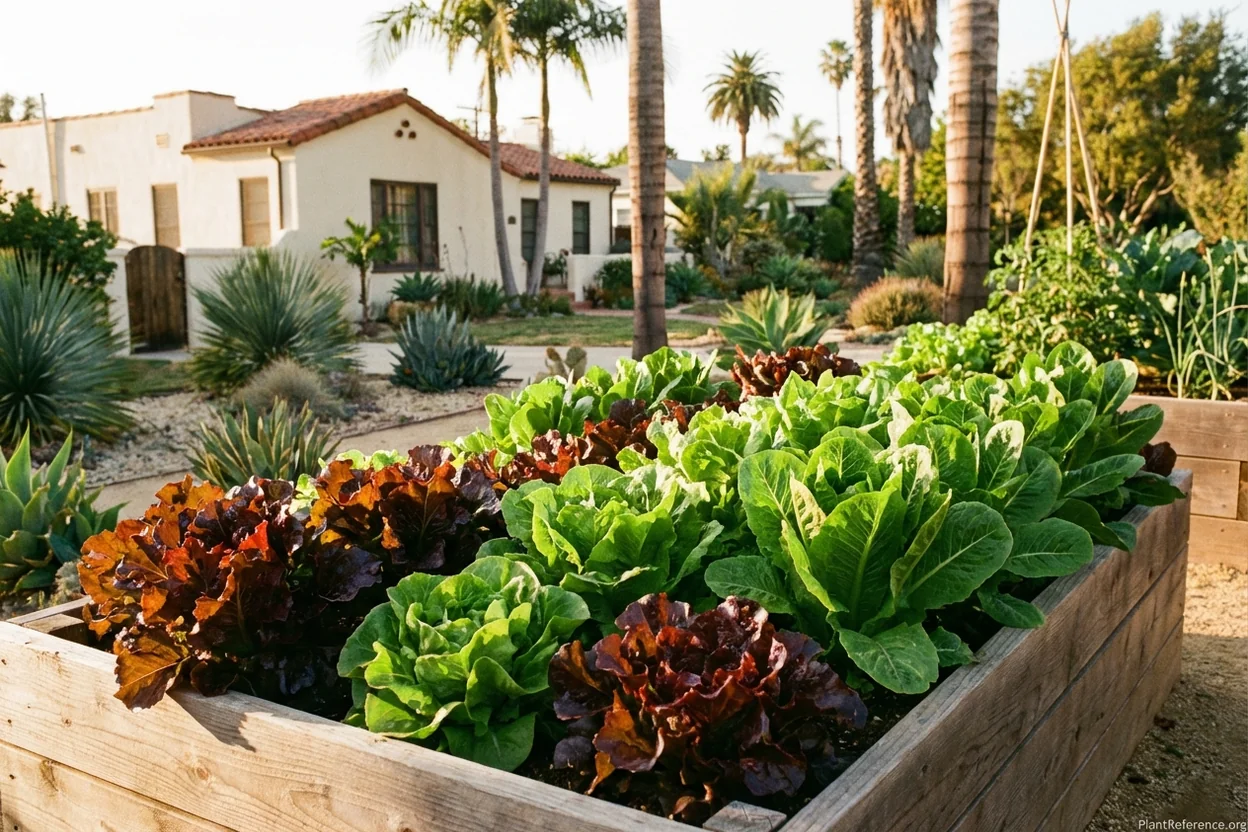
Complete Growing Guide for Los Angeles
LA's Diverse Soils
Los Angeles soils vary dramatically across the metro's vast geography. Coastal areas have sandy, fast-draining soil requiring compost for moisture retention. Valley floors have heavier clay needing drainage improvement. Hillside neighborhoods (Hollywood Hills, Silver Lake, Eagle Rock) have rocky, thin soil requiring raised beds. Most LA soils test alkaline (pH 7.0-8.0) due to the region's limestone and desert-derived geology. Chelated iron spray every 2-3 weeks prevents chlorosis in alkaline conditions. Raised beds with controlled soil mix bypass all these variations. Work 2-3 inches (5-8 cm) of compost into the top 8 inches (20 cm) regardless of soil type. How to Build a Raised Garden Bed: Step-by-Step Construction Guide
Irrigation: LA's Year-Round Requirement
Los Angeles receives only about 15 inches (38 cm) of annual rainfall—almost entirely from November through March—making irrigation mandatory during the September-October and April-May growing windows and optional during the wettest winter months. Drip irrigation is the Southern California standard because it delivers water efficiently in the dry climate. Water 1-1.5 inches (2.5-4 cm) per week consistently. LA's dry air means no downy mildew risk but rapid soil drying between waterings. Mulch 1-2 inches (2.5-5 cm) to retain moisture. California's water-conscious culture makes drip irrigation both practical and responsible for LA lettuce production. 5 Best Drip Irrigation Kits for Raised Beds (Tested for Easy Installation)
Microclimate Management: LA's Defining Strategy
Los Angeles's extreme microclimate variation is the single most important factor in lettuce planning. The Pacific Ocean creates a temperature gradient that drops 1-2°F per mile inland from the coast. Santa Monica at 72°F in August exists in a different climate zone than Woodland Hills at 105°F the same day just 25 miles east. Before planning your LA lettuce garden, determine your neighborhood's summer peak temperatures. If summer highs stay below 85°F, year-round lettuce is feasible. If they exceed 95°F, plan for a September-May cool-season approach identical to Dallas or Atlanta's inverted calendar. When to Plant Squash in Los Angeles: Complete Guide + Best Varieties for Zone 10b
Shade Cloth for Inland Valleys
Shade cloth (40-50%) extends the lettuce season by 3-4 weeks in transitional and inland neighborhoods. Install by May in inland valleys. The dry air means shade cloth provides less evaporative cooling benefit than in humid cities, but the temperature reduction still delays bolting significantly in neighborhoods where temperatures approach but don't exceed 90°F. Shade cloth is less effective in deep inland valleys where 100°F+ temperatures overwhelm any shading. When to Plant Cucumbers in Los Angeles: Zone 10b Dates + Best Varieties
Succession Planting
Sow every 10-14 days from September through May in all neighborhoods. Coastal locations continue through summer. LA's mild winter temperatures produce steady, consistent growth—each planting matures on schedule without the cold-driven slowdowns that winter production in Zone 7-8 cities experiences.
Feeding
Light feeder—fish emulsion every 3-4 weeks. LA's alkaline soils benefit from chelated iron spray every 2-3 weeks. California's long growing season demands more frequent compost top-dressing than cities with shorter windows—replenish organic matter every 6-8 weeks to sustain continuous production. When to Plant Kale in Los Angeles: Complete Guide + Best Varieties for Zone 10b
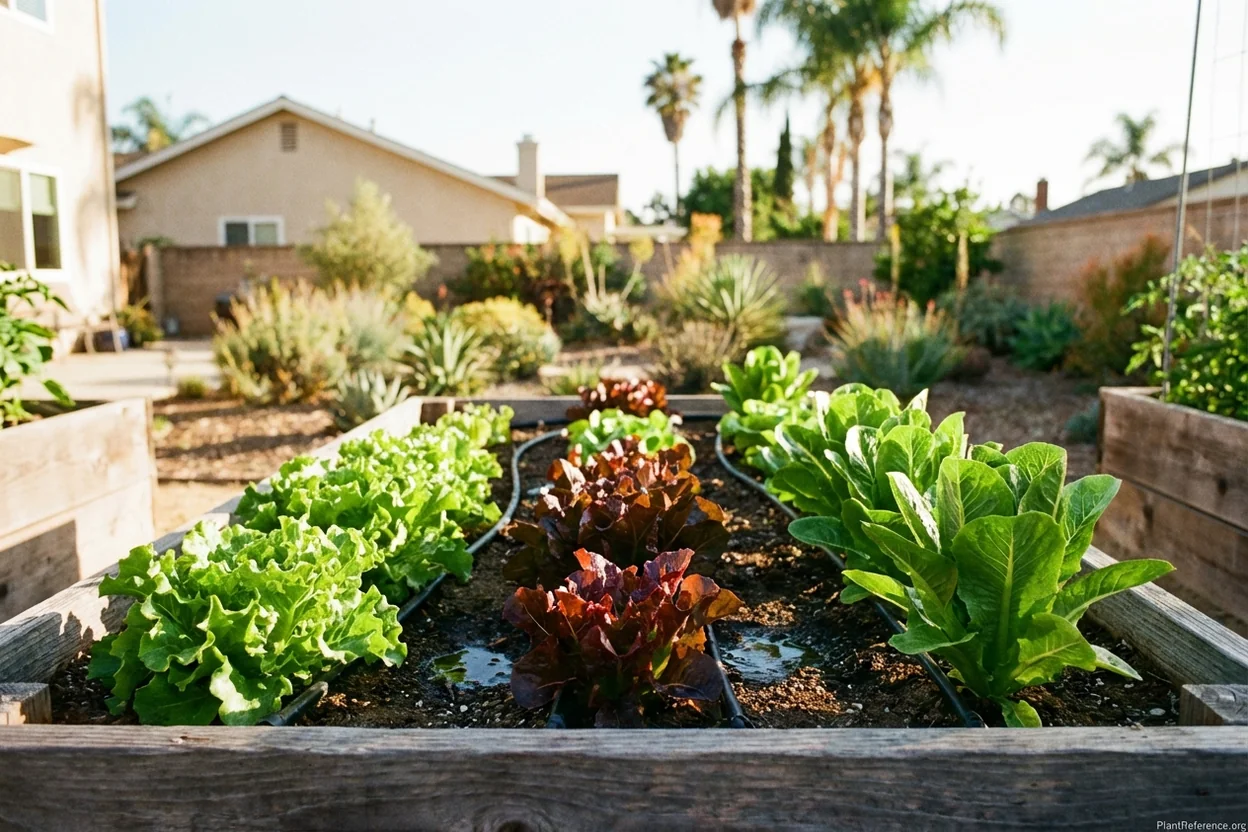
Troubleshooting Los Angeles-Specific Problems
Extreme Microclimate Variation
LA's defining lettuce challenge—a garden in Santa Monica and a garden in Woodland Hills 25 miles east experience completely different growing conditions despite sharing a zip code prefix. Prevention: determine your summer peak temperatures before planning. Coastal (below 80°F): year-round production. Mid-city (80-90°F): September-June with shade cloth. Inland valleys (95-110°F): September-May only, no lettuce in summer regardless of infrastructure. Raised Bed Too Hot in Summer: Protecting Plants from Heat Stress
Inland Valley Heat (95-110°F)
San Fernando, San Gabriel, and Inland Empire valleys reach temperatures that make lettuce impossible from late June through August. Prevention: complete acceptance for deep inland locations. No shade cloth or variety selection produces meaningful lettuce when overnight temperatures remain above 75°F in the valleys. Focus on maximizing the excellent September-May cool-season window. Raised Bed Pest Problems: Identification and Organic Control Methods
Aphids in Dry Conditions
LA's dry climate supports aphid populations year-round because rain never naturally dislodges them. Check leaf undersides weekly. Strong water spray removes aphids effectively. Neem oil every 7-10 days provides organic prevention. The dry climate means downy mildew is nonexistent—LA's primary pest is aphids rather than fungal diseases.
Santa Ana Wind Events
Hot, dry Santa Ana winds (October-March) can desiccate lettuce rapidly with temperatures exceeding 90°F even in coastal areas for 2-5 days. Prevention: extra irrigation during Santa Ana events, shade cloth for temporary protection, and recognition that these events are brief interruptions rather than season-ending problems. Best Soil Mix for Raised Beds: Creating the Perfect Growing Medium
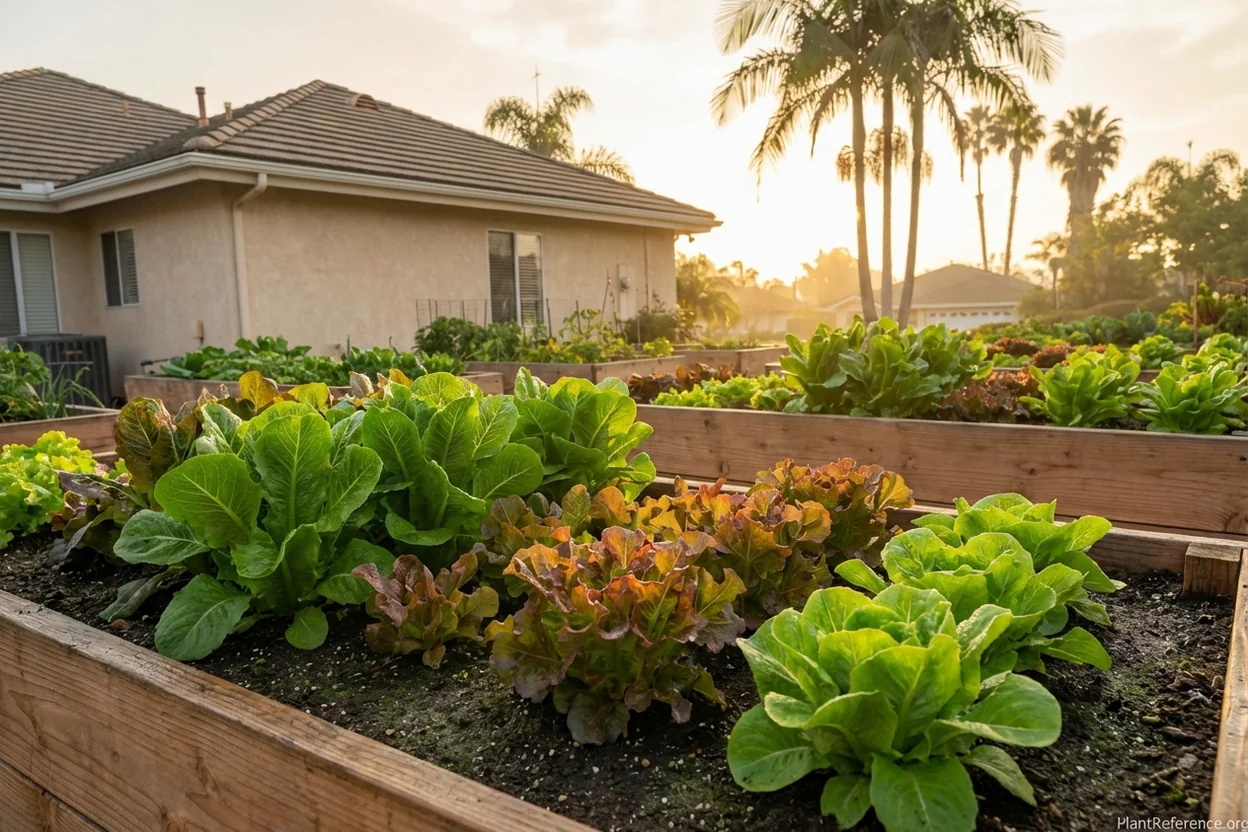
Harvest & Storage
Harvest looseleaf types using cut-and-come-again—cut outer leaves 1 inch above the crown for 4-6 regrowth cycles over 6-8 weeks. LA's mild conditions extend each cutting cycle longer than cities with temperature extremes. Harvest heading types by cutting entire heads at the base when firm. Morning harvest captures peak crispness, though LA's mild afternoon temperatures mean the quality difference between morning and afternoon harvest is smaller than in hot cities.
Los Angeles lettuce rarely experiences frost-sweetening because freezing temperatures are so rare. The quality advantage in LA is consistency—lettuce harvested in January tastes similar to lettuce harvested in November or March because the mild Mediterranean winter maintains consistent growing conditions across the entire cool-season window without the frost-thaw cycles that create sweetening in other climates.
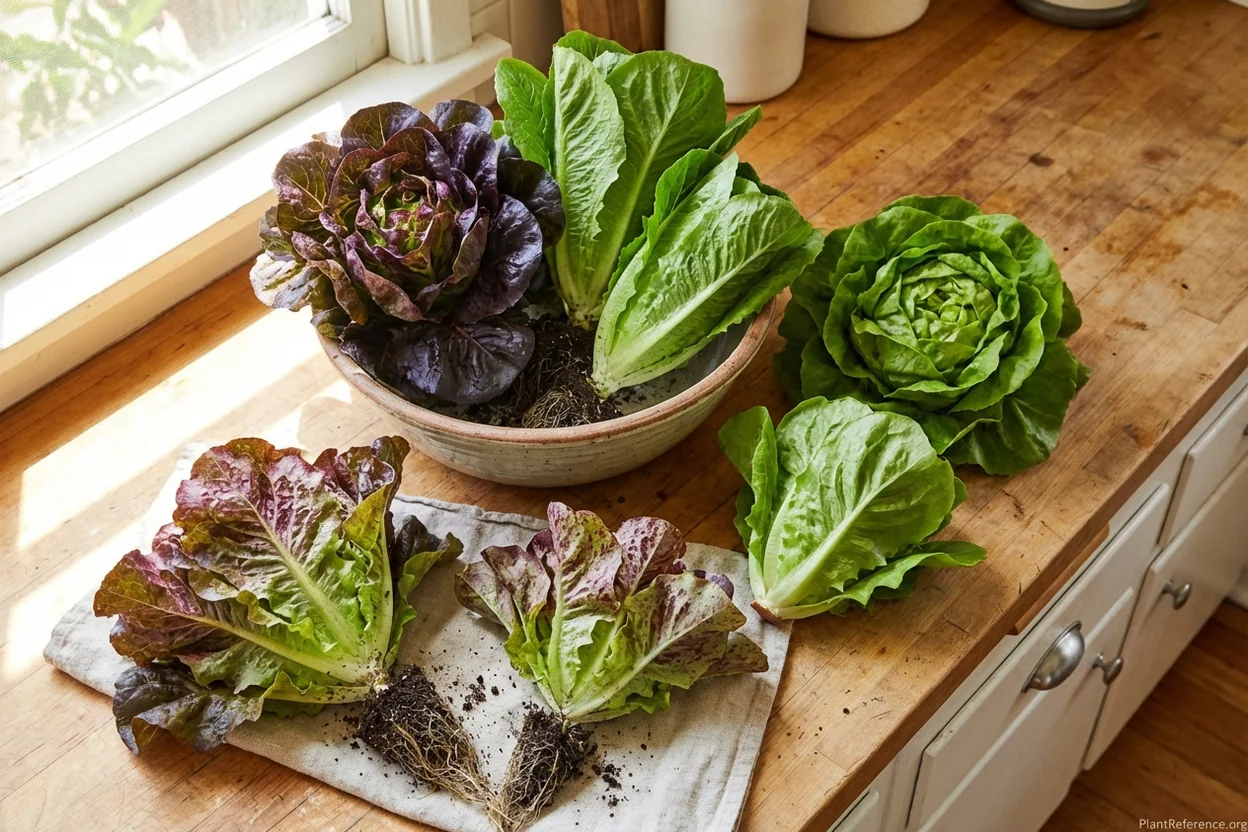
Store harvested lettuce refrigerated in damp paper towels inside a loose bag—keeps 7-10 days. Los Angeles's nine-to-twelve month effective lettuce window (year-round coastal, September-May inland) provides fresh lettuce through the vast majority of the year. The city's extraordinary food culture—from the Hollywood and Santa Monica farmers markets to the farm-to-table restaurants across Silver Lake, Echo Park, and the Arts District—values the clean, disease-free lettuce that Southern California's Mediterranean climate uniquely delivers. LA's combination of mild winters, dry air eliminating all moisture-related diseases, and extreme microclimate variety that creates fundamentally different growing experiences within a single metro area makes it one of the most fascinating and genuinely productive lettuce cities in the entire 30-city guide for gardeners who understand their specific neighborhood's relationship to the Pacific Ocean. The Complete Guide to Raised Bed Gardening for Beginners (2025)
Frequently Asked Questions
Reading about plants and recognising them are different skills. These three build the second.
- Daily PlantIdentify the day’s mystery plant from a close-up photograph.
- Keyed OutWork a dichotomous key, lead by lead, to name a hidden specimen.
- Name That PlantName a specimen from botanical clues dealt hardest first.
Free to play, no account needed
Tagged with
Emma runs a small succulent propagation business from her home in San Diego, shipping starter plants and cuttings across the country. She fell into succulents after college when she realized they were the only plants that survived her travel schedule—she was working as a travel nurse at the time. San Diego's mild, dry climate is ideal for outdoor succulent gardens, and Emma's front yard is a living catalog of over 200 varieties. She completed a certificate program in ornamental horticulture and writes about succulent care, propagation techniques, and drought-tolerant garden design. Her writing is calm and reassuring—she knows people feel bad about killing plants, and she wants them to stop worrying so much.