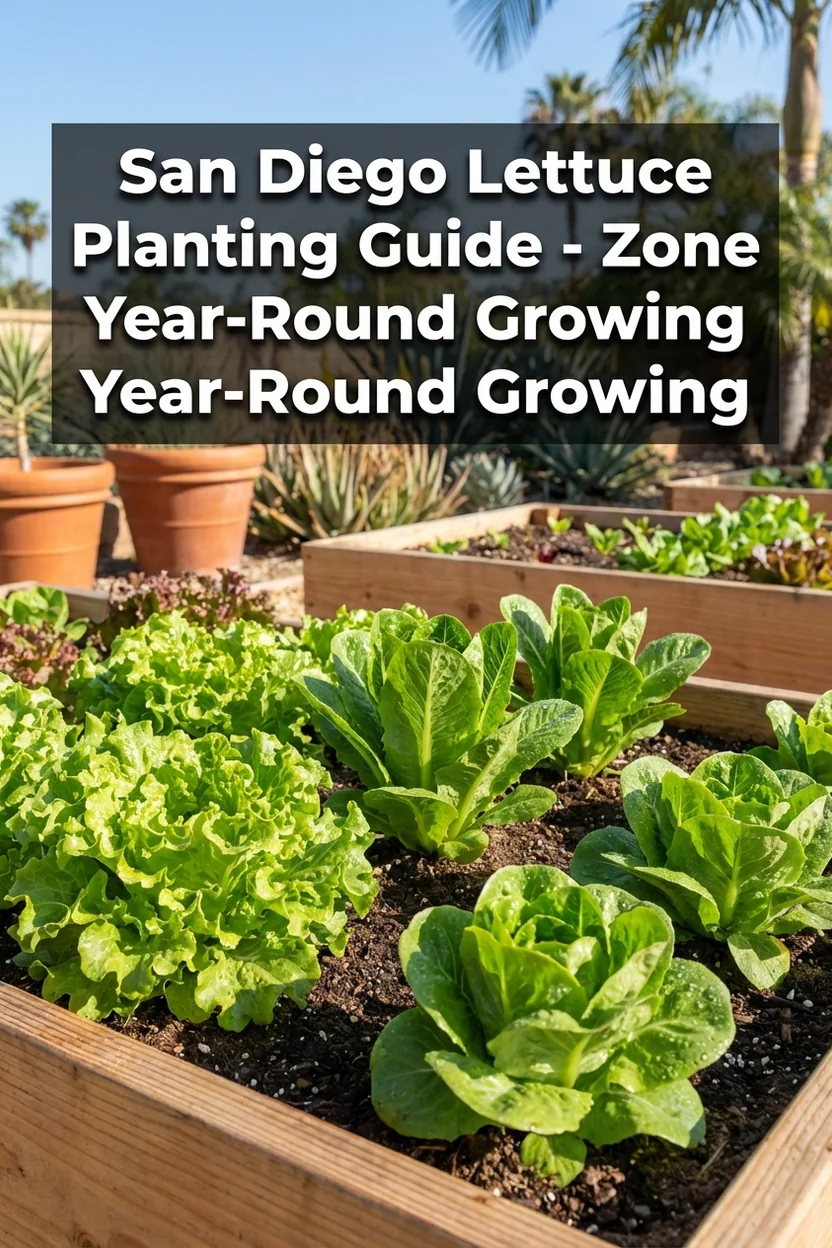
When to Plant Lettuce in San Diego: Complete Guide + Best Varieties for Zone 10b
Pets & Toxicity
Recorded toxicity for plants linked in this guide. An unknown status is not a safety assessment.
No linked plant is recorded as toxicDetailsHide
Lactuca sativa var. crispa — Toxicity: Not assessed
Lactuca sativa var. crispa is non-toxic and safe for human consumption. All parts of the plant are edible, though leaves are the primary harvest. Generally safe around pets, though large quantities may cause mild digestive upset in some animals.View Lactuca sativa var. crispa plant profile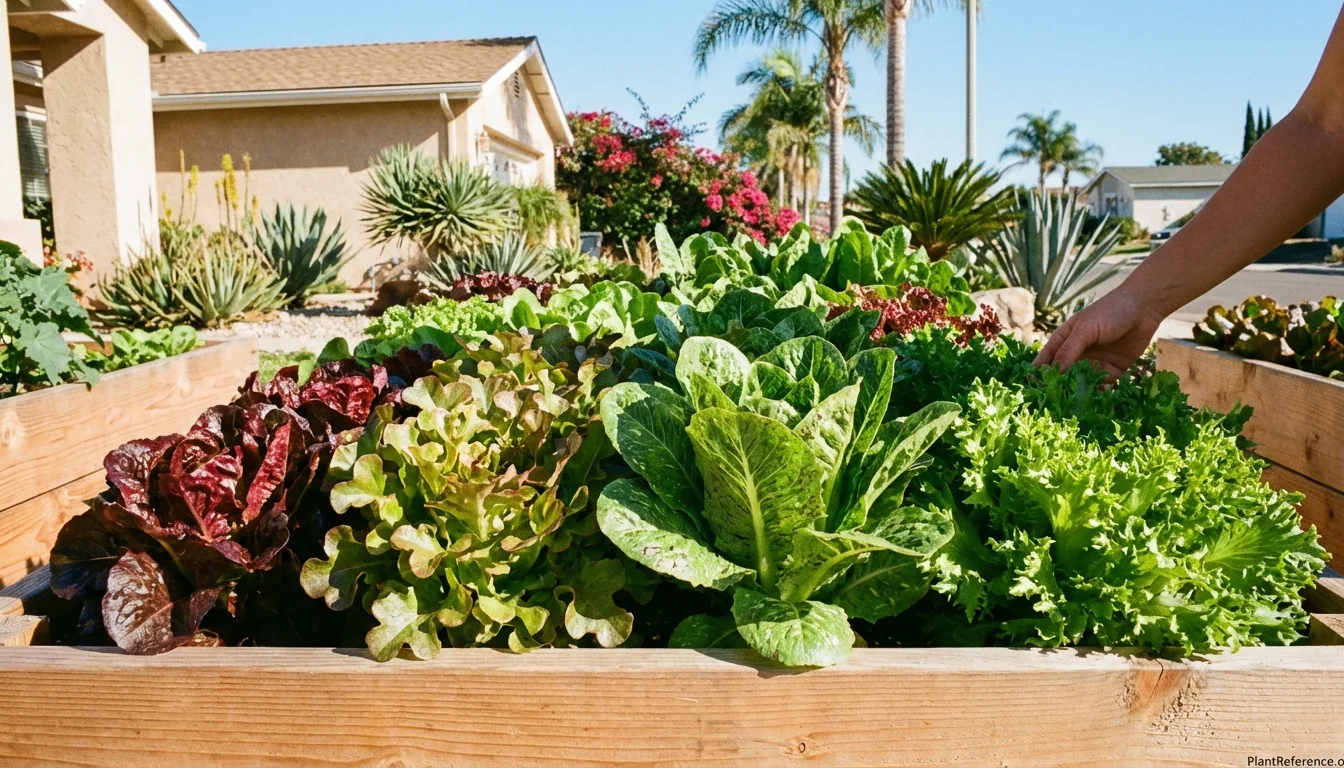
— Image © Plant Reference 2026
San Diego may be the single best lettuce city in America that isn't San Francisco. The coastal climate delivers summer highs averaging just 72-76°F—barely above spring temperatures in most American cities—creating a summer gap so brief that many coastal San Diego gardeners experience no gap at all. The 322-day frost-free season from early February through late December provides the formal framework, but frost is so rare in San Diego that the practical growing season is 365 days for lettuce in neighborhoods from La Jolla through Pacific Beach, Ocean Beach, and Coronado. Where San Francisco achieves year-round production through fog cooling, San Diego achieves it through the naturally mild maritime climate that the Pacific Ocean's California Current maintains along the Southern California coast. The inland valleys (El Cajon, Escondido, Ramona) experience warmer summers that create a 6-8 week gap comparable to moderate Southern cities, but even San Diego's inland areas are milder than LA's San Fernando Valley because San Diego's geography brings ocean influence further east than LA's mountain barriers allow. The dry Mediterranean climate (only 10 inches of annual rainfall, 50-65% humidity) eliminates every moisture-related disease entirely. No downy mildew, no basal rot, no slug damage—San Diego lettuce growers face the cleanest growing conditions of any warm-climate city. The trade-off is water: every drop of irrigation must be supplied, and San Diego's water costs are among the highest in the nation, making drip irrigation both a practical and economic necessity. San Diego's food culture amplifies the lettuce opportunity—from the Hillcrest Farmers Market to Little Italy's Mercato to the farm-to-table restaurants across North Park, South Park, and the Gaslamp Quarter, locally grown lettuce commands premium prices year-round because San Diego's mild climate delivers quality that no other warm city can match consistently across all twelve calendar months. When to Plant Tomatoes in San Diego: Complete Guide + Best Varieties for Zone 10b
Best Lettuce Varieties for San Diego's Climate
San Diego sits in USDA Zone 10b with a February 1 last frost and December 20 first frost—322 frost-free days. But frost is so rare that lettuce grows year-round in most neighborhoods. All lettuce types succeed in San Diego's mild Mediterranean conditions with variety selection driven by seasonal preference rather than climate limitation.
Variety | Type | Days to Harvest | SD Performance | Best For |
|---|---|---|---|---|
Butterhead | 55-65 days | Excellent 12-month | Best all-around for SD | |
🌿Lactuca sativa var. crispa (Red Oak Leaf) | Looseleaf | 45-55 days | Excellent 12-month | Cut-and-come-again |
🌿Lactuca sativa var. longifolia (Romaine) | Cos | 70-80 days | Excellent 12-month | Premium year-round |
Mesclun Mix | Seedling mix | 30-40 days | Excellent 12-month | Fastest harvest |
Butterhead | 55-65 days | Excellent 12-month | Farmers market quality | |
🌿Lactuca sativa var. capitata (Iceberg) | Crisphead | 80-90 days | Good year-round | Coastal neighborhoods |
🌿Lactuca sativa 'Buttercrunch' leads for San Diego because its year-round performance in the mild coastal climate never encounters a serious bolting challenge. Buttercrunch produces continuously from January through December in neighborhoods within 5 miles of the coast, and its bolt resistance carries production through the brief warm periods that inland neighborhoods occasionally experience during August-September.
🌿Lactuca sativa var. crispa (Red Oak Leaf) at 45-55 days produces vivid color year-round in San Diego's mild conditions. The burgundy coloration maintains intensity across all seasons because temperatures rarely stress the anthocyanin pathway. Cut-and-come-again harvesting extends each planting across 6-8 weeks—the longest productive cycle of any city because San Diego's temperatures delay bolting indefinitely.
🌿Lactuca sativa var. longifolia (Romaine) at 70-80 days produces year-round in San Diego—one of only two or three cities where Romaine's long maturation never encounters the heat interruption that limits it everywhere else. The dense, crisp hearts maintain quality through every month because temperatures rarely trigger tipburn.
Mesclun Mix at 30-40 days enables the most frequent succession planting possible—potentially 20-25 sowings per year with continuous harvest in every month.
🌿Lactuca sativa 'Bibb' thrives year-round in San Diego's gentle climate—the delicate variety that bolts within days in warmer cities produces the refined heads that San Diego's food culture prizes without any seasonal restriction.
🌿Lactuca sativa var. capitata (Iceberg) at 80-90 days succeeds year-round in coastal San Diego—one of the only places in America where home gardeners grow reliable Iceberg through summer. When to Plant Peppers in San Diego: Complete Guide + Best Varieties for Zone 10b
Specific Planting Dates for San Diego Gardens
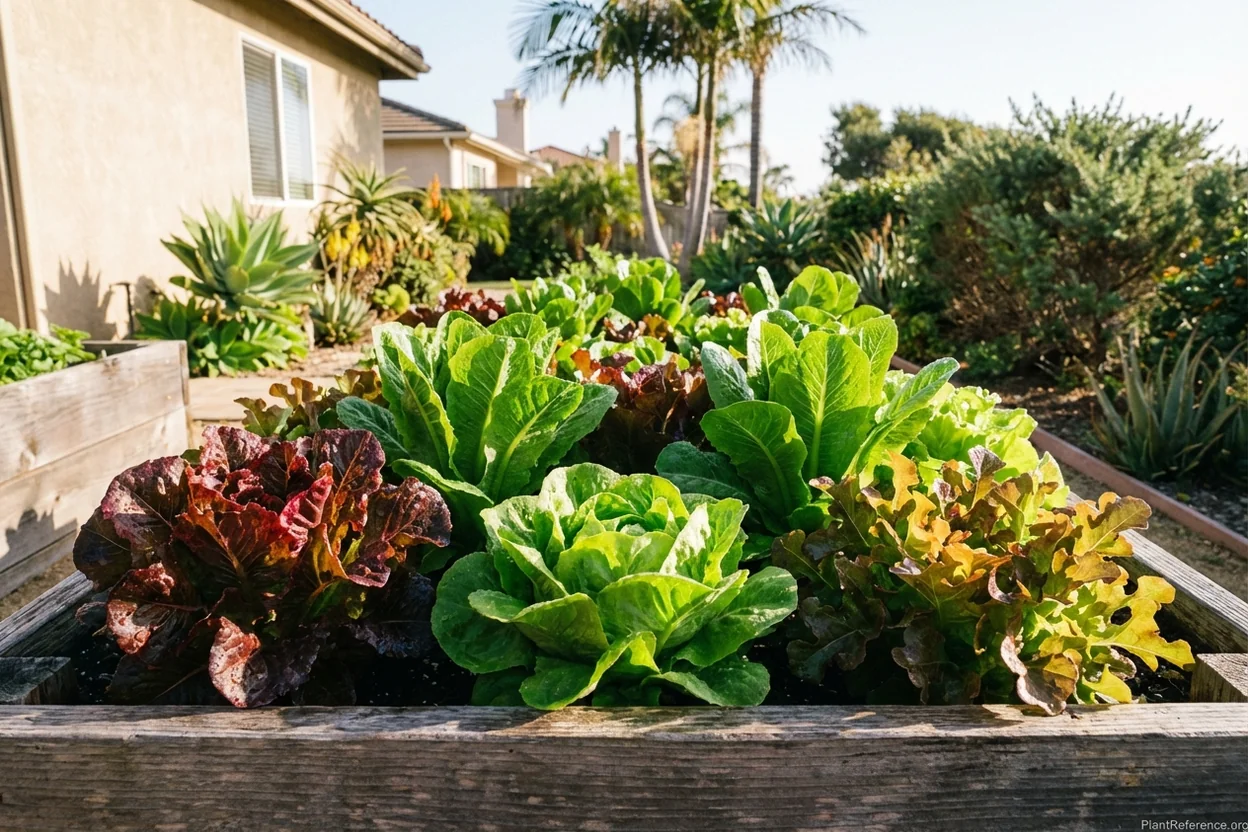
San Diego's planting calendar is the simplest in this guide: plant any time. The schedule varies slightly by coastal proximity.
Coastal Neighborhoods (La Jolla, Pacific Beach, Ocean Beach, Coronado, Point Loma): Plant year-round without interruption. Summer temperatures average 72-76°F. No shade cloth, no season extension, no modifications needed. Succession sow every 10-14 days in every month for continuous harvest.
Mid-County (Clairemont, Kearny Mesa, Mission Valley, National City): Plant year-round with occasional shade cloth during rare August-September warm spells when temperatures briefly reach 85-90°F. 🌿Lactuca sativa 'Buttercrunch' produces continuously.
Inland Valleys (El Cajon, Escondido, Ramona, Poway): Plant September through June. Summer gap of 6-8 weeks from July through mid-August when temperatures exceed 90-100°F. This is milder than LA's inland valleys because San Diego's geography allows more ocean influence to penetrate inland.
Year-Round Succession: Coastal San Diego supports 20-25 succession plantings per year—rivaling San Francisco as the highest in this guide. Inland areas support 10-12 across the September-June window.
Winter Growing: San Diego's mild winters (average lows 48-55°F) support continuous lettuce production without any protection. No cloches, cold frames, or row covers needed—the mildest winter growing conditions of any city in this guide alongside San Francisco. Raised Bed Vegetable Garden Layout: Planning for Maximum Production
Complete Growing Guide for San Diego
San Diego's Soil Diversity
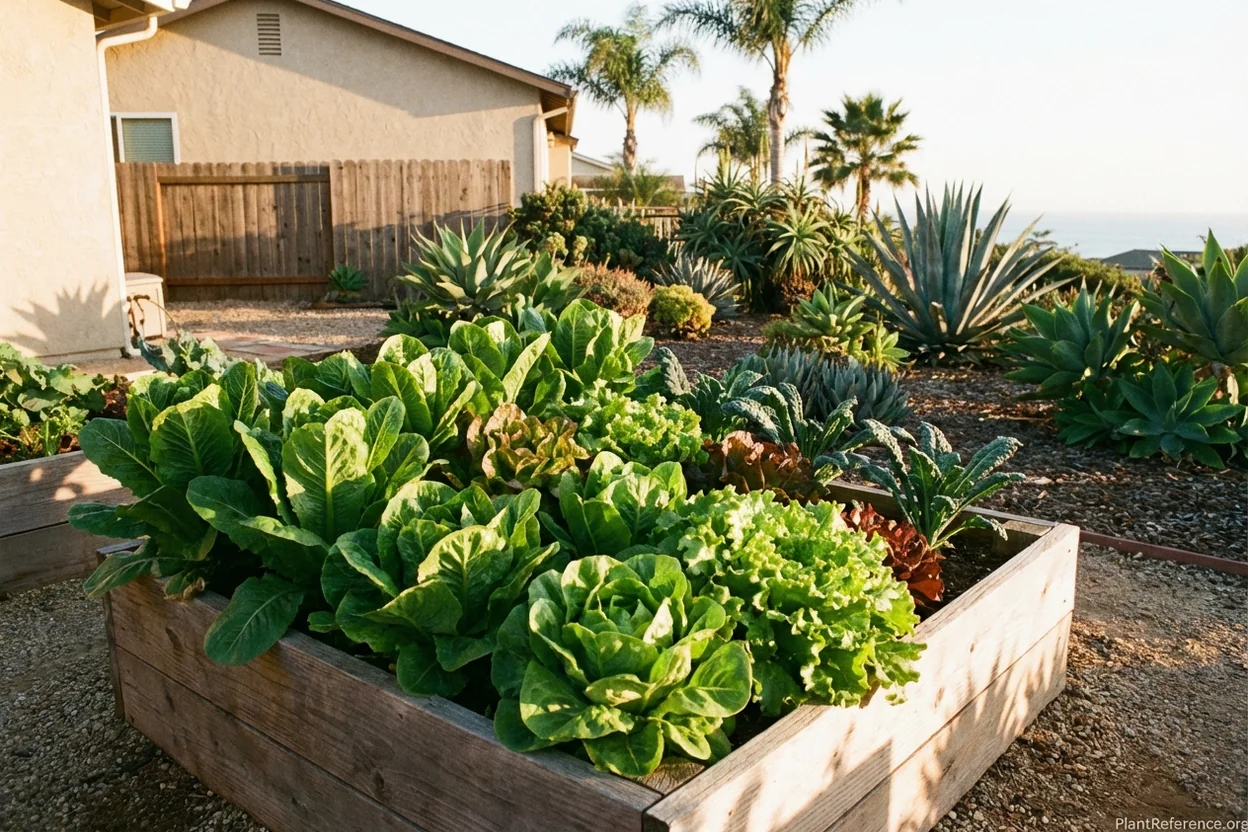
San Diego soils range from sandy coastal deposits near the beach to heavy clay in inland valleys, with decomposed granite on hillsides. Most test alkaline (pH 7.0-8.0). Sandy coastal soils drain well but retain little moisture—add 3-4 inches (8-10 cm) of compost for moisture retention. Inland clay needs drainage improvement through raised beds. Chelated iron spray every 2-3 weeks prevents chlorosis in alkaline conditions. Raised beds with controlled soil mix bypass all variation—the standard approach across the county. Space heading types 8-12 inches (20-30 cm) and looseleaf 4-6 inches (10-15 cm). How to Build a Raised Garden Bed: Step-by-Step Construction Guide
Irrigation: San Diego's Primary Investment
San Diego receives only about 10 inches (25 cm) of annual rainfall—the second-driest major city in this guide after Phoenix—making irrigation the single most important infrastructure investment for lettuce growers. Drip irrigation is the universal standard in San Diego because water costs are among the highest in the nation, making every drop matter economically as well as practically. Water 1-1.5 inches (2.5-4 cm) per week consistently year-round. Mulch 1-2 inches (2.5-5 cm) to retain moisture against the dry coastal air. San Diego's water-conscious gardening culture makes efficient irrigation a point of community pride rather than just practical necessity. 5 Best Drip Irrigation Kits for Raised Beds (Tested for Easy Installation)
San Diego's Microclimate Gradient
San Diego's terrain creates a gentler microclimate gradient than Los Angeles—ocean influence penetrates further inland because the coastal mountains are lower and the valleys are closer to the coast. Coastal neighborhoods within 5 miles of the Pacific experience year-round lettuce conditions with virtually no bolting risk. Mid-county neighborhoods 5-15 miles inland experience brief warm spells during August-September but rarely sustain bolting temperatures for more than a few days. Inland valleys 15-30 miles from the coast experience genuine summer heat comparable to moderate Southern cities but milder than LA's San Fernando Valley. When to Plant Squash in San Diego: Complete Guide + Best Varieties for Zone 10b
Succession Planting: San Diego's Superpower
San Diego's uninterrupted growing calendar supports the most frequent succession planting possible. Sow every 10-14 days year-round for continuous harvest. Each planting produces for 6-8 weeks in the mild conditions. Stagger varieties by maturity: mesclun (30 days), Red Oak Leaf (50 days), Buttercrunch (60 days), and Romaine (75 days) planted simultaneously produce overlapping harvests sustaining daily salad availability across all twelve months. When to Plant Cucumbers in San Diego: Zone 10b Dates + Best Varieties
Feeding
Light feeder—fish emulsion every 3-4 weeks. San Diego's alkaline soils benefit from chelated iron spray every 2-3 weeks. Year-round production demands more frequent compost top-dressing than seasonal cities—replenish organic matter every 6-8 weeks to sustain continuous production across the twelve-month growing calendar. When to Plant Kale in San Diego: Complete Guide + Best Varieties for Zone 10b
San Diego's Growing Culture
San Diego's gardening community is among the most engaged in America, with community gardens from City Heights to Golden Hill, the Hillcrest and Little Italy farmers markets creating strong demand for locally grown greens, and the county's agricultural heritage (San Diego County grows more avocados than any county in America) providing deep horticultural expertise that benefits lettuce growers through the UC San Diego Extension and Master Gardener network.
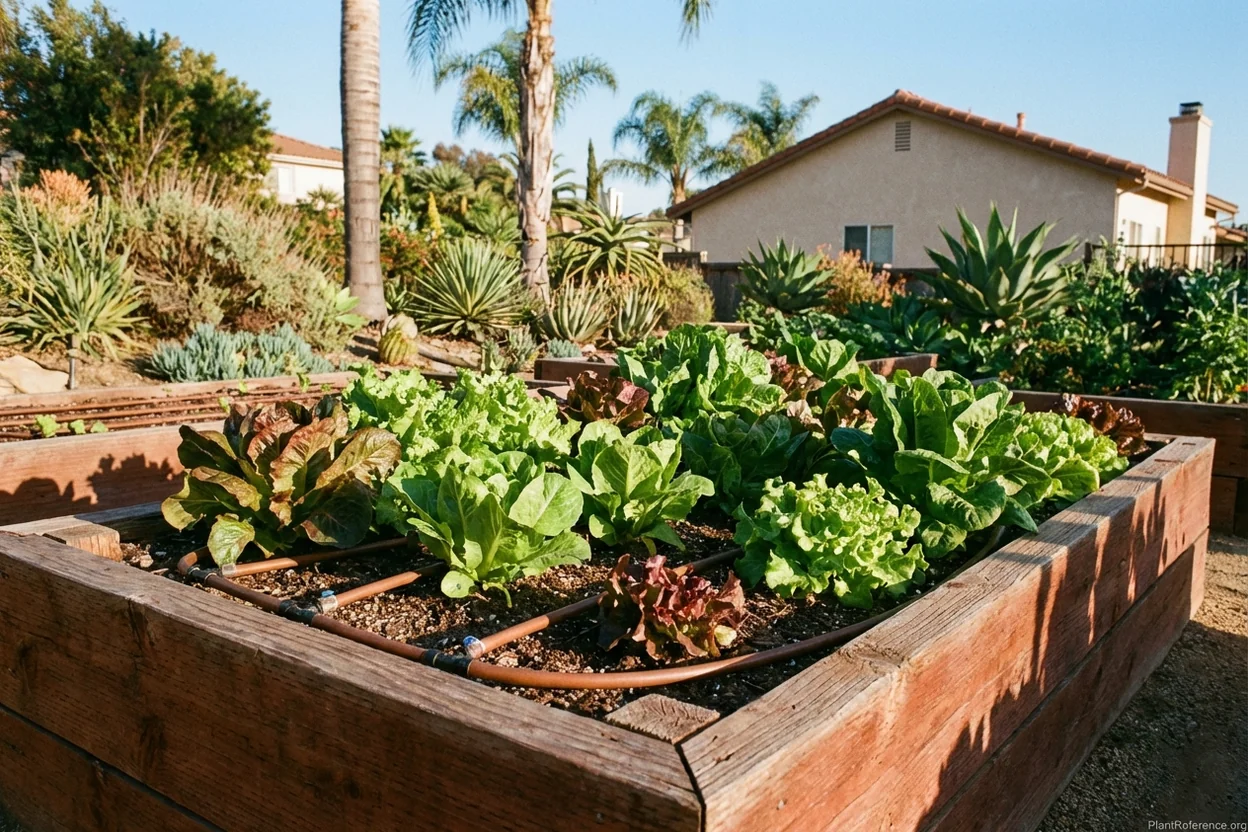
Troubleshooting San Diego-Specific Problems
Inland Valley Heat (6-8 Week Gap)
San Diego's inland valleys (El Cajon, Escondido, Ramona) experience 90-100°F summer temperatures creating a 6-8 week gap from July through mid-August. Prevention: accept the gap for deep inland locations, shade cloth extends the season by 2-3 weeks in transitional areas, and recognize that San Diego's inland valleys are still milder than LA's San Fernando Valley or any Southern city east of the Rockies. Raised Bed Too Hot in Summer: Protecting Plants from Heat Stress
Aphids in Dry Conditions
San Diego's dry climate supports aphid populations year-round because rain never dislodges them. Check leaf undersides weekly. Strong water spray removes aphids effectively. Neem oil every 7-10 days provides organic prevention. The dry climate means downy mildew is completely nonexistent—aphids are San Diego's only significant lettuce pest. Raised Bed Pest Problems: Identification and Organic Control Methods
Water Cost Management
San Diego's water rates are among the highest in America, making efficient irrigation an economic priority. Prevention: drip irrigation with timers delivering exactly the amount needed, mulch reducing evaporation losses by 25-50%, and grouping lettuce with other water-efficient vegetables in shared beds to maximize every gallon delivered.
Sandy Coastal Soil Moisture Loss
Coastal San Diego's sandy soils drain too quickly for lettuce's shallow root system, requiring more frequent irrigation than inland clay soils. Prevention: heavy compost amendment (3-4 inches), mulch, and drip irrigation on shorter, more frequent cycles rather than deep, infrequent watering that drains past shallow lettuce roots. Best Soil Mix for Raised Beds: Creating the Perfect Growing Medium
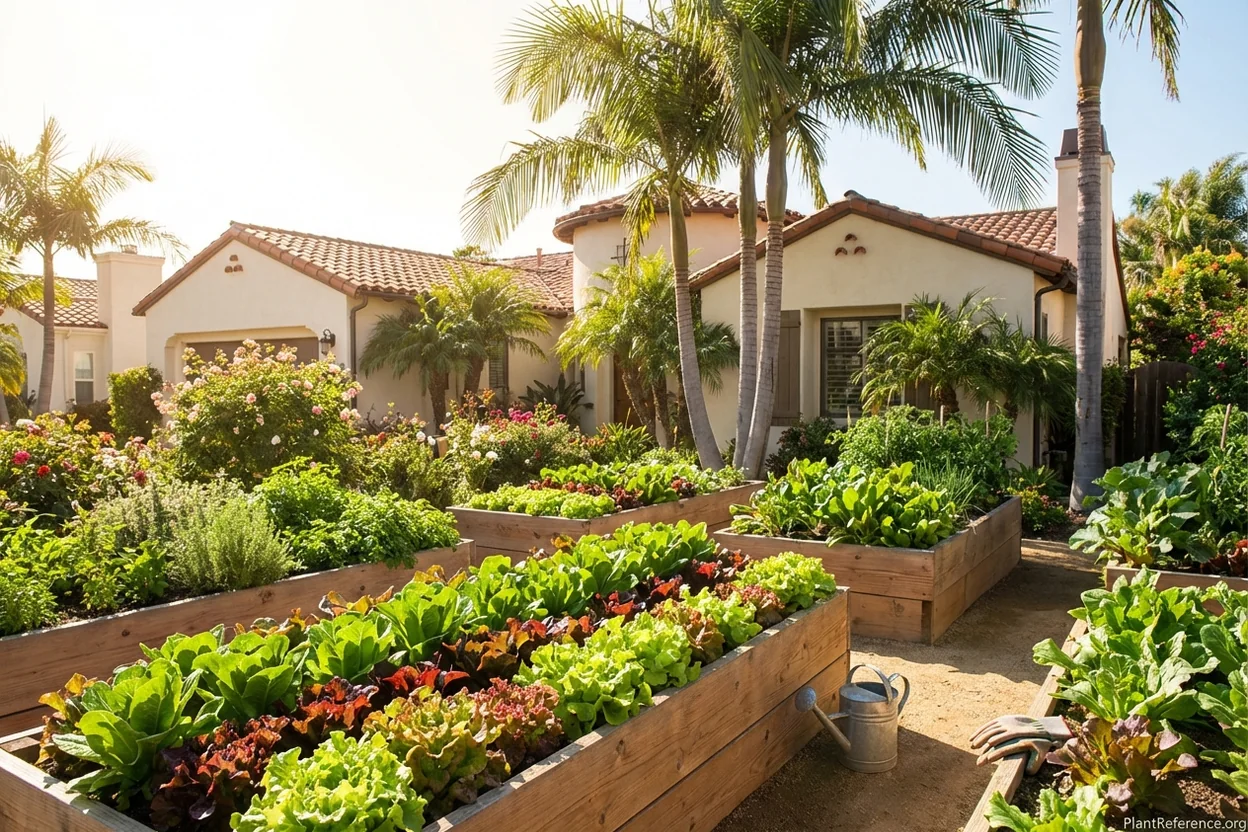
Harvest & Storage
Harvest looseleaf types using cut-and-come-again—cut outer leaves 1 inch above the crown for 4-6 regrowth cycles over 6-8 weeks. San Diego's consistently mild conditions produce the longest productive cutting cycles of any city because the temperatures never accelerate bolting during any month. Harvest heading types by cutting entire heads at the base when firm. Morning harvest captures peak crispness, though San Diego's mild afternoons mean quality differences between morning and afternoon harvest are minimal.
San Diego lettuce rarely experiences frost-sweetening because frost essentially never occurs. The quality advantage in San Diego is uniformity—lettuce harvested in August tastes the same as lettuce harvested in January because temperature variation between seasons is among the smallest of any US city. This remarkable consistency is San Diego's hallmark and the reason its homegrown lettuce quality remains steady year-round while every other city experiences seasonal quality fluctuations driven by temperature extremes.
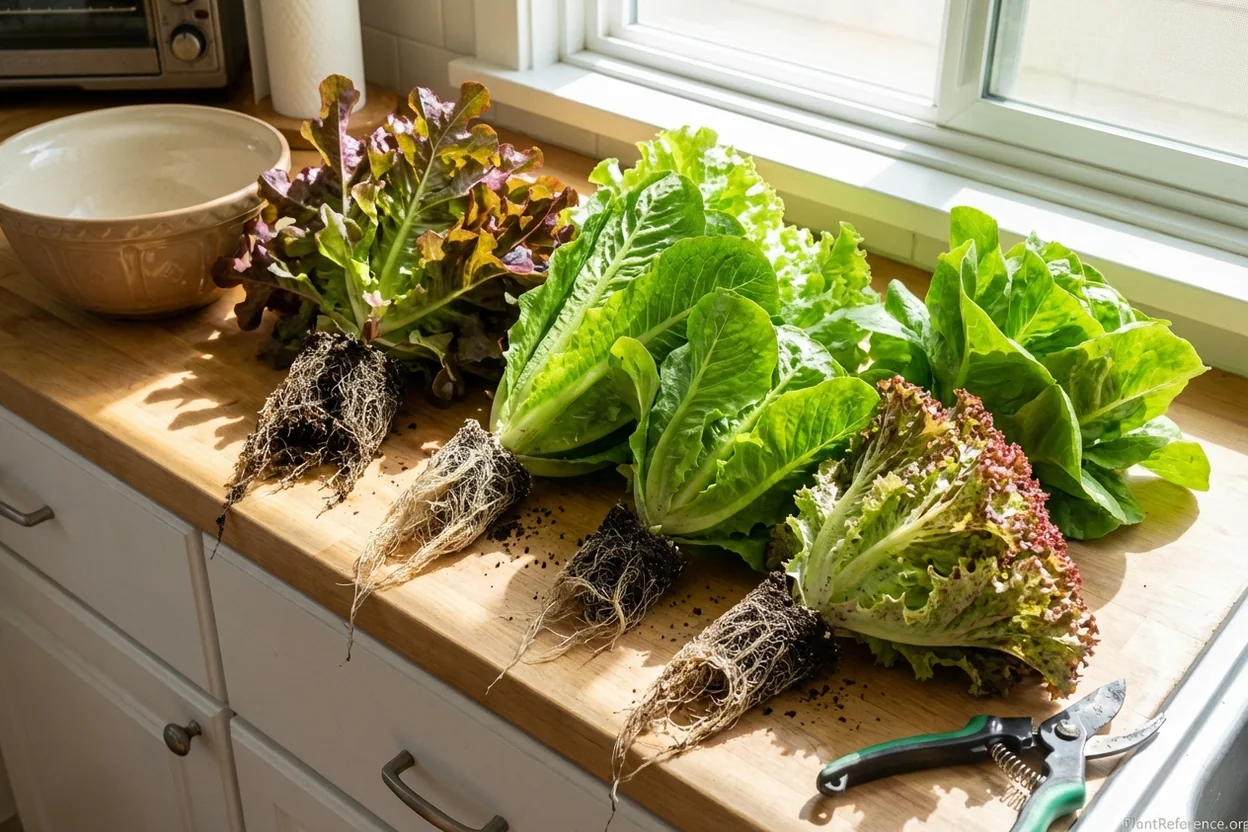
Store harvested lettuce refrigerated in damp paper towels inside a loose bag—keeps 7-10 days. San Diego's twelve-month effective lettuce window provides fresh lettuce every day of the year in coastal neighborhoods without any infrastructure investment beyond basic drip irrigation. The city's food culture—from the Hillcrest Farmers Market to Little Italy's Mercato to the farm-to-table restaurants across North Park and the Gaslamp—values the year-round freshness that San Diego's naturally mild climate delivers without the fog of San Francisco, the rain protection of Portland, or the shade cloth of inland cities. San Diego is simply lettuce easy—the one city in America where growing lettuce requires the least effort for the most consistent result across the entire calendar year. The Complete Guide to Raised Bed Gardening for Beginners (2025)
Frequently Asked Questions
Reading about plants and recognising them are different skills. These three build the second.
- Daily PlantIdentify the day’s mystery plant from a close-up photograph.
- Keyed OutWork a dichotomous key, lead by lead, to name a hidden specimen.
- Name That PlantName a specimen from botanical clues dealt hardest first.
Free to play, no account needed
Tagged with
Emma runs a small succulent propagation business from her home in San Diego, shipping starter plants and cuttings across the country. She fell into succulents after college when she realized they were the only plants that survived her travel schedule—she was working as a travel nurse at the time. San Diego's mild, dry climate is ideal for outdoor succulent gardens, and Emma's front yard is a living catalog of over 200 varieties. She completed a certificate program in ornamental horticulture and writes about succulent care, propagation techniques, and drought-tolerant garden design. Her writing is calm and reassuring—she knows people feel bad about killing plants, and she wants them to stop worrying so much.