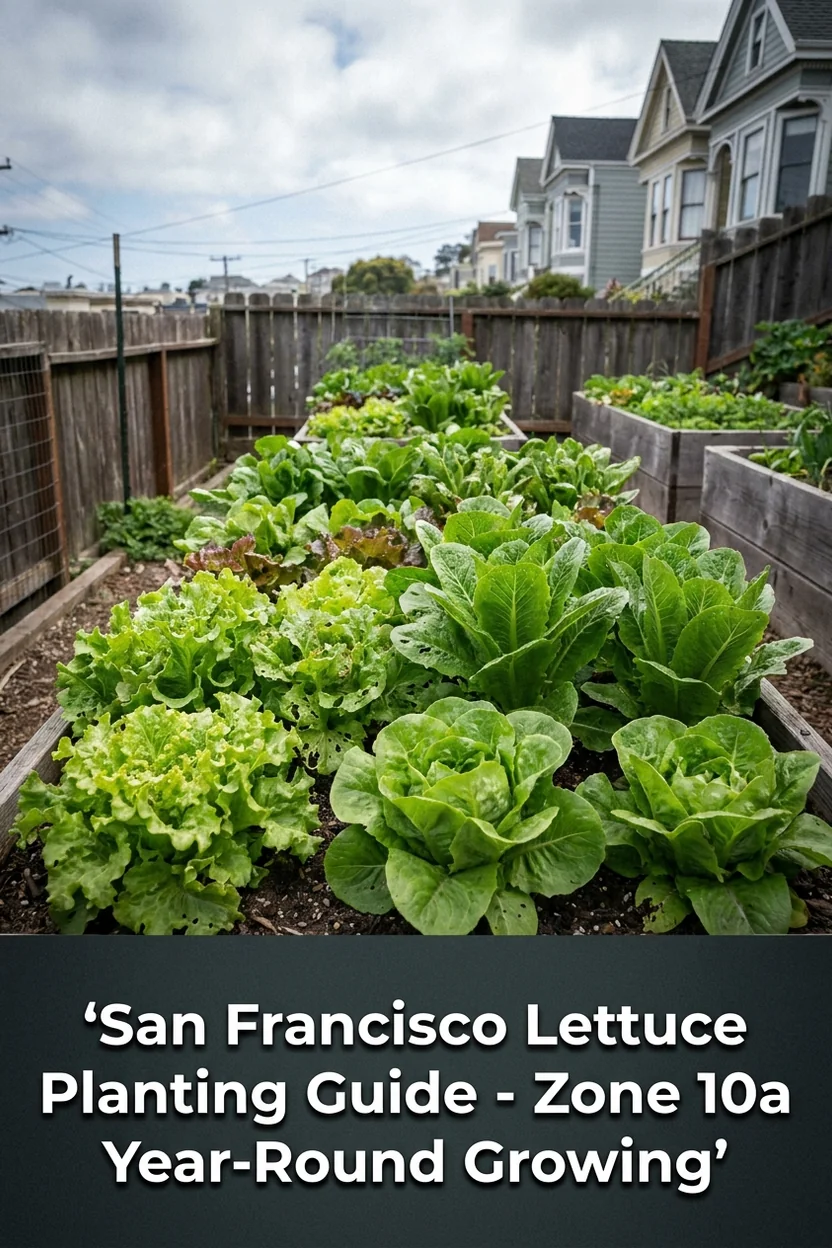
When to Plant Lettuce in San Francisco: Complete Guide + Best Varieties for Zone 10a
Pets & Toxicity
Recorded toxicity for plants linked in this guide. An unknown status is not a safety assessment.
No linked plant is recorded as toxicDetailsHide
Lactuca sativa var. crispa — Toxicity: Not assessed
Lactuca sativa var. crispa is non-toxic and safe for human consumption. All parts of the plant are edible, though leaves are the primary harvest. Generally safe around pets, though large quantities may cause mild digestive upset in some animals.View Lactuca sativa var. crispa plant profile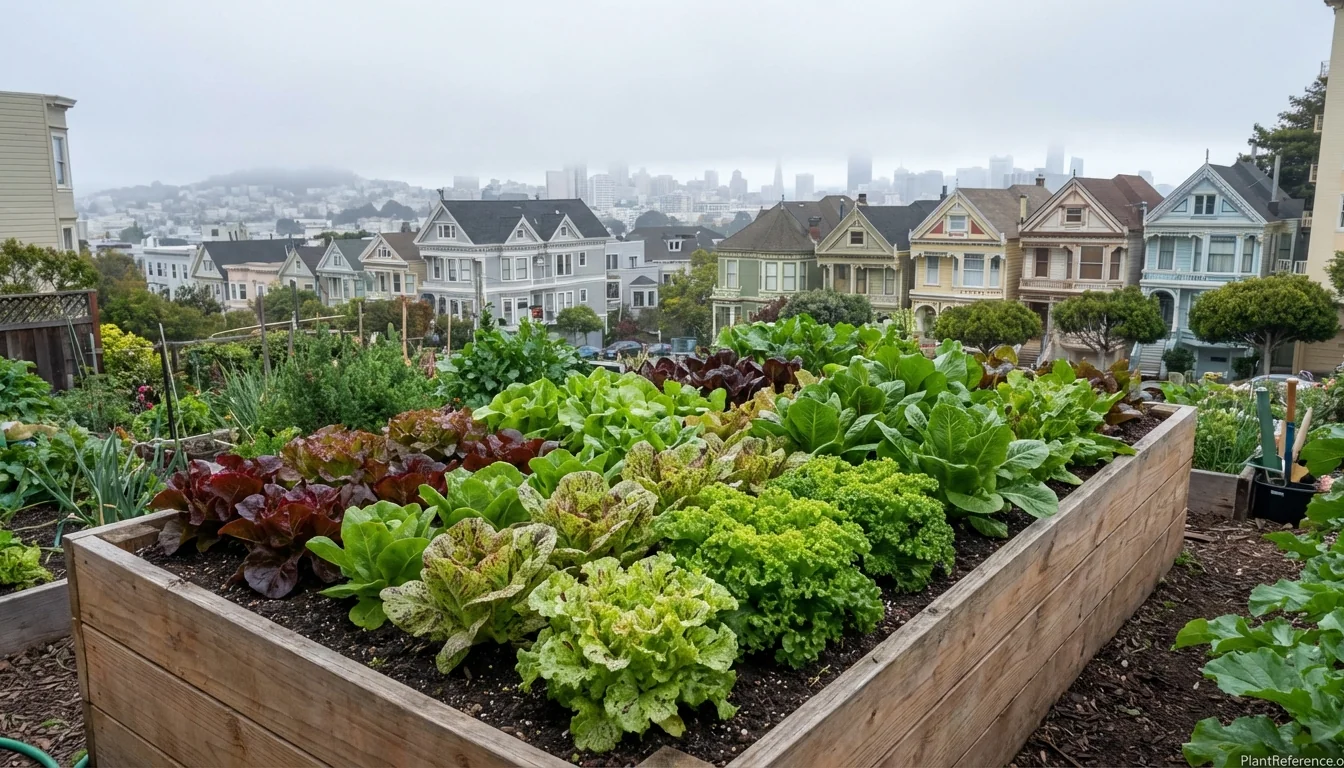
— Image © Plant Reference 2026
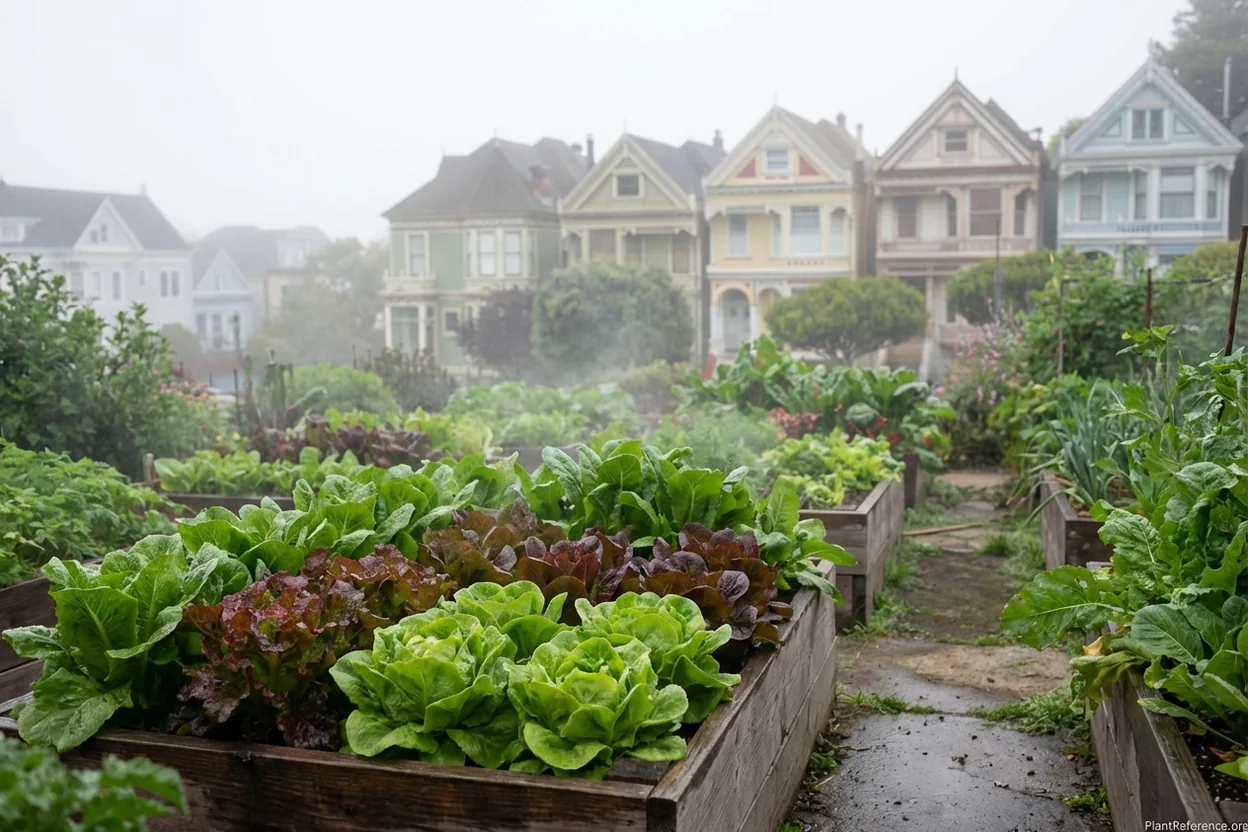
San Francisco is the lettuce city that shouldn't exist. Zone 10a typically means blistering heat that makes cool-season crops impossible during summer—Phoenix, Miami, and Los Angeles all share this zone and struggle with lettuce from June through September. But San Francisco's famous fog completely inverts the equation. The marine layer that rolls through the Golden Gate every summer afternoon keeps temperatures in the city's western and central neighborhoods at 60-72°F during July and August—cooler than most American cities experience in spring. This creates the only major US city where lettuce has absolutely no summer gap. While every other city in this guide battles 3-12 weeks of bolting temperatures, San Francisco gardeners harvest continuously from January through December without interruption, shade cloth, or any artificial temperature modification. The 334-day frost-free season from mid-January through mid-December provides the framework, but frost is so rare in most San Francisco neighborhoods that the practical season is 365 days for lettuce. The catch—and there's always a catch—is microclimate variation. San Francisco's fog creates dramatic temperature differences across short distances: the Sunset and Richmond districts average 60-65°F in summer while the Mission and Potrero Hill neighborhoods break 80°F regularly. A lettuce garden in the Outer Sunset experiences genuinely different growing conditions than one in Noe Valley just three miles east. Understanding your neighborhood's fog exposure is more important for San Francisco lettuce planning than any calendar date. When to Plant Tomatoes in San Francisco: Complete Guide + Best Varieties for Zone 10a
Best Lettuce Varieties for San Francisco's Climate
San Francisco sits in USDA Zone 10a with a January 15 last frost and December 15 first frost—334 frost-free days. But frost is rare enough that lettuce grows through winter in most neighborhoods. The fog-cooled climate supports all lettuce types year-round in western neighborhoods and nearly year-round in warmer eastern neighborhoods.
Variety | Type | Days to Harvest | SF Performance | Best For |
|---|---|---|---|---|
Butterhead | 55-65 days | Excellent 12-month | Best all-around for SF | |
🌿Lactuca sativa var. crispa (Red Oak Leaf) | Looseleaf | 45-55 days | Excellent 12-month | Cut-and-come-again |
🌿Lactuca sativa var. longifolia (Romaine) | Cos | 70-80 days | Excellent 12-month | Caesar salads year-round |
Mesclun Mix | Seedling mix | 30-40 days | Excellent 12-month | Fastest harvest, succession |
🌿Lactuca sativa var. capitata (Iceberg) | Crisphead | 80-90 days | Good year-round | Fog-belt neighborhoods |
Butterhead | 55-65 days | Excellent 12-month | Farmers market quality |
🌿Lactuca sativa 'Buttercrunch' leads for San Francisco because its year-round performance never encounters a bolting challenge in fog-belt neighborhoods. In the Sunset, Richmond, and Outer Parkside, Buttercrunch produces continuously from January through December—the only major US city where this is possible without any season extension. The compact rosettes appear at every Ferry Building Farmers Market and neighborhood market from the Fillmore to Noe Valley.
🌿Lactuca sativa var. crispa (Red Oak Leaf) at 45-55 days produces vivid color year-round in San Francisco's cool conditions. The anthocyanin-driven burgundy maintains its intensity even during summer when other cities lose the pigment to heat stress. Cut-and-come-again harvesting extends each planting across 6-8 weeks because the cool temperatures delay bolting indefinitely in fog-belt locations.
🌿Lactuca sativa var. longifolia (Romaine) at 70-80 days produces year-round in San Francisco—the only major city where Romaine's long maturation never encounters the heat interruption that limits it to fall-only in most locations. The dense, crisp hearts maintain quality through every season because temperatures rarely exceed the range that triggers tipburn.
Mesclun Mix at 30-40 days enables the most frequent succession planting possible—potentially 20-25 sowings per year with continuous harvest every month. San Francisco's year-round growing calendar means mesclun is always in season.
🌿Lactuca sativa var. capitata (Iceberg) at 80-90 days is genuinely feasible year-round in San Francisco's fog-belt neighborhoods—arguably the only place in America where home gardeners can grow reliable Iceberg through summer. The 65-72°F fog-cooled temperatures eliminate the tipburn and premature bolting that make Iceberg the most challenging lettuce type everywhere else.
🌿Lactuca sativa 'Bibb' thrives year-round in San Francisco's gentle climate. The delicate variety that bolts within days in warmer cities produces the refined, soft-textured heads that command the highest prices at the Ferry Building and other Bay Area farmers markets. When to Plant Peppers in San Francisco: Complete Guide + Best Varieties for Zone 10a
Specific Planting Dates for San Francisco Gardens
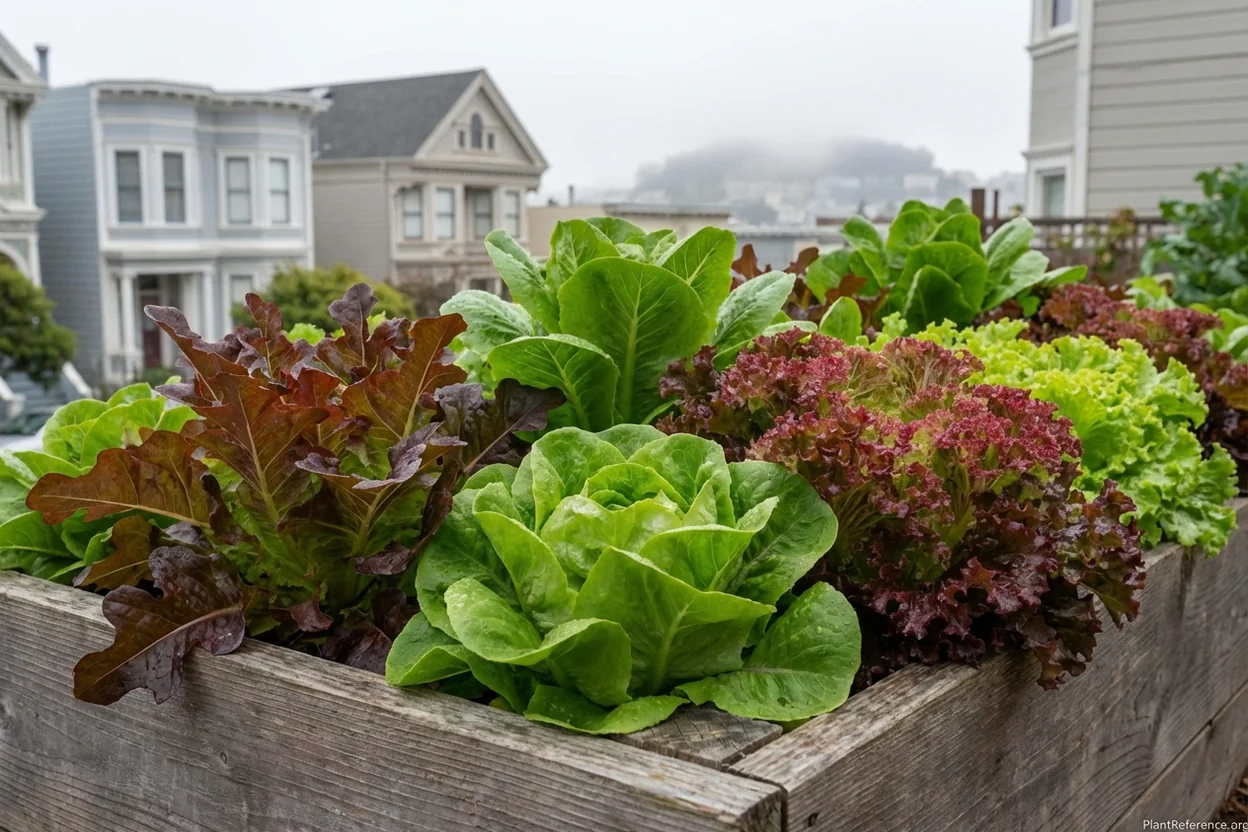
San Francisco's planting calendar is unique: there are no dates when you can't plant lettuce. The schedule is driven by neighborhood microclimate rather than season.
Fog-Belt Neighborhoods (Sunset, Richmond, Outer Parkside, Ocean Beach): Plant year-round without interruption. Summer temperatures average 60-65°F—cooler than most American spring conditions. Succession sow every 10-14 days in every month. No shade cloth needed. No thermoinhibition issues because soil rarely exceeds 70°F.
Transitional Neighborhoods (Cole Valley, Inner Sunset, Haight, Glen Park): Plant year-round with occasional attention during rare warm periods. Summer temperatures average 68-75°F—still within lettuce's comfort zone. Shade cloth unnecessary in most years.
Warm Neighborhoods (Mission, Potrero Hill, Dogpatch, Bernal Heights): Plant year-round but with a possible 2-3 week warm period in September-October during Indian summer heat events when temperatures occasionally reach 85-90°F. This is San Francisco's only approximation of a summer gap—and it occurs in fall rather than summer because the fog-free warmest days happen after the marine layer weakens in late September.
Winter Growing: San Francisco's mild winters (average lows 45-50°F) support continuous lettuce production without any protection. No cloches, cold frames, or row covers needed—the mildest winter growing conditions of any city in this guide.
Year-Round Succession: San Francisco supports 20-25 succession plantings per year—the highest of any city in this guide—because the climate never forces a pause in sowing. Raised Bed Vegetable Garden Layout: Planning for Maximum Production
Complete Growing Guide for San Francisco
Microclimate: San Francisco's Defining Factor
Microclimate management replaces seasonal timing as the primary lettuce strategy in San Francisco. The fog creates a 15-20°F temperature gradient across the city during summer—the largest intra-city variation of any city in this guide. West-facing neighborhoods near the ocean receive direct fog cooling. The city's hills block fog from reaching eastern neighborhoods, creating the warmth that makes the Mission and Potrero Hill feel like different climate zones. Before planning your lettuce garden, determine your neighborhood's fog exposure: if summer afternoons are regularly foggy and cool, you have unlimited year-round lettuce potential. If summer brings clear skies and warm afternoons, plan for a brief 2-3 week warm period in September-October. How to Build a Raised Garden Bed: Step-by-Step Construction Guide
San Francisco's Unique Soil Challenges
San Francisco's soils are sandy and fast-draining—the opposite of the heavy clay that challenges most cities. The sandy composition means excellent drainage (eliminating the waterlogging that rain-heavy cities fight) but poor moisture retention and low nutrient levels. Work 3-4 inches (8-10 cm) of compost into the top 8 inches (20 cm)—more than most cities need—to improve moisture retention in sandy soil. Lettuce's shallow root system dries out quickly in San Francisco's sandy beds without consistent watering. The naturally acidic soils (pH 5.5-6.5) fall within lettuce's preferred range. Space heading types 8-12 inches (20-30 cm) and looseleaf 4-6 inches (10-15 cm). 5 Best Drip Irrigation Kits for Raised Beds (Tested for Easy Installation)
Watering in a Dry Mediterranean Climate
San Francisco receives only about 20 inches (51 cm) of annual rainfall—almost entirely from November through March. Summer is bone-dry despite the fog. The fog provides surface moisture that reduces evaporation but doesn't replace irrigation. Water 1-1.5 inches (2.5-4 cm) per week year-round, with drip irrigation preferred because it delivers water directly to the shallow root zone. Morning watering allows fog moisture to supplement afternoon hydration naturally. San Francisco's dry summer eliminates the downy mildew pressure that plagues humid Eastern and Pacific Northwest cities. When to Plant Squash in San Francisco: Complete Guide + Best Varieties for Zone 10a
Wind Management
San Francisco's afternoon winds—especially in western neighborhoods exposed to ocean breezes—can stress lettuce and accelerate moisture loss from shallow root zones. Windbreaks (fences, hedges, or building walls) on the western side of lettuce beds reduce wind damage. 🌿Lactuca sativa 'Buttercrunch' and 🌿Lactuca sativa var. longifolia (Romaine) with their thicker leaf structures handle wind better than delicate 🌿Lactuca sativa 'Bibb'. Mulch 1-2 inches (2.5-5 cm) to retain moisture against wind-driven evaporation.
Succession Planting: San Francisco's Superpower
San Francisco's uninterrupted growing calendar supports the most frequent succession planting of any city. Sow every 10-14 days year-round for continuous harvest. Each planting produces for 6-8 weeks in the cool conditions that delay bolting. Stagger varieties by maturity: mesclun (30 days), Red Oak Leaf (50 days), Buttercrunch (60 days), and Romaine (75 days) planted simultaneously produce overlapping harvests that sustain daily salad availability. When to Plant Cucumbers in San Francisco: Zone 10a Dates + Best Varieties
Feeding
Light feeder, but San Francisco's sandy, nutrient-poor soils require more attention than most cities. Fish emulsion every 2-3 weeks maintains production in sandy beds that leach nutrients quickly. Compost top-dressing every 6-8 weeks replenishes organic matter that sandy soil doesn't retain naturally. When to Plant Kale in San Francisco: Complete Guide + Best Varieties for Zone 10a
Troubleshooting San Francisco-Specific Problems
Wind Damage in Western Neighborhoods
San Francisco's afternoon ocean winds—especially strong in the Sunset, Richmond, and along the coast—shred delicate lettuce leaves and accelerate moisture loss. Prevention: windbreaks on the western side of beds, thick-leafed varieties (🌿Lactuca sativa 'Buttercrunch', 🌿Lactuca sativa var. longifolia), and mulch to retain moisture. Container lettuce can be positioned in wind-sheltered locations against east-facing walls. Raised Bed Too Hot in Summer: Protecting Plants from Heat Stress
Sandy Soil Nutrient Depletion
San Francisco's sandy soils drain quickly but retain almost no nutrients or moisture. Lettuce shows nutrient deficiency faster here than in any clay-based city. Prevention: heavy compost amendment (3-4 inches worked in), fish emulsion every 2-3 weeks (more frequent than other cities), and consistent irrigation because sandy soil dries completely between waterings. Raised beds with controlled soil mix bypass the worst sandy soil issues. Raised Bed Pest Problems: Identification and Organic Control Methods
Warm Neighborhood Heat Events
Mission, Potrero Hill, and Bernal Heights gardens occasionally experience 85-90°F temperatures during September-October Indian summer events when the fog retreats. Prevention: shade cloth during heat events (rare enough that portable shade works), harvest heat-sensitive 🌿Lactuca sativa 'Bibb' before the warm period, and recognize that these events typically last 3-5 days before marine air returns. Fog-belt neighborhoods are unaffected.
Aphids in Dry Conditions
San Francisco's dry summers support aphid populations that thrive without the rain events that naturally dislodge them in humid climates. Check leaf undersides weekly. Strong water spray removes aphids effectively. Neem oil every 7-10 days provides organic prevention. San Francisco's dry climate means downy mildew is virtually nonexistent—a genuine advantage over humid cities. Best Soil Mix for Raised Beds: Creating the Perfect Growing Medium
Harvest & Storage
Harvest looseleaf types using cut-and-come-again—cut outer leaves 1 inch above the crown for 4-6 regrowth cycles over 6-8 weeks. Harvest heading types by cutting entire heads at the base when firm. Morning harvest captures peak crispness, though San Francisco's cool afternoon temperatures mean the quality difference between morning and afternoon harvest is smaller than in warmer cities.
San Francisco's gentle winter frost (when it occurs at all) provides the same starch-to-sugar sweetening that other cities experience, but the effect is subtle because freezing temperatures are rare. The real quality advantage in San Francisco is consistency—lettuce harvested in July tastes essentially identical to lettuce harvested in January because the temperature variation between seasons is smaller than any other US city. This consistency is the hallmark of San Francisco homegrown lettuce and the reason it commands premium prices at the Ferry Building Farmers Market.
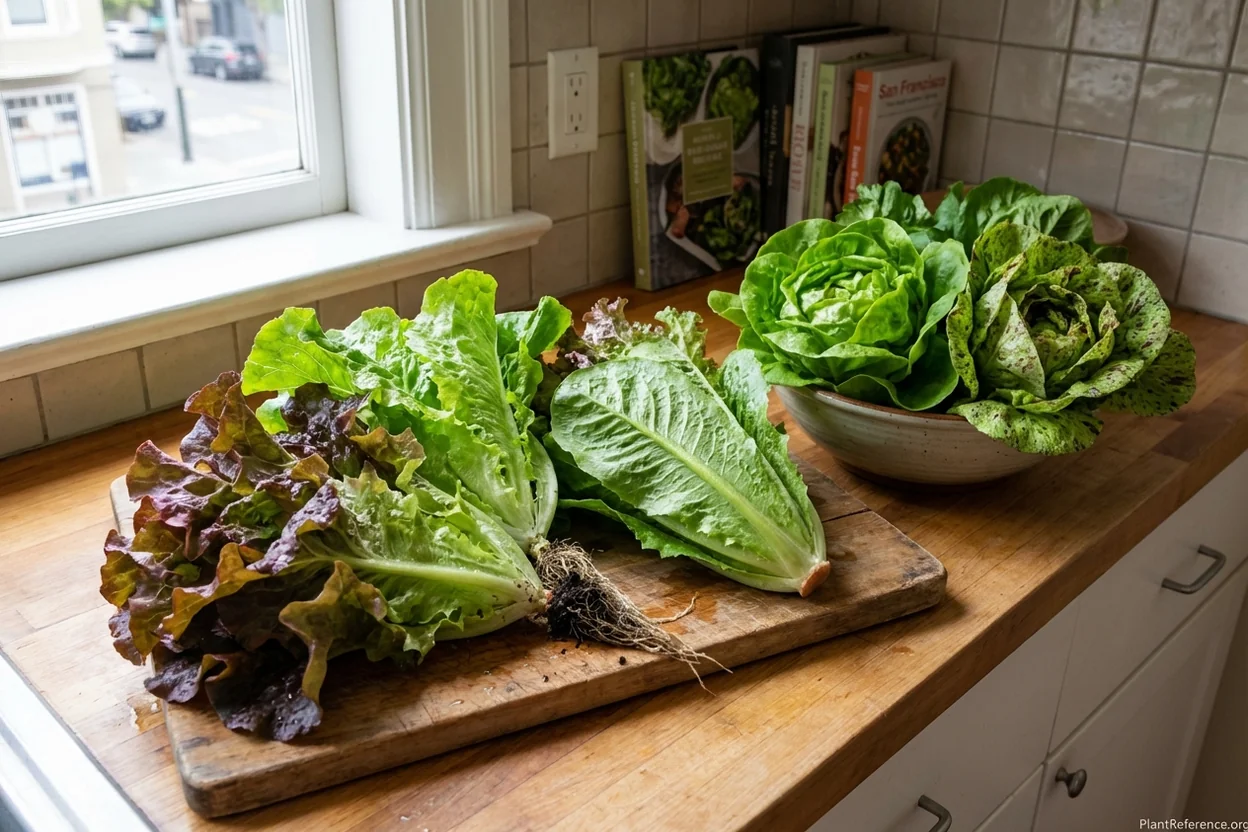
Store harvested lettuce refrigerated in damp paper towels inside a loose bag—keeps 7-10 days. San Francisco's 12-month production eliminates any need for preservation. The city's extraordinary food culture—from the Ferry Building's artisanal vendors to neighborhood farmers markets across the Inner Sunset, Fillmore, and Mission—values the year-round freshness that San Francisco's unique fog-cooled climate delivers. No other major American city can grow lettuce in every month without any artificial temperature modification, making San Francisco's homegrown lettuce genuinely unique among the 30 cities in this guide series. The Complete Guide to Raised Bed Gardening for Beginners (2025)
Frequently Asked Questions
Reading about plants and recognising them are different skills. These three build the second.
- Daily PlantIdentify the day’s mystery plant from a close-up photograph.
- Keyed OutWork a dichotomous key, lead by lead, to name a hidden specimen.
- Name That PlantName a specimen from botanical clues dealt hardest first.
Free to play, no account needed
Tagged with
David is a software engineer who got into gardening after buying a fixer-upper in the Sunset District with a neglected backyard. San Francisco's microclimates fascinated him—he quickly learned that what grows three blocks away might not work in his fog belt yard. David now maintains a productive vegetable garden despite the marine layer, growing cool-season crops almost year-round and experimenting with season extension techniques. He volunteers at a local community garden and writes about urban food growing, microclimate gardening, and the particular challenges of Bay Area conditions. His approach is methodical—he keeps detailed notes and isn't afraid to share what didn't work.