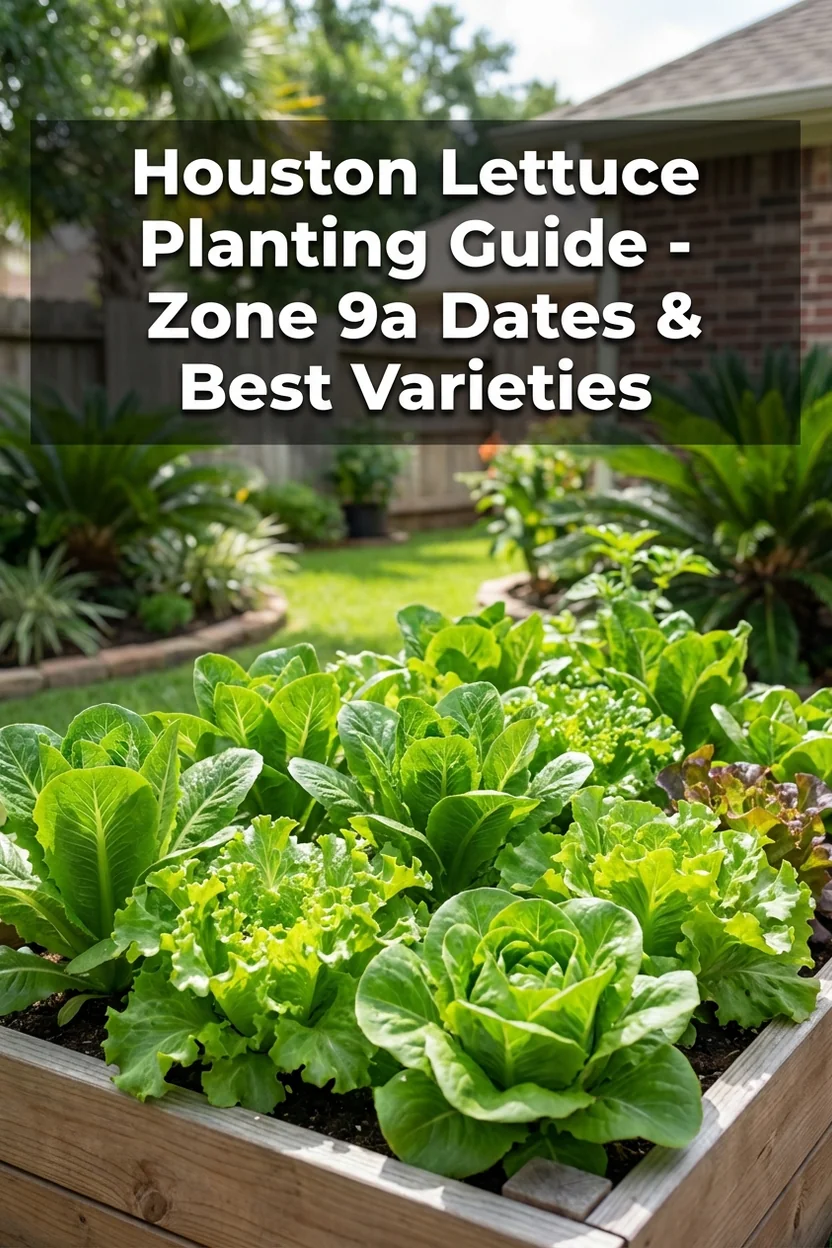
When to Plant Lettuce in Houston: Complete Guide + Best Varieties for Zone 9a
Pets & Toxicity
Recorded toxicity for plants linked in this guide. An unknown status is not a safety assessment.
No linked plant is recorded as toxicDetailsHide
Lactuca sativa var. crispa — Toxicity: Not assessed
Lactuca sativa var. crispa is non-toxic and safe for human consumption. All parts of the plant are edible, though leaves are the primary harvest. Generally safe around pets, though large quantities may cause mild digestive upset in some animals.View Lactuca sativa var. crispa plant profile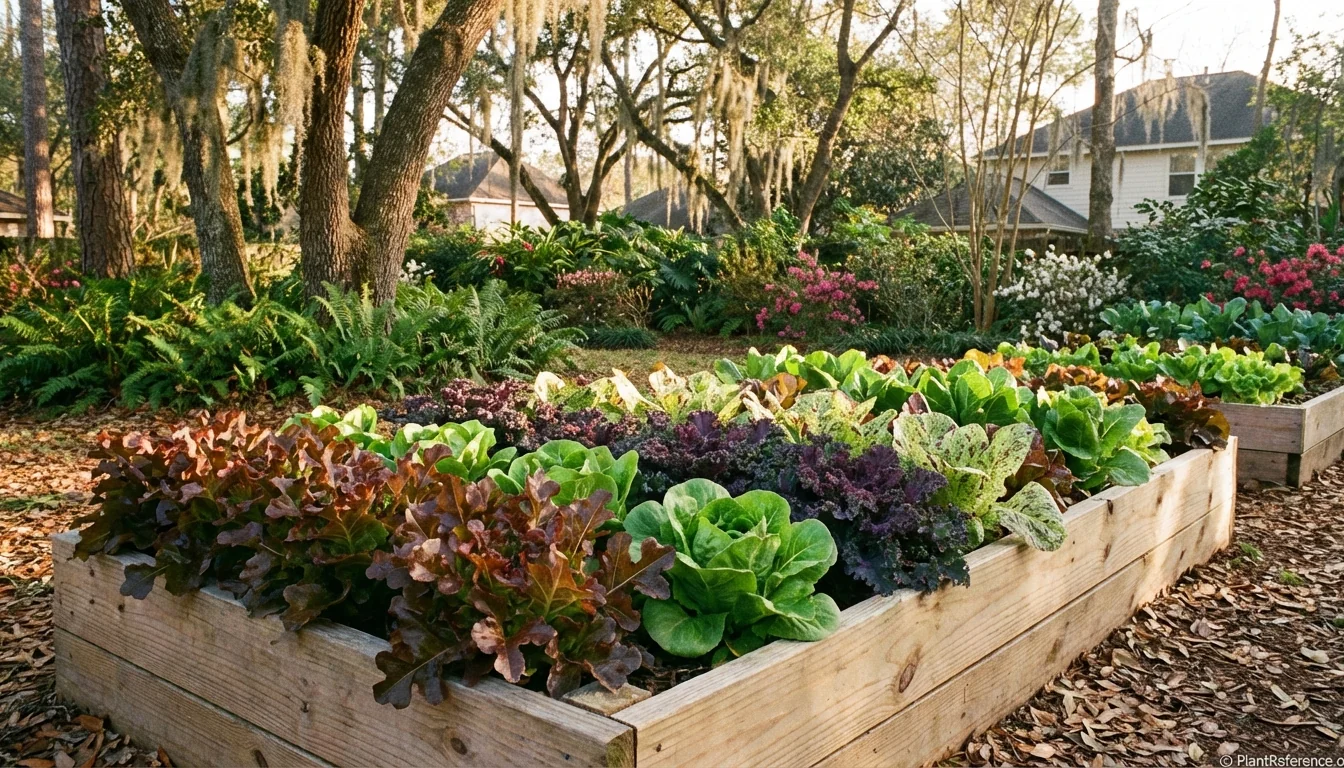
— Image © Plant Reference 2026
Houston closes this 30-city lettuce guide where it belongs—as the humidity counterpoint to every dry-climate city that came before. Where Austin (just 165 miles northwest) grows lettuce in dry Hill Country air with minimal disease pressure, Houston grows lettuce in Gulf Coast humidity that creates downy mildew conditions rivaling Memphis and approaching Miami's tropical intensity. The Zone 9a climate delivers a 289-day frost-free season from mid-February through early December—longer than Austin's 274 days because Houston's coastal position moderates winter temperatures—but for lettuce, the effective window runs October through March when the Gulf Coast's mild winter delivers daytime temperatures of 55-70°F with overnight lows of 40-55°F. The summer gap of 16-18 weeks from May through mid-September is driven by the devastating combination of 95°F+ temperatures with 70-80% humidity that sustains bolting and disease around the clock—longer than Dallas's 12-14 weeks and Austin's 14-16 weeks because Houston's Gulf Coast position brings maritime moisture that inland Texas cities avoid. Houston's humidity during the winter growing window (60-75%) is the highest of any Texas city and comparable to Memphis's peak growing-season levels. This means downy mildew management is a genuine concern even during Houston's coolest months, requiring the drip irrigation, morning watering, and spacing discipline that humid Southern cities demand. The Gulf Coast's clay soil (Beaumont clay, pH 6.5-7.5) is less alkaline than Austin's or Dallas's—actually closer to lettuce's preferred range—but the heavy clay drains so poorly that waterlogging after Houston's frequent winter rain events creates root suffocation risk that drier cities never face. Houston's food culture—from the Urban Harvest Farmers Market to the farm-to-table restaurants across Montrose, the Heights, and EaDo—creates strong demand for locally grown lettuce. The metro's agricultural heritage includes the Texas A&M AgriLife Extension, which provides Gulf Coast-specific guidance that addresses the humidity challenges unique to southeastern Texas growing conditions throughout the Harris County metro area. When to Plant Tomatoes in Houston: Complete Guide + Best Varieties for Zone 9a
Best Lettuce Varieties for Houston's Climate
Houston sits in USDA Zone 9a with a February 15 last frost and December 1 first frost—289 frost-free days. For lettuce, variety selection emphasizes disease resistance because Houston's Gulf Coast humidity challenges every variety even during the coolest winter months when most cities enjoy disease-free growing conditions.
Variety | Type | Days to Harvest | Disease Resistance | Best For |
|---|---|---|---|---|
Butterhead | 55-65 days | Good | Best all-around for Houston | |
🌿Lactuca sativa var. crispa (Red Oak Leaf) | Looseleaf | 45-55 days | Best | Disease resistant, fast |
Mesclun Mix | Seedling mix | 30-40 days | Good (harvested early) | Fastest harvest, essential |
🌿Lactuca sativa var. longifolia (Romaine) | Cos | 70-80 days | Moderate | Winter only |
Butterhead | 55-65 days | Moderate | Winter luxury, humidity-vulnerable | |
🌿Lactuca sativa var. capitata (Iceberg) | Crisphead | 80-90 days | Poor | High-risk, winter only |
🌿Lactuca sativa 'Buttercrunch' leads for Houston because its thick, blistered leaves provide humidity resistance that thinner varieties lack. The compact rosettes allow airflow around the base, reducing the trapped moisture that promotes basal rot in tight-heading varieties during Houston's humid winter conditions. Buttercrunch produces from October through March with the consistent quality that Gulf Coast humidity allows when management is disciplined.
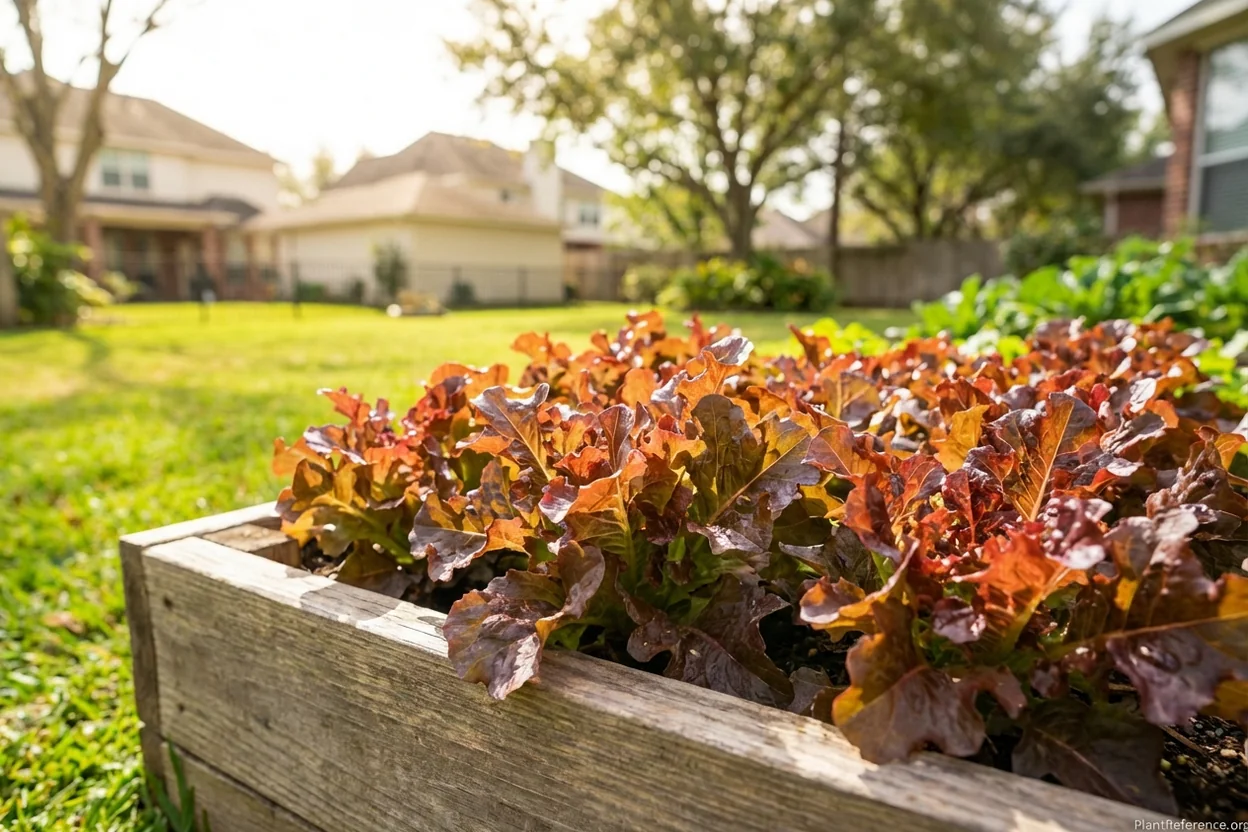
🌿Lactuca sativa var. crispa (Red Oak Leaf) at 45-55 days is Houston's most disease-resistant option. The open rosette form eliminates trapped moisture between leaves—the critical advantage in 60-75% winter humidity. Cut-and-come-again harvesting produces for 3-4 weeks per planting during the cool-season window.
Mesclun Mix at 30-40 days is essential for Houston because the baby-leaf format is harvested before disease can establish. The rapid cycle means Houston gardeners consume the harvest before Gulf Coast humidity degrades quality—a timing strategy that more humid cities rely on more heavily than dry-climate cities.
🌿Lactuca sativa var. longifolia (Romaine) at 70-80 days works during Houston's coolest months (December-February) when humidity drops to its annual low. The tight heading traps moisture, increasing disease risk during the warmer October-November and March shoulders.
🌿Lactuca sativa 'Bibb' produces Houston's most refined winter lettuce but requires the most vigilant disease monitoring because its delicate leaves and compact form are vulnerable to humidity.
🌿Lactuca sativa var. capitata (Iceberg) at 80-90 days is high-risk in Houston because the tight heading traps Gulf Coast moisture, promoting tipburn and basal rot. Feasible only during peak winter with aggressive spacing and airflow management. When to Plant Peppers in Houston: Complete Guide + Best Varieties for Zone 9a
Specific Planting Dates for Houston Gardens
Houston's lettuce calendar follows the inverted Southern pattern with additional humidity management requirements that dry Texas cities don't face.
Fall Sowing (Season Start): October 1-15. Start seeds indoors under AC—Houston's September soil exceeds 85°F. Transplant outdoors by mid-October under shade cloth for establishment as temperatures moderate.
Peak Winter Production: November through February. Houston's best lettuce months—the coolest temperatures (55-70°F days, 40-55°F nights) with the lowest humidity of the year (60-70%, still higher than Austin and Dallas year-round). Disease pressure is at its annual minimum during this four-month window.
Late Season: March-early April. Production continues but quality declines as temperatures climb above 80°F and Gulf Coast humidity increases. Harvest remaining heads by mid-April.
Summer Gap (May through Mid-September): Houston's gap runs 16-18 weeks when 95°F+ temperatures combine with 70-80% humidity. The Gulf Coast's maritime moisture sustains conditions that make lettuce impossible longer than inland Texas cities experience.
Succession Planting: 8-10 plantings from October through February. Emphasize fast varieties to minimize disease exposure. Raised Bed Vegetable Garden Layout: Planning for Maximum Production
Complete Growing Guide for Houston
Gulf Coast Clay Soil
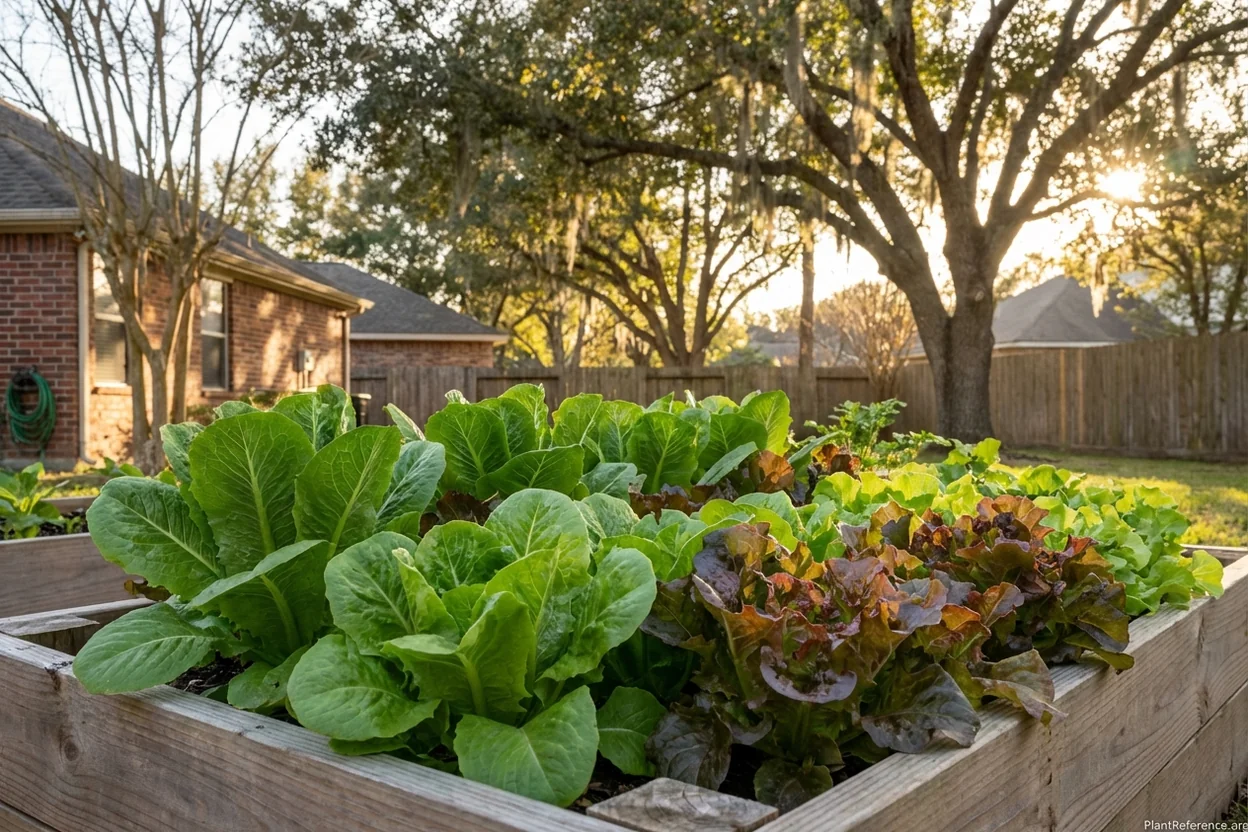
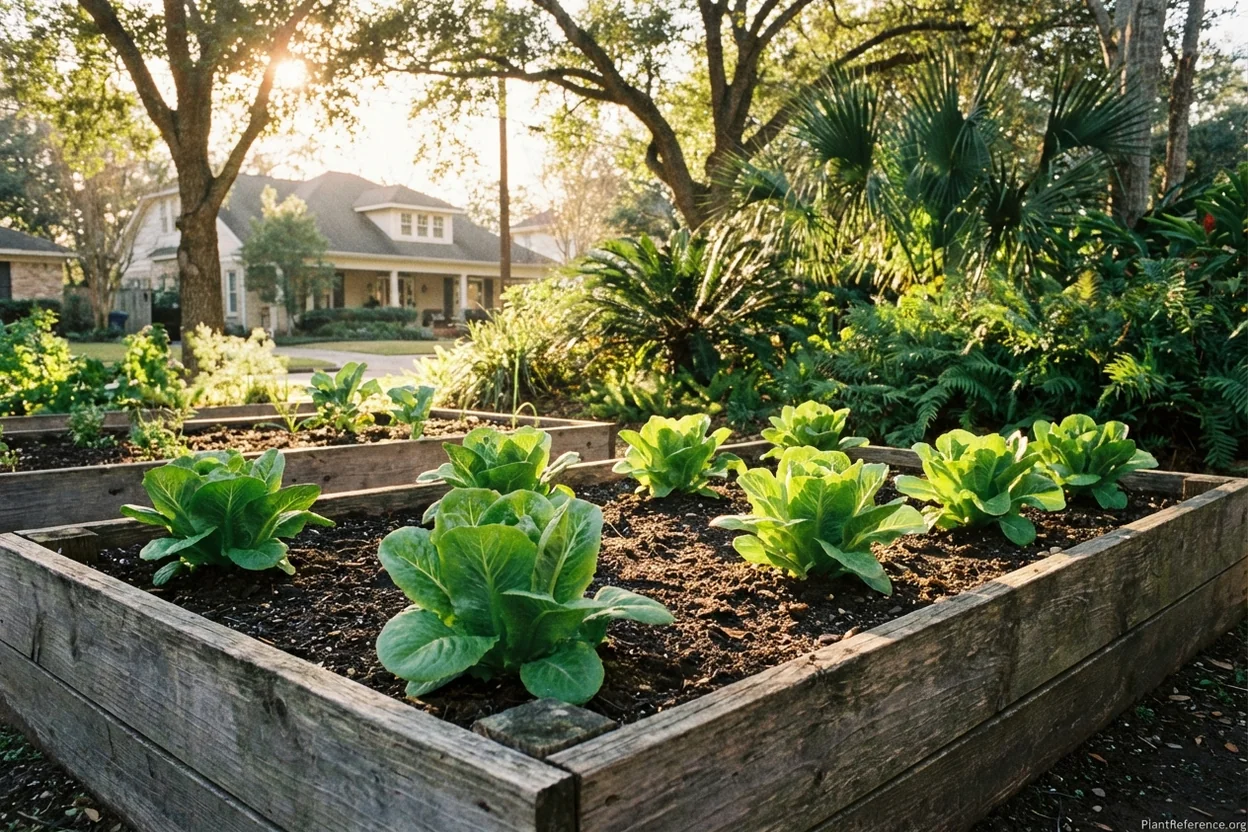
Houston sits on Beaumont clay—heavy, poorly draining clay that waterlogging risk during the winter rainy season. Unlike Austin's and Dallas's alkaline soils, Houston's Beaumont clay tests closer to neutral (pH 6.5-7.5)—actually within lettuce's preferred range—meaning iron chlorosis is less of a concern here than in Hill Country or Blackland Prairie cities. The primary challenge is drainage: Houston's clay holds water after rain events, suffocating shallow lettuce roots. Raised beds are strongly recommended for drainage rather than pH correction. Fill with 50% topsoil, 30% compost, and 20% expanded shale or perlite. Space heading types 10-12 inches (25-30 cm)—wider than dry cities—because airflow between plants is critical for disease prevention in Gulf Coast humidity. Looseleaf types 6-8 inches (15-20 cm). How to Build a Raised Garden Bed: Step-by-Step Construction Guide
Humidity Management: Houston's Central Challenge
Houston's winter humidity (60-75%) is the highest of any Texas city and creates the most disease pressure in the state. Solutions: drip irrigation is mandatory—never use overhead watering because wetting foliage in Gulf Coast humidity accelerates downy mildew dramatically. Morning watering only so any residual moisture dries before evening. Wider spacing (10-12 inches for heading types) than dry-climate cities to maximize airflow. Looseleaf and open-rosette varieties resist humidity damage better than tight-heading types. Remove any diseased material immediately because Gulf Coast conditions promote rapid spread. Despite these challenges, Houston's humidity is lower than Miami's (65-90%) and comparable to Memphis's—manageable with disciplined practices. 5 Best Drip Irrigation Kits for Raised Beds (Tested for Easy Installation)
Houston vs Austin: The Texas Humidity Divide
Houston and Austin represent the two poles of Texas lettuce growing. Austin's dry Hill Country air (55-65% humidity) produces disease-free lettuce with minimal management. Houston's Gulf Coast humidity (60-75% even in winter) requires the disease management infrastructure that Austin gardeners rarely need—drip irrigation, wider spacing, morning-only watering, and disease-resistant variety selection. Austin's advantage is cleaner production; Houston's advantage is milder winters with fewer hard freezes and a slightly longer production window due to the maritime temperature moderation that the Gulf provides. When to Plant Squash in Houston: Complete Guide + Best Varieties for Zone 9a
Winter Rain Management
Houston receives about 50 inches (127 cm) of annual rainfall—the wettest major city in this lettuce guide—with significant winter rain events that waterlog clay soils. The combination of heavy rain and high humidity is Houston's most dangerous lettuce condition, creating simultaneous root suffocation and foliar disease. Prevention: raised beds providing drainage above waterlogged native clay, mulch preventing rain splash onto foliage, and harvesting immediately before or after major rain events when leaf quality peaks. When to Plant Cucumbers in Houston: Zone 9a Dates + Best Varieties
Succession Planting
Houston's five-month window supports 8-10 succession plantings from October through February. Emphasize fast varieties for shoulder months (October, March): mesclun (30 days), Red Oak Leaf (50 days). Reserve slower varieties for peak winter (November-February): Buttercrunch (60 days), Romaine (75 days) when humidity is lowest and disease pressure is most manageable.
Feeding
Light feeder—fish emulsion every 3-4 weeks. Houston's near-neutral clay (pH 6.5-7.5) requires less pH correction than alkaline Texas cities—chelated iron is usually unnecessary unless soil tests high. Avoid excess nitrogen that promotes lush, disease-susceptible growth in Houston's humid conditions. Test soil through Harris County Extension before planting. When to Plant Kale in Houston: Complete Guide + Best Varieties for Zone 9a
Houston's Growing Community
Houston's gardening community is among the largest in Texas, with Urban Harvest managing community gardens across the metro, the Urban Harvest Farmers Market creating demand for locally grown greens, and the Texas A&M AgriLife Extension providing Gulf Coast-specific guidance through the Harris County Master Gardener program. The Bayou City's diverse food culture—from the Heights farmers markets to Montrose's restaurant scene to EaDo's evolving culinary landscape—values the fresh, locally grown lettuce that Houston's mild winter climate produces despite the humidity challenges.
Troubleshooting Houston-Specific Problems
Gulf Coast Humidity and Downy Mildew
Houston's defining lettuce challenge—60-75% winter humidity creates the most disease pressure of any Texas city. Prevention: drip irrigation only, morning watering exclusively, 10-12 inch spacing for heading types, looseleaf varieties preferred, and immediate removal of infected material. 🌿Lactuca sativa var. crispa (Red Oak Leaf) and mesclun resist downy mildew better than heading types. Houston's humidity is manageable—less intense than Miami's but more intense than any other Texas city. Raised Bed Too Hot in Summer: Protecting Plants from Heat Stress
Extended Summer Gap (16-18 Weeks)
Houston's gap runs longer than inland Texas cities because Gulf Coast maritime moisture sustains heat-humidity conditions into mid-September. Prevention: complete acceptance. No shade cloth, variety, or strategy produces meaningful lettuce during Houston's summer. Focus on maximizing the excellent October-March window. Raised Bed Pest Problems: Identification and Organic Control Methods
Clay Soil Waterlogging After Rain
Houston's Beaumont clay holds water after the city's frequent heavy rain events, suffocating lettuce roots. Prevention: raised beds providing critical drainage above the waterlogged native clay, monitoring for standing water after rain, and harvesting before extended wet periods when quality deteriorates rapidly.
Thermoinhibition for Fall Starts
Houston's September soil exceeds 85°F. Prevention: mandatory indoor starting under AC, refrigerator-priming seeds, shade cloth over seedbeds. Houston's fall start is comparable to other Southern cities—challenging but manageable with indoor starting. Best Soil Mix for Raised Beds: Creating the Perfect Growing Medium
Harvest & Storage
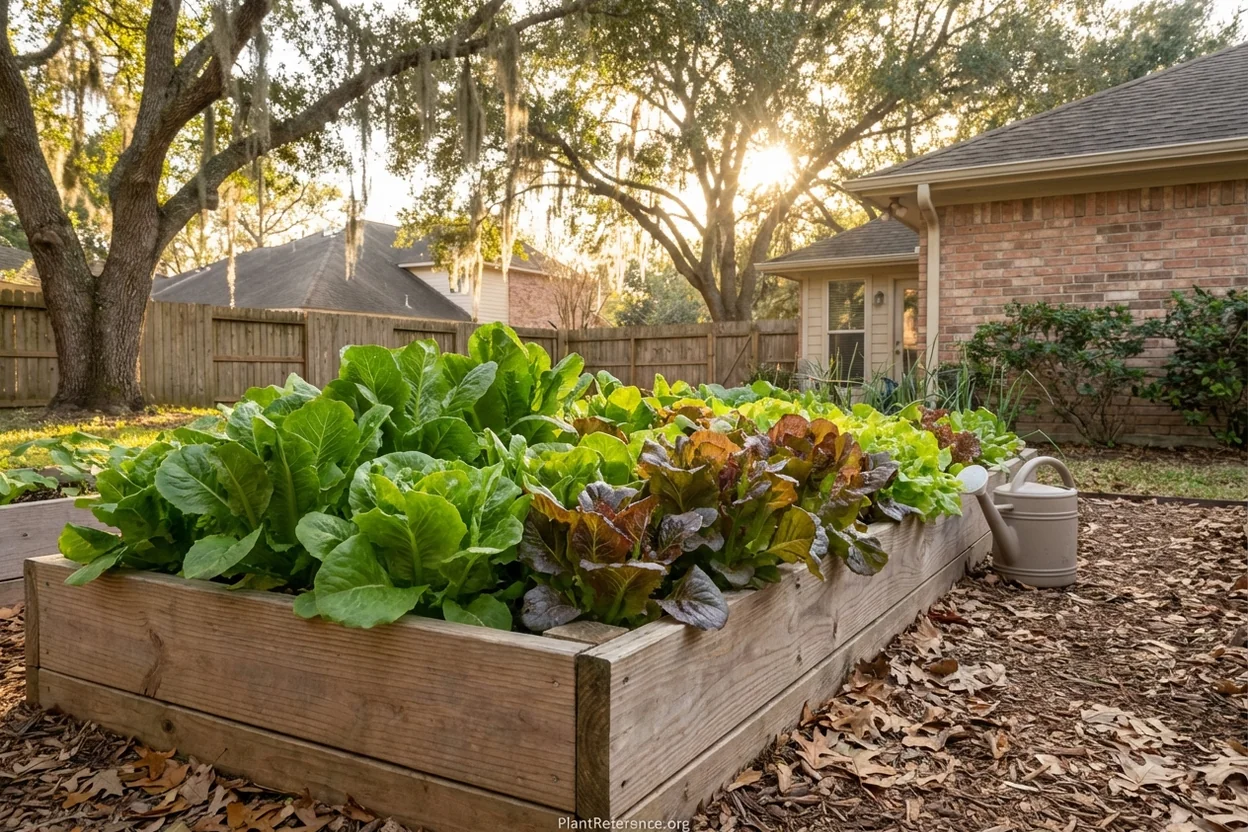
Harvest looseleaf types using cut-and-come-again—cut outer leaves 1 inch above the crown for 3-4 regrowth cycles. Houston's warm winter conditions produce faster regrowth than cooler cities but also faster quality decline—harvest frequently in smaller quantities for the best flavor. Harvest heading types by cutting entire heads at the base when firm. Morning harvest before 9 AM is critical because Gulf Coast warmth builds quickly and concentrates bitter compounds in the leaf tissue.
Houston's winter lettuce benefits from occasional frost-sweetening—temperatures in the 28-32°F range trigger starch-to-sugar conversion that sweetens leaves. Houston experiences fewer frost events than Austin or Dallas because the Gulf's maritime influence moderates winter temperatures, but the events that do occur produce noticeable sweetening. The trade-off is that Houston's frost-sweetened lettuce is less consistently sweet than cities with more frequent frost events.
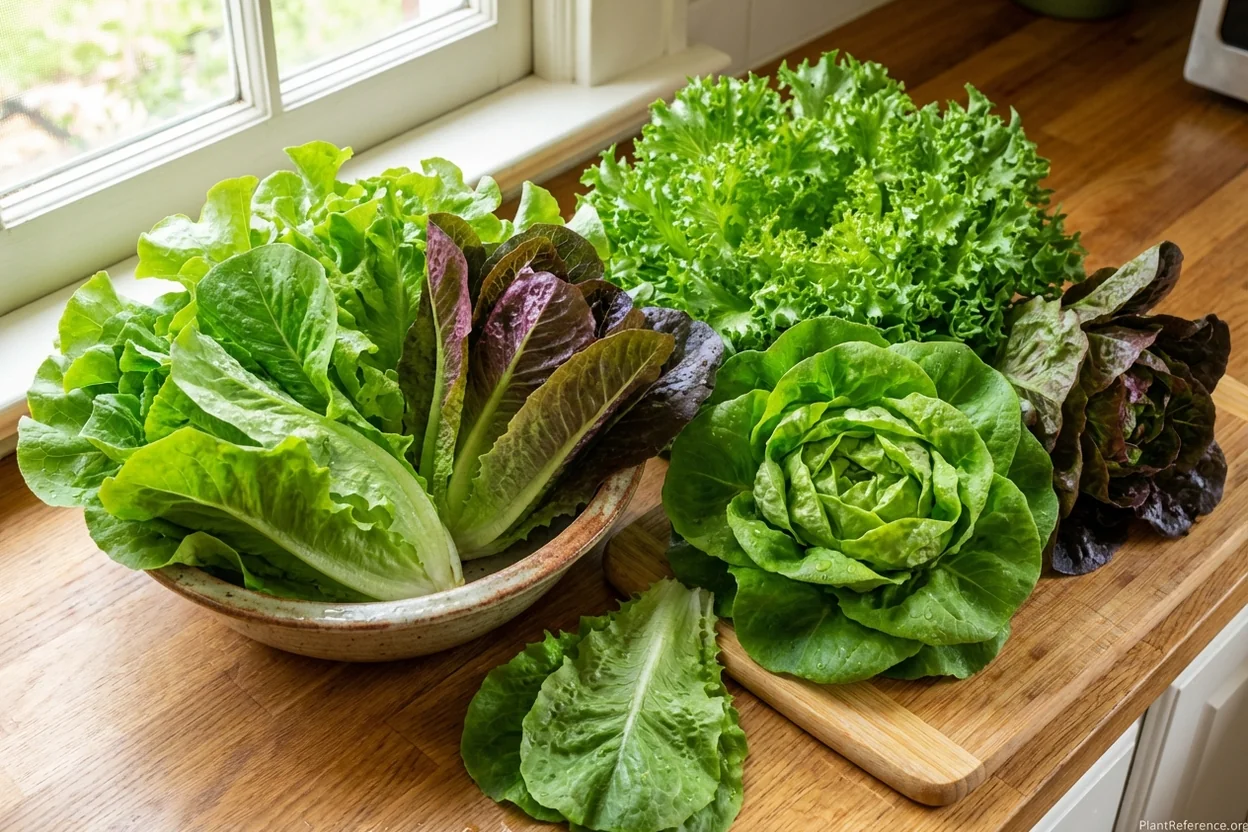
Store harvested lettuce refrigerated in damp paper towels inside a loose bag—keeps 5-7 days (shorter than dry-climate cities because Houston lettuce absorbs more moisture from the humid growing conditions). Houston's five-month effective lettuce window (October-March, extended into April with shade cloth) provides fresh lettuce through the cooler half of the year. The Bayou City's food culture—from the Urban Harvest Farmers Market to the Heights restaurants to Montrose's farm-to-table scene—values the fresh, locally grown lettuce that Gulf Coast winters produce despite the humidity challenges that make Houston the most demanding Texas lettuce city. Houston closes this 30-city guide as it should—the final word on humidity management, the ultimate test of the disease prevention strategies that every humid Southern city shares, and the proof that even in America's most challenging lettuce climates, disciplined gardeners produce fresh, homegrown lettuce that no grocery store can match. The Complete Guide to Raised Bed Gardening for Beginners (2025)
Frequently Asked Questions
Reading about plants and recognising them are different skills. These three build the second.
- Daily PlantIdentify the day’s mystery plant from a close-up photograph.
- Keyed OutWork a dichotomous key, lead by lead, to name a hidden specimen.
- Name That PlantName a specimen from botanical clues dealt hardest first.
Free to play, no account needed
Tagged with
Aisha manages a small tropical nursery on the east side of Houston, specializing in plants that can handle the Gulf Coast's humidity, heat, and unpredictable flooding. She studied horticulture in college and worked at a wholesale grower before opening her own operation. Growing up, her parents kept a kitchen garden with okra, bitter gourd, and curry leaf plants—a tradition she's continued. Houston's subtropical climate lets her grow things most of the country can't, but it also means dealing with fungal issues, standing water, and summers where it's too hot for even tomatoes. Aisha writes about tropical and subtropical plant care, humidity management, and working with heavy clay soils.