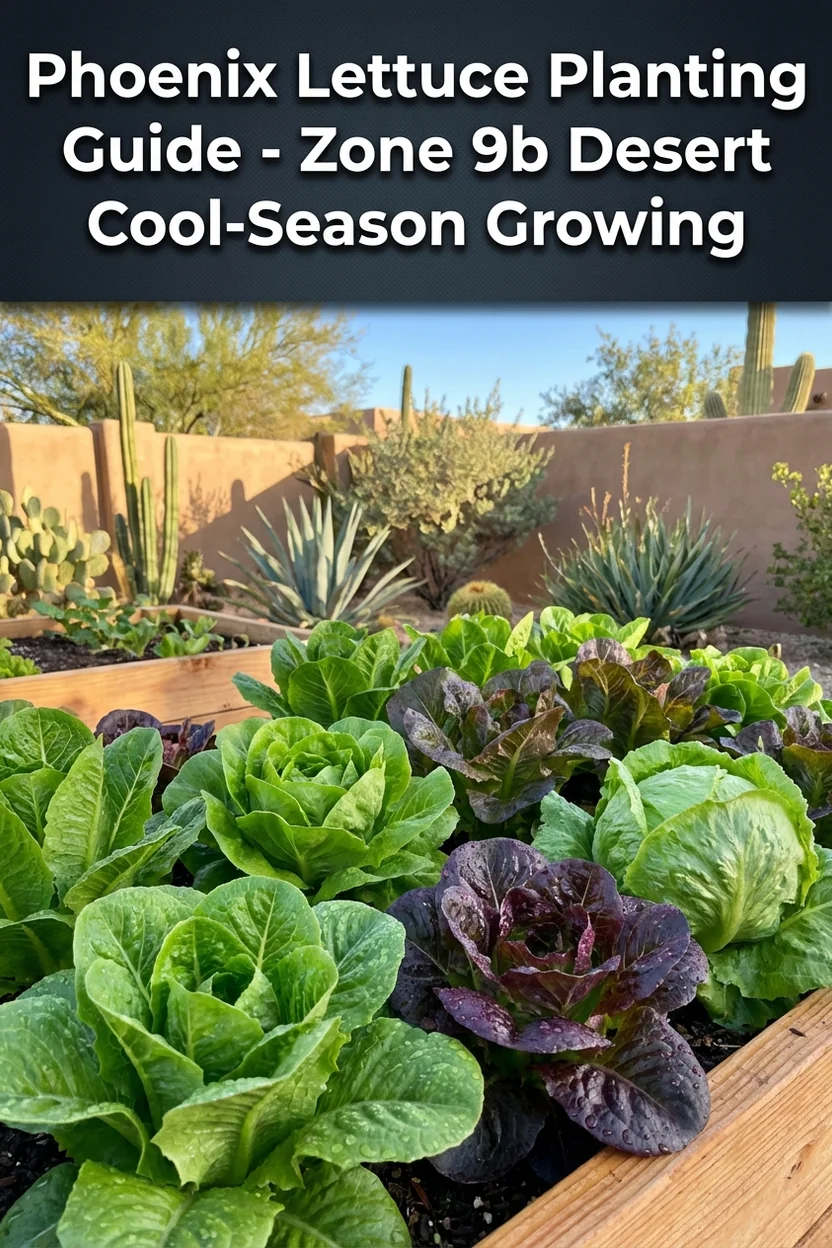
When to Plant Lettuce in Phoenix: Complete Guide + Best Varieties for Zone 9b
Pets & Toxicity
Recorded toxicity for plants linked in this guide. An unknown status is not a safety assessment.
No linked plant is recorded as toxicDetailsHide
Lactuca sativa var. crispa — Toxicity: Not assessed
Lactuca sativa var. crispa is non-toxic and safe for human consumption. All parts of the plant are edible, though leaves are the primary harvest. Generally safe around pets, though large quantities may cause mild digestive upset in some animals.View Lactuca sativa var. crispa plant profile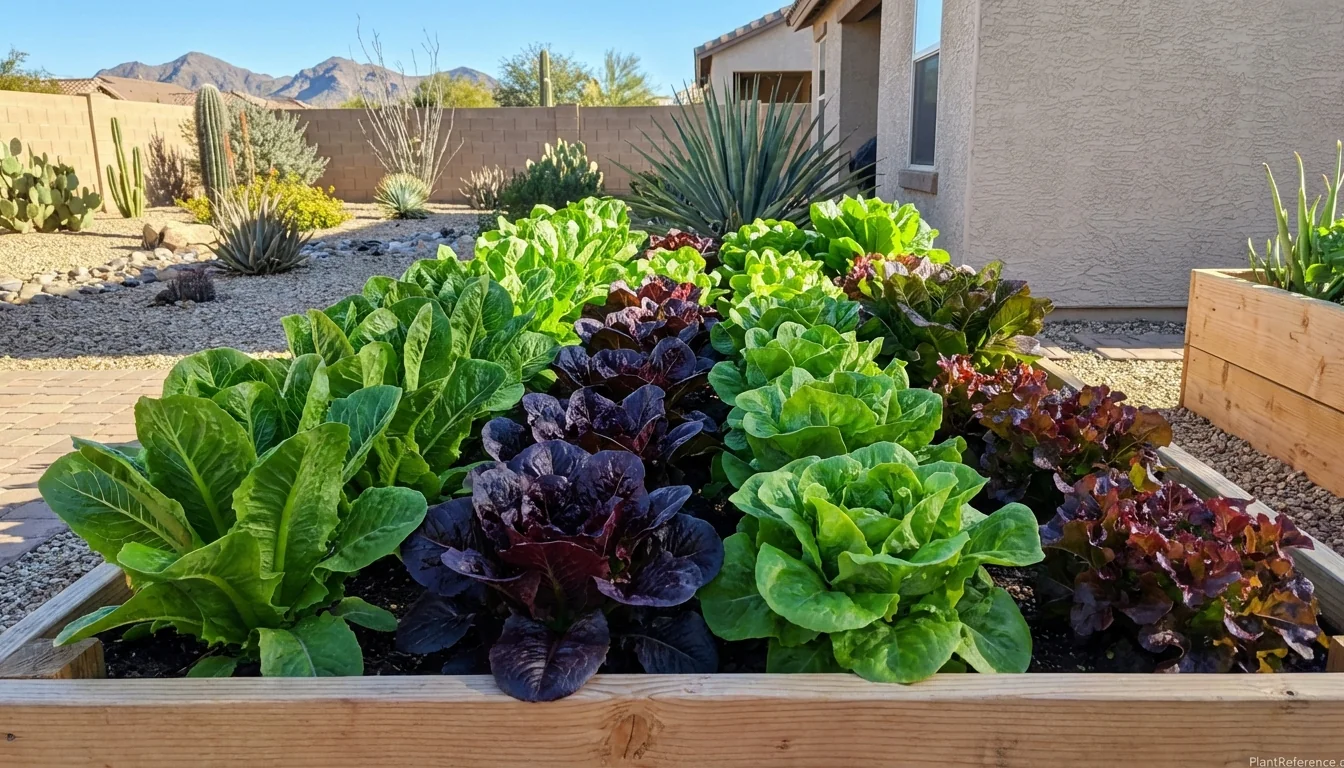
— Image © Plant Reference 2026
Phoenix is the city of extremes for lettuce—the longest summer gap and the best winter growing conditions in this entire 30-city guide, both created by the same Sonoran Desert climate. The summer gap runs an astonishing 18-20 weeks from April through mid-September when temperatures regularly exceed 100-115°F with overnight lows above 85°F—conditions so far beyond lettuce tolerance that no variety, shade cloth, or infrastructure can produce meaningful lettuce during the Valley of the Sun's brutal summer. But the cool-season window from October through March is genuinely outstanding. Phoenix's mild desert winter delivers daytime temperatures of 65-75°F and overnight lows of 40-50°F—nearly identical to the conditions that make the Salinas Valley and Yuma the commercial lettuce capitals of America. This isn't a coincidence: Phoenix sits in the same low-desert climate zone that produces the vast majority of America's winter lettuce supply. Home gardeners in Phoenix have access to the same ideal conditions that commercial operations use, making Phoenix one of the best winter lettuce cities in the country despite being one of the worst summer lettuce cities. The 289-day frost-free season from mid-February through early December provides the formal framework, but for lettuce, only six months matter—October through March. The dry Sonoran Desert climate (only 8 inches of annual rainfall, 15-30% humidity) eliminates every moisture-related disease completely—no downy mildew, no basal rot, no slugs, no fungal issues of any kind. Phoenix lettuce is the cleanest in America alongside Salt Lake City. The trade-off is water: every drop must be irrigated, and Arizona's water consciousness makes efficient drip irrigation both a practical and ethical necessity. The city's food culture—from the Phoenix Public Market to the farm-to-table restaurants across Roosevelt Row, Arcadia, and Old Town Scottsdale—values the premium winter lettuce that the desert climate uniquely delivers during the months when most American cities are frozen. When to Plant Tomatoes in Phoenix: Complete Guide + Best Varieties for Zone 9b
Best Lettuce Varieties for Phoenix's Climate
Phoenix sits in USDA Zone 9b with a February 15 last frost and December 1 first frost—289 frost-free days. For lettuce, only the October-March cool-season window matters. All lettuce types succeed during Phoenix's mild desert winter because the conditions are ideal—this is the same climate that grows America's commercial lettuce supply.
Variety | Type | Days to Harvest | Winter Performance | Best For |
|---|---|---|---|---|
Butterhead | 55-65 days | Excellent | Best all-around for Phoenix | |
🌿Lactuca sativa var. crispa (Red Oak Leaf) | Looseleaf | 45-55 days | Excellent | Cut-and-come-again |
🌿Lactuca sativa var. longifolia (Romaine) | Cos | 70-80 days | Excellent | Premium desert winter crop |
Mesclun Mix | Seedling mix | 30-40 days | Excellent | Fastest harvest, succession |
Butterhead | 55-65 days | Excellent | Desert winter luxury | |
🌿Lactuca sativa var. capitata (Iceberg) | Crisphead | 80-90 days | Excellent | Commercial-quality winter crop |
🌿Lactuca sativa 'Buttercrunch' leads for Phoenix because it produces from October through March with consistent quality. The mild desert winter provides such ideal conditions that variety selection is less critical than in any other city—everything grows well during the cool season. Buttercrunch's compact rosettes thrive in the clear desert sun and low humidity that creates disease-free growing conditions unmatched elsewhere.
🌿Lactuca sativa var. crispa (Red Oak Leaf) at 45-55 days delivers vivid color during Phoenix's cool winter nights when dramatic day-to-night temperature swings (sometimes 30°F) stimulate intense anthocyanin production.
🌿Lactuca sativa var. longifolia (Romaine) at 70-80 days is Phoenix's premium winter crop. The same conditions that make Yuma (just 180 miles southwest) the commercial Romaine capital of America make Phoenix home gardens produce dense, crisp Romaine hearts from November through February that rival commercial quality.
Mesclun Mix at 30-40 days enables maximum succession planting across the six-month window—potentially 10-12 sowings from October through March.
🌿Lactuca sativa 'Bibb' produces Phoenix's most delicate winter lettuce in the gentle 65-70°F conditions that the desert winter maintains—conditions too warm for Bibb in Northern winters and too hot in Southern summers.
🌿Lactuca sativa var. capitata (Iceberg) at 80-90 days succeeds in Phoenix's winter window—one of the few cities where home gardeners reliably produce Iceberg because the long, consistently cool maturation window matches commercial Yuma conditions exactly. When to Plant Peppers in Phoenix: Complete Guide + Best Varieties for Zone 9b
Specific Planting Dates for Phoenix Gardens
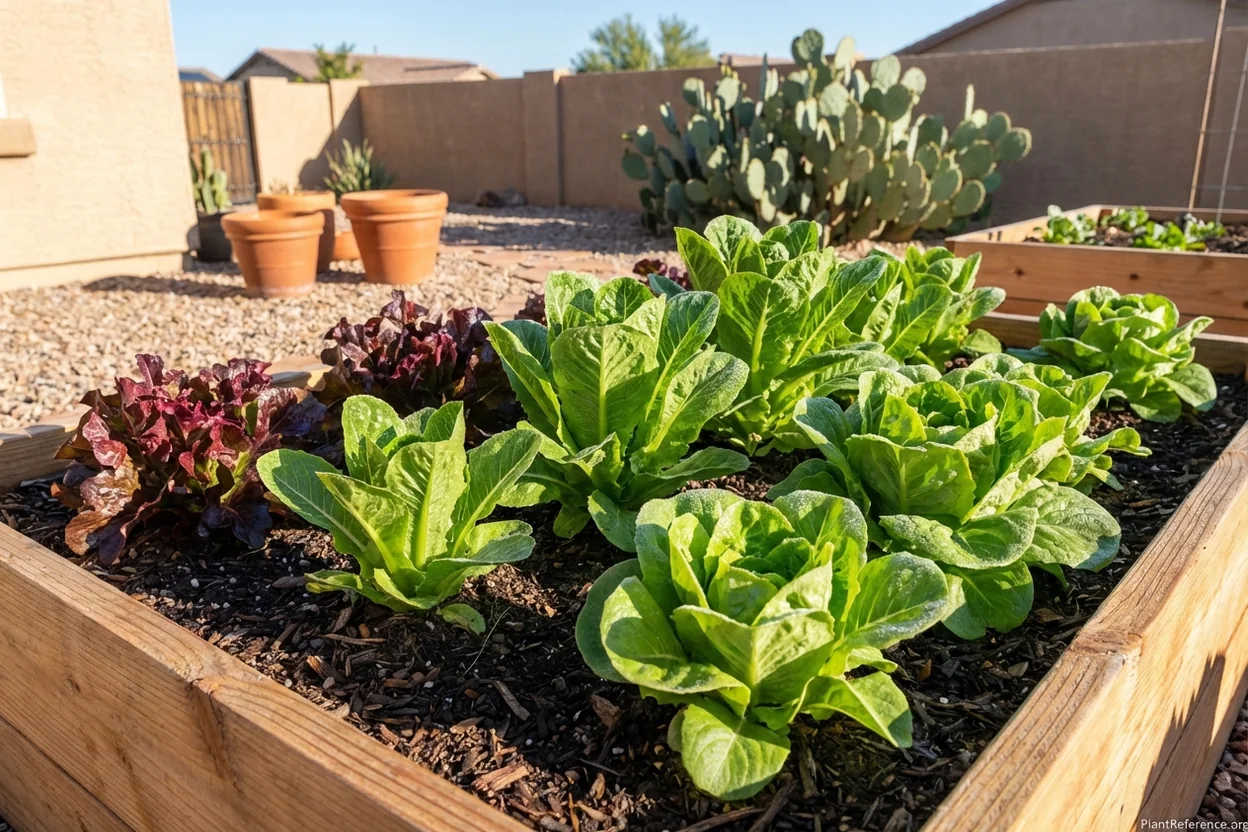
Phoenix's lettuce calendar is the most extreme in this guide—six months on, six months absolutely off.
Fall Sowing (Season Start): October 1-15. Direct sow or transplant into cooling desert conditions. Phoenix soil temperatures drop below 80°F by early October, ending the thermoinhibition that makes September sowing impossible outdoors. Succession sow every 10-14 days through January.
Peak Winter Production: November through February. Phoenix's premium lettuce window—daytime temperatures of 65-75°F with overnight lows of 40-50°F provide textbook lettuce growing conditions. Growth is steady and disease-free.
Late Season: March. Production continues but quality declines as temperatures climb toward 85°F by late March. Harvest remaining heads before April heat arrives. Stop all new sowings by February 15 because lettuce planted later won't mature before the heat.
Summer Gap (April through Mid-September): Phoenix's absolute gap—18-20 weeks when temperatures exceed 100-115°F daily with overnight lows above 85°F. No lettuce variety, shade cloth, or infrastructure produces meaningful lettuce during Phoenix's summer. The gap is the longest in this 30-city guide by a wide margin. Accept it completely.
Fall Restart: September 15-October 1. Start seeds indoors under AC—mandatory because Phoenix's September soil still exceeds 90°F. Transplant outdoors by early October under temporary shade cloth for establishment. Raised Bed Vegetable Garden Layout: Planning for Maximum Production
Complete Growing Guide for Phoenix
Desert Alkaline Soil
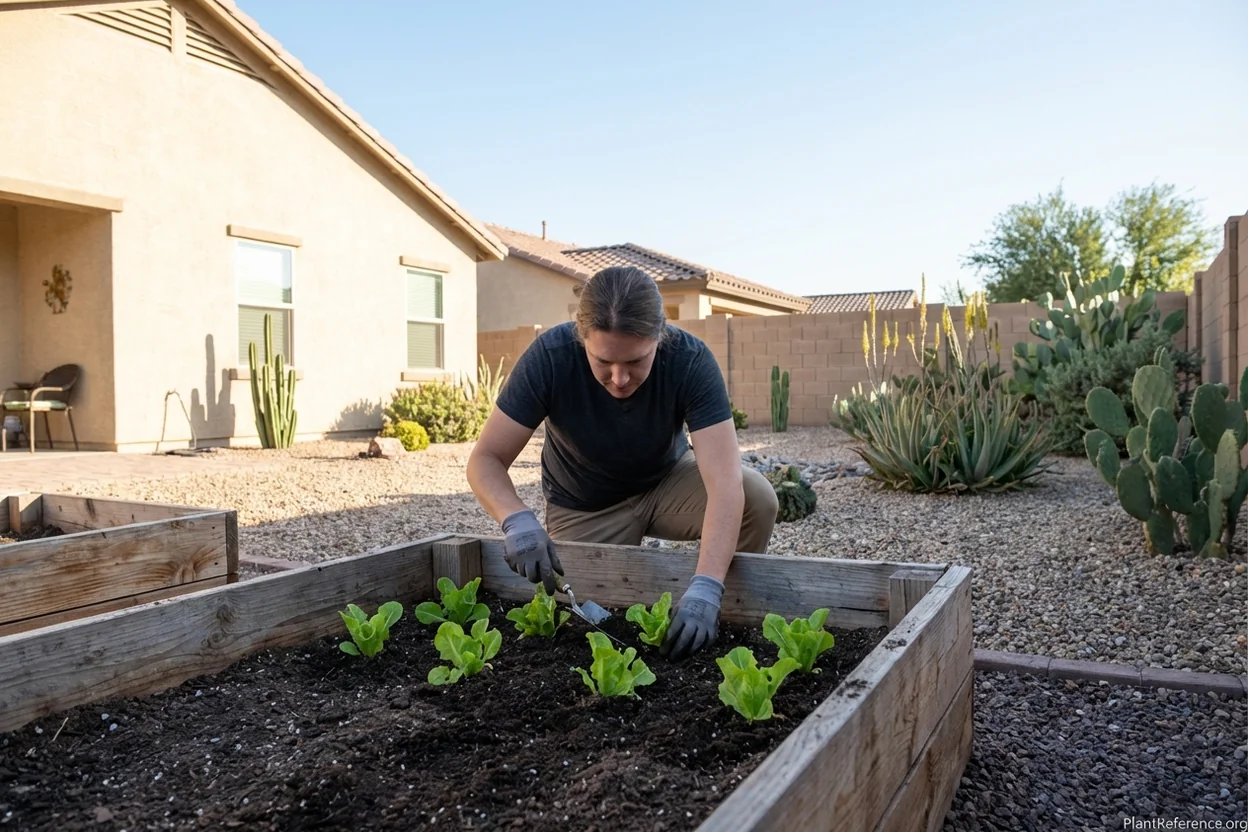
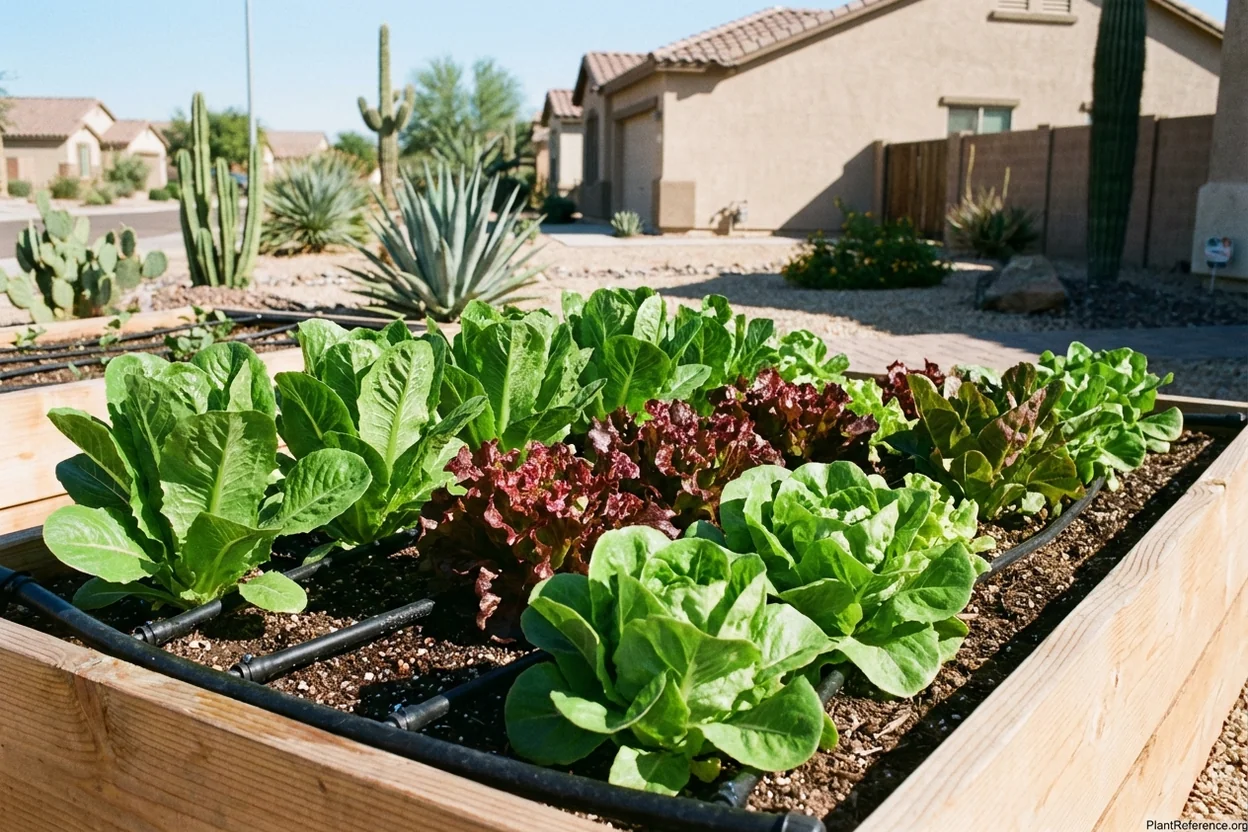
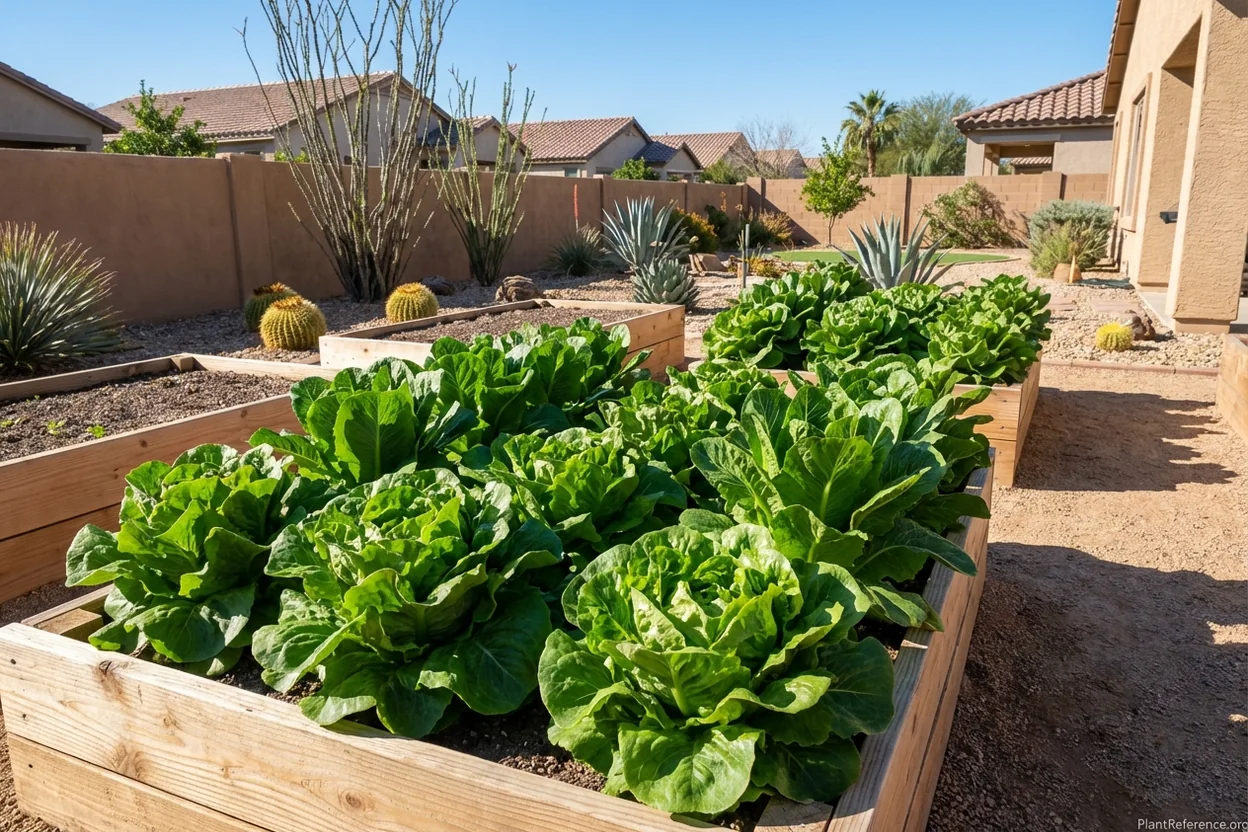
Phoenix sits on highly alkaline desert soil (pH 7.5-8.5) with caliche hardpan layers—the most extreme alkaline conditions of any city in this guide. The native desert soil is essentially unsuitable for lettuce without complete replacement in raised beds. Fill raised beds with 50% topsoil, 30% compost, and 20% perlite or pumice (locally available desert materials). Chelated iron spray every 2-3 weeks is mandatory to prevent the severe iron chlorosis that Phoenix's extreme alkalinity causes. Do not add lime under any circumstances. Compost naturally lowers pH over time. Space heading types 8-12 inches (20-30 cm) and looseleaf 4-6 inches (10-15 cm). How to Build a Raised Garden Bed: Step-by-Step Construction Guide
Irrigation: Phoenix's Fundamental Infrastructure
Phoenix receives only about 8 inches (20 cm) of annual rainfall—the driest major city in this guide. Every drop of moisture must be irrigated, making drip irrigation the absolute foundation of Phoenix lettuce growing. Water 1-1.5 inches (2.5-4 cm) per week during the cool season, increasing to 2 inches during the warm October and March shoulder months. The desert air (15-30% humidity) dries soil rapidly between waterings—mulch 2-3 inches (5-8 cm) to retain moisture. Arizona's water-conscious culture makes efficient irrigation both practical and ethical. Many Phoenix gardeners use reclaimed greywater systems alongside drip irrigation to minimize water impact. 5 Best Drip Irrigation Kits for Raised Beds (Tested for Easy Installation)
Desert Sun Management
Phoenix's intense winter sun (clear skies averaging 300+ days per year) produces rapid growth during the cool season but can stress lettuce during the warm October and March shoulders when daytime temperatures approach 85°F. Light shade cloth (20-30%) during October and March extends the productive season by 2-3 weeks at each end. During peak winter (November-February), full sun is ideal—the lower sun angle and shorter days provide exactly the light intensity that lettuce thrives in. When to Plant Squash in Phoenix: Complete Guide + Best Varieties for Zone 9b
Succession Planting Across the Cool Season
Phoenix's six-month window supports 8-10 succession plantings from October through February. Sow every 10-14 days. Stagger varieties: mesclun (30 days), Red Oak Leaf (50 days), Buttercrunch (60 days), Romaine (75 days), and even Iceberg (85 days) planted simultaneously produce overlapping harvests across the entire winter window.
Feeding
Light feeder—fish emulsion every 3-4 weeks. Phoenix's alkaline soils require chelated iron spray every 2-3 weeks—the most critical amendment for desert lettuce growing. Use sulfur-based fertilizers to gradually lower pH. Compost provides baseline nutrition while slowly acidifying. When to Plant Cucumbers in Phoenix: Zone 9b Dates + Best Varieties
Phoenix's Commercial Lettuce Heritage
Phoenix sits in the same low-desert climate zone as Yuma, which produces 90% of America's winter lettuce. Home gardeners in Phoenix have access to identical growing conditions—the same mild temperatures, intense winter sun, and disease-free dry air that make commercial lettuce production so successful. This heritage means Phoenix nurseries and garden centers stock lettuce varieties and supplies specifically suited to desert winter growing, and the Arizona Master Gardener program provides desert-specific expertise unavailable in humid climates. When to Plant Kale in Phoenix: Complete Guide + Best Varieties for Zone 9b
Troubleshooting Phoenix-Specific Problems
Problem | Symptoms | Likely Cause | Quick Fix |
|---|---|---|---|
Extreme Summer Gap (18-20 Weeks) | Complete lettuce failure April through mid-September | Sonoran Desert temperatures 100-115°F daily with overnight lows above 85°F | Accept completely—no technology produces lettuce. Grow heat-loving crops (peppers, melons, okra) instead. |
Extreme Alkaline Soil (pH 7.5-8.5) | Severe yellowing of younger leaves, stunted growth | Phoenix desert soil pH 7.5-8.5 with caliche hardpan | Raised beds with controlled soil mix (mandatory, not recommended). Chelated iron spray every 2-3 weeks. Complete soil replacement—don't amend native desert soil. |
Thermoinhibition for Fall Starts | September seeds don't germinate outdoors | Phoenix September soil exceeds 90°F—hottest fall-start conditions of any city | Indoor starting under AC. Refrigerator-prime seeds. Wait until early October (soil below 80°F) for outdoor transplanting. Use shade cloth over seedbeds. |
Frost Events During Peak Winter | Light frost damage, occasional leaf burn | Phoenix 1-3 light frost events per winter, temperatures drop to 30-35°F | Row covers provide sufficient protection. Desert frost is brief and mild—rapid daytime recovery. These events are far less severe than Northern/Southern city frost. |
Harvest & Storage
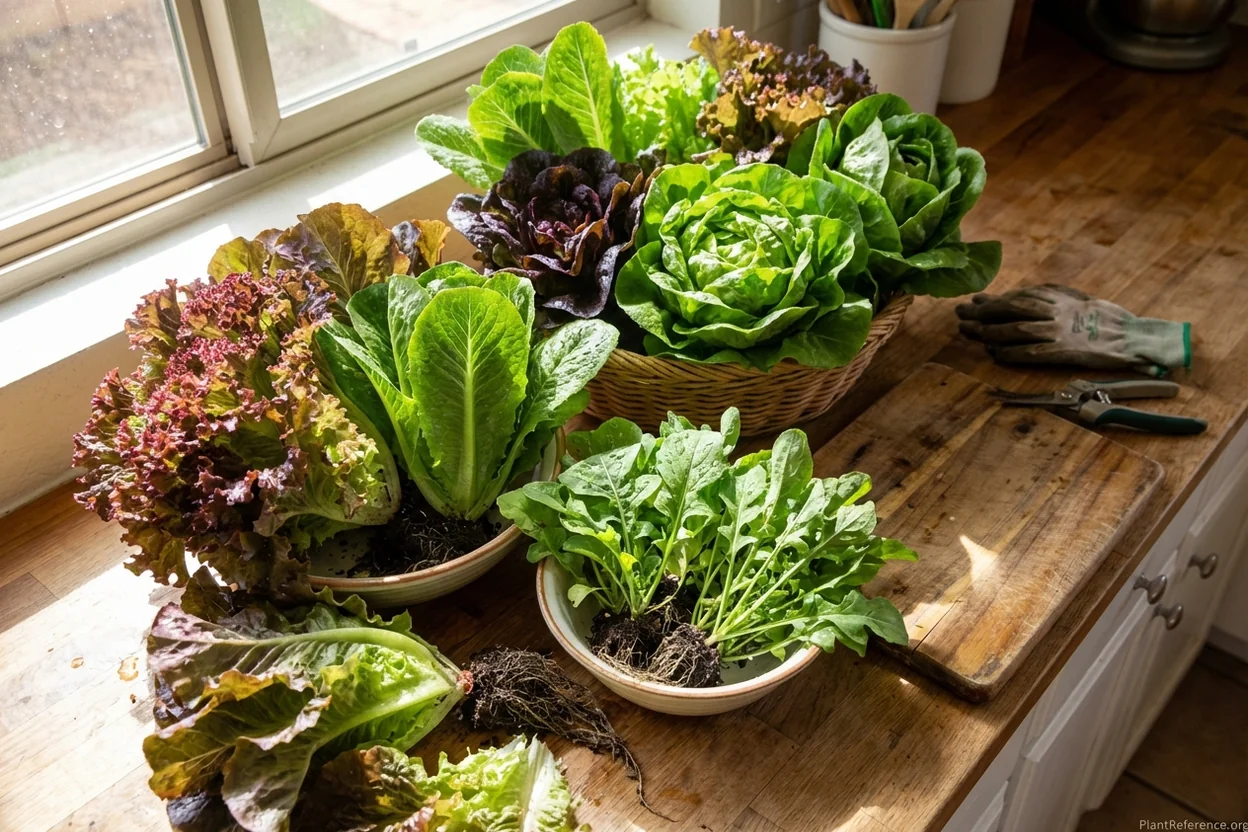
Harvest looseleaf types using cut-and-come-again—cut outer leaves 1 inch above the crown for 4-6 regrowth cycles over 6-8 weeks. Phoenix's mild winter temperatures produce steady, extended cycles because conditions never stress plants toward bolting during the November-February peak. Harvest heading types by cutting entire heads at the base when firm. Morning harvest before 10 AM captures peak crispness.
Phoenix's winter lettuce benefits from the dramatic day-to-night temperature swings that the desert produces—overnight lows of 40-45°F trigger the starch-to-sugar conversion that sweetens leaves without the hard freezes that damage or kill plants. This consistent, gentle frost-sweetening effect across the entire November-February window produces some of the best-tasting lettuce in the entire 30-city guide. The Sonoran Desert's clear dry air contributes a crisp, clean flavor profile that humid climates cannot replicate because moisture never waterlogged the leaves during production.
Store harvested lettuce refrigerated in damp paper towels inside a loose bag—keeps 7-10 days. Phoenix's six-month effective lettuce window (October-March) provides fresh lettuce through half the year—the other half belongs to the heat-loving crops that thrive in the desert summer. The Valley of the Sun's food culture—from the Phoenix Public Market to Scottsdale's farm-to-table scene to the Roosevelt Row restaurants—values the premium desert winter lettuce that Arizona's commercial heritage and ideal home-growing conditions uniquely deliver. Phoenix may have the worst summer for lettuce in America, but it has among the best winters—a trade-off that desert gardeners who embrace the inverted calendar find deeply rewarding. The Complete Guide to Raised Bed Gardening for Beginners (2025)
Frequently Asked Questions
Reading about plants and recognising them are different skills. These three build the second.
- Daily PlantIdentify the day’s mystery plant from a close-up photograph.
- Keyed OutWork a dichotomous key, lead by lead, to name a hidden specimen.
- Name That PlantName a specimen from botanical clues dealt hardest first.
Free to play, no account needed
Tagged with
Alejandro is a landscape designer in Phoenix who focuses on low-water, desert-adapted plantings. He grew up in Tucson surrounded by Sonoran Desert plants and got frustrated watching neighbors install water-hungry lawns in a city that gets eight inches of rain a year. After earning his landscape architecture degree, he started designing residential gardens using native and desert-adapted species. Alejandro's approach is practical—he works with the climate rather than against it, using microclimates, shade structures, and efficient irrigation to create gardens that look good without draining the aquifer. He's a regular speaker at local xeriscaping workshops.