Image 1 of 4
1 / 4
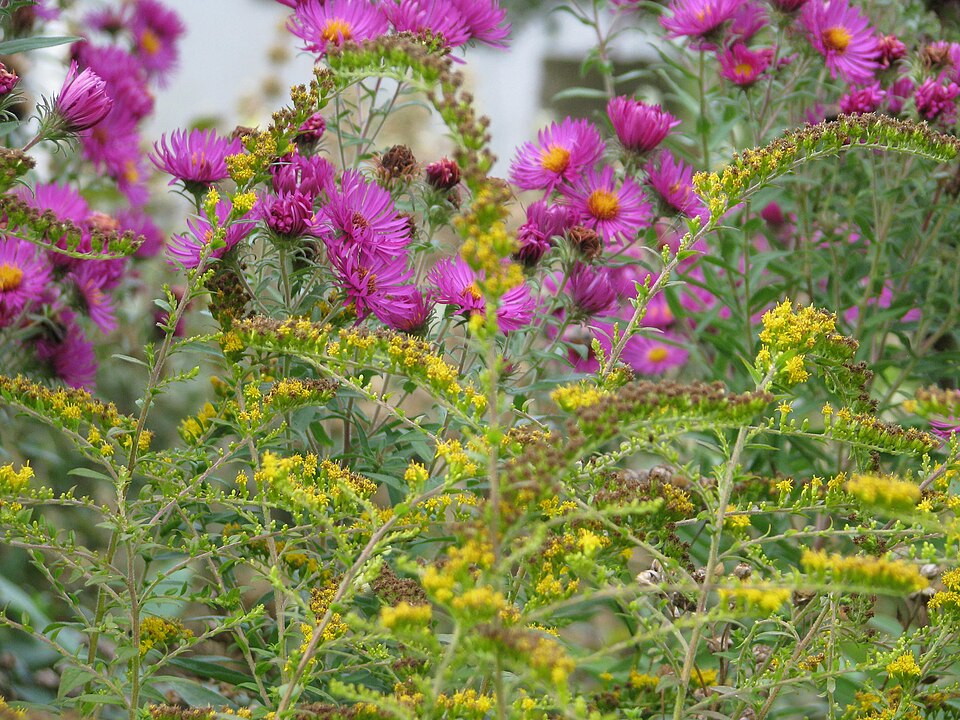
© peganum from Henfield, England, some rights reserved (CC-BY-SA) · Wikimedia Commons
Solidago, Genus, rugosa, Species, 'Fireworks', Cultivar,
- Genus & species
- Cultivar
fireworks goldenrod
Eastern North America (Nova Scotia to Florida, west to Texas; meadows, roadsides, open woodlands)
Overview
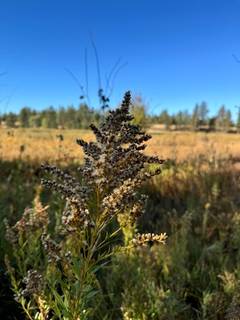
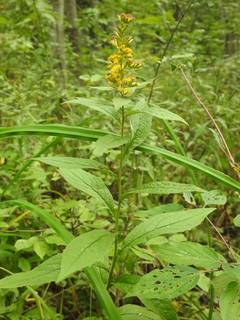
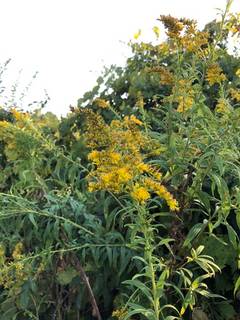
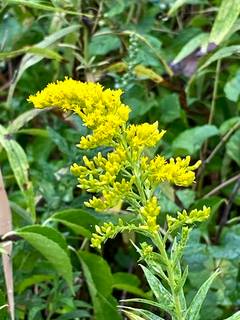
Solidago rugosa 'Fireworks' is a deciduous herbaceous perennial in the daisy family (Asteraceae) reaching 36–48 inches (90–120 cm) tall with a spread of 24–36 inches (60–90 cm). The habit is upright and clump-forming, with sturdy stems that curve outward under the weight of the panicles in late summer. Native to eastern North America (the species range extends from Nova Scotia south to Florida and west to Texas), the species occurs in meadows, along roadsides, and in open woodlands. Rough-textured wrinkled dark green leaves 2–4 inches (5–10 cm) long are carried on the upper half of each stem. Long arching radiating panicles 10–18 inches (25–45 cm) long of tiny golden-yellow flower heads appear in September–October; the panicles spray outward and downward from the stem tips in the pattern that gives the cultivar its name. Growth rate is moderate; plants reach full size in 1–2 growing seasons. Hardy to zone 4. Goldenrod pollen is carried by insects rather than wind, so the plant is not responsible for autumn hay fever (common ragweed, Ambrosia artemisiifolia, is the usual cause). 'Fireworks' spreads slowly by short rhizomes, in contrast to the more aggressive S. canadensis.
Native Range
Solidago rugosa is native to eastern North America, from Nova Scotia south to Florida and west to Texas. The species occurs in meadows, along roadsides, and in open woodlands.Suggested Uses
Grown in mixed borders, meadow plantings, native gardens, and pollinator plantings at 24–30 inch (60–75 cm) spacing. The September–October bloom fills the gap between late summer perennials and autumn asters; combines with Aster, Eupatorium, and ornamental grasses. The radiating panicle pattern reads at 15–30 feet (5–10 m) distance, suiting larger border plantings. Formal tight plantings and sites where height control without seasonal cutback is needed produce poor results.How to Identify
Appearance
Size & Dimensions
Height3' - 4'
Width/Spread2' - 3'
Bloom Information
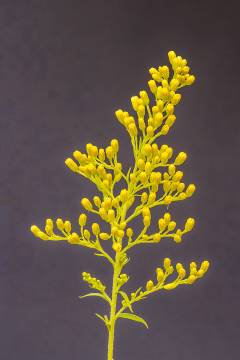
Long arching radiating panicles 10–18 inches (25–45 cm) long of tiny golden-yellow flower heads appear in September–October on stem tips. The panicles spray outward and downward to form the fireworks pattern that gives the cultivar its name. Bloom duration is 4–6 weeks. Pollen is insect-carried rather than wind-borne, so the plant is not a hay-fever source.
Detailed Descriptions
Flower Description
Golden-yellow, tiny flower heads in long arching radiating panicles 10-18 inches forming a fireworks-burst patternFoliage Description
Dark green, rough wrinkled 2-4 inches; carried on sturdy stemsGrowing Conditions
Sun Requirements
Requires 6-10 hours of direct sunlight daily
• Full Sun: 6+ hours of direct sunlight
• Partial Shade: 3-6 hours of direct sunlight
• Full Shade: Less than 3 hours of direct sunlight
Care & Maintenance
Care Guide
Grows in full sun in average well-drained soil at pH 5.5–7.5, tolerating a wide range of soil types including clay, loam, and sand. Hardy to zone 4. Drought-tolerant once established. In rich moist soils, stems reach the upper end of the height range and may lean outward under flower weight; cutting stems back by half in early June ('Chelsea chop') produces shorter denser plants with slightly delayed bloom. Division every 3–4 years in early spring maintains vigor. Pollen attracts bees, butterflies, and other late-season insects.Pruning
For shorter bushier plants, cut stems back by half in early June before flower buds form. Cut stems to ground level after frost in late autumn, or leave standing through winter and cut back in late winter (February–March). Divide every 3–4 years in early spring as new growth emerges.Pruning Schedule
Prune: June
summer