Solidago, Genus, juncea, Species,
- Genus & species
early goldenrod
Overview
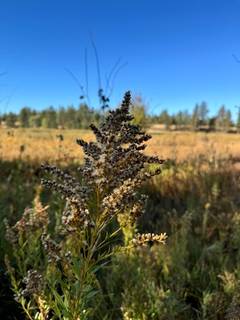
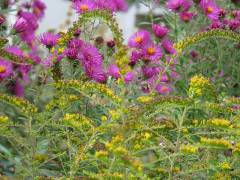
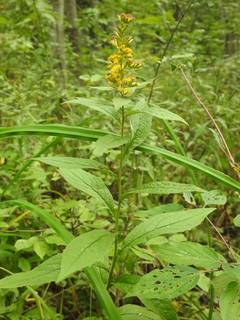
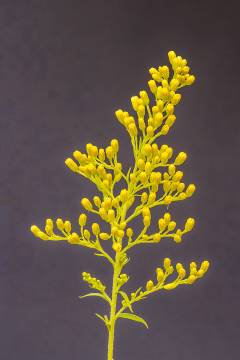
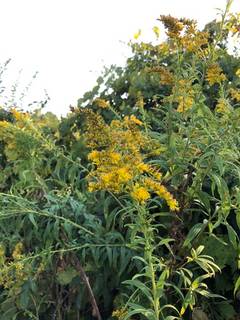
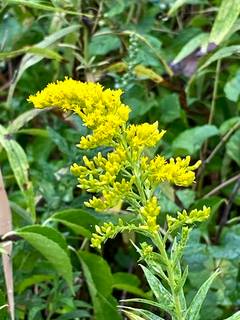
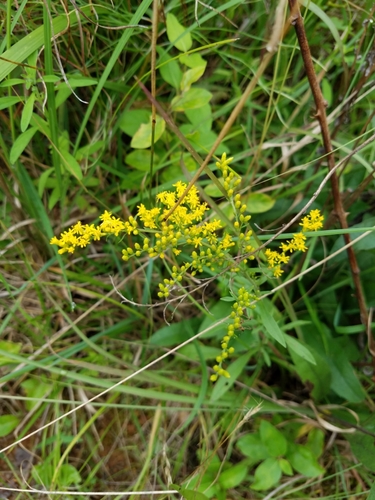
Solidago juncea is a herbaceous perennial in the aster family, reaching 24-48 inches (60-120 cm) tall and 18-24 inches (45-60 cm) wide, spreading by short rhizomes into loose clumps. Smooth, often reddish stems carry lance-shaped basal leaves up to 12 inches (30 cm) long that taper to a winged stalk, with much smaller leaves up the stem. Tiny yellow flower heads are arranged in a one-sided, arching, pyramidal cluster with the branches curving downward. It is among the earliest goldenrods to bloom, opening from midsummer ahead of most other species. The plant grows in dry fields, open woods, banks, and roadsides across eastern and central North America, tolerating poor, dry soils. It spreads steadily by rhizome and seed and can crowd smaller plants in a border. Like other goldenrods, its pollen is heavy and insect-carried, so it is not a cause of hay fever despite its conspicuous bloom. The flowers support a wide range of bees, wasps, butterflies, and beneficial insects in late summer.
Native Range
Native to eastern and central North America, from Nova Scotia and Ontario south to Georgia and west to the Great Plains. It grows in dry fields, open woods, clearings, banks, and roadsides.Suggested Uses
Grown in native, prairie, and pollinator plantings, meadow gardens, and dry banks for erosion control. The late-summer flowers feed bees, butterflies, and predatory insects, and the seeds feed birds.How to Identify
Appearance
Size & Dimensions
Height2' - 4'
Width/Spread1'6" - 2'
Bloom Information
Detailed Descriptions
Foliage Description
greenGrowing Conditions
Sun Requirements
Requires 6-10 hours of direct sunlight daily
• Full Sun: 6+ hours of direct sunlight
• Partial Shade: 3-6 hours of direct sunlight
• Full Shade: Less than 3 hours of direct sunlight
Care & Maintenance
Care Guide
Grows in full sun to light shade in dry to average, well-drained soil and tolerates poor, sandy, or rocky ground. Established plants need no irrigation and no fertilizer, which can otherwise make them flop. It spreads by rhizomes and self-sown seed, forming wider clumps over time. Dividing every few years controls the spread and keeps clumps vigorous. Cutting stems back by half in late spring produces shorter, sturdier plants. It has no serious pests and tolerates heat and drought.Pruning
Cutting stems back by about half in late spring produces shorter, less floppy plants with more branching. Removing spent flower heads before seed ripens limits self-sowing, and old stems can be cut to the ground in late winter.Pruning Schedule
late springwinter