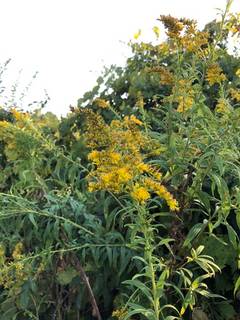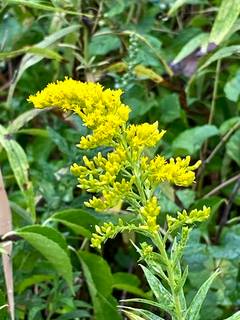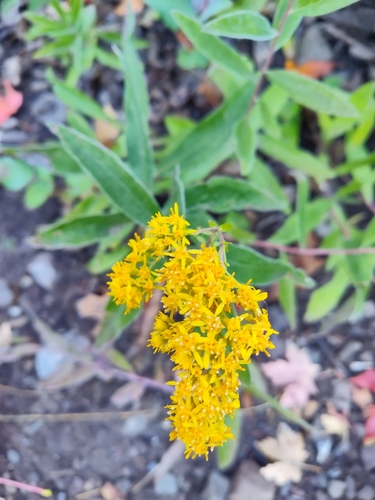
Solidago, Genus, velutina, Species,
- Genus & species
velvety goldenrod
Western and southwestern North America
Overview
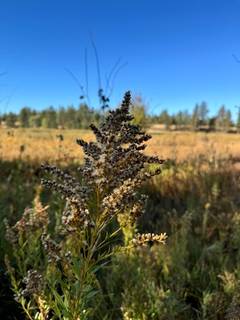
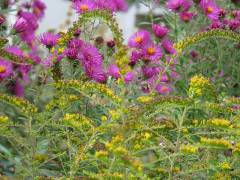
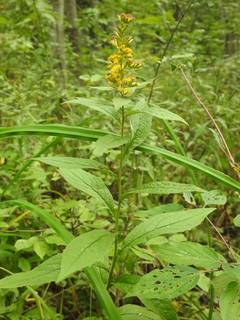
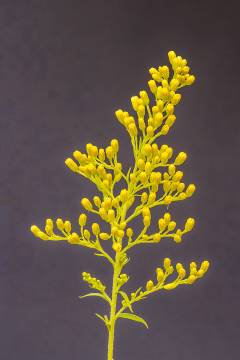
Solidago velutina is a herbaceous perennial growing 12-36 inches (30-90 cm) tall from a woody crown and short rhizomes. Stems and leaves carry a coating of soft, short hairs that give the plant a grayish, velvety surface. The narrow lance-shaped leaves are 1-3 inches (2.5-8 cm) long and reduce in size upward along the stem. Small yellow flower heads cluster in a narrow, often one-sided plume at the stem tips from late summer into fall. Each head holds both ray and disc florets and produces tiny dry seeds tipped with a tuft of bristles that carry on the wind. The species grows in dry open ground, rocky slopes, and pine and oak woodland across western and southwestern North America, tolerating drought, poor soils, and full exposure. It spreads slowly by short rhizomes to form loose colonies rather than dense mats. In garden settings it can self-seed where soil is bare. Flowering coincides with the activity of late-season bees and migrating butterflies, and the dry seed heads stand into winter.
Native Range
Solidago velutina is native to western and southwestern North America, from the western United States south into Mexico. It grows on dry slopes, plains, and open woodland.Suggested Uses
Planted in meadow, prairie, and pollinator gardens and on dry slopes for erosion control. It works in naturalized plantings where its rhizomes can spread. The late flowers support bees and butterflies, and cut stems are used in fresh and dried arrangements.How to Identify
Appearance
Size & Dimensions
Height1' - 3'
Width/Spread1' - 2'
Bloom Information
Detailed Descriptions
Foliage Description
Gray-green, hairyGrowing Conditions
Sun Requirements
Requires 6-12 hours of direct sunlight daily
• Full Sun: 6+ hours of direct sunlight
• Partial Shade: 3-6 hours of direct sunlight
• Full Shade: Less than 3 hours of direct sunlight
Care & Maintenance
Care Guide
Grow S. velutina in full sun and dry to medium, free-draining soil; it tolerates rocky, sandy, and low-nutrient ground. Established plants withstand extended drought and need little supplemental water. Rich soil and shade produce floppy stems and fewer flowers. The species spreads by short rhizomes and can self-seed, so it suits naturalized and meadow plantings more than tight borders. Cutting plants back after flowering reduces self-seeding. It is hardy in USDA zones 4-8.Pruning
Cut stems to the ground in late fall or early spring to clear old growth. Shearing by about one-third in early summer lowers the mature height and reduces flopping. Removing spent flower heads limits self-seeding.Pruning Schedule
Prune: March & November
fallearly spring