Solidago, Genus, lepida, Species,
- Genus & species
canada goldenrod
Pacific Northwest and broadly across Canada and the western United States
Overview
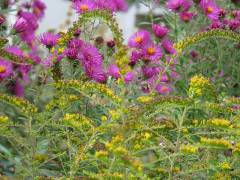
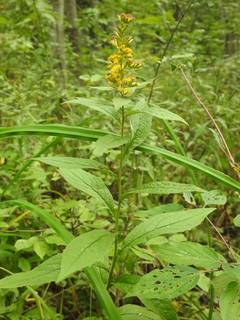
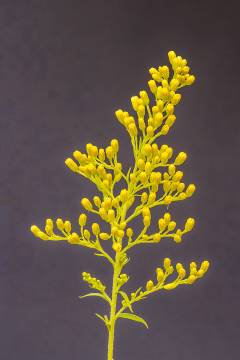
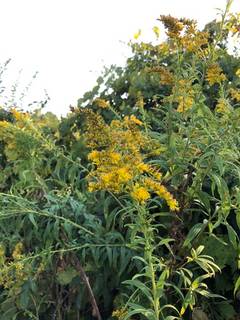
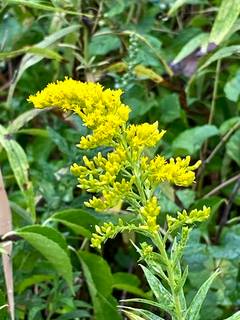
Solidago lepida is the western Canada goldenrod, a native perennial growing 12–48 inches (30–120 cm) tall and 18–36 inches (45–90 cm) wide. Golden-yellow tiny composite flower heads in one-sided plume-like terminal panicles 4–8 inches (10–20 cm) from late summer to early fall. Lance-shaped alternate leaves 2–5 inches (5–13 cm) with 3 prominent veins. In the daisy family (Asteraceae). One of the primary late-season native nectar sources for bees, butterflies, and other pollinators — the bloom occurs when few other native perennials are flowering. Goldenrod does not cause hay fever: the pollen is heavy and insect-carried (entomophilous), not wind-carried. The wind-pollinated ragweed (Ambrosia) that blooms at the same time is the actual hay-fever source — the two are commonly confused. S. lepida is the western segregate of the S. canadensis complex. Spreads by rhizomes — can form colonies in meadows and at forest edges. Goldfinches feed on the seeds through fall and winter. Native to the Pacific Northwest and broadly across Canada and the western US, growing at moist forest edges, meadows, roadsides, and stream banks. Drought-tolerant once established. Non-toxic. Deer-resistant. Part sun to full sun. Native. Zones 3–9. Growth rate is fast.
Native Range
Native to the Pacific Northwest and broadly across Canada and the western United States, growing at moist forest edges, meadows, roadsides, and stream banks.Suggested Uses
Grown in native plantings, meadows, and pollinator gardens in zones 3–9. One of the primary late-season native pollinator plants. Goldfinch seed food. Does not cause hay fever. Rhizome-spreading. Non-toxic. Deer-resistant. Native.How to Identify
Appearance
Size & Dimensions
Height1' - 4'
Width/Spread1'6" - 3'
Bloom Information
Detailed Descriptions
Flower Description
Golden-yellow, tiny composite flower heads in one-sided plume-like terminal panicles 4-8 inches (10-20 cm)Foliage Description
Medium green, lance-shaped, alternate, 2-5 inches (5-13 cm), with 3 prominent veins; finely serrated marginsGrowing Conditions
Sun Requirements
Requires 4-8 hours of direct sunlight daily
• Full Sun: 6+ hours of direct sunlight
• Partial Shade: 3-6 hours of direct sunlight
• Full Shade: Less than 3 hours of direct sunlight
Care & Maintenance
Care Guide
Part sun to full sun. Drought-tolerant once established. Spreads by rhizomes — can colonize. Does not cause hay fever (insect-pollinated — ragweed is the hay-fever source). Late-season pollinator plant. Non-toxic. Deer-resistant. Native. Zones 3–9.Pruning
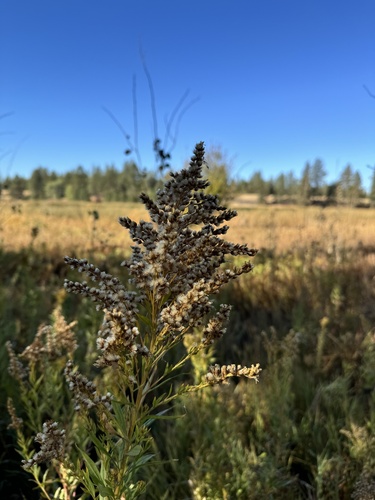
Cut dead stems to the ground in early spring (March). Leave seed heads through winter for goldfinch food. Contain rhizome spread if needed.Pruning Schedule
Prune: March
early spring