Image 1 of 10
1 / 10
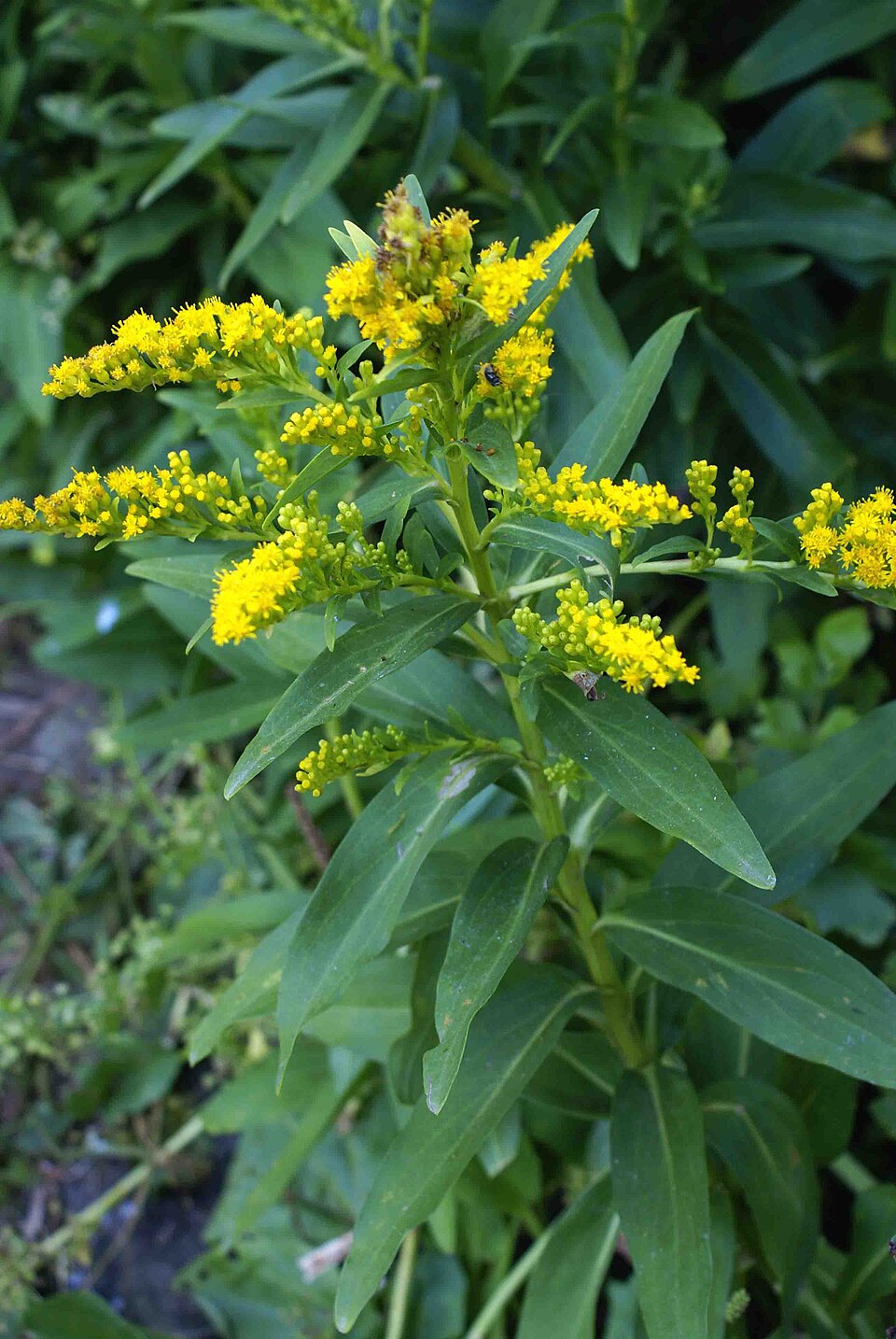
José Luís Ávila Silveira/Pedro Noronha e Costa, no rights reserved (CC0) · Wikimedia Commons
Solidago, Genus, sempervirens, Species,
- Genus & species
northern seaside goldenrod
Overview
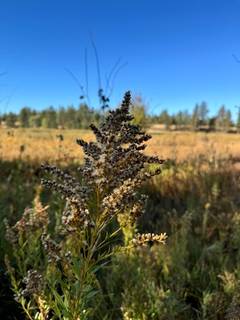
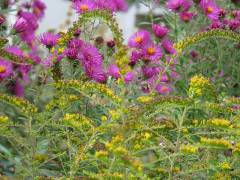
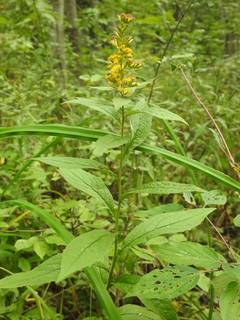
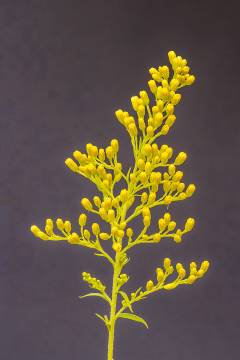
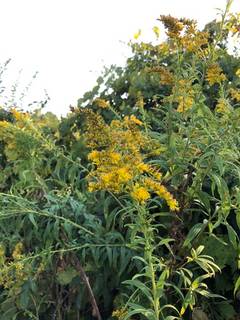
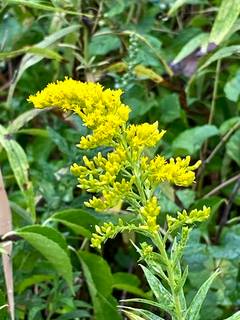
Solidago sempervirens is an upright, clump-forming perennial in the daisy family, native to the Atlantic and Gulf coasts of North America. It grows 2-6 feet (0.6-1.8 m) tall on stout, often reddish stems lined with thick, smooth, fleshy lance-shaped leaves 4-10 inches (10-25 cm) long that resist salt spray and drought. From late summer into autumn the stems are topped by broad, plume-like clusters of small golden-yellow flower heads, each head combining ray and disc florets, followed by tufted seeds that disperse on the wind. The fleshy foliage and tolerance of salt let it grow where few other perennials persist, including dune sand, beach edges, and the upper margins of salt marshes. It spreads by seed and short rhizomes and can self-sow into open ground. Its late nectar supports migrating monarch butterflies and many bees, though the vigorous reseeding and tall stems can crowd smaller plants in rich garden soil.
Native Range
Native to coastal eastern North America, from Atlantic Canada south along the Atlantic seaboard to Florida and around the Gulf of Mexico to Texas and Mexico. It grows in salt marshes, on dunes, beaches, and tidal shorelines, and along salted highway edges inland.Suggested Uses
Used in coastal and seaside gardens, dune stabilization, pollinator and meadow plantings, and rain gardens with sandy soil. It also suits naturalized borders where its salt tolerance and late bloom fill a difficult niche.How to Identify
Appearance
Size & Dimensions
Height2' - 6'
Width/Spread1'6" - 3'
Bloom Information
Flowering runs from late summer into autumn, roughly August to November depending on latitude. Dense plumes of golden-yellow heads open at the stem tips over four to six weeks and draw bees, wasps, and migrating butterflies. Wind-dispersed seeds with white bristles follow.
Detailed Descriptions
Foliage Description
greenGrowing Conditions
Sun Requirements
Requires 6-12 hours of direct sunlight daily
• Full Sun: 6+ hours of direct sunlight
• Partial Shade: 3-6 hours of direct sunlight
• Full Shade: Less than 3 hours of direct sunlight
Care & Maintenance
Care Guide
Grows in full sun on sandy, well-drained soils and tolerates salt spray, salty soil, drought, and poor fertility better than many perennials. It is hardy in USDA zones 4-9 and withstands coastal wind and sandy, low-nutrient ground. Rich, moist soils and shade produce tall, floppy stems that may need support or cutting back. Watering is rarely needed once plants are established. It self-sows and spreads by rhizomes, so removing spent flower heads before seed set limits unwanted seedlings. Few pests trouble it, though rust and powdery mildew can appear in humid, crowded conditions.Pruning
Cutting plants back by a third in early summer produces shorter, sturdier stems and delays bloom slightly. Removing spent flower heads in autumn curbs heavy self-seeding. Old stems can be cut to the ground in late winter before new growth begins.Container Growing
Suitable for container growing
Minimum container size: 3 gallons