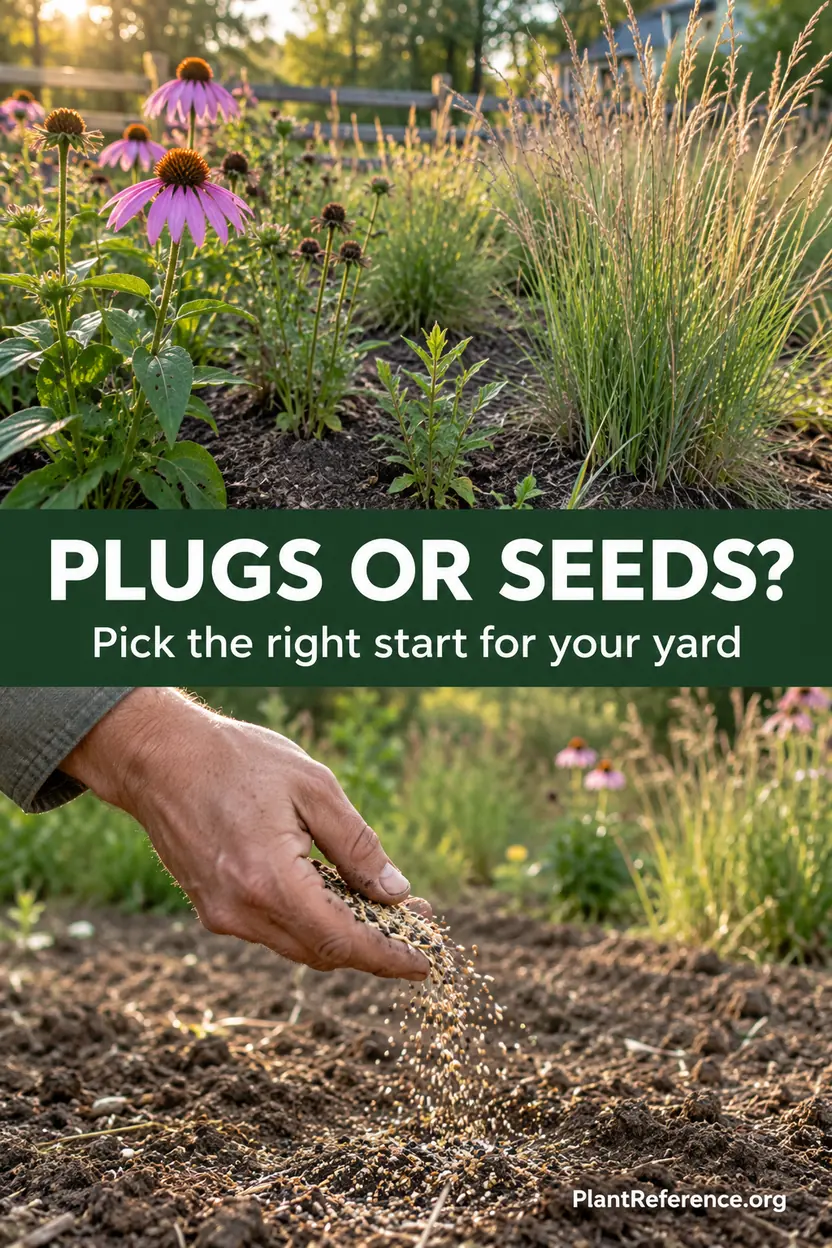
Native Plant Plugs vs. Seeds: Which Option Wins?
— Image © PlantReference.org 2026
Pets & Toxicity
Recorded toxicity for plants linked in this guide. An unknown status is not a safety assessment.
Toxic to pets: northern blue flag, butterfly weedDetailsHide
Asclepias tuberosa — Toxicity Warning
Toxic to pets and humans (cardiac glycosides — cardenolides — at moderate concentration; less toxic than other milkweed species but still toxic if ingested in quantity)View Asclepias tuberosa plant profileChoosing native plant plugs vs seeds comes down to area, patience, and how much control you want over the finished planting. For a tidy front-yard bed or a 250-square-foot (23-square-meter) pocket prairie, plugs usually buy faster coverage and fewer design surprises. Seed mixes stretch the budget across a larger restoration, but they demand careful site preparation and two to four years of steady management.
Both methods can succeed when installation is treated as the beginning, not the final step. Define the planting's job before choosing material.
Plugs and Seed Mixes at a Glance
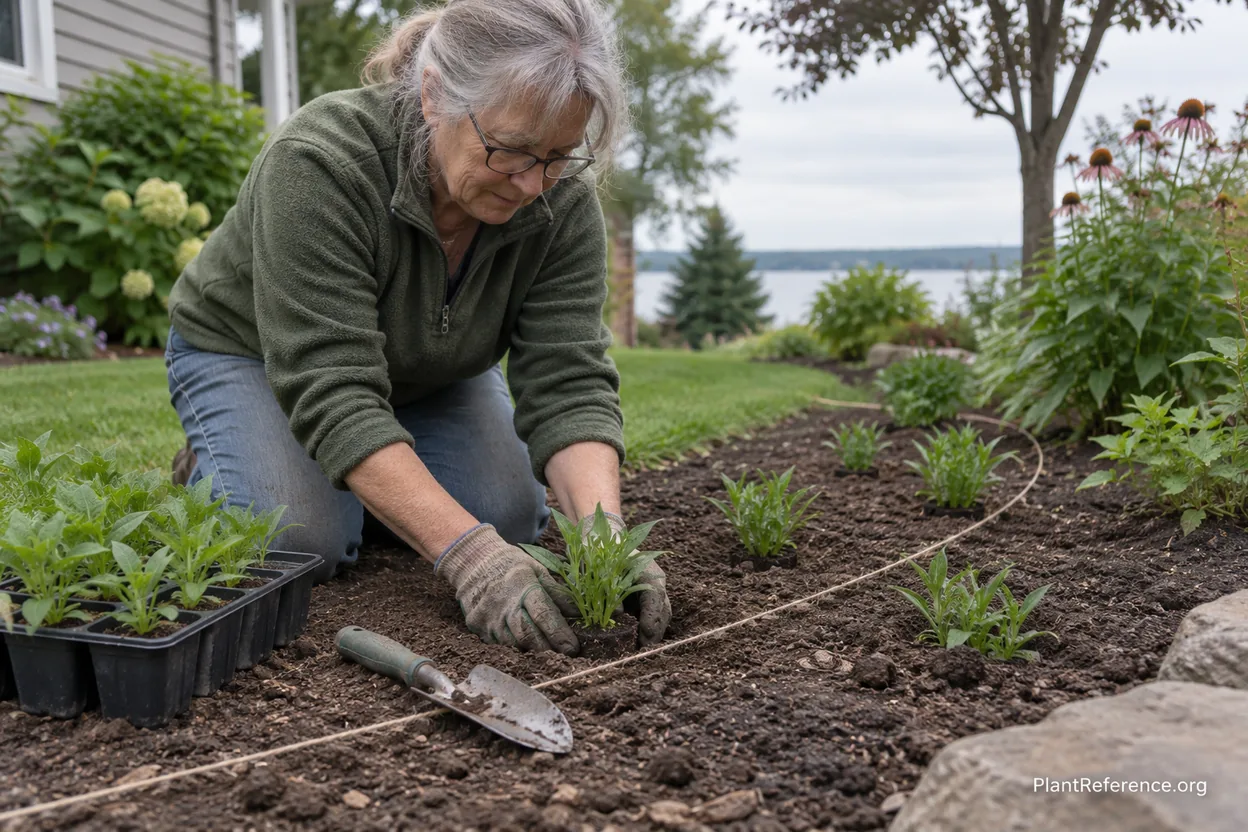
Plugs are young plants with established roots, usually set 12-18 inches (30-46 cm) apart. You see the composition immediately, can put each species where its height and moisture preference fit, and usually reach a convincing garden within one to two years. That precision is valuable around paths, windows, utility boxes, and property lines.
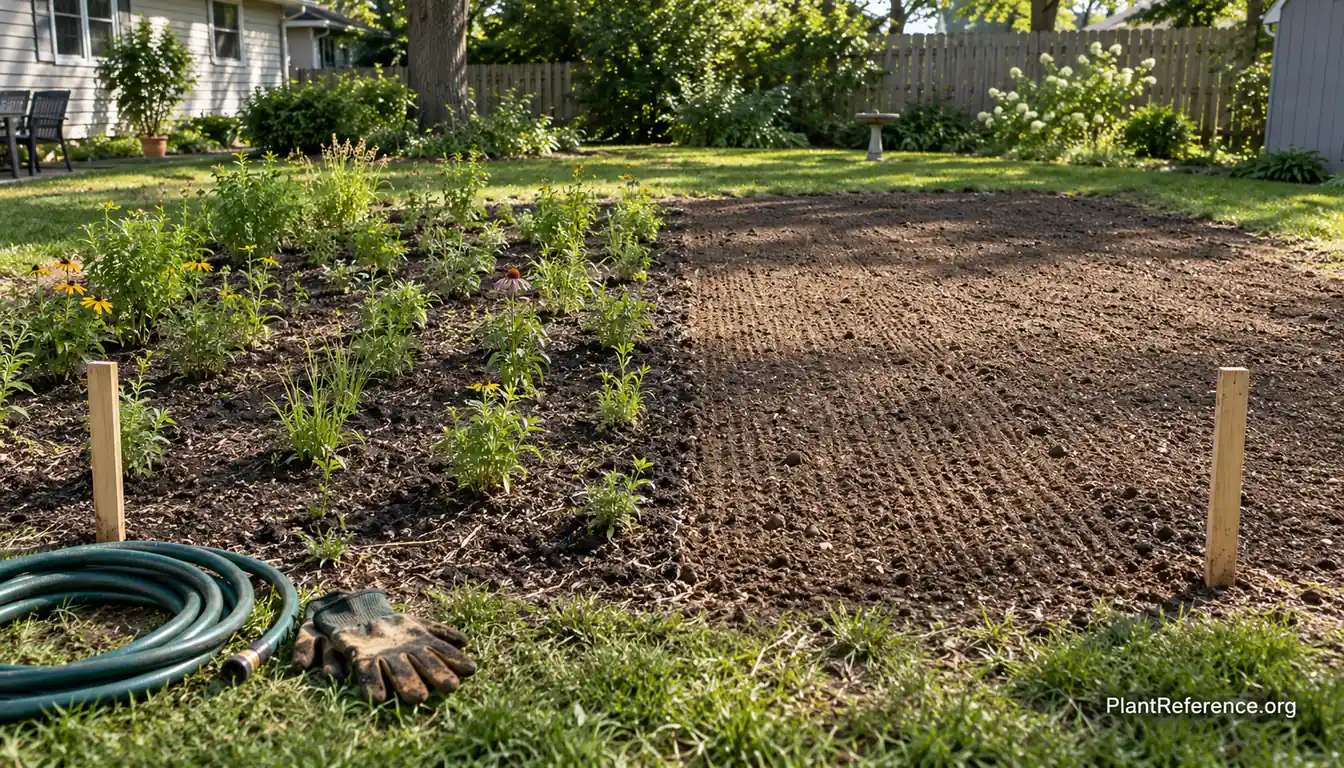
Seed mixes distribute many dormant seeds across prepared soil. A residential seed project may cost around $16 for 250 square feet (23 square meters) of seed compared with roughly $750 for enough plugs to cover the same area at close spacing. The tradeoff is time: seeded communities commonly need two to four years before they look abundant, and their final pattern is partly determined by germination, weather, and competition.
Decision factor | Native plugs | Native seed mixes |
|---|---|---|
Approximate material cost for 250 sq ft (23 sq m) | About $750 | About $16 |
Typical establishment | 1-2 years | 2-4 years |
Design control | High | Low to moderate |
Early weed competition | Faster canopy closure | Slow, management-heavy |
Best project scale | Small beds and focal areas | Larger meadows and restorations |
If you are still choosing the planting style itself, Lawn Alternatives That Actually Work: 5 Options Beyond Grass helps separate a meadow from groundcover, sedge, and low-mow options. That decision should come before shopping.
When Native Plant Plugs Win
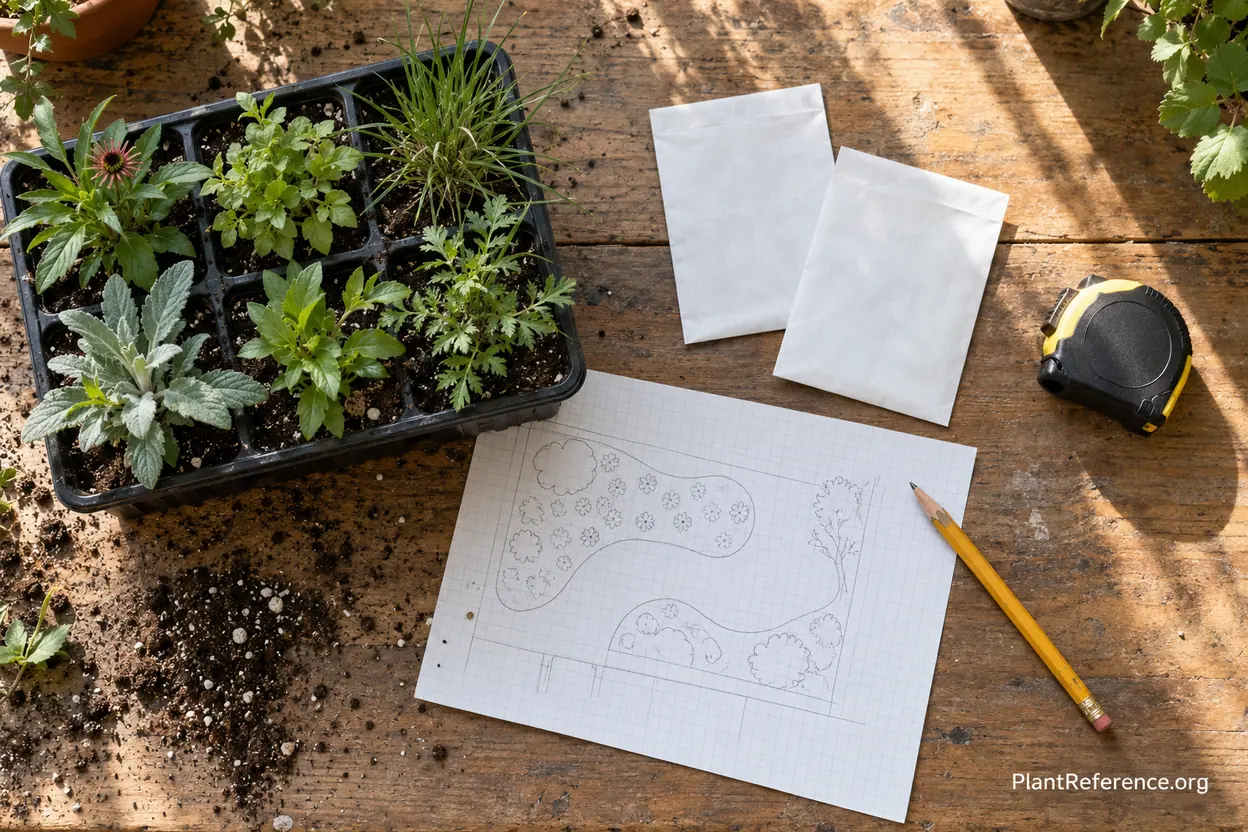
Use plugs when the planting is small enough that you can afford deliberate spacing and close enough to daily life that a long scruffy establishment period would bother you. A front walk, rain-garden edge, mailbox bed, or narrow side yard benefits from visible plants that family members and contractors can recognize rather than accidentally mow.
Plugs let you place species by function: blue flag iris 🌿Iris versicolor in a basin, butterfly weed 🌿Asclepias tuberosa on a dry shoulder, and little bluestem 🌿Schizachyrium scoparium where upright clumps support flowers.
Choose plugs if any of these conditions describe your project:
The bed is under about 500 square feet (46 square meters).
You need a recognizable garden during the first growing season.
Weed pressure is high and quick root competition matters.
The design needs repeated drifts, borders, or precise color placement.
You are adding plants to an established bed without disturbing everything.
For a pollinator-focused bed, pair that control with the bloom-planning ideas in Best Perennials for Pollinators: Bees & Butterflies and How to Grow Coneflowers (Echinacea) That Feed Pollinators. A plug is not automatically a good ecological choice; the species and source still matter.
When Native Seed Mixes Win
Seed wins when area overwhelms the plug budget. A 1,000-square-foot (93-square-meter) slope, field edge, or former lawn can require hundreds of plants, while a well-matched seed mix covers it economically. Seeding also creates the interwoven, semi-random look people expect from a meadow rather than a conventional perennial border.
Read the species list rather than trusting a colorful photograph. Confirm the ecoregion, moisture, light, scientific names, species percentages, ecotype origin, and carrier material. Avoid vague “wildflower” products dominated by nonnative annuals or filler.
Native seeds may remain quiet while dormancy breaks. Many species need weeks or months of cold, moist conditions before germination. Dormant sowing in late fall or late winter lets weather provide those fluctuations naturally. Spring sowing can work, but untreated seed may wait until the following season.
Use Best Wildflower Field Guide by Region: Top Picks Compared and Wildflower Identification by Color: Name Any Flower to learn the seedlings and volunteers you intend to keep. That early identification skill prevents the costly mistake of pulling slow native seedlings while preserving fast weeds.
Calculate the Real Project Cost
Material price is only the first budget line. Plugs may reduce reseeding and years of uncertainty; seed can require mowing, spot weeding, watering, and monitoring for three intensive seasons.
Measure both methods against the same boundaries, subtract paths and shrubs, then add 10% for losses or coverage errors. A hybrid often gives the best value: plugs at visible edges and seed across the interior.
Also count your labor honestly. If you can weed only a few hours each month, a seeded acre is not a bargain. If you enjoy field-style management and already own mowing equipment, seed becomes far more practical. The long-range design process in Plan a Perennial Garden That Blooms Spring to Fall can help you budget for seasonal structure rather than one spectacular month.
Match the Method to Your Site
Neither format fixes a poor species match. Observe the site after rain, through midday sun, and during the driest part of summer. A seed mix labeled for moist meadow will not succeed on a hot gravel bank, and a tray of shade-loving woodland plugs will not forgive eight hours of direct sun.
Before ordering, record:
Daily sun in hours during the growing season.
Soil moisture after a 1-inch (25-mm) rain.
Existing perennial weeds and nearby seed sources.
Slope, runoff direction, and erosion risk.
Desired mature height near doors, sidewalks, and neighbors.
Regional context matters too. Pacific Northwest Native Plants: 10 Resilient Picks and Pacific Northwest Gardening Guide: Climate, Soil & Plant Selection show why a plant list from another region cannot simply be copied. Even within one region, drainage and soil chemistry shift what will thrive. Where acidity is a concern, Why Pacific Northwest Soil Is Acidic + How to Fix It explains how to test before amending.
Installation Timing and Technique
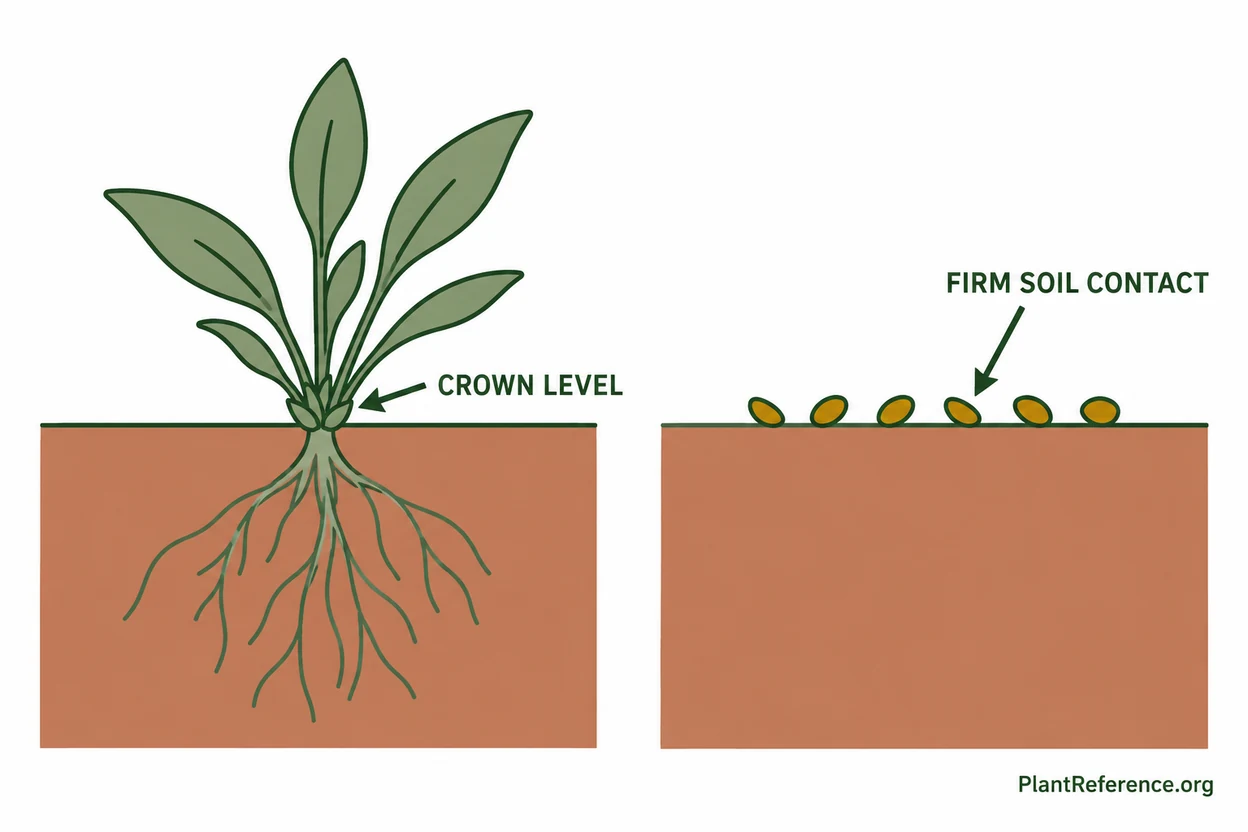
Plant plugs in cool, moist weather. Water root balls, keep crowns level with soil, firm gently, and use only light mulch. Space for mature spread, not tray size.
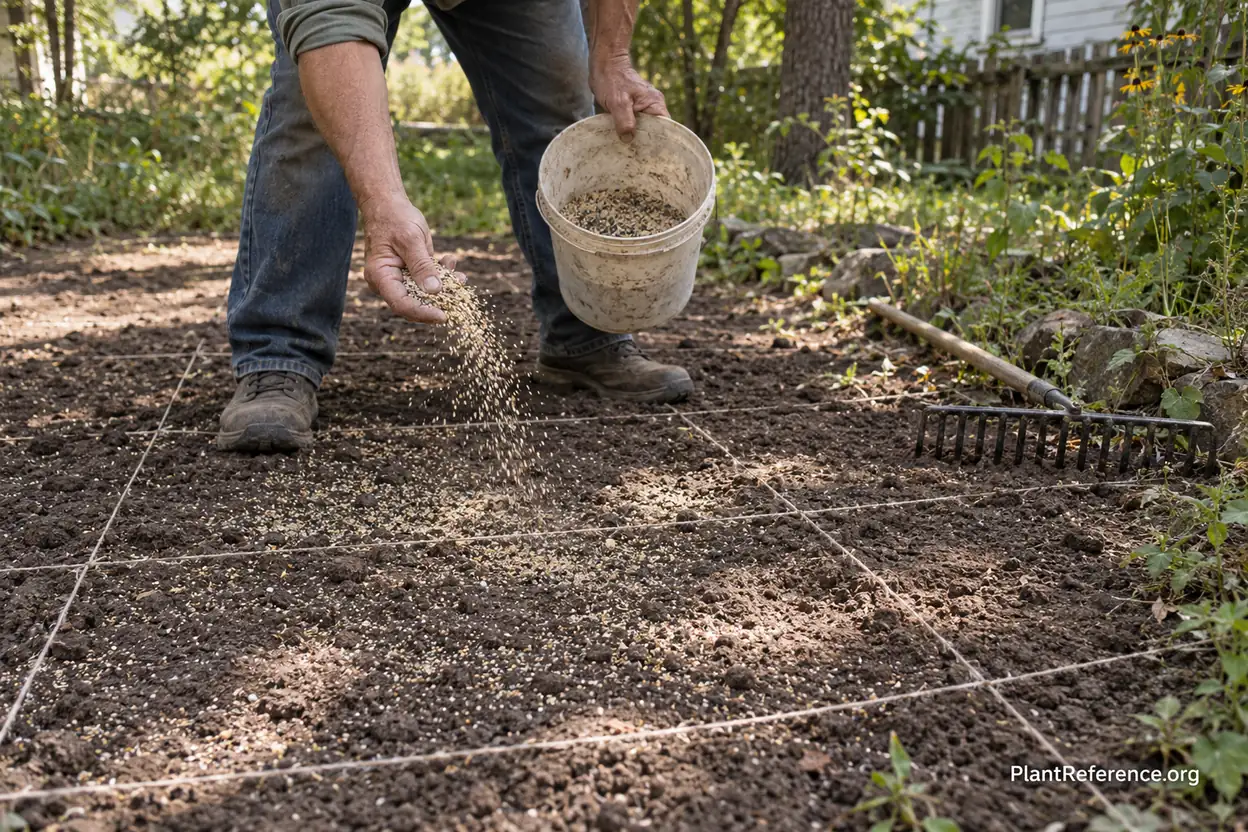
For seed, remove competing vegetation first. Rake smooth, divide seed in half, spread in two crossing directions, then press it onto soil. Many native seeds need light and should not be buried deeply.
Dormant seeding works after the soil has cooled enough to prevent immediate germination but before reliable snow cover. In much of the Upper Midwest, that is late fall into early winter. In milder regions, follow supplier guidance for local rainfall and temperature patterns instead of borrowing Wisconsin dates.
If you are rehabilitating lawn, How to Overseed Your Lawn: Timing, Seed Selection, and Technique offers useful calibration principles, but a native meadow requires complete turf suppression rather than simply adding seed to existing grass.
Weed Control Through Establishment
Plugs begin with a size advantage, but gaps still invite weeds. Inspect every seven to ten days during the first season, pull weeds before they flower, and avoid deep cultivation that brings buried seed to the surface. As plants expand, their shade reduces later weed pressure.
Seeded areas demand a different rhythm. During year one, mow unwanted growth to about 6-8 inches (15-20 cm) whenever it reaches roughly 12 inches (30 cm). That prevents annual weeds from setting seed while allowing low native seedlings to keep building roots. In years two and three, shift to spot control and timed mowing based on what is actually emerging.
Mark plugs and photograph seedlings. A simple map keeps well-meaning helpers from removing the plants you paid for. When winter arrives, the species-by-species cleanup advice in How to Prepare Perennial Gardens for Winter by Species helps preserve seed heads and habitat without letting aggressive weeds take over.
The Final Decision
Choose plugs when you are buying speed, placement, and a readable garden. Choose seed when you are buying coverage and can supply patient labor over several seasons. For many residential projects, the smartest answer is both: plugs where structure and first-year appearance matter, seed where acreage makes individual plants impractical.
Before checkout, verify the supplier's growing region, pesticide policy, species list, and substitution rules. Then put maintenance dates on the calendar. Native plants can become resilient, but every successful planting still begins with prepared soil, correct material, and a gardener who keeps showing up.
Frequently Asked Questions
Reading about plants and recognising them are different skills. These three build the second.
- Daily PlantIdentify the day’s mystery plant from a close-up photograph.
- Keyed OutWork a dichotomous key, lead by lead, to name a hidden specimen.
- Name That PlantName a specimen from botanical clues dealt hardest first.
Free to play, no account needed
Tagged with
Pat has been gardening in Milwaukee for over thirty years, through every kind of Wisconsin weather. She worked as a school librarian and started gardening seriously when her kids were small—she wanted them to know where food came from. Now retired, she's a certified Master Gardener and runs the plant sale at her local garden club every spring. She specializes in cold-hardy perennials, native wildflower meadows, and the art of getting a vegetable garden producing in Wisconsin's short but intense growing season. Pat is practical and patient—she's seen enough Wisconsin winters to know that gardening here is a long game, and she writes with the steady confidence of someone who's been doing this a long time.