Image 1 of 19
1 / 19
Plant Reference
Urtica, Genus, dioica, Species,
- Genus & species
stinging nettle
Pacific Northwest of North America (subspecies gracilis) and broadly across temperate Europe and Asia (subspecies dioica); moist nutrient-rich stream banks, forest edges, floodplains, and disturbed ground across the full Holarctic range
Overview
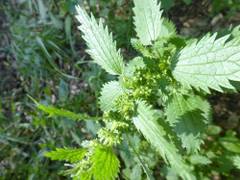
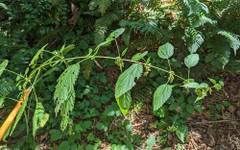
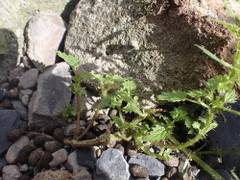
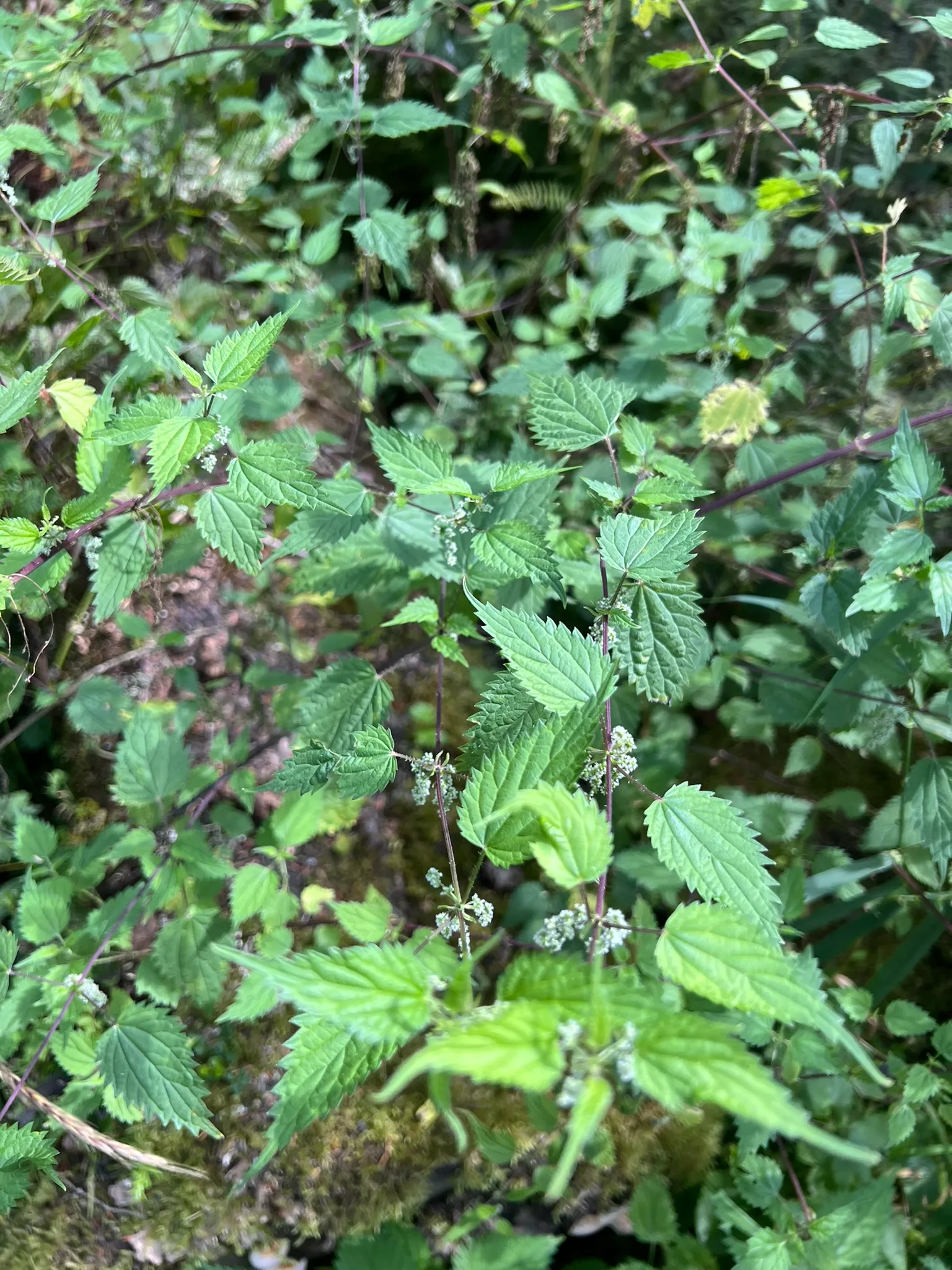
Urtica dioica is a tall upright deciduous rhizomatous perennial in the nettle family Urticaceae growing 3–9 feet (0.9–2.7 m) tall and 24–48 inches (60–120 cm) wide in single clumps that expand aggressively over time through a spreading rhizome system. Leaves are medium to dark green, ovate to lance-shaped with heart-shaped bases, 1.5–6 inches (4–15 cm) long, arranged in opposite pairs along four-angled stems, and carry coarsely serrated margins with a pointed tip; both the leaves and the stems are covered in stinging trichomes — hollow silica-tipped hairs that break off at the tip on contact and inject a chemical cocktail of histamine, formic acid, and acetylcholine into the skin. The result is immediate painful burning, red welts, and a lingering prickling sensation that can last several hours or into the next day, and this chemical defense is the source of the common name stinging nettle and the main reason the species is planted only in positions where accidental contact with people and pets is unlikely. Tiny greenish wind-pollinated flowers open in drooping catkin-like racemes 1–3 inches (2.5–7 cm) long at the leaf axils from June through September across a 12-week bloom window, and the specific epithet dioica means two houses in Latin and refers to the dioecious nature of the European subspecies U. dioica ssp. dioica, in which male and female flowers are borne on separate plants. The North American subspecies U. dioica ssp. gracilis is monoecious (male and female flowers on the same plant), and this difference in reproductive biology is one of the main taxonomic characters that separates the two subspecies. The species is the exclusive larval food plant of the West Coast lady butterfly (Vanessa annabella) and one of the main larval food plants of the red admiral (Vanessa atalanta), and butterfly gardeners plant it in contained wild areas to support these species through the caterpillar stage. Young shoots and leaves are edible and nutritious when cooked or dried because heat destroys the silica tips and neutralizes the stinging chemistry, and the species has a long history of use as a spring pot herb and fiber plant across Europe, Asia, and North America. Limitation: the species spreads aggressively by underground rhizomes and can colonize an area within a few years, and the aggressive rhizomatous spread combined with the stinging trichomes on all above-ground parts are the main reasons for the careful siting of the species away from garden pathways, lawn edges, and children's play areas. Thick leather gloves are warranted during planting, weeding, and harvesting operations for anyone working around the plant. Native broadly across temperate North America, Europe, and Asia, growing on moist nutrient-rich stream banks, forest edges, floodplains, and disturbed ground across the Holarctic range.
Native Range
Native broadly across temperate North America (especially the Pacific Northwest as U. dioica ssp. gracilis), Europe (as U. dioica ssp. dioica), and temperate Asia, growing on moist nutrient-rich stream banks, forest edges, floodplains, and disturbed ground across the full Holarctic range. The species has a long history of human use across the native range as a spring pot herb, a cooked vegetable, a fiber source for cord and cloth, and a traditional medicinal plant in European, North American indigenous, and Asian herbal traditions.Suggested Uses
Used in butterfly and pollinator gardens as an exclusive larval host for the West Coast lady and a main host for the red admiral, in permaculture food forests as a spring pot herb and a nutrient accumulator, in contained wild areas and hedgerow positions, and in herbal and fiber production plantings at 24–48 inch (60–120 cm) spacing between clumps. Positions along garden pathways, lawn edges, children's play areas, and any location with frequent pedestrian or pet access are unsuitable because of the contact-injury risk from the stinging trichomes, and small gardens without room for a contained isolated patch are unsuitable because of the aggressive rhizomatous spread. The species pairs with other butterfly host plants (Asclepias for monarchs, Passiflora for Gulf fritillaries) in dedicated caterpillar-rearing habitat plantings.How to Identify
Appearance
Size & Dimensions
Height3' - 9'
Width/Spread2' - 4'
Bloom Information
Tiny greenish wind-pollinated flowers open in drooping catkin-like racemes 1–3 inches (2.5–7 cm) long at the leaf axils from June through September across a 12-week bloom window. The flowers carry no ornamental value because they are tiny and green and offer no nectar reward to insect pollinators, and wind carries the pollen between male and female plants in the dioecious European subspecies or between male and female flowers on the same plant in the monoecious Pacific Northwest subspecies. Seed sets through summer and fall and small dry seeds drop from the dried racemes into the surrounding soil where they germinate to establish new seedlings.
Detailed Descriptions
Flower Description
tiny greenish flowers arranged in drooping catkin-like racemes 1-3 inches (2.5-7 cm) long carried at the leaf axils; the flowers are wind-pollinated and carry no petals or ornamental color; male and female flowers are borne on separate plants in the European subspecies dioica and on the same plant in the Pacific Northwest subspecies gracilisFoliage Description
medium to dark green; ovate to lance-shaped leaves with heart-shaped bases 1.5-6 inches (4-15 cm) long, arranged in opposite pairs along four-angled stems, with coarsely serrated margins; both the leaves and the stems are covered in stinging trichomes that inject histamine, formic acid, and acetylcholine on contact and produce immediate painful burning welts on human and animal skinGrowing Conditions
Sun Requirements
Requires 3-10 hours of direct sunlight daily
• Full Sun: 6+ hours of direct sunlight
• Partial Shade: 3-6 hours of direct sunlight
• Full Shade: Less than 3 hours of direct sunlight
Care & Maintenance
Care Guide
Site in part sun to full sun with 3–10 hours of direct sun per day in moist nutrient-rich soil with a pH of 5.5–7.5. The species grows in almost any loam, clay, or silt substrate as long as the soil stays consistently moist through the growing season, and it is not drought-tolerant and declines on dry positions without supplemental irrigation. The stinging trichomes inject histamine, formic acid, and acetylcholine on skin contact and produce immediate painful burning welts, so thick leather gloves and long sleeves are warranted during any planting, weeding, harvesting, or cut-back work around the plant, and positions along garden pathways, lawn edges, play areas, and any location where accidental contact with people or pets is likely are unsuitable because of the contact-injury risk. The rhizomatous spread is aggressive and calls for physical containment (deep root barriers to 18 inches / 45 cm) or an isolated contained wild area where the expanding colony is acceptable. The species is the exclusive larval host of the West Coast lady butterfly and a main host of the red admiral, and butterfly gardeners hold a contained nettle patch specifically to support these species through the caterpillar stage. Young shoots and leaves are edible and nutritious when cooked or dried because heat destroys the silica tips and neutralizes the stinging chemistry. Non-toxic when cooked. Deer-resistant (because of the stinging hairs). Hardy in USDA zones 3–9.Pruning
Dead stems are cut to the ground in late fall (November) after the first hard frost has killed the above-ground growth, or in early spring (March) before new growth emerges from the rhizome. Thick leather gloves and long sleeves are warranted for the cut-back work because the dead stems still carry functional stinging trichomes and produce the same painful contact injury as the living plant. The cut material is removed to the compost pile or left as mulch at the edge of the contained patch, and the stinging chemistry breaks down during composting so the finished compost is safe to handle without protection. Rhizome thinning at the colony edges is done during the cut-back window to hold the planting within a designed boundary and slow the rate of expansion.Pruning Schedule
Prune: March & November
fallearly spring