Overview
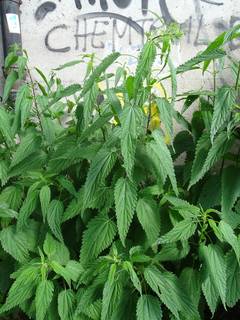
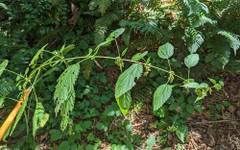
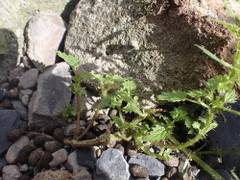
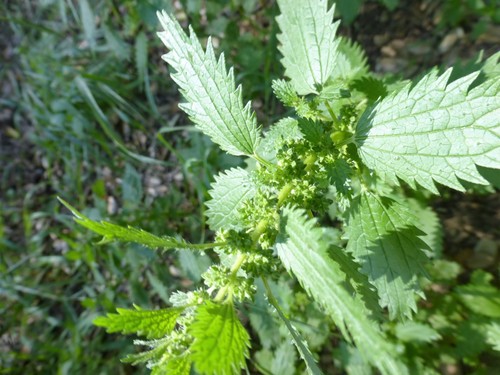
Urtica urens is an annual herb in the Urticaceae family, growing 6–24 inches (15–60 cm) tall with an erect, branching habit. The entire plant is armed with stinging hairs (trichomes) — hollow, silica-tipped needles 1–2 mm long that break on contact and inject a mixture of histamine, serotonin, acetylcholine, and formic acid into the skin, causing an immediate burning, stinging sensation and urticarial (hive-like) welts lasting 30 minutes to several hours. Stems are square in cross-section, green to pale green, with both stinging and non-stinging hairs. Leaves are opposite, ovate to elliptic, 1–2.5 inches (2.5–6 cm) long, with coarse, incised-serrate margins and a bright green colour. Monoecious — tiny green flowers are borne in short axillary clusters, with male and female flowers on the same plant. The species is smaller in all parts than the perennial stinging nettle (U. dioica), completes its life cycle in a single season, and is monoecious (U. dioica is dioecious). Native to Europe and western Asia, widely naturalised as a weed of gardens, farmyards, and disturbed ground in temperate regions worldwide. Like U. dioica, the young leaves are edible when cooked (the stinging compounds are destroyed by heat) and are used in traditional herbalism. The species is a nitrogen indicator — dense populations signal high soil nitrogen and phosphorus.
Native Range
Urtica urens is native to Europe, western Asia, and North Africa. Widely naturalised across temperate regions globally, including North America, South America, Australia, and New Zealand, occurring in gardens, farmyards, arable field margins, and nitrogen-rich disturbed ground.Suggested Uses
Traditionally harvested for cooked greens (blanched young tops), herbal tea, and as a composting accelerator due to high nitrogen content. In permaculture systems, tolerated in composting areas and nutrient cycling zones. Used as an indicator species in soil fertility assessment. Not recommended for ornamental planting due to the stinging hairs and weedy habit.How to Identify
Appearance
Size & Dimensions
Height6" - 2'
Width/Spread4" - 8"
Bloom Information
Small green flowers appear from May through October, produced continuously throughout the growing season in the leaf axils. Wind-pollinated. Seed is shed progressively as achenes mature, starting approximately 4 weeks after germination in warm conditions. Multiple generations per year are possible in mild climates.
Detailed Descriptions
Flower Description
Green (inconspicuous)Foliage Description
Bright greenGrowing Conditions
Sun Requirements
Requires 3-8 hours of direct sunlight daily
• Full Sun: 6+ hours of direct sunlight
• Partial Shade: 3-6 hours of direct sunlight
• Full Shade: Less than 3 hours of direct sunlight
Water & Climate
Water Needs
Care & Maintenance
Care Guide
Not typically cultivated intentionally. Where it occurs as a garden weed, hand-pull using thick gloves before seed set. Improving soil cultivation timing (disturbing seedbed in early spring to germinate and destroy seedlings) and mulching reduce establishment. The species is an indicator of nitrogen-rich soil — its presence signals high fertility. In ethnobotanical or permaculture gardens, it can be tolerated in a contained area for young leaf harvest (cooked greens, tea). Sow seed directly on bare, nitrogen-rich soil in early spring if cultivation is intended.Pruning
Not applicable in standard horticulture. For managed harvest, cut plants to 2 inches (5 cm) above ground for a second flush of young leaves. Wear thick gloves for all handling.Toxicity Warning
Toxic to humansPlanting Guide
Planting Methods & Timing
Planting Method
direct sow
Days to Maturity
30–60 days
Plant Spacing
6 inches