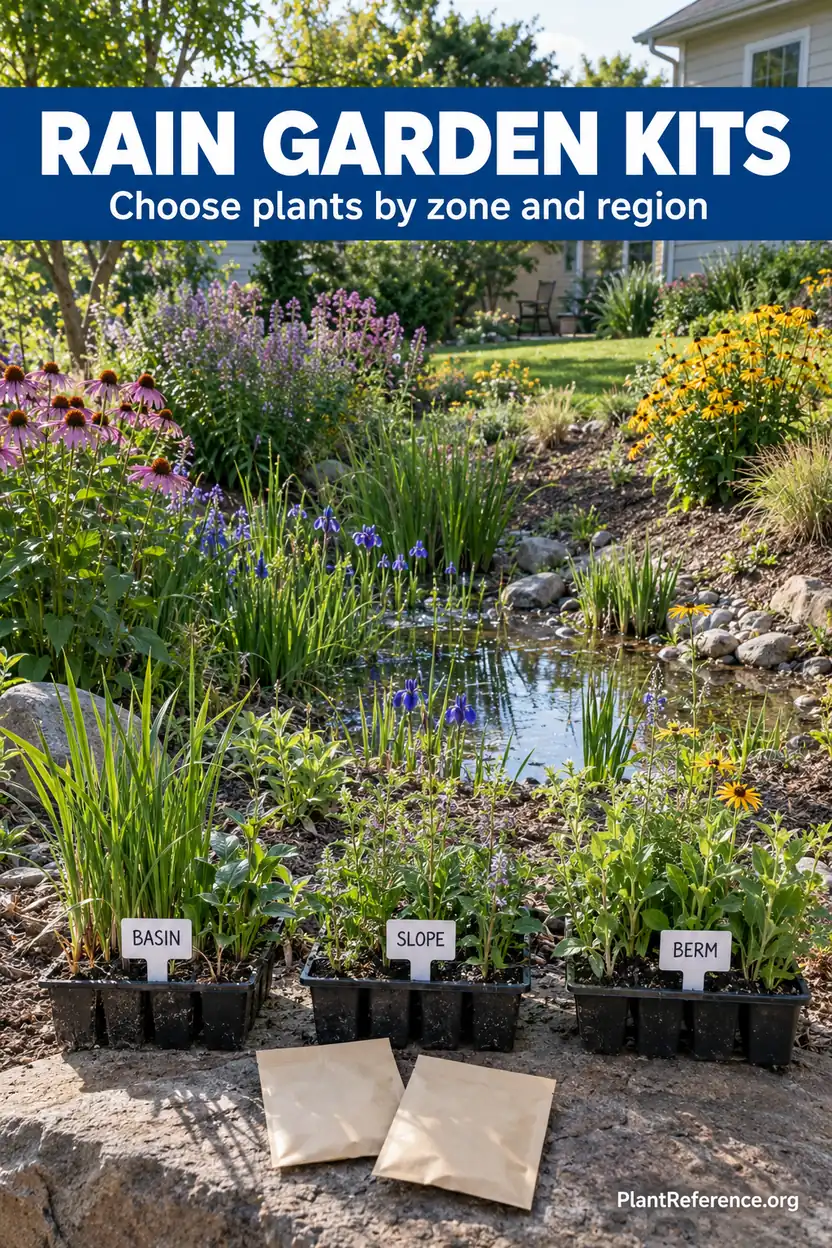
Rain Garden Plant Kits and Native Seed Mixes
Pets & Toxicity
Recorded toxicity for plants linked in this guide. An unknown status is not a safety assessment.
Toxic to pets: northern blue flag, swamp milkweedDetailsHide
Asclepias incarnata — Toxicity Warning
Toxic to pets and humansView Asclepias incarnata plant profile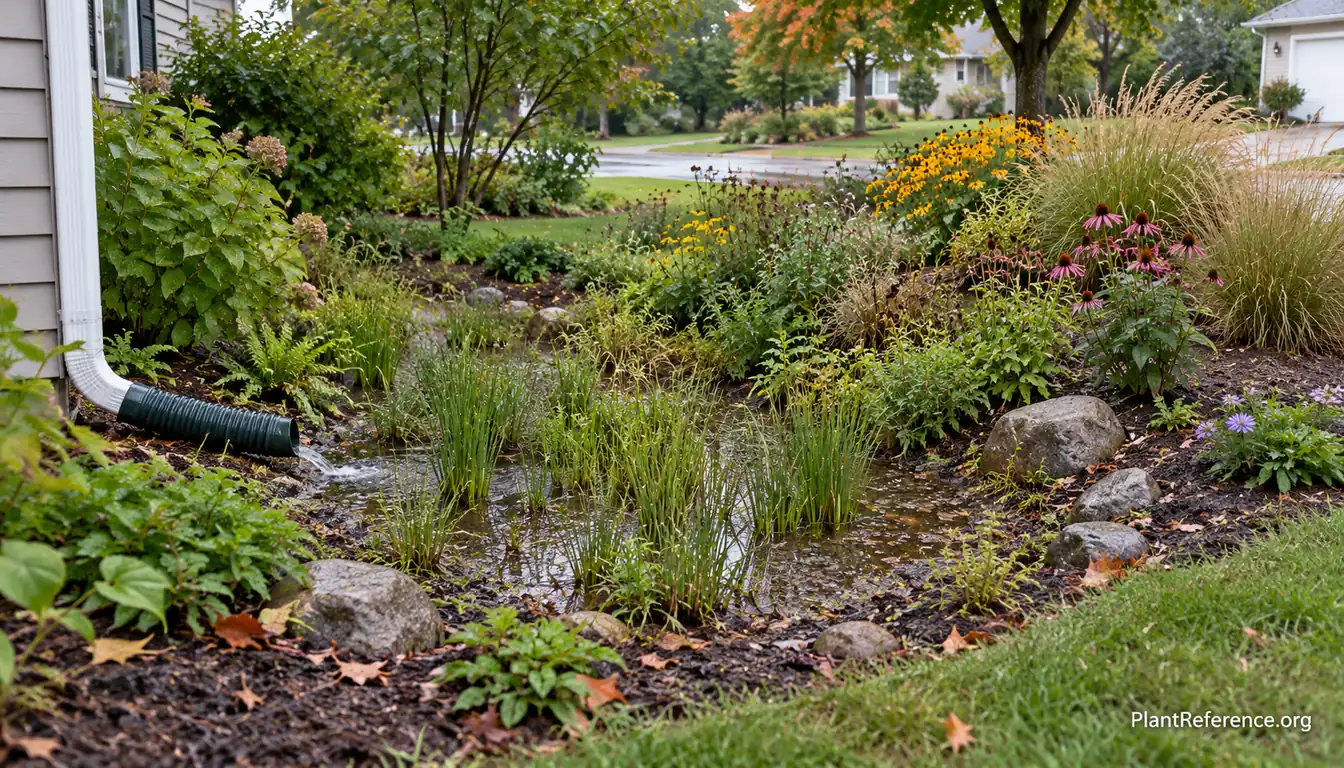
— Image © PlantReference.org 2026
A rain garden plant kit should solve two problems at once: it must fit your region, and it must place the right plants along a sharp moisture gradient. The basin may stand wet briefly after a storm while the upper berm dries like an ordinary perennial border. A generic collection that treats every position alike is not a complete system, no matter how attractive its catalog photograph looks.
For most residential projects, I prefer a labeled plug kit for structure, with a carefully selected native seed mix used only to fill larger open areas. That approach costs more than broadcasting seed alone, but it makes installation readable and keeps moisture-sensitive plants out of the wrong zone.
Choose a Kit by Region, Not Marketing Name
“Rain garden” describes a job, not a universal plant palette. A kit assembled for the Great Lakes may include cold-hardy wet-meadow plants that struggle in the Coastal Southeast. A western kit should reflect local rainfall patterns and summer drought rather than borrowing an eastern list. Buy by ecoregion or state, then confirm that every species is native to your smaller area.
Regional sourcing also affects timing and genetics. Seed collected near your project may be better synchronized with local winter, rainfall, and pollinator activity than material originating hundreds of miles away. Ask whether the seller identifies an ecotype or collection region. “Native to North America” is too broad for a serious purchase.
If you garden in the Northwest, compare candidates with Pacific Northwest Native Plants: 10 Resilient Picks and the site-selection framework in Pacific Northwest Gardening Guide: Climate, Soil & Plant Selection. For pollinator value in any region, Best Perennials for Pollinators: Bees & Butterflies provides a useful second screen after regional fit.
Read the Species List Before Buying
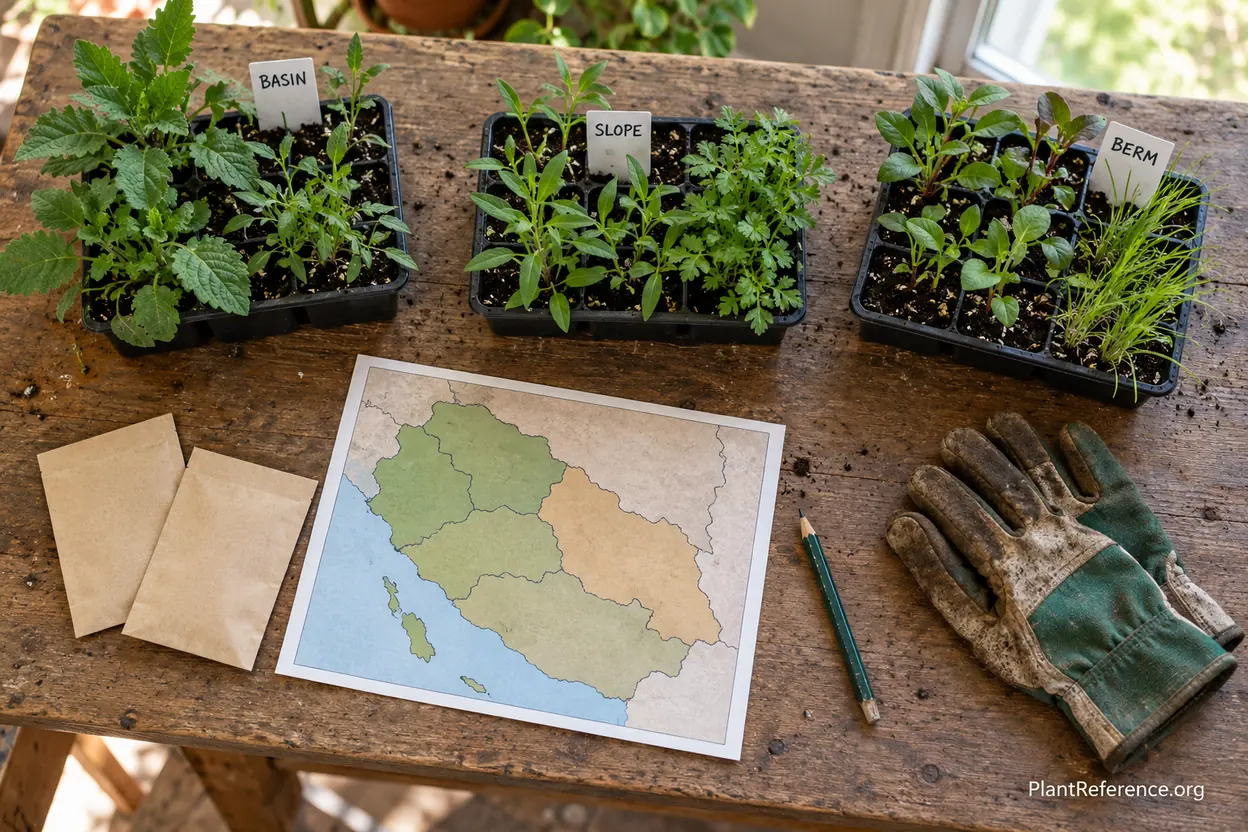
A trustworthy kit names every species rather than promising only “colorful natives.” Look for scientific names, quantities, mature heights, light requirements, and intended hydrologic zone. For seed, the label should also state the percentage of each species, germination or purity data, lot information, and any inert carrier.
Check these details before paying:
Complete species list with no substitute-by-default clause.
Ecotype, provenance, or collection-region information.
Plant count and recommended spacing for the stated coverage.
Confirmation that plants were not treated with neonicotinoids.
No filler crop that could compete with slow native seedlings.
Clear instructions for cold stratification or dormant sowing.
Avoid packages built mostly around one quick annual. Fast flowers can create first-year color while longer-lived perennials establish, but they should not conceal a weak permanent mix. Use Best Wildflower Field Guide by Region: Top Picks Compared and Wildflower Identification by Color: Name Any Flower to verify unfamiliar names before installation.
Match Plants to the Three Rain Garden Zones
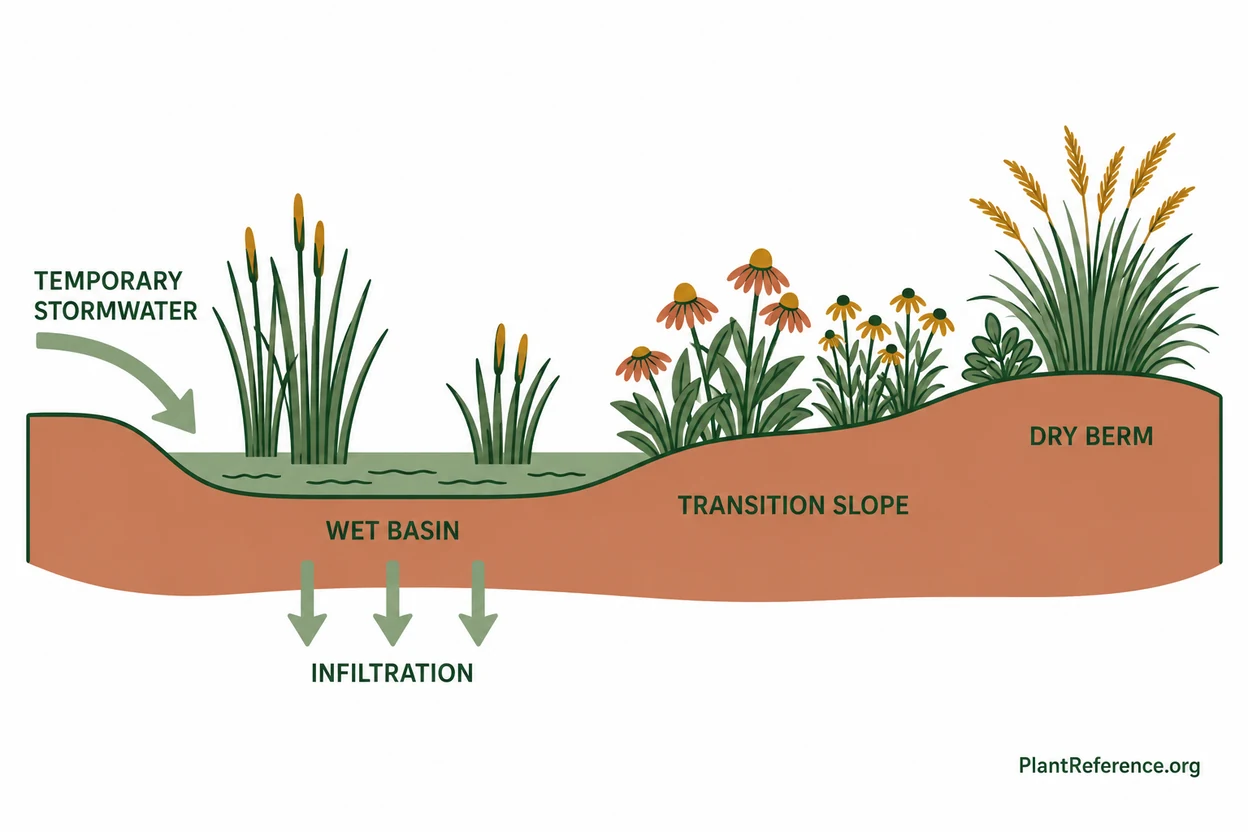
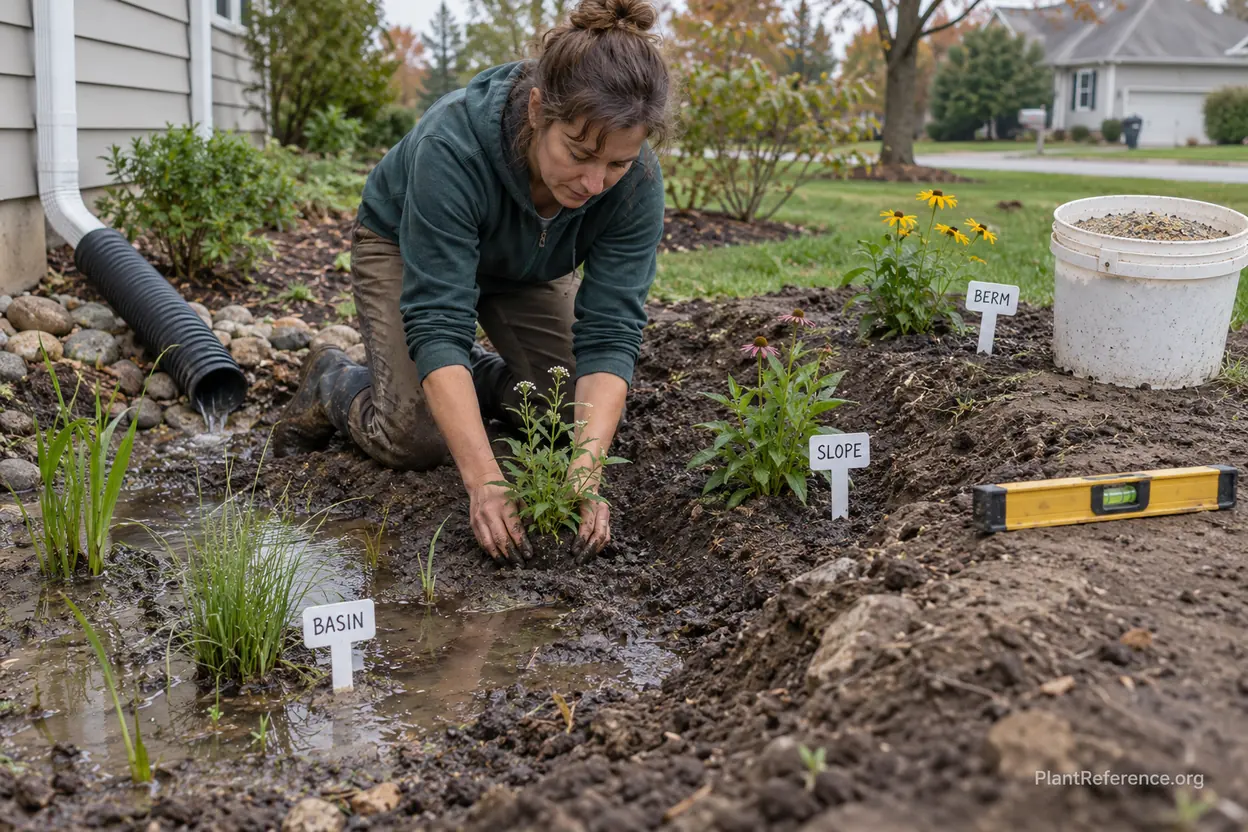
The flat bottom is Zone 1, where plants tolerate temporary inundation followed by drying. Blue flag iris 🌿Iris versicolor, swamp milkweed 🌿Asclepias incarnata, and soft rush 🌿Juncus effusus are examples for appropriate parts of their native ranges. They are not permission to build a pond; a functional rain garden should drain within about 24 hours.
Zone 2 covers the sloping transition. Wild bergamot 🌿Monarda fistulosa, purple coneflower 🌿Echinacea purpurea, and obedient plant 🌿Physostegia virginiana can handle changing moisture where regionally suitable. The upper berm, Zone 3, behaves more like a dry border. Little bluestem 🌿Schizachyrium scoparium and moss phlox 🌿Phlox subulata belong in that better-drained position, not the basin.
Zone | Moisture pattern | Example plants | Buying priority |
|---|---|---|---|
Zone 1 basin | Briefly wet, then drains | Flood tolerance | |
Zone 2 slope | Moist to periodically dry | 🌿Monarda fistulosa, 🌿Echinacea purpurea, 🌿Physostegia virginiana | Flexible moisture needs |
Zone 3 berm | Fast-draining and driest | Drought tolerance and structure |
Reject any kit that gives you plants without a zone map. A bag of good species is not the same thing as a designed rain garden.
Decide Between Plant Kits and Seed Mixes
Plug kits win in small, visible basins because each plant can be assigned to its zone. They usually establish in one to two years, compete with weeds sooner, and are easier to protect from accidental mowing. The higher price buys certainty and a more finished first season.
Seed mixes win on larger swales and broad overflow areas where plug counts become expensive. Expect two to four years for full expression and plan three demanding weed-management seasons. Native seed may also need cold, moist stratification, making dormant fall or late-winter sowing the simplest route in cold climates.
For a typical do-it-yourself garden, combine both. Install structural grasses, rushes, and moisture-critical species as plugs, then seed compatible open ground. The broader design principles in Plan a Perennial Garden That Blooms Spring to Fall help keep the planting attractive after spring rain has passed, while How to Grow Coneflowers (Echinacea) That Feed Pollinators explains the value of one reliable transition-zone species.
Size and Test the Site First
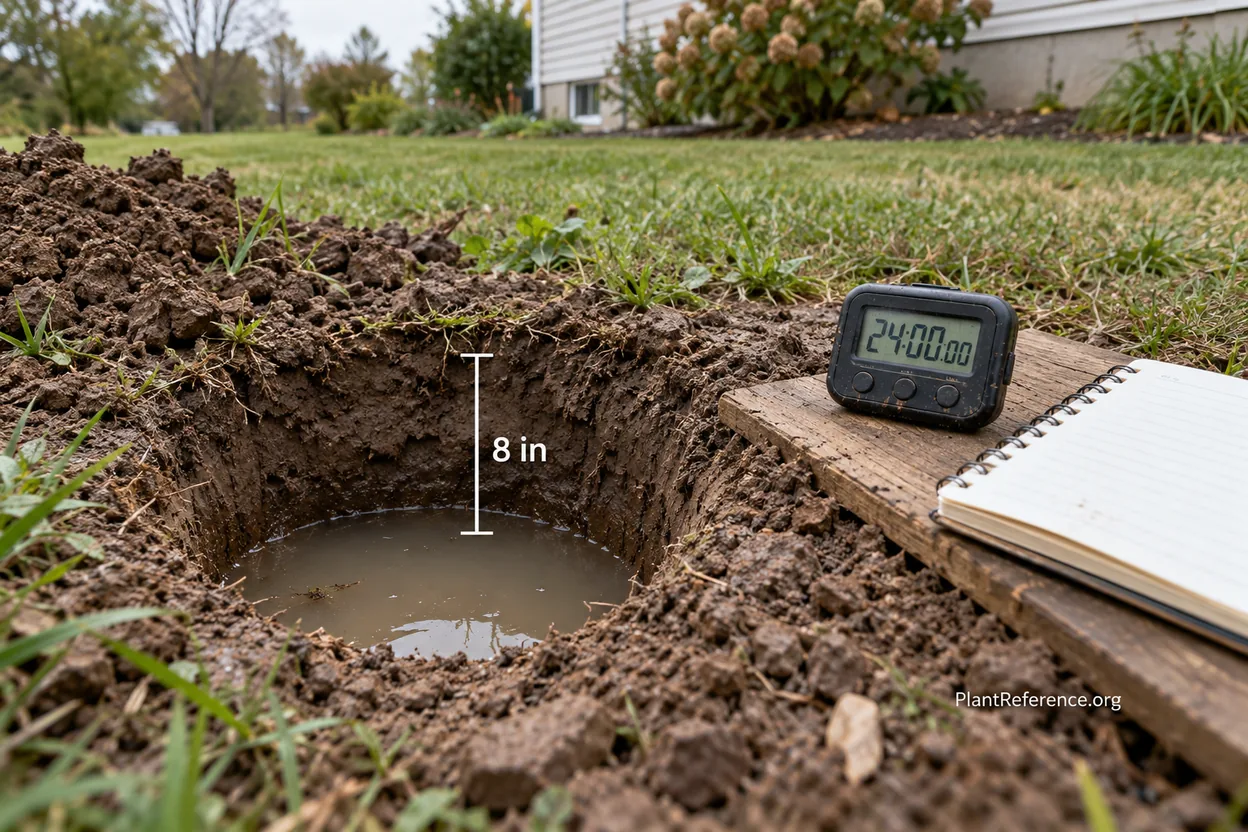
Do not order plants until you know the basin drains. Keep excavation at least 10 feet (3 meters) from a foundation, farther where local rules or slope conditions require. Dig an 8-inch-deep (20-cm) test hole, fill it with water, and confirm it empties within 24 hours. Standing water after that point calls for redesign, another location, or professional drainage advice.
Shape the floor like a shallow pie tin rather than a steep bowl. A flat bottom spreads water across more soil and keeps one low point from remaining saturated. Mark the overflow path so unusually large storms move safely away from structures and neighboring property.
Poor drainage elsewhere in the landscape often reveals useful warning signs. Fix PNW Garden Drainage: Glacial Till, Hardpan & Raised Beds and Poor Drainage in Raised Beds: Causes and Fixes for Waterlogged Soil are not rain-garden plans, but both explain why texture, compaction, and outlet paths matter more than simply adding plants.
Prepare a Rain Garden Soil Profile
Where existing soil is compacted or drains poorly, research-based amended profiles often use about 50% sand, 25% compost, and 25% topsoil by volume. That is a project specification, not a universal bagged recipe. Test existing soil first and confirm local stormwater guidance, because mixing sand into some clays without sufficient organic material can create a dense result.
Avoid making the basin richer than necessary. Excess phosphorus and nitrogen can wash downstream, defeating part of the garden's purpose. A soil test should guide amendments. The same restraint applies to pH; Raised Bed Soil pH Problems: Testing, Adjusting, and Maintaining Balance explains why blind correction creates new problems.
Install and Maintain the Planting
Set plugs at the same depth they grew in their cells, then water thoroughly. Keep mulch thin and stable; loose material in the basin can float into a drain or pile against crowns. On the berm, a 2-inch (5-cm) layer helps reduce weeds while plants close gaps. Keep the inlet and overflow visible for inspection.
During the first season, water deeply whenever the root zone begins to dry, even though the project is designed for stormwater. Young roots do not yet reach the full soil profile. Pull weeds every week or two, replace losses only after diagnosing whether the problem was moisture, placement, or browsing, and leave healthy stems through winter where practical for habitat.
Review the planting after major storms. Repair erosion promptly, clear blocked inlets, and move a repeatedly stressed plant to a better zone. For seasonal decisions, How to Prepare Perennial Gardens for Winter by Species gives a better framework than cutting every stem on one date.
The Best Buying Strategy
Buy the plan before the plants. Confirm setback, infiltration, area, three-zone layout, and overflow route. Then select a regional kit whose quantities match the actual square footage and whose seller discloses species, origin, pesticide history, and substitutions.
For a small front-yard basin, choose labeled plugs and use seed sparingly. For a larger swale, use plugs to lock in structure and a regional seed mix for coverage. Skip any package that hides its species list, treats all zones alike, or promises a finished garden without establishment care. Durable landscapes come from matching materials to the site, not from buying the biggest box.
Frequently Asked Questions
Reading about plants and recognising them are different skills. These three build the second.
- Daily PlantIdentify the day’s mystery plant from a close-up photograph.
- Keyed OutWork a dichotomous key, lead by lead, to name a hidden specimen.
- Name That PlantName a specimen from botanical clues dealt hardest first.
Free to play, no account needed
Tagged with
Mike's been designing residential landscapes in the Seattle area, with a particular focus on Pacific Northwest natives and sustainable practices. He's a Washington State Master Gardener and worked in construction before landscaping, which gives him a practical edge when it comes to building raised beds and hardscaping projects. He runs a small side business propagating and selling unusual perennials at farmers markets on weekends. His property serves as a testing ground for low-maintenance, wildlife-friendly garden designs. Mike's philosophy: if it requires weekly maintenance, it's not sustainable.