Juncus, Genus, effusus, Species,
- Genus & species
soft rush
Cosmopolitan — circumboreal North America, Europe, Asia, Africa, and Australasia; wetlands, stream banks, pond margins, wet meadows, and ditches
Overview
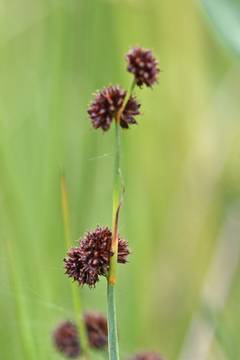
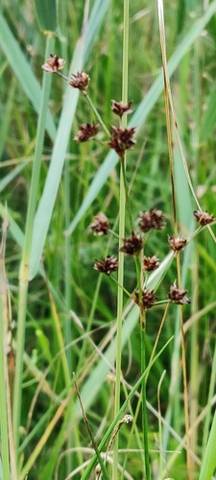
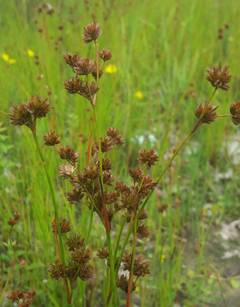
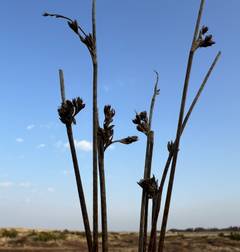
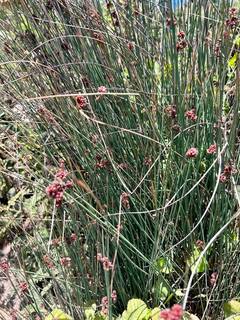
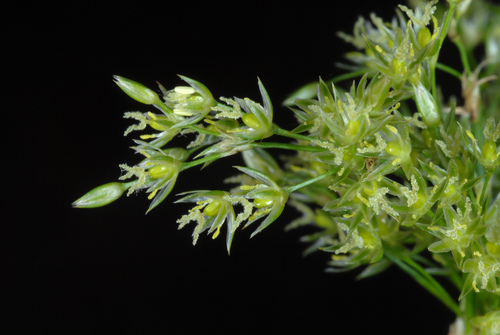
Juncus effusus is an evergreen clump-forming rush in the Juncaceae family with a cosmopolitan distribution across wetlands of North America, Europe, Asia, Africa, and Australasia. Plants form dense tussocks 2-4 feet (60-120 cm) tall and 18-24 inches (45-60 cm) wide of soft, smooth, cylindrical green stems 0.08-0.16 inch (2-4 mm) thick that arise directly from short rhizomes. The stems are pith-filled and slightly arching, with no visible leaves above the basal sheaths. Lateral inflorescences appear June to August about 4-8 inches (10-20 cm) below the stem tip as branched clusters of small greenish-brown to tan flowers, followed by tiny three-valved seed capsules that persist into winter. J. effusus requires consistently moist to saturated soil and will decline rapidly in dry conditions. Stems remain green through winter in mild climates and turn tan in colder zones. The plant spreads slowly to form expanding clumps, and self-seeds prolifically in suitable wet sites; volunteer seedlings can become weedy in irrigated landscapes. Suited to pond margins, rain gardens, wet swales, and stormwater plantings.
Native Range
Native across the circumboreal zone — throughout North America, Europe, Asia, Africa, and Australasia — growing in wetlands, stream banks, pond margins, wet meadows, and ditches in moist to saturated, acidic to neutral soils.Suggested Uses
Used in pond margins, rain gardens, wet swales, bioswales, stormwater treatment plantings, and naturalized wetland restorations. Spaced 18-24 inches (45-60 cm) apart, plants form a vertical green mass within 2 seasons. The upright cylindrical stems contrast with broad-leaved wetland perennials in mixed wetland plantings.How to Identify
Appearance
Size & Dimensions
Height2' - 4'
Width/Spread1'6" - 2'
Bloom Information
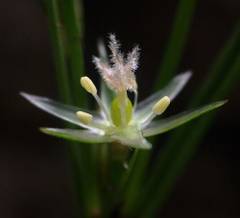
Inflorescences emerge June to August as lateral branched clusters of small greenish-brown to tan flowers held 4-8 inches (10-20 cm) below the stem apex. Each cluster persists 6-8 weeks and matures into tiny three-valved brown seed capsules that hold their shape into winter. The inflorescence is wind-pollinated and not showy.
Detailed Descriptions
Flower Description
Greenish-brown to tanFoliage Description
GreenGrowing Conditions
Sun Requirements
Requires 4-10 hours of direct sunlight daily
• Full Sun: 6+ hours of direct sunlight
• Partial Shade: 3-6 hours of direct sunlight
• Full Shade: Less than 3 hours of direct sunlight
Care & Maintenance
Care Guide
Site J. effusus in full sun to part shade with consistently moist to saturated soil; suitable for pond margins, rain gardens, wet swales, bog gardens, and stormwater plantings. Tolerates seasonal flooding to 4 inches (10 cm) of standing water and a wide pH range from 4.5 to 7.5. Plant divisions or container plants in spring or early fall, spacing 18-24 inches (45-60 cm) apart for a continuous stand within 2 seasons. Water deeply and frequently during establishment; the plant will not tolerate drying out. Self-seeds prolifically in wet ground, and volunteer seedlings should be removed from adjacent landscape beds where they are unwanted. Clumps can be divided every 4-5 years in spring to refresh vigor.Pruning
Cut clumps back to 4-6 inches (10-15 cm) above the crown in late winter or early spring before new growth begins. Remove any winter-killed brown stems at the same time. In mild climates where stems stay green year-round, cut back only as needed to refresh appearance every 2-3 years.Pruning Schedule
Prune: February–March
winterearly spring
Container Growing
Suitable for container growing
Minimum container size: 5 gallons