Juncus, Genus, tenuis, Species,
- Genus & species
path rush
North America — among the more widespread native rushes with a continuous range across most of Canada and the United States; compacted-soil habitats including path edges, trail margins, dirt-road shoulders, and disturbed-ground positions where soil compaction excludes most other vegetation.
Overview
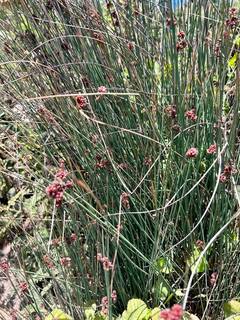
Juncus tenuis is path rush (also called slender rush), a native North American rush in the rush family (Juncaceae) growing 8-18 inches (20-45 cm) tall and 6-12 inches (15-30 cm) wide as a clumping perennial. The species name 'tenuis' is Latin for 'slender' and references the very narrow wiry stem diameter (approximately 1 mm) that distinguishes the species from the heavier-stemmed Juncus effusus (common rush) and most other rush species. The common name 'path rush' is functionally descriptive: the species occurs naturally along the compacted, trampled edges of paths, trails, dirt-road shoulders, and walkway margins where soil compaction excludes most other plant species, and the species' physiological tolerance of compaction, foot traffic, drought, and disturbance places it in a cultivation niche different from the wet-soil ornamental rushes (J. effusus and its cultivars) that the genus more commonly carries. The compaction tolerance comes from the species' fibrous shallow root system that does not require the loose-substrate aeration that most plants depend on, and from the rapid self-sowing recolonization that replaces individual plants killed by extreme trampling — populations persist on heavily-used path edges by continuous seedling replacement rather than by individual long-lived plants. The species is among the more widespread native rushes in North America with a continuous range across most of Canada from the Atlantic provinces west to British Columbia, and across most of the United States from Maine to California, with the species occurring in compacted-soil habitats wherever foot traffic, vehicle traffic, or other soil-compacting disturbance creates the bare-ground conditions the species colonizes. Greenish-brown small flower clusters open at the tips of the slender stems (terminal placement) from June through August across a 6-week active flowering window — the terminal-cluster placement separates J. tenuis from J. effusus and other lateral-flowered Juncus species at the field-identification level, and is the species' principal field-identification character at the floral display level. The species is in the rush family (Juncaceae), which is the third major grasslike family alongside the sedge family (Cyperaceae) and the grass family (Poaceae); the round solid cylindrical stem cross-section without joint-like nodes confirms the family placement and distinguishes the species from the triangular sedge stems and the round-with-nodes grass stems. Hardy to zone 2 — the species' broad climatic tolerance and disturbance-tolerant ecology gives it cultivation reliability across most of the temperate North American range. Drought-tolerant, deer-resistant, and self-sowing in compacted-soil habitats. The species is non-toxic to humans and pets. The species is not a traditional ornamental species — it is a functional native ground cover for compacted-soil restoration of disturbed habitats where conventional ornamental plants do not survive.
Native Range
Juncus tenuis is native to North America with a continuous native range across most of Canada from the Atlantic provinces (Newfoundland, Nova Scotia, New Brunswick, Quebec) west through Ontario, the Prairie provinces, and into British Columbia, and across most of the United States from Maine south to Florida and west to California, Oregon, and Washington. The species occurs in compacted-soil habitats including path edges, trail margins, dirt-road shoulders, livestock-trampled pasture margins, walkway perimeters, and other disturbance-compaction positions where soil compaction excludes most other vegetation. The species has also become naturalized on most other temperate continents (Europe, Asia, Australia, South America) following accidental introduction from North American native populations, and now occurs as a cosmopolitan compacted-ground ruderal species in temperate regions worldwide.Suggested Uses
Used along path edges, trail margins, dirt-road shoulders, livestock-trampled pasture margins, walkway perimeters, and compacted-soil positions where conventional ornamental plants do not survive. The species is a functional ecological restoration choice for compacted bare-ground positions rather than a traditional ornamental species, and gardeners use the species specifically to establish green cover and reduce erosion in habitats where soil compaction, foot traffic, or other disturbance excludes conventional plants. The species is among the few native plants reliable for these compacted-habitat positions and the species' self-sowing recolonization sustains the population without ongoing replanting. Companion species for compacted-disturbance restoration plantings include Plantago major (broadleaf plantain), Trifolium repens (white clover), and other ruderal compaction-tolerant species that share the compacted-habitat physiological tolerance.How to Identify
Appearance
Size & Dimensions
Height8" - 1'6"
Width/Spread6" - 1'
Bloom Information
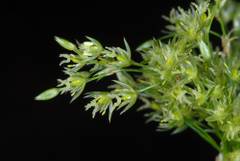
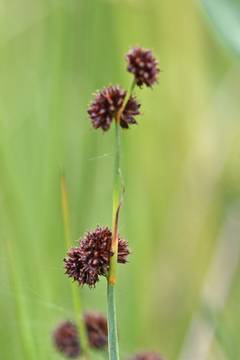
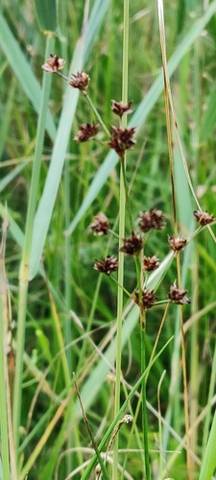
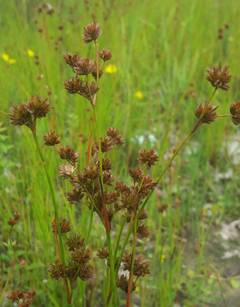
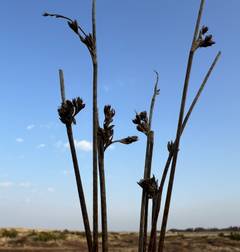
Greenish-brown small flower clusters open at the tips of the slender stems from June through August across a 6-week active flowering window. The terminal flower-cluster placement (at stem tips) separates J. tenuis from J. effusus and other Juncus species that produce lateral flower clusters partway up the stem, and is one of the species' principal floral-display field-identification characters. Pollination is by wind in the typical rush-family pattern, with the small flowers producing wind-dispersed seed that supports the rapid self-sowing recolonization the species depends on for population persistence in compacted-disturbance habitats.
Detailed Descriptions
Flower Description
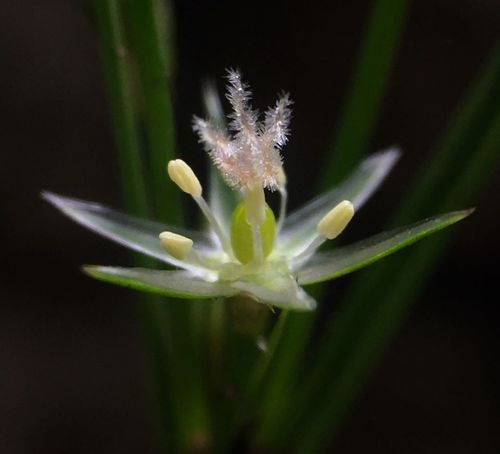
Greenish-brown small flower clusters carried at the tips of the slender stems (terminal placement) rather than partway up the stem (lateral placement) — the terminal-cluster placement separates Juncus tenuis from Juncus effusus and other lateral-flowered Juncus species at the field-identification level; the flower clusters themselves are individually inconspicuous and the species' principal value is the foliage clump rather than the floral displayFoliage Description
Medium green; very slender wiry round-cylindrical photosynthetic stems arranged in a tight basal clump, with the round stem cross-section and the narrow stem diameter (approximately 1 mm wide) confirming the rush family (Juncaceae) placement against the triangular sedges (Cyperaceae) and the round-with-nodes grasses (Poaceae)Growing Conditions
Sun Requirements
Requires 4-10 hours of direct sunlight daily
• Full Sun: 6+ hours of direct sunlight
• Partial Shade: 3-6 hours of direct sunlight
• Full Shade: Less than 3 hours of direct sunlight