Juncus, Genus, articulatus, Species,
- Genus & species
jointed rush
Circumboreal range across Europe, northern Asia, and North America; in North America from Alaska across Canada and south through the northern and western United States including the Pacific Northwest, in wet meadows, lake margins, stream banks, and seasonally flooded ground from sea level to approximately 8,500 feet (2,600 m).
Overview
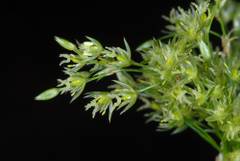
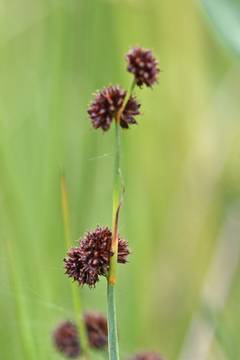
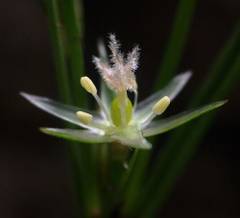
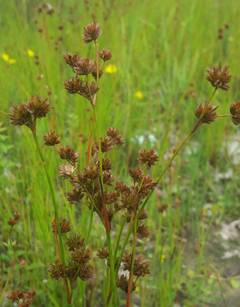
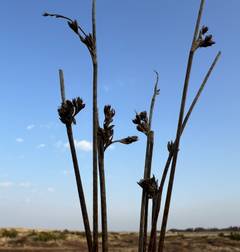
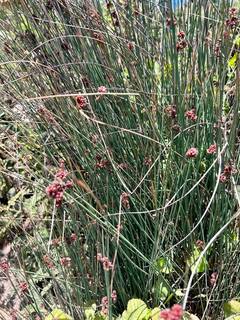
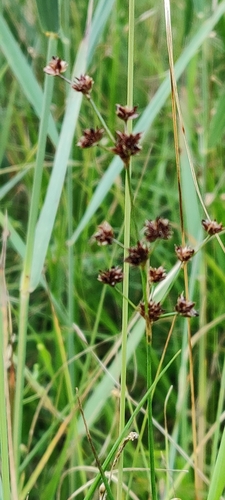
Juncus articulatus is a rhizomatous perennial rush in the rush family (Juncaceae) reaching 8-24 inches (20-60 cm) tall in loose to dense tufts, spreading by short creeping rhizomes that extend the colony 6-12 inches (15-30 cm) per year in moist soil. Stems are erect to ascending, cylindrical, 1-2 mm in diameter, with conspicuous transverse septa (cross-partitions) visible through the stem wall when a stem is held up to light, which is the source of the species common name and its primary identification feature. Leaves are also cylindrical and hollow with the same septate (jointed) structure as the stems, and the septa spaced 3-8 mm apart give a knotted appearance to a stem run between thumb and forefinger. Inflorescences are terminal branching cymes 1-3 inches (2.5-8 cm) across, composed of dense clusters of 3-12 flowers each. Individual flowers are small at 2.5-3.5 mm long with dark brown to blackish tepals (the undifferentiated sepal-petal organs of Juncaceae flowers), and the dark tepal color combined with the small flower size makes the inflorescence look more like a seed head than a flower at distance. Capsules are dark chestnut-brown, ovoid, 3-4 mm long, exceeding the tepals at maturity, which is a key separation from some related Juncus species where the capsule sits within or slightly below the tepals. The species occupies a wide range of wet habitats: pond margins, stream banks, ditches, wet meadows, and seasonally flooded ground, with tolerance for brackish conditions up to moderate salinity that extends the range into salt-marsh transition zones. In the Pacific Northwest, the species is native and widespread in wet ground from sea level to mid-elevations, where it appears as both a native restoration component and a stormwater-management plant in constructed bioswales and rain gardens.
Native Range
Juncus articulatus has a circumboreal distribution, native across Europe, northern Asia, and North America. In North America, the species ranges from Alaska across Canada and south through the northern and western United States, where it grows in wet meadows, lake margins, stream banks, and disturbed wet ground from sea level to approximately 8,500 feet (2,600 m). The Pacific Northwest range covers wet sites west of the Cascades from coastal British Columbia south through Washington and Oregon, with the species appearing in both natural wetland communities and constructed stormwater-management plantings.Suggested Uses
Used in rain gardens, bioswales, pond margins, and constructed wetlands for stormwater management, where the species combination of standing-water tolerance, fibrous root system, and rhizomatous spread fills the wetland-edge functional niche. The fibrous roots bind soil within one growing season, which makes the species useful for bank stabilization along streams and ditches where erosion control is the primary management goal. Native plant restoration in wet meadow and riparian habitats throughout the Pacific Northwest uses this species as a structural component of the wet-zone planting palette, and seasonal-drawdown tolerance suits the species to fluctuating-level rain gardens that go from saturated in winter to relatively dry in late summer.How to Identify
Appearance
Size & Dimensions
Height8" - 2'
Width/Spread1' - 1'6"
Bloom Information
Branching terminal cymes of dark brown to blackish flowers open progressively from June through August over 3-4 weeks, with peak inflorescence in July. Individual flowers are wind-pollinated with occasional insect visits, and the small flower size combined with the dark tepal color gives the inflorescence a seed-head appearance through the bloom window. Dark chestnut-brown capsules develop by late summer and persist on the stems through autumn and winter. Seed dispersal occurs through both water (the small ovoid seeds float at the water surface and disperse along stream and pond margins) and wind, with the dual dispersal mode supporting the species wetland-corridor distribution along watercourses.
Detailed Descriptions
Flower Description
Dark brown to blackish; small flowers 2.5-3.5 mm long with dark tepals carried in branching terminal cymes 1-3 inches (2.5-8 cm) acrossFoliage Description
Medium green; cylindrical hollow stems and leaves with conspicuous transverse septa (cross-partitions) visible through the stem wall when held to light, giving the species its common nameGrowing Conditions
Sun Requirements
Requires 4-10 hours of direct sunlight daily
• Full Sun: 6+ hours of direct sunlight
• Partial Shade: 3-6 hours of direct sunlight
• Full Shade: Less than 3 hours of direct sunlight
Care & Maintenance
Care Guide
Plant in full sun to partial shade in consistently moist to wet soil at pH 5.0-7.5, with spacing of 8-12 inches (20-30 cm) apart. The species tolerates standing water up to 2 inches (5 cm) deep and seasonal flooding, which makes it suited to the lowest zone of rain gardens and bioswales where water collects after storms. Fertilization is unnecessary because the species thrives in lean to moderately fertile conditions, and high fertility promotes lax growth that lodges in wind. Soil texture from sand through clay all support the species provided moisture stays consistent. In small garden settings, the rhizomatous spread can be limited by installing a 6-inch (15 cm) deep root barrier around the planting area, and dividing the colony every 3-4 years removes excess rhizome and maintains the desired coverage area without the species pushing into adjacent plantings.Pruning
Cut back dead stems to 2-3 inches (5-8 cm) above the soil line in late winter (February through March) before new growth emerges. No other pruning is needed. Thin dense colonies every 3-4 years by removing sections of rhizome with a sharp spade.Pruning Schedule
Prune: February–March
early spring
Container Growing
Suitable for container growing
Minimum container size: 3 gallons