Juncus, Genus, acuminatus, Species,
- Genus & species
knotty-leaf rush
Overview
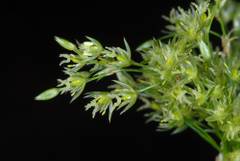
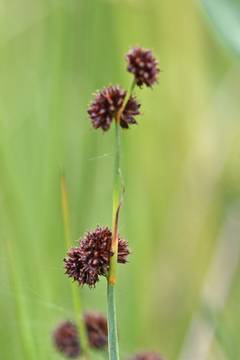
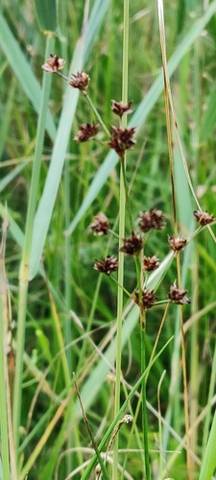
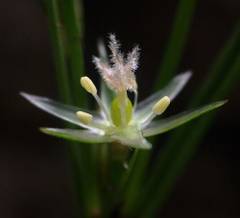
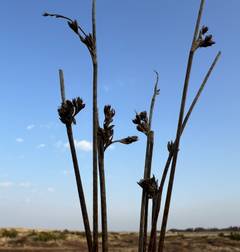
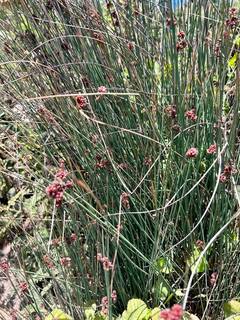
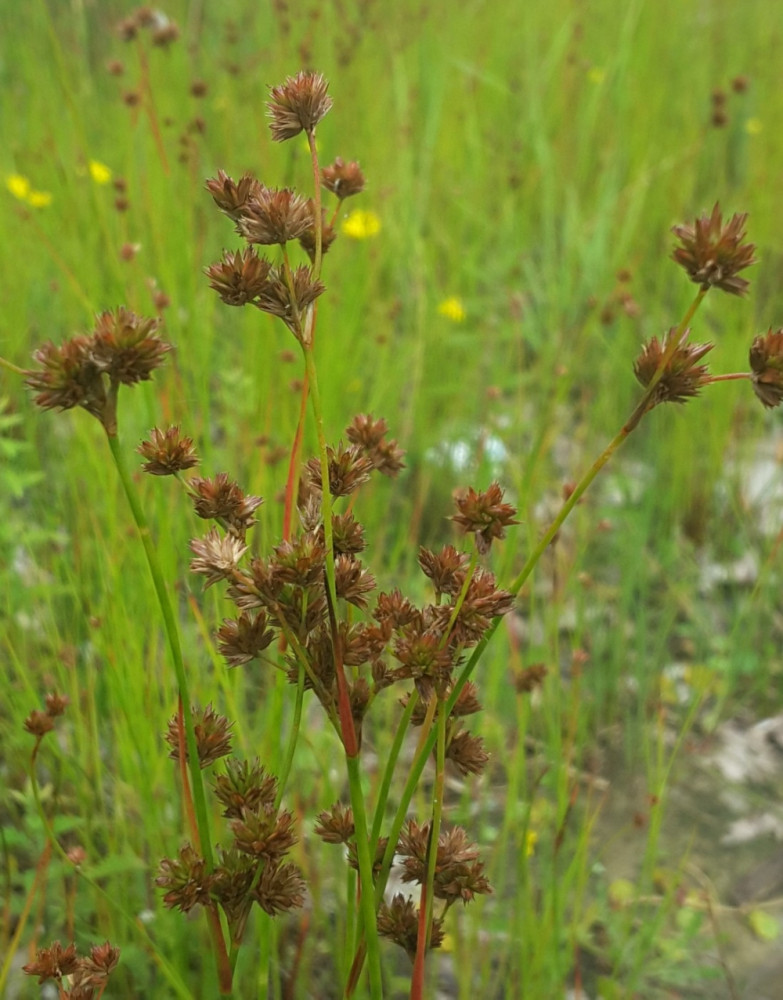
Juncus acuminatus is a clump-forming perennial rush reaching 12-36 inches (30-90 cm) tall and 8-18 inches (20-45 cm) wide, spreading slowly via short rhizomes. Stems (culms) are erect, smooth, dark green, and round in cross-section, 0.04-0.1 inch (1-3 mm) in diameter. Leaves are basal and cauline, with hollow blades 4-8 inches (10-20 cm) long that are transversely septate (jointed) when squeezed between the fingers, separating it from non-septate Juncus species. Inflorescences are open and branched, held at the stem tip and 1-3 inches (2.5-7.5 cm) across, with flowers in dense rounded heads of 5-15 brown or reddish-brown 6-tepaled flowers. Bloom occurs from June through August. Fruits are 3-celled capsules 0.1-0.16 inch (3-4 mm) long, exceeding the tepals. Plants persist 5-10 years on suitable wet sites and self-sow readily on bare moist soil. Foliage browns by late October and dies back in winter; new shoots emerge from rhizomes in late April. The species hybridizes occasionally with J. articulatus where ranges overlap.
Native Range
Native across most of North America from southern Canada south through nearly all of the contiguous United States and into northern Mexico. Found in seasonally to permanently wet sites including marshes, pond margins, ditches, vernal pools, and seeps at 0-7,500 feet (0-2,300 m) elevation; tolerates a wider range of disturbance and soil conditions than many Juncus species.Suggested Uses
Used in pond margins, rain gardens, constructed wetlands, vernal pool restoration, and stream-bank stabilization plantings at 12-18 inch (30-45 cm) spacing. Suited to wet meadow plantings, water quality treatment cells, and seasonally flooded basins. Performs poorly in dry, fast-draining sites and conventional perennial borders.How to Identify
Appearance
Size & Dimensions
Height1' - 3'
Width/Spread8" - 1'6"
Bloom Information
Flowers open from June through August across most of the range, with peak bloom in July. Individual inflorescences ripen 4-6 weeks after emergence; total reproductive period extends 8-10 weeks per plant. Capsules ripen brown and persist on stems through fall and winter, releasing seed gradually. Bloom is reduced in years with prolonged spring drawdown of habitat water levels.
Detailed Descriptions
Flower Description
brown to reddish-brownFoliage Description
dark green; hollow, septate bladesGrowing Conditions
Sun Requirements
Requires 4-12 hours of direct sunlight daily
• Full Sun: 6+ hours of direct sunlight
• Partial Shade: 3-6 hours of direct sunlight
• Full Shade: Less than 3 hours of direct sunlight
Care & Maintenance
Care Guide
Plants require permanent or seasonal saturation; water 0-2 inches (0-5 cm) above soil level produces full mature stem height. Plants tolerate brief flooding to 6 inches (15 cm) but decline within a season under sustained drawdown of more than 6 weeks. Aphids occasionally cluster on flower stems in early summer; populations remain low. Plants self-sow aggressively on bare moist soil, producing 200-1,000 seedlings per parent annually under suitable conditions. Replace senescent crowns by digging clumps and resetting healthy rhizome sections every 5-8 years. No fertilizer is required in established wetland sites.Pruning
Cut all dead stems and seedheads to 2-4 inches (5-10 cm) above the rhizome layer in late winter or early spring before new growth emerges. The brown winter foliage may be left for habitat structure and removed at spring cleanup. No other pruning is required during the growing season.Pruning Schedule
Prune: February–March
winterearly spring
Container Growing
Suitable for container growing
Minimum container size: 2 gallons