Overview
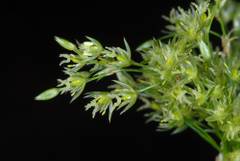
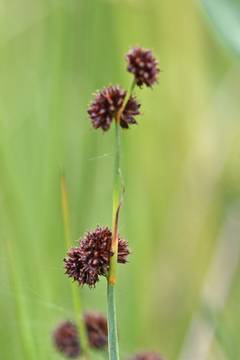
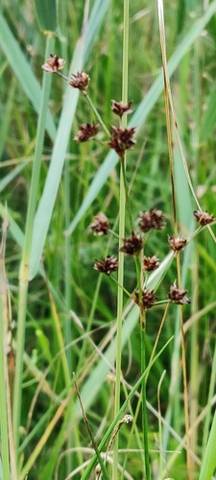
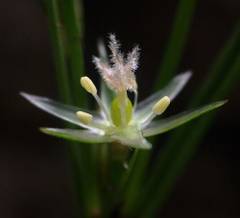
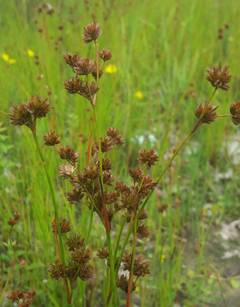
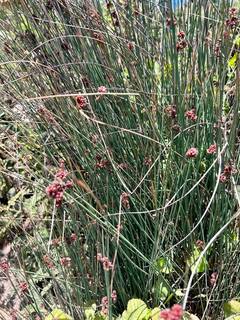
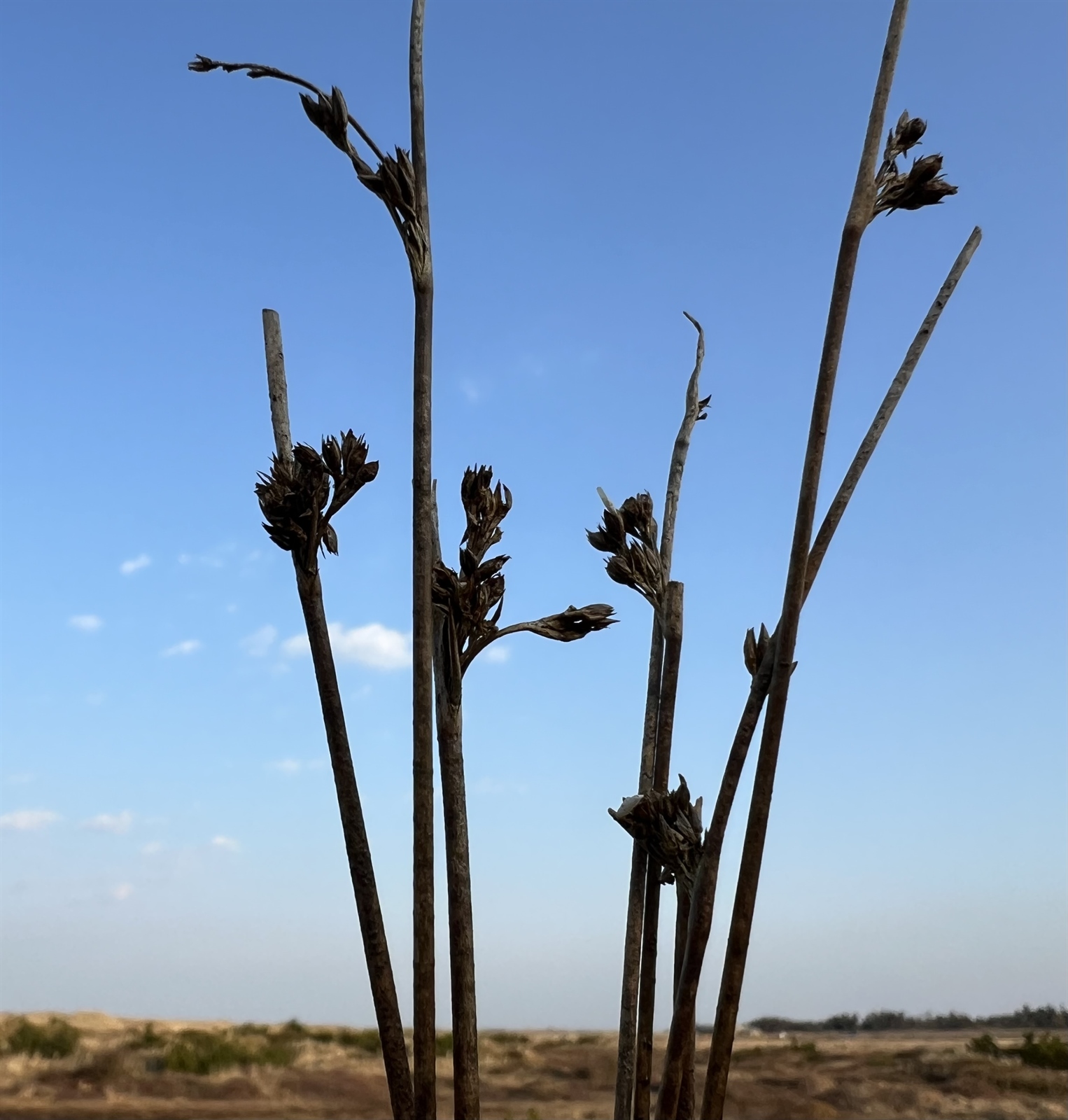
Juncus balticus is a strongly rhizomatous perennial rush reaching 16-40 inches (40-100 cm) tall and forming extensive linear colonies via creeping underground rhizomes. Stems (culms) are erect, cylindrical, smooth, dark green to gray-green, and 0.06-0.12 inch (1.5-3 mm) thick, often arranged in straight rows along the rhizome. Leaves are reduced to bladeless basal sheaths surrounding the stem base. Inflorescences are lateral pseudo-compound clusters appearing about 4-8 inches (10-20 cm) below the apparent stem tip, with 10-30 small dark brown flowers in loose cymose heads; a single bract continues the stem line and extends 4-8 inches (10-20 cm) above the cluster, making the inflorescence look as if it emerges from the side of the stem. Bloom occurs from June through August. Fruits are 3-celled capsules 0.1-0.16 inch (3-4 mm) long, dark brown at maturity. Plants persist 15-30 years on stable wet sites and form solid stands several meters across. Foliage browns in fall and persists upright through winter, contributing to habitat structure. New shoots emerge from rhizomes in late April.
Native Range
Native to circumboreal regions across North America, Europe, and Asia, with North American populations from Alaska south through most of Canada, the western and northern United States to California, Colorado, and the Great Lakes region. Found in coastal dune slacks, alkaline meadows, brackish marshes, lake margins, and wet sandy soils at 0-10,000 feet (0-3,050 m) elevation; tolerates moderate salinity in coastal populations.Suggested Uses
Used in pond margins, stream-bank stabilization, coastal dune restoration, brackish wetland creation, and rain garden plantings at 18-30 inch (45-75 cm) spacing where rhizome spread is acceptable. Suited to alkaline wetland mitigation and coastal salt-marsh restoration. Performs poorly in dry conventional borders and any planting where contained spread is required.How to Identify
Appearance
Size & Dimensions
Height1'4" - 3'4"
Width/Spread1'6" - 2'6"
Bloom Information
Flowers open from June through August across most of the range, with peak bloom in July. Individual inflorescences ripen 4-6 weeks after emergence; total reproductive period extends 8-10 weeks per stand. Capsules ripen dark brown and persist on stems through fall and winter, releasing seed gradually with rain. Bloom timing shifts later by 2-3 weeks at higher elevations and in cooler coastal climates.
Detailed Descriptions
Foliage Description
stems dark green to gray-green; leaves reduced to basal sheathsGrowing Conditions
Sun Requirements
Requires 6-12 hours of direct sunlight daily
• Full Sun: 6+ hours of direct sunlight
• Partial Shade: 3-6 hours of direct sunlight
• Full Shade: Less than 3 hours of direct sunlight
Care & Maintenance
Care Guide
Plants require permanent or seasonal saturation; water 0-2 inches (0-5 cm) above soil level produces full mature stem height and dense colonies. Plants tolerate brief flooding to 8 inches (20 cm) and moderate salinity (up to 0.5%) in coastal populations. Aphids occasionally cluster on stems; populations remain low. Plants spread aggressively via rhizomes, with colonies expanding 6-18 inches (15-45 cm) per year on saturated soils; this rate of expansion is incompatible with mixed plantings. Replace senescent rhizome sections every 10-15 years to maintain density. No fertilizer is required in established wetland sites.Pruning
Cut all dead stems to 2-4 inches (5-10 cm) above the rhizome layer in late winter or early spring before new growth emerges. The brown winter foliage may be left for habitat structure and bird use through winter. Remove emergent shoots in adjacent water bodies if spread is unwanted, as the species can colonize new wetland areas via floating rhizome fragments.Pruning Schedule
Prune: February–March
winterearly spring