Juncus, Genus, conglomeratus, Species,
- Genus & species
compact rush
Europe, North Africa, and western Asia
Overview
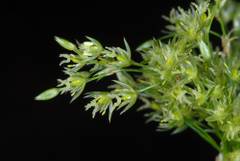
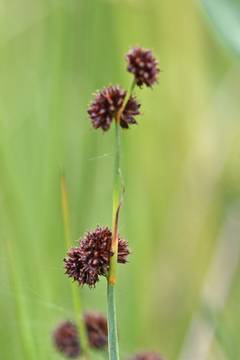
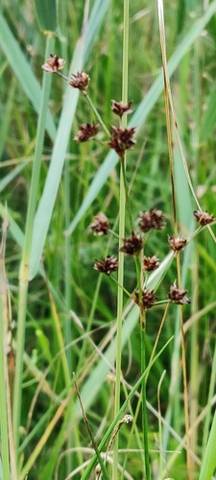
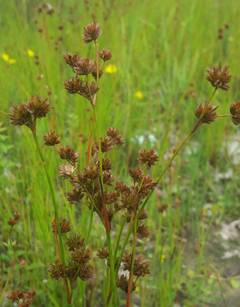
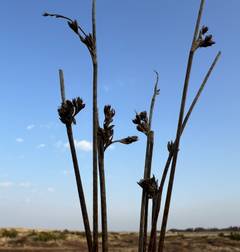
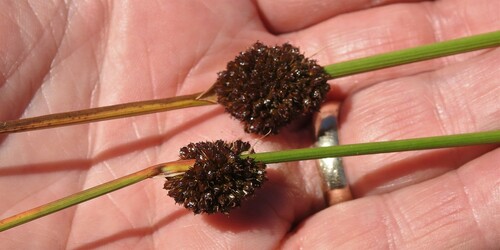
Juncus conglomeratus, the compact or clustered rush, is a tufted evergreen perennial in the rush family, forming dense clumps of slender, cylindrical green stems 12-39 inches (30-100 cm) tall. The stems are smooth to faintly ridged, pithy inside, and carry no obvious leaves, the blades reduced to brown sheaths at the base. The flower cluster is a tight, rounded knot of many small brown flowers borne on one side of the stem a little below the tip, while the stem appears to continue past it as a pointed bract. As the seed sets, the cluster can loosen slightly. The plant spreads by short rhizomes into solid tussocks and seeds freely in bare wet ground. It grows in marshes, wet meadows, ditches, pond margins, and damp pastures on acidic, poorly drained soils. Native to Europe, North Africa, and western Asia, it is a common plant of rough grazing and rush pasture. Its stiff stems persist through winter, turning straw-colored, and it can become weedy in waterlogged fields where drainage is poor.
Native Range
Native to Europe, North Africa, and temperate western Asia, with introductions in parts of North America and elsewhere. It grows in marshes, wet meadows, ditches, bogs, and damp pastures, chiefly on acidic, poorly drained soils.Suggested Uses
Used in bog gardens, rain gardens, pond and stream margins, and wet meadow or wetland restoration plantings. Its tussocks shelter insects and small wildlife and help stabilize damp soil.How to Identify
Appearance
Size & Dimensions
Height1' - 3'3"
Width/Spread1' - 2'
Bloom Information
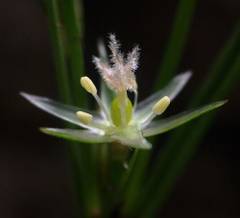
Flowers from late spring into summer, mainly May to July, producing dense clusters of tiny wind-pollinated brown flowers. The flower heads ripen to brown seed capsules that persist into autumn. The plant relies on wind rather than insects for pollination.
Detailed Descriptions
Foliage Description
greenGrowing Conditions
Sun Requirements
Requires 4-12 hours of direct sunlight daily
• Full Sun: 6+ hours of direct sunlight
• Partial Shade: 3-6 hours of direct sunlight
• Full Shade: Less than 3 hours of direct sunlight
Care & Maintenance
Care Guide
Grows in full sun to part shade in permanently moist to waterlogged ground, including bog gardens, pond edges, and heavy clay that stays wet. It favors acidic soils and tolerates standing water and seasonal flooding. Once established it needs no watering in suitable damp sites and spreads steadily by rhizome and seed. In garden settings it can be cut back hard in late winter to refresh the clump. It tolerates poor fertility but will not persist in dry, free-draining soil.Pruning
Old stems can be cut back to the base in late winter or early spring before new growth begins, to remove the previous year straw-colored stems. The clump regrows quickly from the rhizome. No other pruning is needed.Pruning Schedule
Prune: February–March
winterearly spring
Container Growing
Suitable for container growing
Minimum container size: 2 gallons